The Best Co-Op Deckbuilding Games
Team up with friends to build combo decks, manage party roles, and survive roguelike runs together.
Co-op deckbuilding games hit best when every turn matters and your group actually has to talk through lines, not just queue into another match. The good ones turn card picks, pathing, and support tools into real team decisions instead of stapling multiplayer onto a solo run.
This list sticks to games you can actually play with a friend. Every co-op mode below was checked against the store page or developer docs before it went on the list. Where co-op is online-only, local-only, or ability-drafting rather than traditional cards, that is stated plainly. Party size in single-player is not the same as multiplayer.
Quick take
- Across the Obelisk is the strongest all-around co-op deckbuilder. Distinct party roles, branching routes, and shared run decisions make the teamwork feel native.
- Slay the Spire 2 is the cleanest pick for groups that want classic roguelike deckbuilding first, with up to four players online.
- Hellcard is the purpose-built three-player online option — positioning and decks that have to reinforce each other.
- Inkbound is the four-player tactical pick from the Monster Train team: ability drafting and free-movement fights rather than a classic hand of cards.
- One Step From Eden is the local/couch pick. Shared deck, real-time spell casting, no native online co-op.
The picks
Across the Obelisk
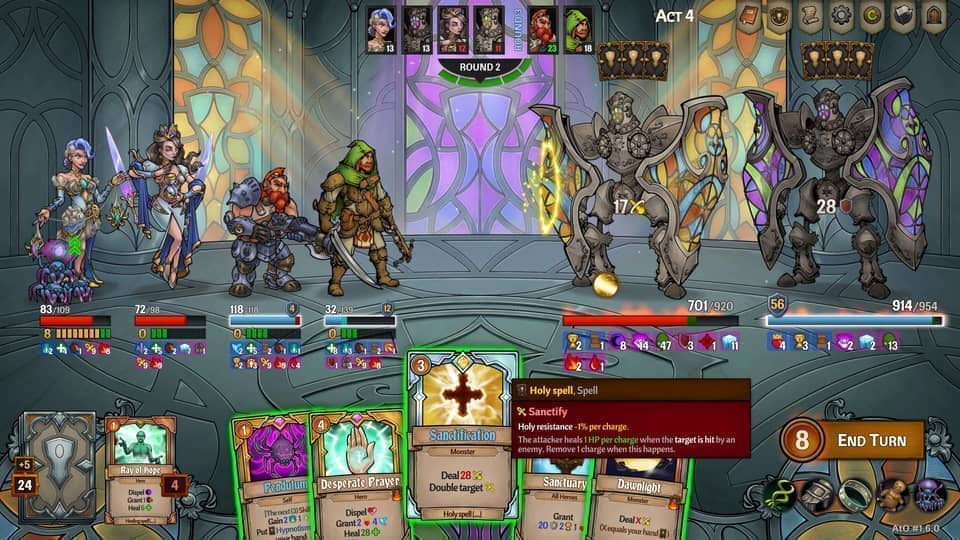
Co-op support: Online co-op for 2–4 players with full cross-play across PC, PlayStation 5, Xbox Series X|S, and Nintendo Switch. Each player controls one or more heroes in a shared party. No local/split-screen co-op.
This is the clearest answer for most groups searching for co-op deckbuilders. Across the Obelisk is built around party composition, role coverage, and run-wide coordination, so multiplayer does not feel bolted on. Each player can focus on a character and deck identity, which immediately gives the table cleaner jobs: damage, healing, mitigation, debuffs, energy support.
That role clarity matters. Quarterbacking can wreck co-op card games, but this one helps avoid it because players usually have their own lane to optimize. At the same time, the run still creates shared arguments in the best way. Gold spending, map pathing, event choices, and shop priorities all affect the whole team, so your group gets those great tabletop-style debates without losing individual agency.
A big strength here is how co-op changes card evaluation. A selfish damage card can be worse than a support tool that keeps another deck online, and Across the Obelisk makes that tradeoff visible almost every run. The main friction is that its systems and progression layers are denser than they first look. New groups may need a few runs before their drafts stop fighting each other.
Slay the Spire 2
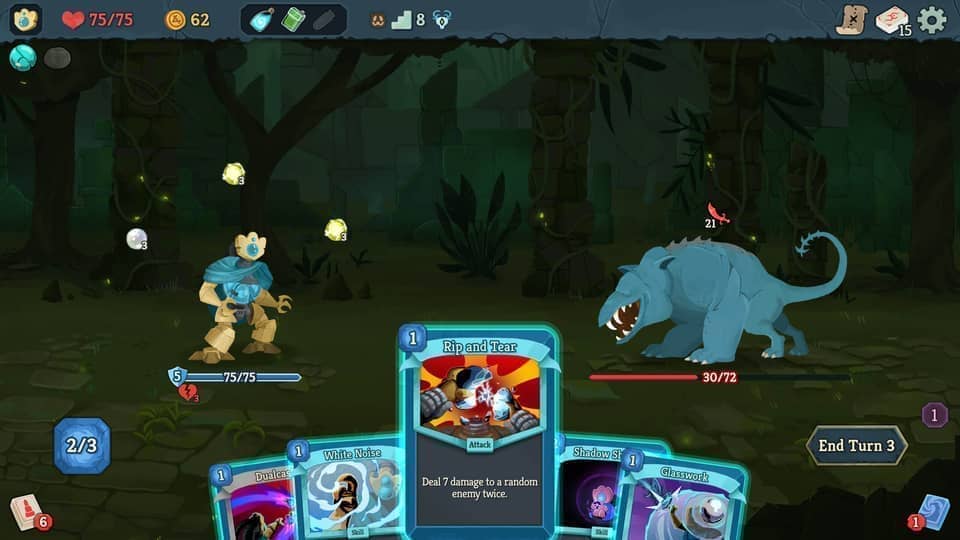
Co-op support: Online co-op for up to 4 players on Steam. Invite-only (friends list); no public matchmaking and no local co-op. Enemy difficulty scales with party size. Multiplayer-specific cards and team synergies are part of the mode.
For players who want the cleanest card-battling foundation, Slay the Spire 2 is the easy sell. The draw here is familiar: readable fights, high-value card choices, and turns where one smart decision can save a run. The co-op angle works because that clarity carries over well to multiplayer. You can discuss lines quickly, understand what each deck is trying to do, and build around obvious synergy instead of wrestling with too many side systems.
This is also the best choice if your group wants runs that stay sharp instead of sprawling into campaign overhead. It keeps the focus on combat sequencing, deck identity, and encounter planning. In practice, that usually means less downtime and fewer “wait, what are we even building toward?” moments than heavier RPG-style deckbuilders.
What sets it slightly behind Across the Obelisk for pure co-op fit is party texture. It is excellent at refined run structure, but it is not as inherently role-driven as a game designed around a fuller party setup from day one. If your group wants healer-tank-support style coordination and lots of shared resource tension, this may feel cleaner but a bit less social in the tabletop sense.
Hellcard
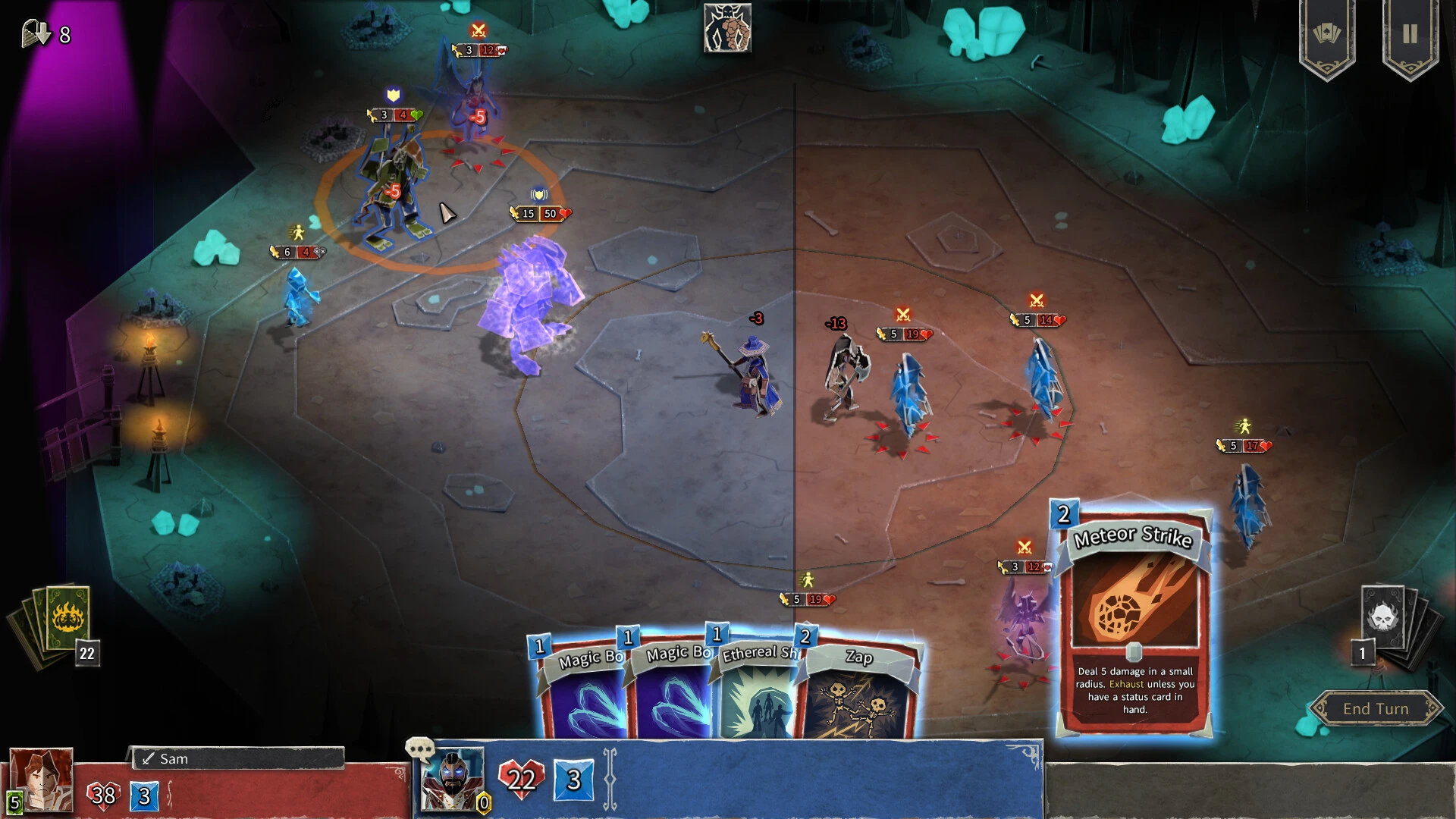
Co-op support: Online co-op for up to 3 heroes. Play with friends, drop into public lobbies, or run solo with AI companions. Positioning on a circular battlefield is part of the co-op loop.
Hellcard belongs here because co-op is the design, not a checkbox. Each player builds a deck while the party holds the center of a papercraft dungeon map, and monster placement actually matters — shove enemies, set up AoE, and sequence turns so your cards reinforce the group instead of competing for the same job.
It fits groups that want a tighter session than Across the Obelisk’s campaign weight, without giving up real multiplayer deckbuilding. Roles still emerge (melee vs ranged positioning, who sets up vs who finishes), but the loop stays focused on tactical card fights rather than long meta-progression debates.
The tradeoff is ceiling and polish relative to the two bigger names above it. If your group wants the deepest run systems or the most readable Spire-like combat language, start higher on this list. Pick Hellcard when you want purpose-built three-player co-op that still feels like a real deckbuilder.
Inkbound
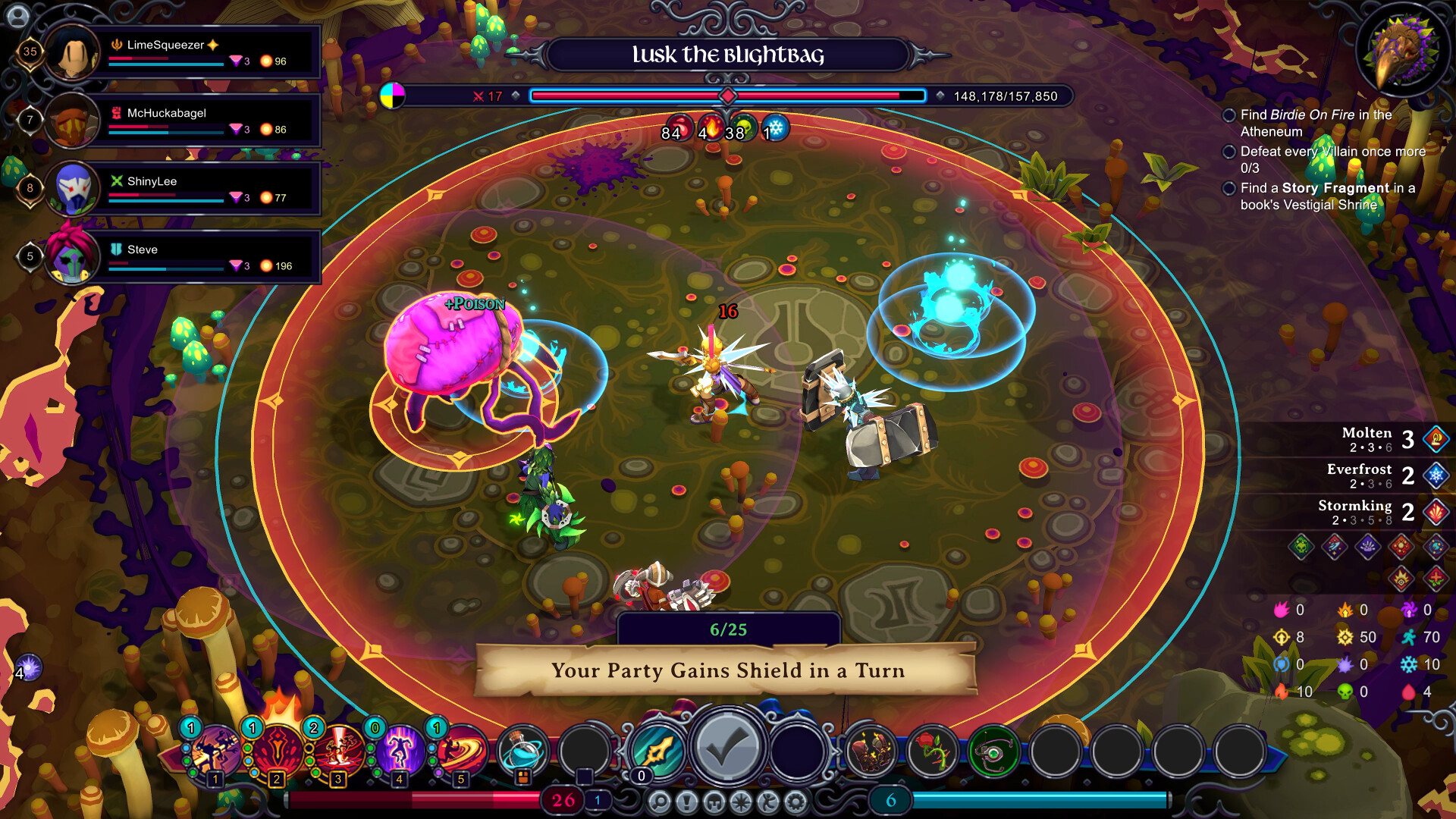
Co-op support: Online co-op for up to 4 players, plus solo/offline. Atheneum hub for partying with friends or strangers. Combat is turn-based with free movement; in multiplayer, players act simultaneously rather than in a fixed turn order. The 1.0 / post–live-service updates kept the 4-player co-op — they did not remove it.
Inkbound is from Shiny Shoe (Monster Train), and it earns a spot even though it drafts abilities and items rather than a classic hand of cards. The co-op is genuine: up to four players coordinate positioning, timing, and upgrade picks on a shared run. That is more than most “deckbuilder-adjacent” games deliver.
It fits groups that like Monster Train’s synergy thinking but want online party play — something Monster Train 2 does not offer. Ability drafting still scratches the run-planning itch: you shape a build, specialize roles, and win or lose on how well the party covers each other’s gaps.
Be honest about the genre edge. If your friends specifically want Slay the Spire-style card draws and exhaust engines, this will feel like a tactical roguelike with draft systems, not a pure deckbuilder. If they want verified four-player co-op with real build craft, it belongs on the shortlist.
One Step From Eden
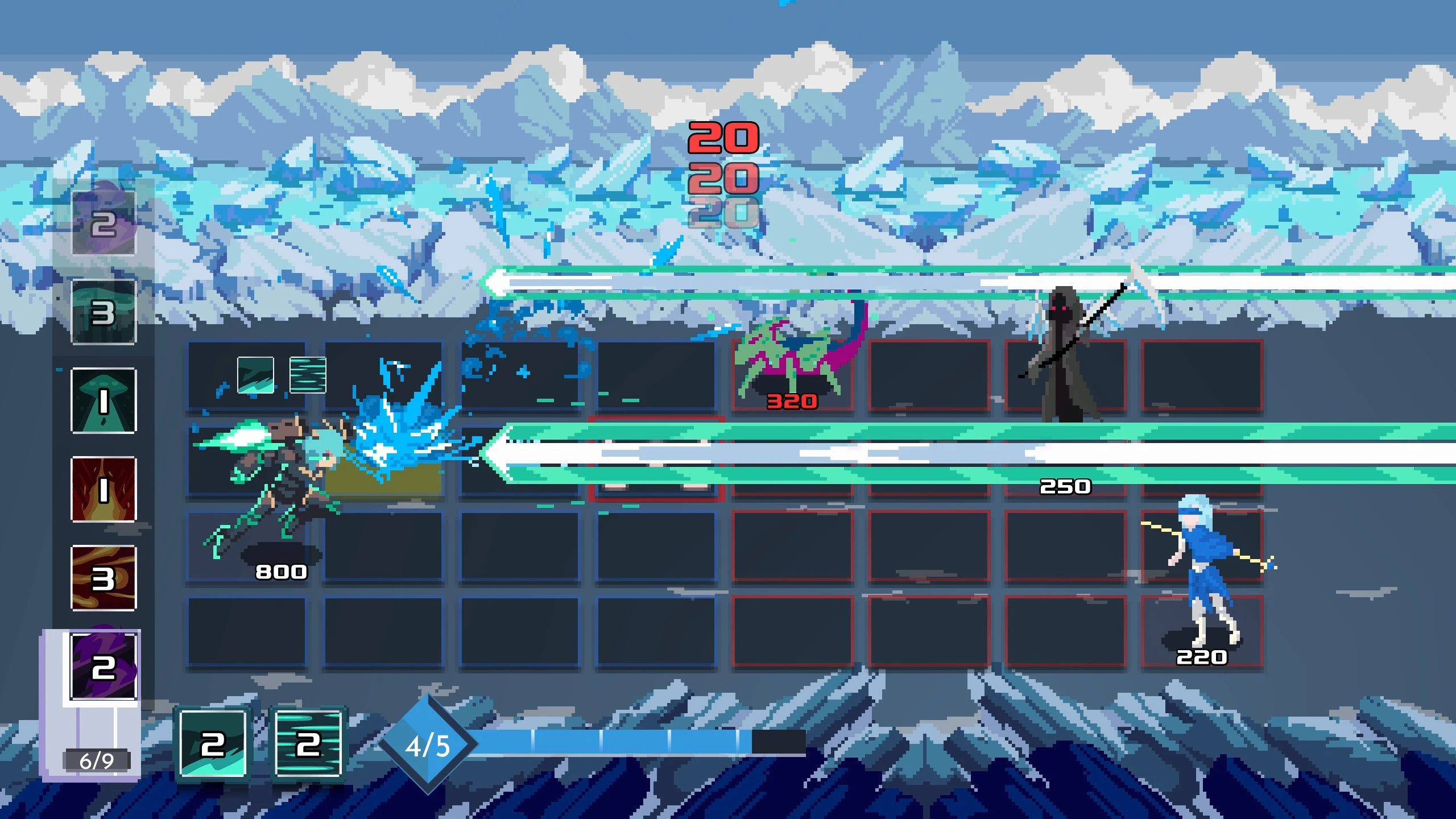
Co-op support: Local shared-screen co-op for 2 players. Shared health, mana, and deck; each player controls half the spell slots. No native online co-op — Steam Remote Play Together works as a workaround. Local PvP is also available.
One Step From Eden is the couch pick. It is a real-time action deckbuilder: you build a spell deck, then cast on a grid under bullet-hell pressure. Co-op is functional and finishable — shared resources mean neither player can quietly solve the fight alone — but it is widely considered the game’s weakest mode, and it is noticeably harder than solo. You are locked to your spell slot, so a dead card can strand you until the shared deck reshuffles; both players are separate hurtboxes on one HP pool (a hit on each is effectively double damage); shields are not shared even though health is; and the shared mana pool makes 2+ cost builds awkward.
It fits pairs who are in the same room (or willing to Remote Play) and want something faster and louder than turn-based party deckbuilders, and who will accept that co-op was shoehorned onto a solo design rather than built as a peer of the online picks above. The deckbuilding is real; the pacing is closer to a twin-stick spellslinger than a Spire clone.
The reason it sits last is the co-op quality and constraint, not the quality of the solo game. Online-only groups should start with Across the Obelisk, Slay the Spire 2, Hellcard, or Inkbound. Choose this when “same couch, same screen” is the requirement and you know what you are getting into.
Who should play this
- Groups that want a strategic co-op game without defaulting to shooters, MOBAs, or survival crafting.
- Players who like discussing card picks, route choices, and team roles between fights.
- Friends who need the co-op mode to be real — not a single-player party sold as multiplayer.
- People deciding between online party deckbuilders and a local/couch action deckbuilder.
- Deckbuilder fans who want co-op to change how they build, not just add another player slot.
Common mistakes
-
Everyone drafts selfishly.
Fix: decide early who is covering sustain, defense, scaling, and burst so your decks stop competing for the same job. -
One player calls every turn.
Fix: assign responsibility by role or character. Clear jobs reduce quarterbacking and keep each player engaged. -
Your group ignores shared economy decisions.
Fix: treat gold, shops, and route choices as core strategy. In co-op deckbuilders, bad pathing can hurt more than one bad card reward. -
You pick the wrong game for your group’s setup.
Fix: choose Slay the Spire 2 or Across the Obelisk for online party runs, Hellcard for tight three-player online co-op, Inkbound for four-player tactical drafting, and One Step From Eden only if you can do local or Remote Play. -
Support cards get undervalued.
Fix: in co-op, enabling another player’s deck can be stronger than adding a little more damage to your own line.
FAQ
What is the best co-op deckbuilding game overall?
For most groups, Across the Obelisk is the best overall fit. It has the clearest party roles, strong branching runs, and co-op decisions that matter outside of combat too.
Which co-op deckbuilder is easiest to get into with friends?
Slay the Spire 2 is the easiest starting point if your group already likes roguelike deckbuilding. Its systems are cleaner and more immediately readable than denser party RPGs. Hellcard is a strong alternative if you want purpose-built co-op without Spire familiarity.
Do these games use shared decks or separate decks?
They vary, and that is the important part. Across the Obelisk, Slay the Spire 2, Hellcard, and Inkbound lean on individual builds inside a shared run. One Step From Eden co-op uses one shared deck with split spell slots. The key difference is whether your group wants personal lanes, turn-by-turn collaboration, or a single shared resource pool.
Which games have online co-op vs local only?
Across the Obelisk, Slay the Spire 2, Hellcard, and Inkbound support online co-op. One Step From Eden is local co-op only (Remote Play Together for online). None of the picks here are “party of six in single-player” games sold as multiplayer.
Which game is best if my group argues a lot over strategy?
Across the Obelisk may suit you best if those arguments are part of the fun. Shared gold and pathing choices create great strategic debates, as long as your group is fine with more discussion between fights.
Takeaway
The best co-op deckbuilding game depends on how your group wants to collaborate — and whether you can actually play together. Across the Obelisk is the strongest pure co-op fit, Slay the Spire 2 is the cleanest run-based option, Hellcard is the purpose-built three-player pick, Inkbound covers four-player tactical drafting, and One Step From Eden is the local couch option. If a list recommends a game without stating how co-op works, verify it before you buy.