Games Like Monster Train for Combo Lovers
Craving explosive combos, unit scaling, and broken synergies? These games deliver the same power trip as Monster Train.
You want games like Monster Train because normal deckbuilders can feel too polite. The real itch is explosive scaling, absurd unit stacks, and runs where finding the broken synergy is the whole point.
These seven picks stay close to that feeling from different angles. We’re focusing on games that let you build an unstoppable engine, abuse smart interactions, and make combat decisions that matter now, not ten turns later. Some are direct fits for Monster Train fans. A couple are more specialized, but still hit the same power-trip center.
Quick take
- Monster Train 2 is the cleanest answer if you want more of the same core high-roll engine building with extra layers.
- Hadean Tactics is the best pick for players who love that unit placement adds a puzzle layer to card play.
- Vault of the Void trades board units for extreme deck control, but it absolutely delivers on combo consistency.
- Chrono Ark is the hardest recommendation here, but it has huge payoff if you want party-based combo planning and nasty boss fights.
- Wildfrost is tighter and meaner than Monster Train, with shorter runs and sharper positioning pressure.
- Banners of Ruin is the best pick if you want party-sized boards where several characters stack synergies instead of one hero carrying the run.
- Across the Obelisk shines when you like role-based party builds, branching paths, and runs that can go fully off the rails when the comp clicks.
The picks
Monster Train 2
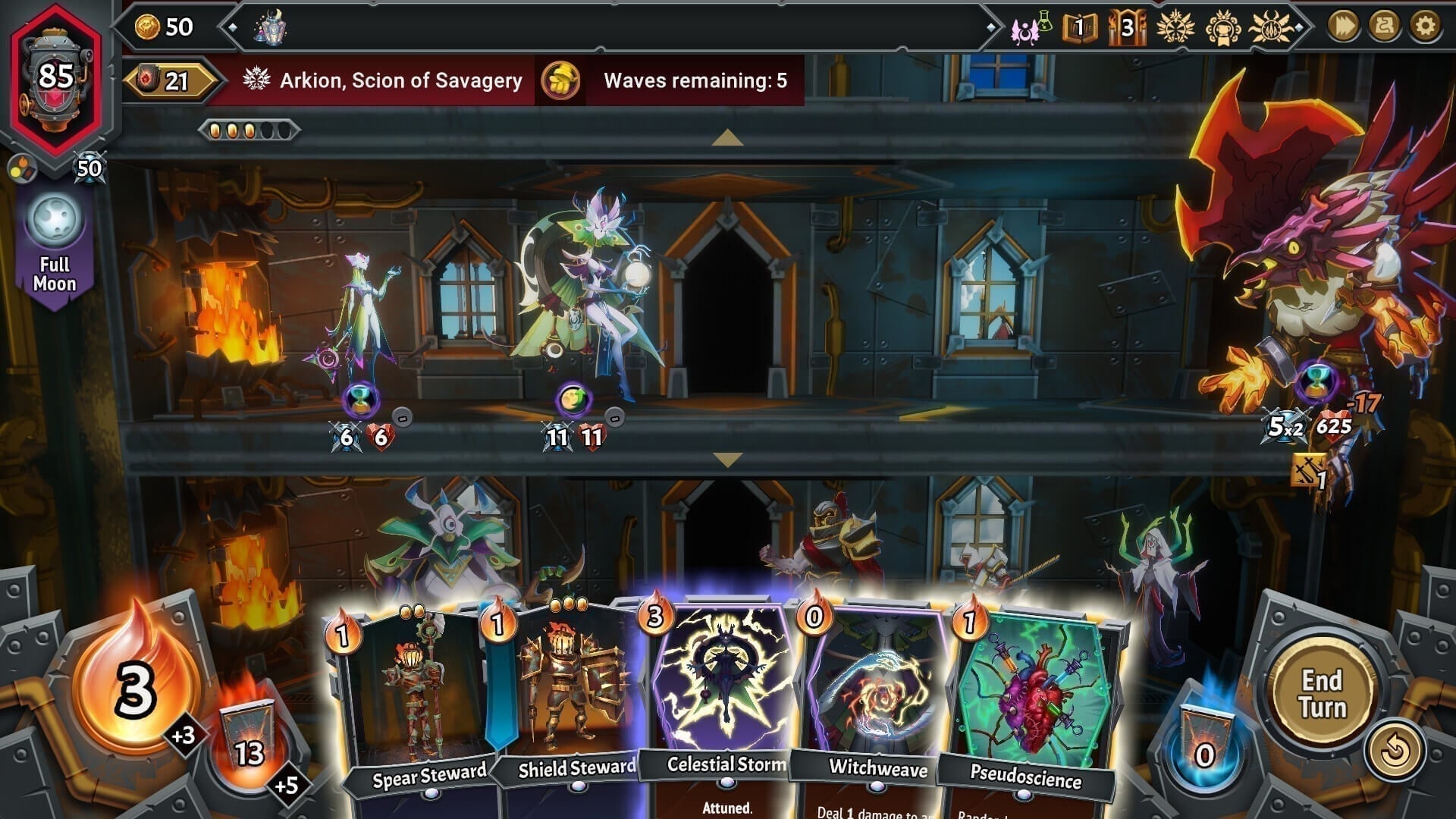
This is the strongest overall fit because it keeps the core Monster Train fantasy intact: stack scaling, break encounters, and turn a decent run into a complete mess of overpowered interactions. If your favorite part of the first game was building an unstoppable engine instead of cautiously surviving, this is the obvious place to go.
It also keeps the tactical identity that made Monster Train stand out. Unit placement still matters, and that puzzle layer changes how your cards actually function in combat. That matters more than theme or novelty here. The best “games like Monster Train” picks are the ones that preserve the feeling of setting up a floor that simply should not be allowed to exist.
The tradeoff is simple: this is the least adventurous recommendation on the list. If you want a fresh structure or a big tonal shift, it may feel more like refinement than reinvention. For many players, that is exactly the point.
Hadean Tactics
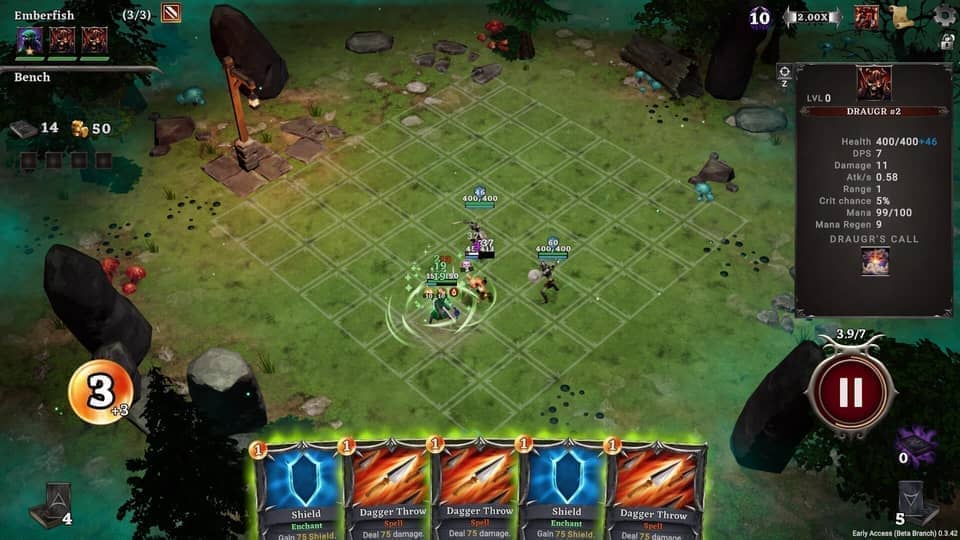
Hadean Tactics is one of the best alternatives if your favorite Monster Train turns were the ones where unit placement, timing, and scaling all collided at once. It mixes deckbuilding with auto-battler logic, so your setup decisions matter just as much as the cards in your hand. That creates the same kind of board-state tension Monster Train players usually enjoy.
What makes it fit is how quickly runs start asking interesting questions. Where do you place your units? When do you commit a spell? How greedy can you be with scaling before the board falls apart? It scratches the same itch as a strong Monster Train floor, where one good setup turns into a chain reaction.
Still, this one is less breezy. The combat flow is busier, and the auto-battler layer can feel less immediately readable than Monster Train’s floor-by-floor structure. If you want pure clarity and instant comprehension, there are cleaner picks below. If you like tactical friction, this is one of the best in the bunch.
Vault of the Void
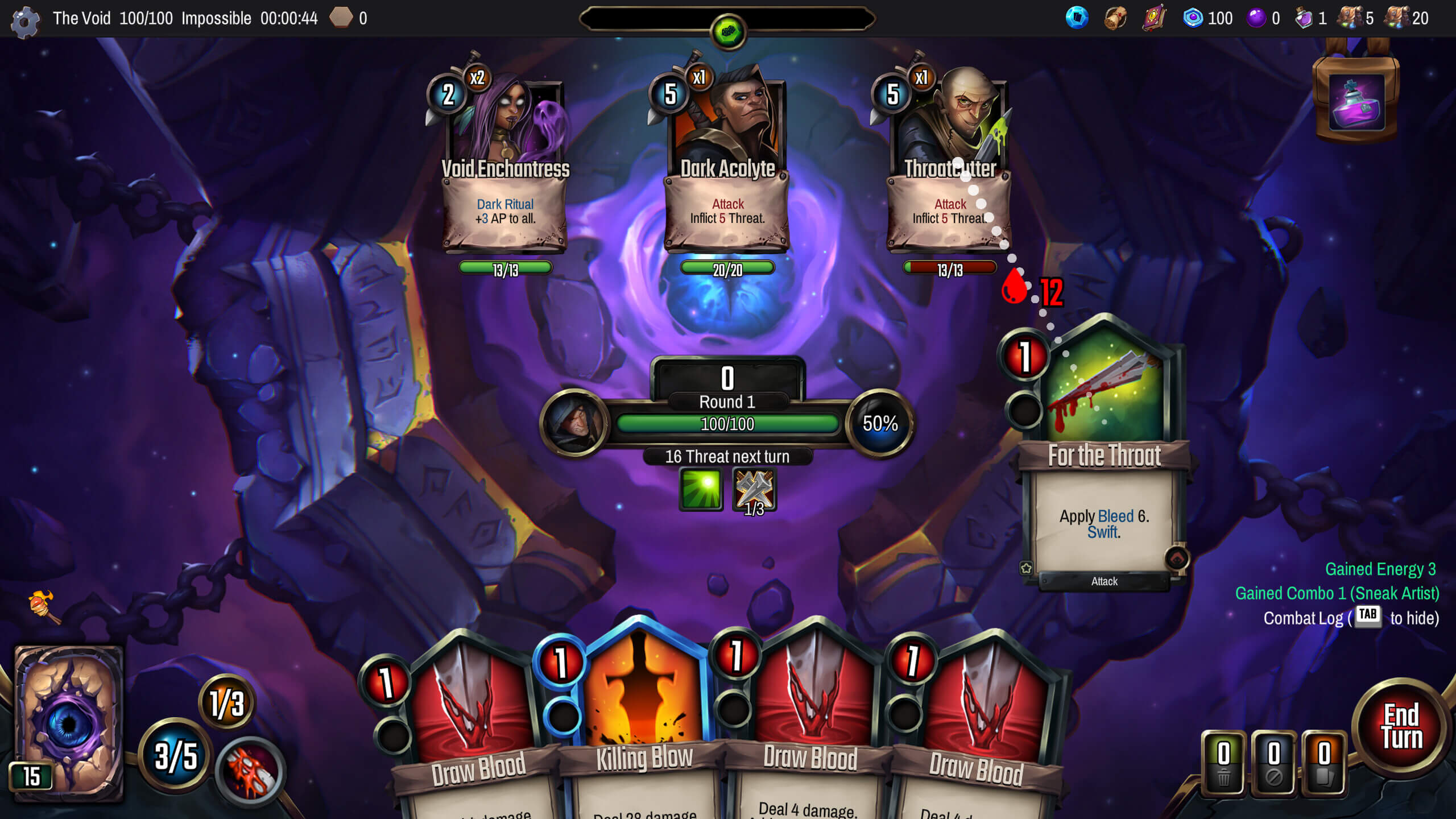
Vault of the Void fits from a different angle. It does not give you units to stack on a board, but it absolutely understands the combo-lover mindset. This is a game about control, consistency, and making your deck do the broken thing on purpose rather than hoping the pieces show up in time.
That matters because a lot of Monster Train fans are not actually chasing “train defense” as such. They want build expression that gets out of hand fast. Vault of the Void gives you unusual authority over draw order, deck trimming, and card selection, so your engine comes online with much less randomness. For players who love smoothing a build until it becomes a machine, it is a great fit.
The main difference is feel. It is more precise and less spectacle-driven than Monster Train. You are usually solving a cleaner efficiency puzzle rather than watching a floor become an impossible stat mountain. Some players will prefer that. Others will miss the board presence and unit scaling immediately.
Chrono Ark
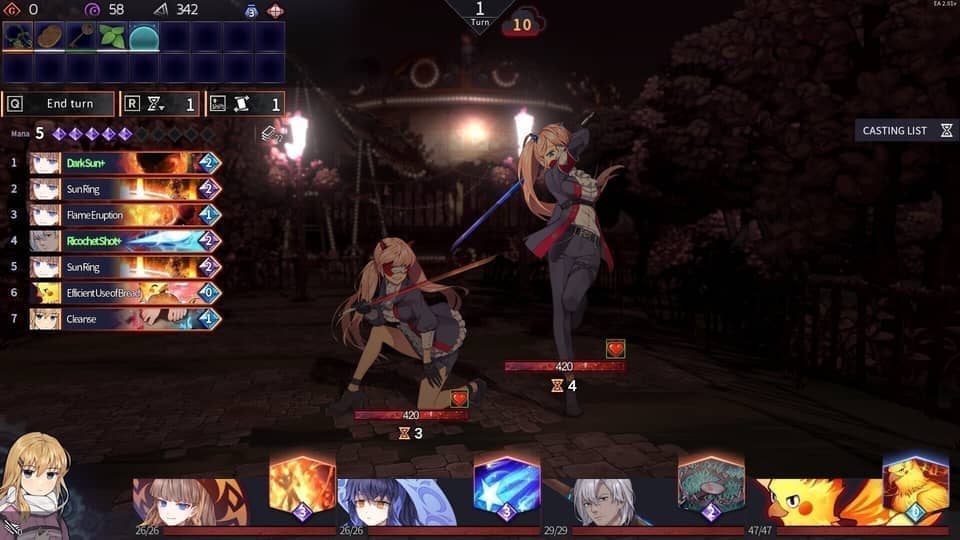
Chrono Ark is the most demanding game on this list, but it earns its spot because the combo planning goes deep. Instead of building around train floors and unit stacks, you are managing a party with layered interactions, tougher sequencing, and boss fights that ask for real execution. When a build clicks, it can feel wonderfully unfair in the same way Monster Train’s best runs do.
This one is for players who want more moving parts, not less. Team synergies, skill timing, and encounter planning all matter, and the payoff is a run where your party’s engine starts feeding itself. That “I found the nonsense build” moment is absolutely here. It just arrives through party composition and turn planning rather than floor defense.
Be warned, though: Chrono Ark asks for more patience. Its presentation, systems, and overall complexity create more onboarding friction than the other recommendations. New players often bounce off it before the good stuff opens up. If you want immediate readability, save this for later.
Wildfrost
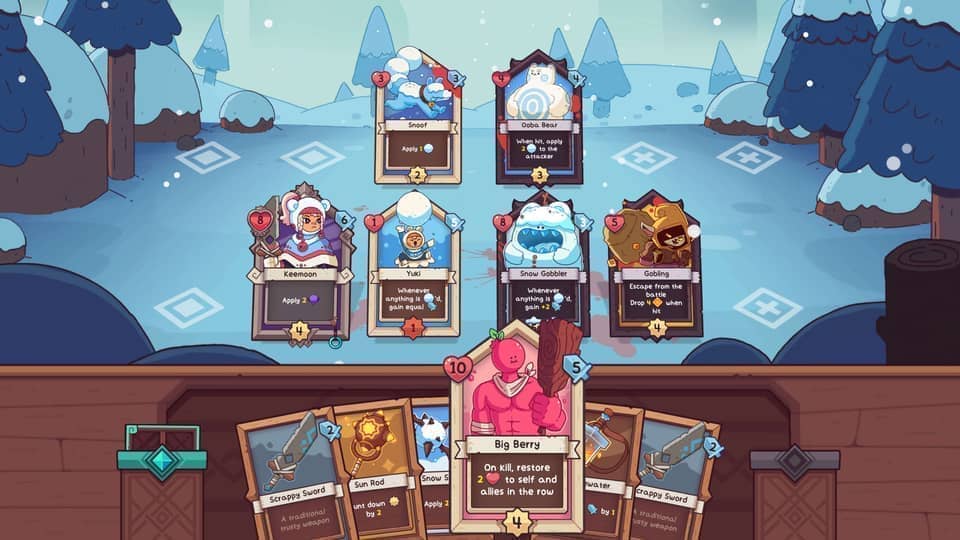
Wildfrost is a strong pick for players who like compact runs and hard tactical edges. It shares Monster Train’s love of units, positioning, and build identity, but it strips the structure down into a tighter and harsher form. Every placement choice matters. Every support effect matters. Small mistakes can snowball quickly.
That makes it a good recommendation for the subset of Monster Train players who care less about huge endless scaling and more about sharp board manipulation. Unit placement adds a real puzzle layer here too, and your best runs often come from discovering a nasty interaction and then fully committing to it. The systems are easy to read, but the game is not soft on you.
The important caveat is that Wildfrost is usually less generous with the power fantasy. You can absolutely assemble strong synergies, but it is more restrained about letting you become completely absurd. That makes it excellent for disciplined tactical players, and a little less ideal for those who want every run to flirt with total nonsense.
Banners of Ruin
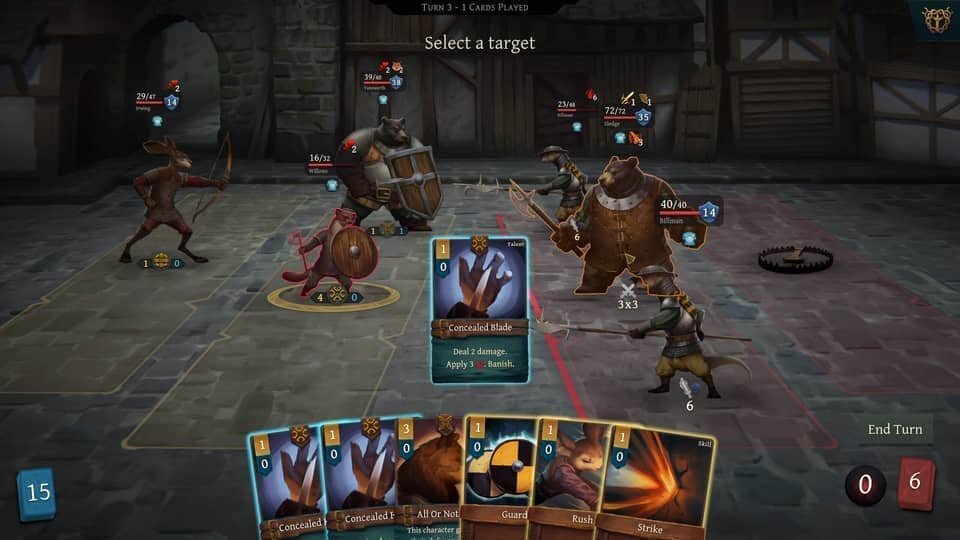
Banners of Ruin is a strong fit if your favorite Monster Train moments involved several bodies on your side of the fight, not just one carry unit. You run a squad of anthropomorphic fighters through branching paths, and a lot of the fun is lining up party-wide passives, shared buffs, and combat roles that turn the whole team into one engine.
It is not a vertical “defend the floors” game, but it preserves the same combo fantasy: small optimizations on each character add up until the squad feels illegally strong. If you liked Monster Train because multiple pieces had to click together, this is one of the cleaner party-deckbuilder answers.
The tradeoff is tone and pacing. It is darker and more RPG-crawl flavored than Monster Train’s infernal train spectacle, and the fantasy is squad tactics over lane pressure. If you only want the train metaphor and vertical layers, look elsewhere. If you want multi-character scaling, it belongs on the shortlist.
Across the Obelisk
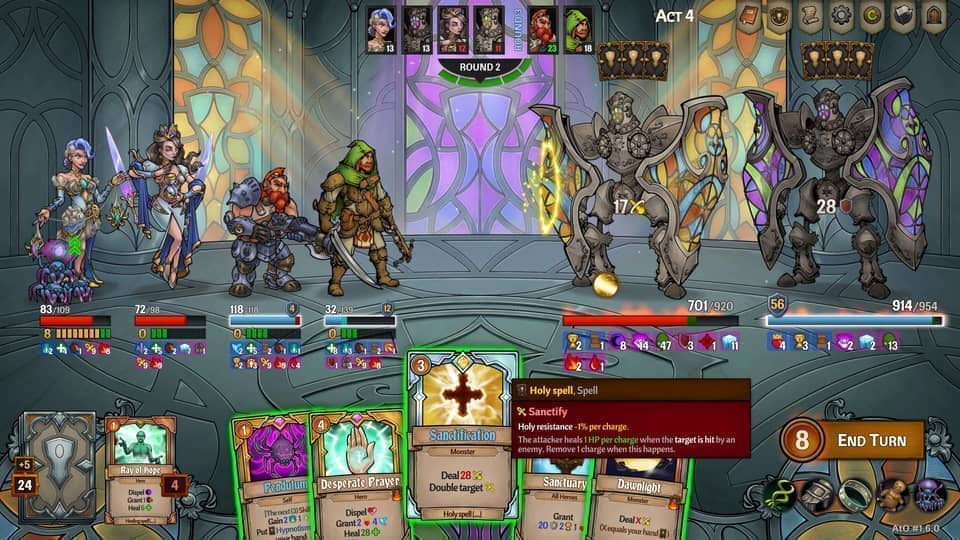
Across the Obelisk targets the same itch from a co-op-friendly angle. You steer a party with distinct roles, pick branching routes, and chase card synergies that span multiple heroes. When a composition works, it produces the same “we broke the encounter” highs Monster Train fans chase, just expressed through shared pathing and team combos instead of floor stacking.
It is especially compelling if you like planning around who tanks, who sets up, and who cashes in damage. The game rewards you for thinking in party terms, which maps well onto Monster Train’s habit of treating units as puzzle pieces rather than disposable blockers.
The caveat is structure. Runs are more adventure-map than single-scenario escalation, and playing with friends changes tempo and coordination. Solo still works, but the design assumes you might be coordinating roles. If you want a strictly solitary, self-contained combat loop, prioritize Monster Train 2 or Vault of the Void first.
Who should play this
- Players who loved Monster Train for scaling units, floor setups, and busted interactions more than the defense premise itself.
- Anyone who prefers deckbuilders where a run gets interesting fast and synergies show up early.
- Players who want deckbuilders with units instead of pure spell-chaining or stat trading.
- People who enjoy readable combat systems but still want room to break the rules.
- Combo hunters who would rather build an engine than play slow, careful defense.
Common mistakes
-
Picking based on genre label alone.
Fix: prioritize how the game feels in motion. Monster Train fans usually want scaling and board pressure, not just “another roguelike deckbuilder.” -
Assuming every recommendation delivers the same level of power fantasy.
Fix: go with Monster Train 2 or Hadean Tactics first if you want the strongest “things are getting out of control” energy. -
Jumping into Chrono Ark first.
Fix: start there only if you already enjoy heavier systems and tougher onboarding. It is rewarding, but not the easiest entry point. -
Ignoring positioning as a preference.
Fix: if unit placement is central to why you liked Monster Train, move Hadean Tactics and Wildfrost higher on your list. -
Forgetting party-scale synergies.
Fix: if you liked stacking interactions across several friendly units, try Banners of Ruin or Across the Obelisk before you assume solo-hero deckbuilders are the only option. -
Undervaluing consistency tools.
Fix: if your favorite part of Monster Train was making a deck reliably do the broken thing, Vault of the Void may fit better than a more obvious board-based alternative.
FAQ
What game is most like Monster Train?
Monster Train 2 is the closest fit here. It keeps the same core appeal of explosive synergies, unit-based combat, and runs that can spiral into absurd strength.
Which pick has the best unit placement gameplay?
Hadean Tactics is the standout if placement is your thing. Wildfrost is also excellent, but it is stricter and less focused on giant scaling payoffs.
What should I play if I want less randomness and more control?
Go with Vault of the Void. It is the best recommendation here for players who want to tune consistency, manage draw order, and make combo plans happen on schedule.
Which game is hardest to get into?
Chrono Ark has the highest learning curve on this list. It is deeper and more demanding, which is great if you want a heavier systems game, but not ideal if you want instant flow.
Are these all good for combo-focused players?
Yes, but in different ways. Monster Train 2 and Hadean Tactics are the most direct “broken synergy” fits. Vault of the Void is more controlled, Chrono Ark is more demanding, and Wildfrost is more tactical and punishing. Banners of Ruin and Across the Obelisk lean into party-wide engines and role-based setups.
Takeaway
For pure Monster Train energy, start with Monster Train 2. After that, Hadean Tactics is the best alt if you love board tension, while Vault of the Void is the smart pick for players who want cleaner combo control. Chrono Ark and Wildfrost are a bit more specialized, but both still understand the same core truth: finding the broken synergy is the fun part. If multi-character scaling is what you missed most, add Banners of Ruin or Across the Obelisk to your queue next.