Best Deckbuilders for Short Sessions: 7 Quick-Run Card Games
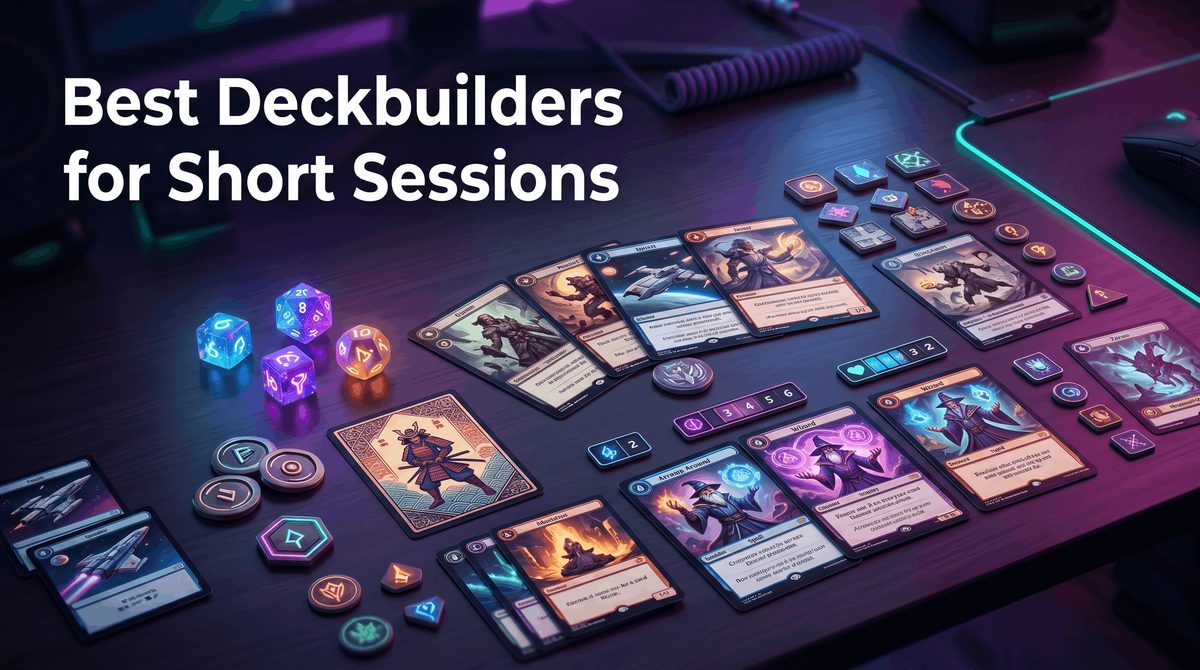
The best deckbuilders for short sessions, with quick-run card games that deliver real strategy, fast decisions, and meaningful runs in 15 to 30 minutes.
Short deckbuilders are not good because they are easy.
They are good because they stop wasting your time.
The best deckbuilders for short sessions reach real decisions fast: early drafts that matter, fights that do not drag, upgrades that change your plan, and losses that feel like useful information instead of a stolen evening.
This list is for players who like run-based card games but do not always want a full-hour commitment. The picks below focus on quick deckbuilding games that create tension fast: small decks, readable fights, early build direction, clean failures, and enough replay value to make another run tempting.
Quick picks
| Game | Best for | Session feel |
|---|---|---|
| Dicey Dungeons | Fastest easy recommendation | Light, clever, low-friction |
| Shogun Showdown | Tactical compression | Sharp, positional, deliberate |
| Cobalt Core | Crew synergy and replay hooks | Clean, tactical, readable |
| Phantom Rose 2 Sapphire | Moody quick card battling | Focused, brisk, stylish |
| Zet Zillions | Personality and pace | Loud, readable, energetic |
| Die in the Dungeon | Dice builds with more bite | Experimental, replayable |
| One Step From Eden | High-pressure short runs | Fast, intense, demanding |
What makes a deckbuilder good for short sessions?
A short run is only useful if the first few minutes matter.
The strongest short roguelike deckbuilders do at least one of these things well:
- They make early drafts meaningful instead of disposable.
- They keep combat readable enough that you can play tired without losing the thread.
- They let small upgrades change your whole turn plan.
- They avoid long setup phases before the build starts working.
- They make losses feel like information, not sunk time.
- They give you a clean reason to start another run.
For 15 to 30 minute play windows, speed alone is not enough.
A game can be fast and still mentally exhausting. It can also be simple on the surface but full of sequencing pressure. That distinction matters because "short session" does not always mean "low effort."
Sometimes you want a relaxed run.
Sometimes you want to get punched in the face quickly.
This list covers both.
1. Dicey Dungeons
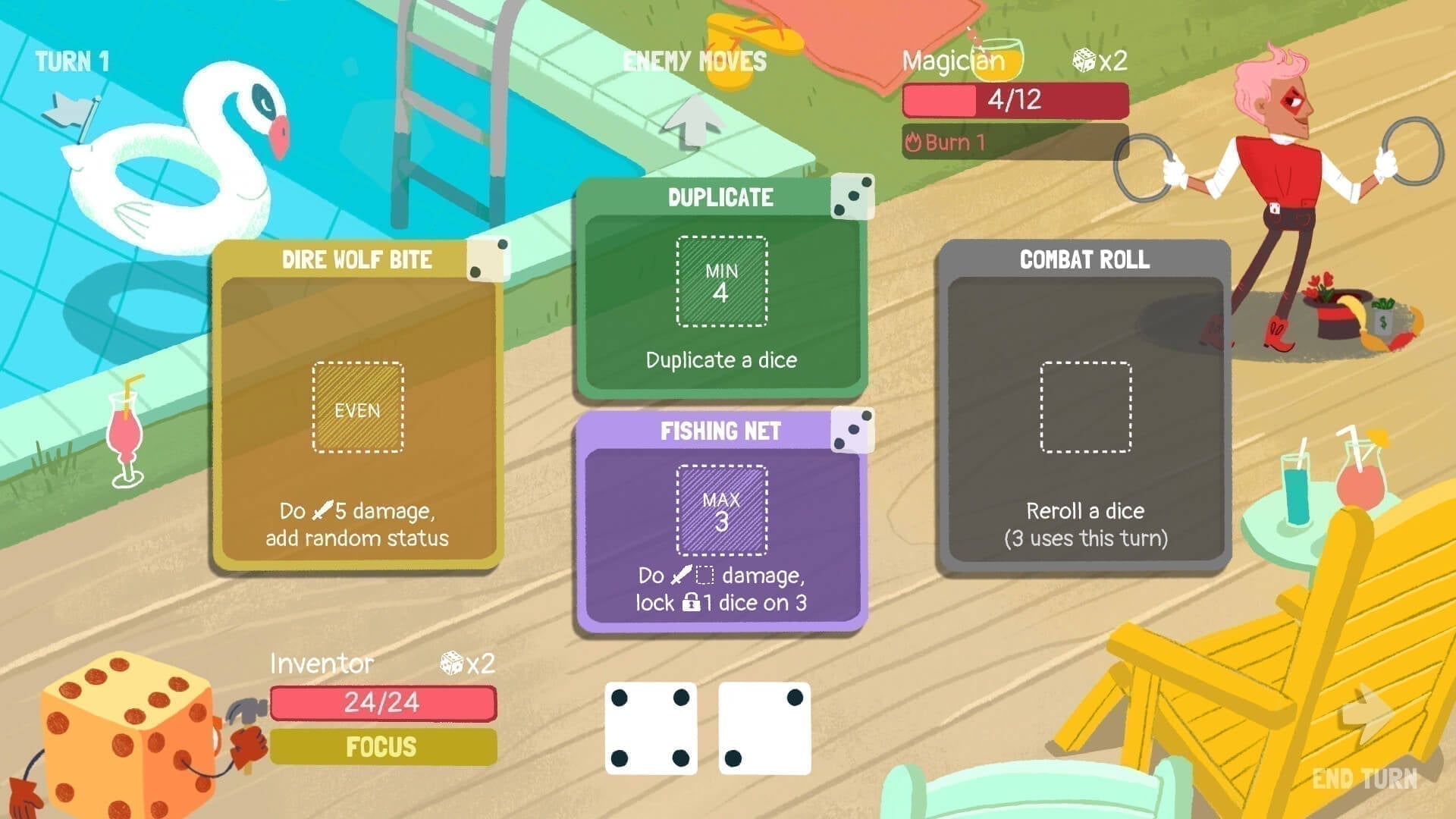
Dicey Dungeons is the cleanest pick if you want a short-session deckbuilder that starts making sense immediately. Runs are brisk, the dice system is readable, and the game does not bury its good ideas under too many layers of campaign structure.
The real appeal is how quickly each fight asks you to convert awkward rolls into useful turns. At first, it is tempting to value raw damage above everything. The game gets much better once you start drafting around die manipulation, reliability, and ways to turn bad rolls into planned output.
That makes Dicey Dungeons especially strong for players who want short sessions without shallow decisions. You can finish a meaningful attempt quickly, but you still get the core deckbuilder pleasure of tuning a build around constraints.
The limitation is ceiling. Compared with heavier, more replay-driven picks on this list, Dicey Dungeons is more approachable than endlessly elastic. If you want sprawling synergy webs and long-term mastery above all else, it may feel a little contained.
Best fit: players who want fast, friendly runs with smart tactical problem-solving and minimal friction.
2. Shogun Showdown
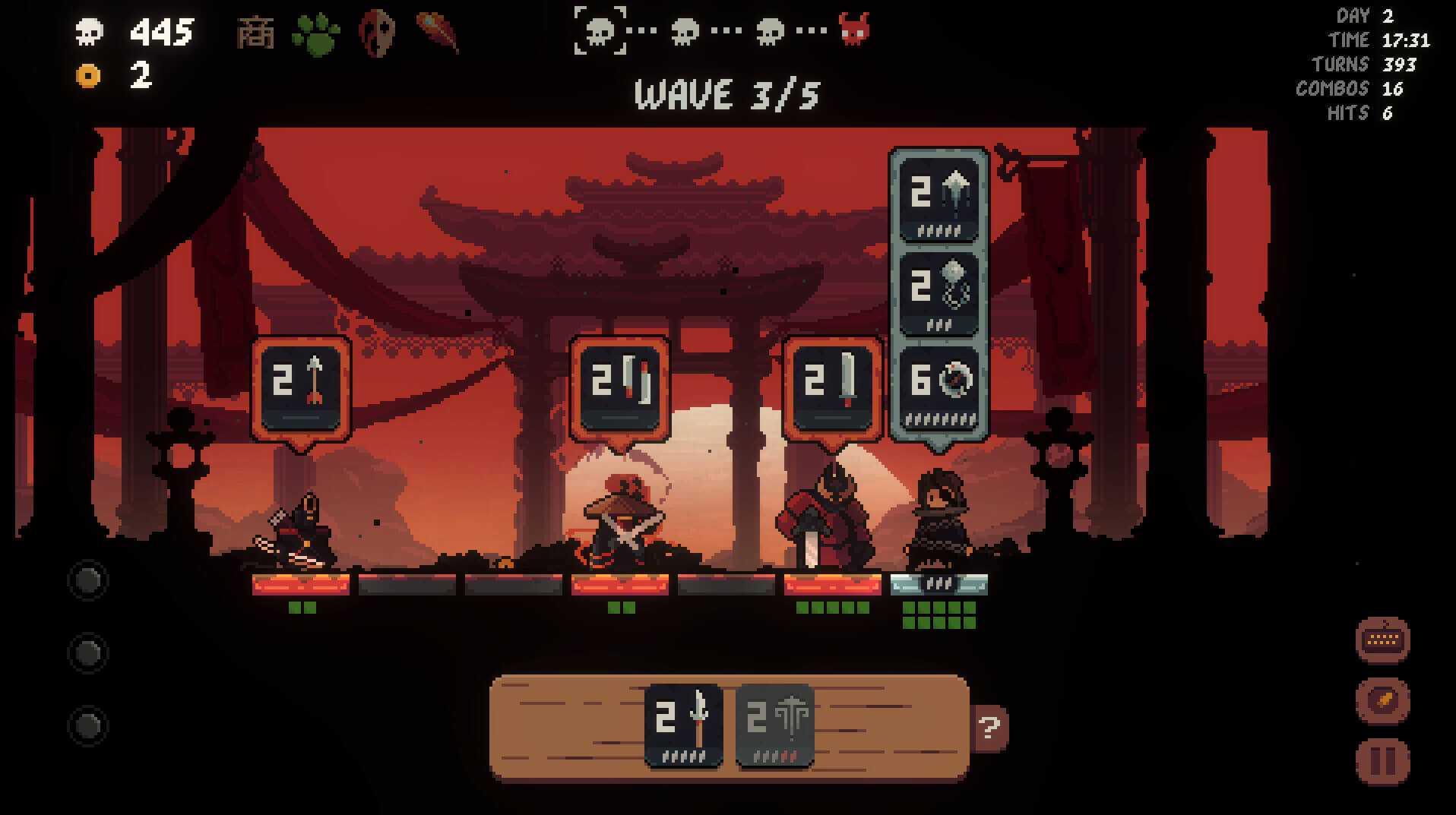
Shogun Showdown proves that a tiny toolkit can hit harder than a bloated deck.
Its lane-based combat, positioning, and upgradeable attack tiles mean every action has timing consequences. You are not just asking what to play. You are asking where to stand, when to face, how to delay, and which upgraded tile changes the next three turns.
This is one of the best card games for 30 minutes because it compresses decision density so well. A small toolkit becomes expressive fast. Upgrading a tile is not just a stat bump. It changes your turn-order math and the way you survive crowded lanes.
It fits short sessions because the run becomes interesting almost immediately. There is very little waiting for the "real build" to appear. Your build is your movement, your tile sequence, and your ability to manipulate danger before it reaches you.
The tradeoff is that Shogun Showdown is more tactical than traditional deckbuilding. If your favorite part of the genre is drafting large card pools and sculpting a big engine, this may feel narrower. If you like clean positional puzzles with roguelike upgrade pressure, it is one of the sharpest picks here.
Best fit: players who want compact, tactical runs where every upgrade changes how the turn is solved.
3. Cobalt Core
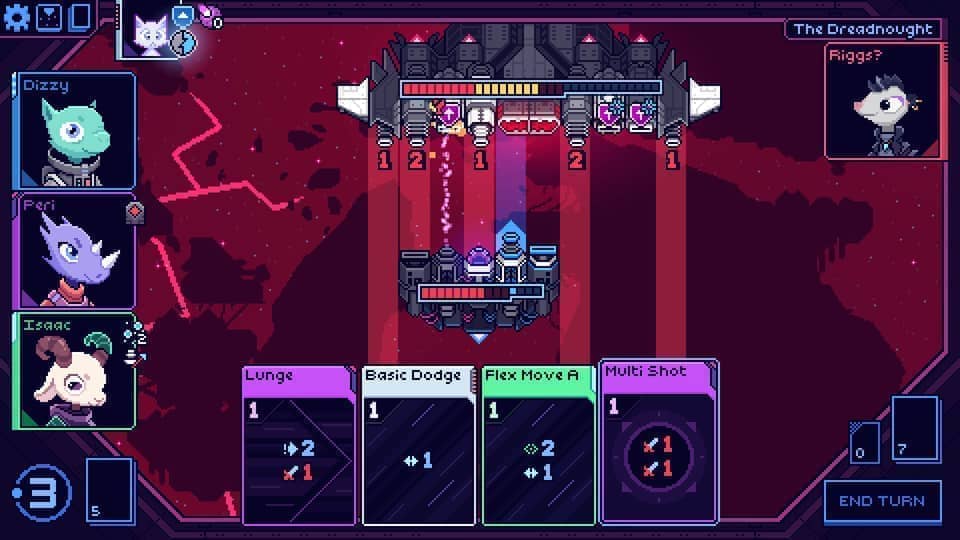
Cobalt Core is a strong short-session choice because it combines readable space combat with enough crew synergy to keep repeat runs alive.
It has a clear combat language: position your ship, manage incoming fire, use your crew tools, and build toward a run plan that can survive escalating threats.
The reason it works for busy players is that it does not take long to understand what the run is asking from you. Crew choices push your deck in different directions, and the sci-fi time-loop setup gives the game personality without slowing every session into a heavy narrative crawl.
Its best quality is clean build expression. You can feel a run taking shape through crew interactions, card choices, and tactical ship movement. That gives it more replay texture than lighter quick-run games, while still keeping the encounter flow approachable.
The main friction is that it asks for more attention than Dicey Dungeons. Positioning and incoming attacks matter, so autopilot play gets punished. It is still a good 30-minute deckbuilder, but not the kind you should boot up if you want completely frictionless clicking.
Best fit: players who want fast-paced deckbuilders with readable combat, crew synergy, and strong replay hooks.
4. Phantom Rose 2 Sapphire
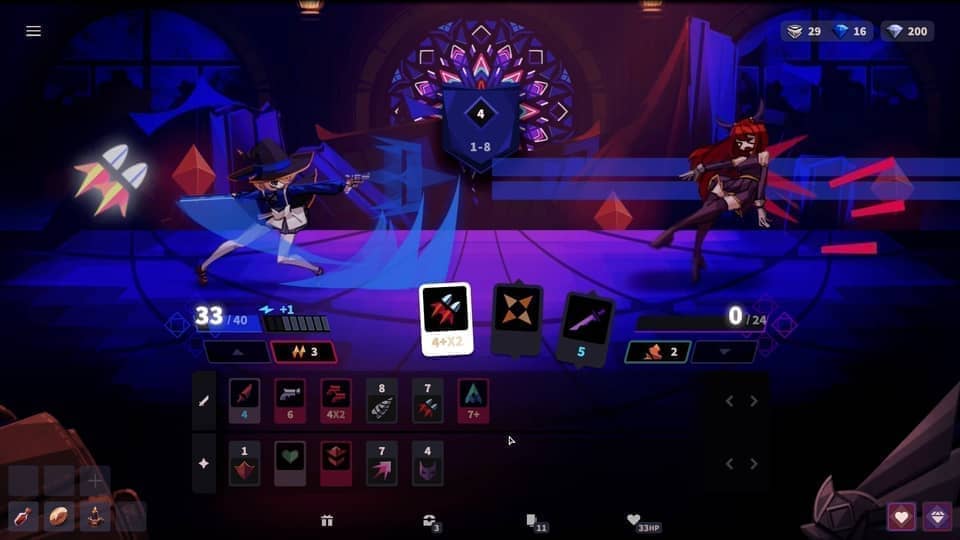
Phantom Rose 2 Sapphire is the pick for players who want brisk card battling with a darker edge.
It has enough mood and sharpness to feel distinct, but it trims enough friction that a failed run still feels like useful practice rather than a wasted evening.
The appeal here is pace. Battles move cleanly, decisions arrive quickly, and the game does not require a long runway before you are making meaningful choices. That matters for short sessions because a loss can still teach you something about sequencing, survival, and how aggressively to push your plan.
It is also a good fit if you want a card battler that feels more focused than sprawling. The game's personality is part of the draw, but the stronger reason it belongs here is that it keeps the decision loop tight.
The limitation is replay ceiling. Its replayability is solid, not bottomless. If you need a game to support hundreds of highly varied runs, other picks here have more long-term elasticity. Phantom Rose 2 Sapphire is better as a sharp, moody short-session game than as a forever deckbuilder.
Best fit: players who want brisk card battles, stylish presentation, and losses that still feel productive.
5. Zet Zillions
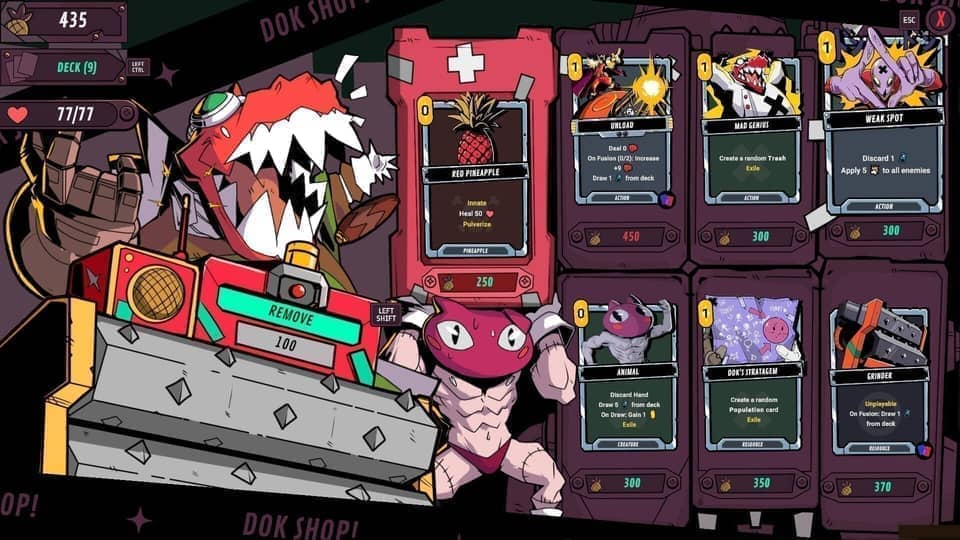
Zet Zillions is a good short-session pick because its battles are brisk and readable without feeling sterile.
The comic-book sci-fi style gives it immediate identity, but the more important point is that combat clarity stays high enough for quick play windows.
This clicks most if you want personality without sacrificing pace. Some deckbuilders with big style ask you to chew through too much text, too many subsystems, or too much setup before the run starts paying off. Zet Zillions keeps the focus closer to card choices, encounter rhythm, and fast tactical reads.
It is not the deepest replay machine on this list, and that matters. The game's medium replayability makes it better for players who want energetic runs in rotation, not necessarily a single main game to master for months.
Still, for quick deckbuilding games, readability is a major advantage. Zet Zillions belongs here because it gets to the point quickly and lets the run's personality come through without dragging the pace down.
Best fit: players who want a stylish, brisk card battler with clean combat flow.
6. Die in the Dungeon
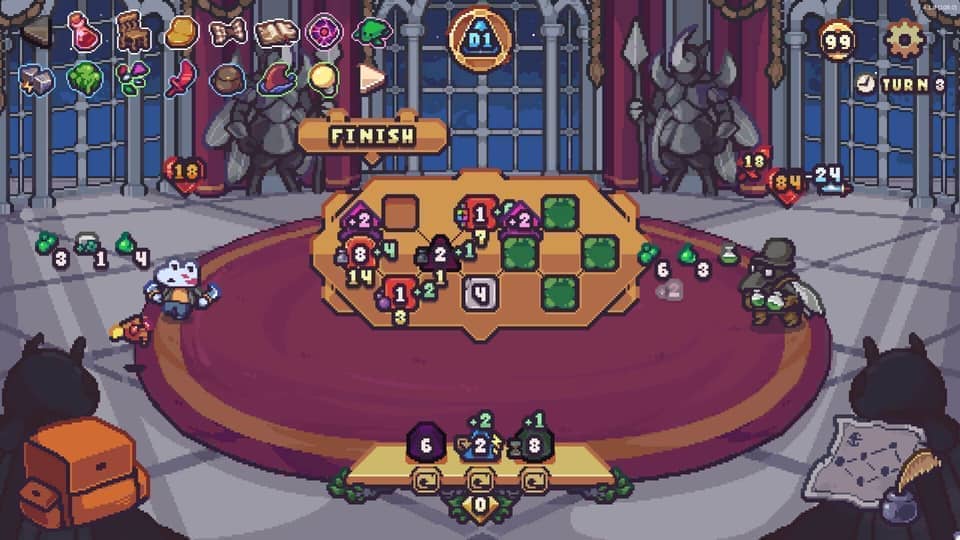
Die in the Dungeon is the more build-hungry dice pick.
Compared with Dicey Dungeons, it leans harder into dungeon crawling and run variety, with more room to chase different dice-based plans. That gives it a stronger replay hook if you want your short sessions to have more experimentation.
The fun is in shaping a dice toolkit that can handle awkward situations. Good runs are not just about rolling well. They are about building a set of options that can convert imperfect rolls into pressure, defense, or recovery.
This makes Die in the Dungeon a better fit for players who want more texture from their dice systems. It has higher replayability, and that matters if short sessions are your main way of playing deckbuilders. A game you can revisit often needs enough draft tension to keep the next attempt from feeling solved.
The tradeoff is that it is a little less instantly breezy. The dungeon structure and build variety add friction compared with the cleanest games here. If you only have one quick window and want the lowest possible setup cost, Dicey Dungeons is easier to recommend. If you want more long-term bite, Die in the Dungeon has the edge.
Best fit: players who want dice-based deckbuilding with more build variety and repeat-run interest.
7. One Step From Eden
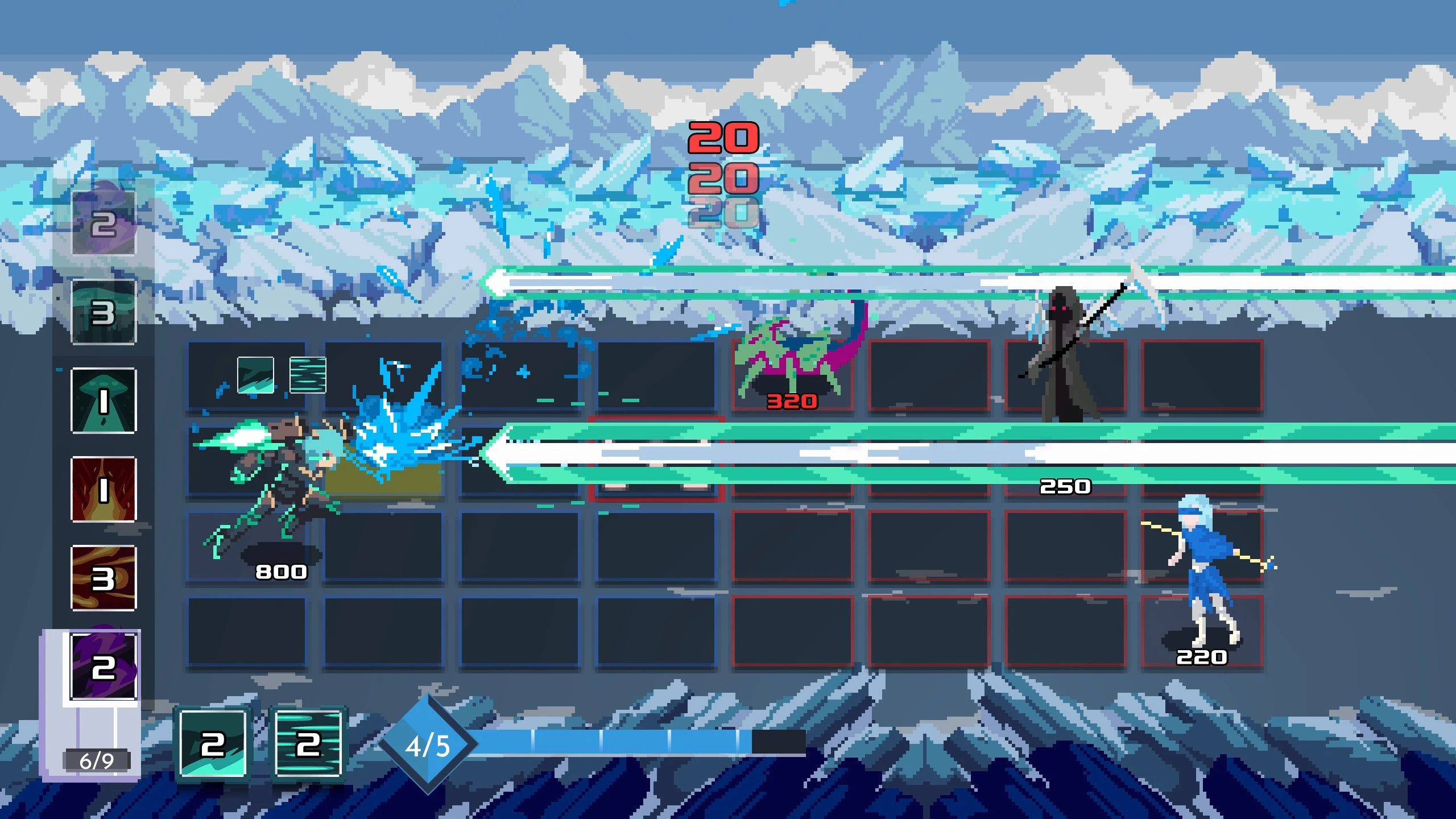
One Step From Eden is a short-session game in clock time, but not in mental load.
Runs and fights move fast, yet the real-time combat makes it far more demanding than most quick deckbuilders. This is not the relaxing 20-minute pick. It is the "lock in or get deleted" pick.
That distinction is important. One Step From Eden has deckbuilding, spell slinging, and roguelike runs, but its pacing is closer to tactical reflex management than calm card sequencing. You are drafting a plan while also dodging, aiming, and reacting under pressure.
It belongs on this list because it absolutely respects your time. It gets interesting fast, it escalates quickly, and it can deliver a full run-based experience without a long sit-down. But it is also the easiest game here to misread.
Short does not mean light.
The limitation is obvious: difficulty. If you want to play after a long day and make slow, careful decisions, this may be the wrong fit. If you want a fast-paced deckbuilder that hits harder than many hour-long games, it is the most intense option here.
Best fit: players who want real-time pressure, high replayability, and short runs that demand full attention.
Quick recommendations by session mood
If you want the safest all-around short-session pick, start with Dicey Dungeons. It is readable, brisk, and deeper than it first looks.
If you want the best tactical compression, choose Shogun Showdown. It makes tiny decisions feel heavy in the best way.
If you want replayable crew synergy with clean combat flow, pick Cobalt Core.
If you want a moody card battler that does not waste your evening, go with Phantom Rose 2 Sapphire.
If style and brisk readability matter most, Zet Zillions is the sharper fit.
If you want dice builds with more long-term variation, choose Die in the Dungeon.
If you want short runs that feel intense rather than casual, One Step From Eden is the high-pressure pick.
How to choose the right short-session deckbuilder
The easiest way to choose is to decide what kind of short session you actually want.
If you want low friction, pick Dicey Dungeons.
If you want tactical depth in a tiny package, pick Shogun Showdown.
If you want more classic roguelite replay structure, pick Cobalt Core or Die in the Dungeon.
If you want style and momentum, pick Phantom Rose 2 Sapphire or Zet Zillions.
If you want stress, speed, and punishment, pick One Step From Eden.
That last one matters. A game can be short and still be exhausting. One Step From Eden is a great quick-run game, but it is not a chill quick-run game. Do not confuse the two.
FAQ
What is the best deckbuilder for short sessions?
Dicey Dungeons is the safest recommendation for most players because it is quick, readable, and easy to return to. Shogun Showdown is the better pick if you want more tactical pressure in a compact format.
What is a good deckbuilder for 15 to 30 minute sessions?
Dicey Dungeons, Shogun Showdown, Cobalt Core, and Phantom Rose 2 Sapphire are strong picks for 15 to 30 minute play windows. They reach meaningful decisions quickly without demanding a long setup phase.
Are short-session deckbuilders easier than longer deckbuilders?
Not always. One Step From Eden is fast, but it is also intense and demanding. Short-session deckbuilders are defined by pace, not difficulty.
Which quick deckbuilder has the most replay value?
For replay value, Cobalt Core, Die in the Dungeon, and One Step From Eden are the strongest picks on this list. They give you more room to experiment across repeated runs.
Which short deckbuilder is best for relaxed play?
Dicey Dungeons is the best relaxed pick. It still has real decisions, but the readable dice system and friendly structure make it easier to play in short bursts.
Takeaway
The best deckbuilders for short sessions are not just shorter.
They are sharper.
They make the first draft, first upgrade, or first bad draw matter. They do not need to be easy, but they do need to respect the player's time.
For most players, Dicey Dungeons and Shogun Showdown are the easiest recommendations because they become interesting quickly and keep friction low. Cobalt Core is the best step up if you want more replay structure. One Step From Eden is the outlier: fast, brilliant for the right player, and absolutely not the pick if "short session" means "low stress."