Best Dice and Poker Deckbuilders for Players Who Love Managing Variance
A focused roundup of deckbuilders and roguelike hybrids built around dice rolls, poker hands, rerolls, odds manipulation, and turning bad luck into smart decisions.

The best dice and poker deckbuilders are not the games that remove randomness.
They are the games that make randomness playable.
A bad roll should not always mean failure. An awkward hand should not always end the run. The best games in this space give you tools to bend luck, reduce risk, build around common outcomes, and turn imperfect results into smart lines.
This list is for players who enjoy dice deckbuilding games, poker roguelike deckbuilders, and nearby card-battler hybrids where variance is the main puzzle.
The focus here is not just “does this game use dice or poker?” The better question is:
Does the game let you manage uncertainty in interesting ways?
The short list
| Pick | Best for | Variance you are managing |
|---|---|---|
| Balatro | Explosive poker scoring and instant restarts | Poker hands, jokers, economy, probability curves |
| Poker Quest | Poker hands as tactical resources | Hand quality, equipment use, survival decisions |
| Astrea: Six-Sided Oracles | Dense dice systems with meaningful bad outcomes | Dice faces, mitigation, risk conversion |
| Dicey Dungeons | Brisk, readable dice tactics | Rolled values, equipment tempo, efficient turns |
| Die in the Dungeon | Dice-based dungeon crawling and build variety | Dice reliability, board placement, route pressure |
How to choose quickly
Start with Balatro if you want the cleanest and most replayable poker roguelike. It is fast, sharp, addictive, and built around making ordinary hands score in ridiculous ways.
Pick Astrea: Six-Sided Oracles if you want the most interesting dice system. It is denser, stranger, and more demanding, but it gives bad outcomes real tactical meaning.
Choose Dicey Dungeons if you want short dice-based runs that are easy to understand but still full of good decisions.
Go with Poker Quest if you want poker hands to work like survival resources instead of just scoring patterns.
Try Die in the Dungeon if you want a more dungeon-crawler-like structure where dice become the center of your build.
The picks
Balatro
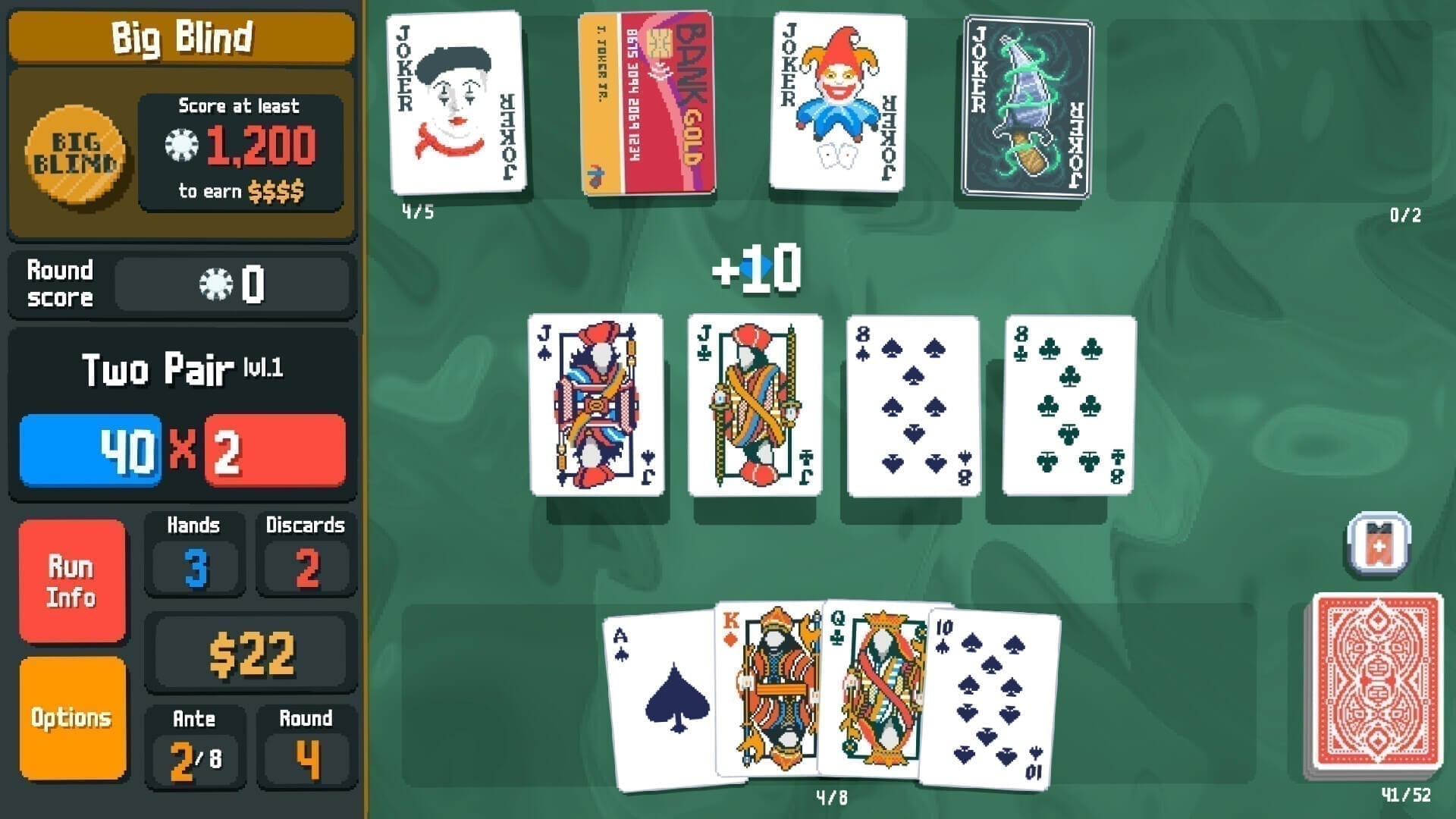
Balatro is the easiest recommendation if you want poker variance turned into a fast, dangerous scoring engine.
The basic idea is simple: play poker hands, beat score targets, improve the run, and keep scaling. But the real game is not just making strong hands. It is shaping your deck, economy, jokers, and scoring routes so that more hands become playable.
That is why Balatro works so well for players who enjoy managing variance.
A weak draw is not always a dead turn. If your build is stable enough, a simple pair, two pair, or high card can still carry the round. The best runs are not only about chasing rare hands. They are about making common hands profitable.
That is the secret sauce.
Balatro makes probability feel active. You are not just waiting for luck. You are changing the deck, changing the scoring rules, and changing what “a good hand” even means.
The run pace is also a huge strength. A new run gets interesting almost immediately. Failed runs rarely feel like a massive time loss, which makes experimentation easy. You can try a greedy joker setup, crash out, and jump right back in.
The tradeoff is that Balatro is more of a score engine than a traditional combat roguelike. If you want enemies, defense, and turn-by-turn survival, it may feel too abstract.
But if you want sharp probability management, wild scaling, and constant “one more run” energy, Balatro is the first pick.
Poker Quest
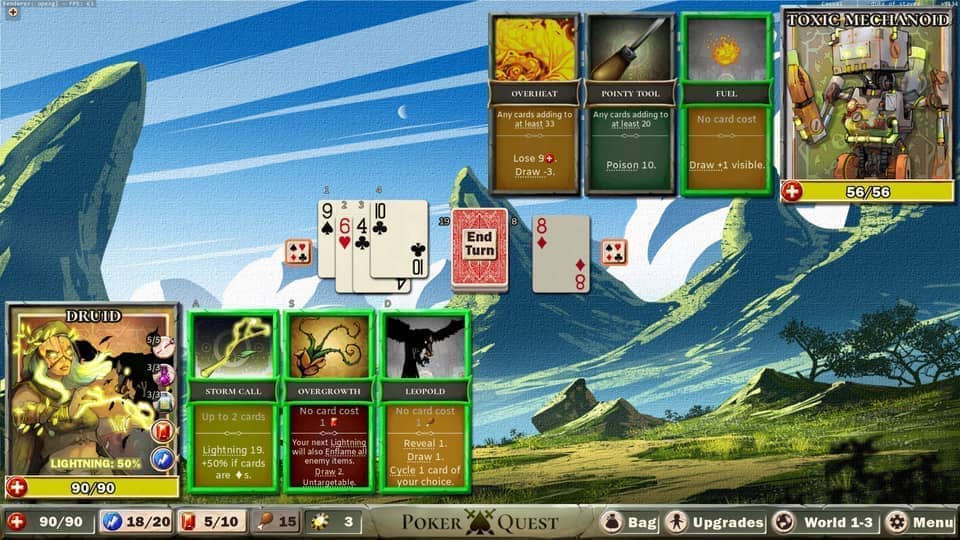
Poker Quest is the poker pick for players who want hands to function as tools, not just scoring patterns.
The appeal is not simply making the strongest poker hand. It is deciding what a hand is worth right now.
Should you spend it on damage? Defense? Utility? Tempo? Is this good hand worth using immediately, or should you preserve stronger options for a more dangerous fight?
That gives Poker Quest a very different rhythm from Balatro.
Where Balatro asks how much value a hand can score, Poker Quest asks what problem the hand solves.
A good hand can become an attack, a defensive play, or a key ability depending on your equipment. A mediocre hand can still be correct if it keeps the run stable. Sometimes the best move is not the flashiest move. It is the move that lets you survive the next few turns.
That makes Poker Quest a better fit for players who want poker mixed with adventure pressure. It has more survival texture, more equipment evaluation, and more “how do I get through this fight?” decision-making.
The main friction is that Poker Quest is less instantly slick than Balatro. It asks for more patience. The value of a hand is sometimes harder to read at a glance.
For players who want poker roguelike deckbuilders with more survival weight, that friction is part of the appeal.
For players who want rapid-fire score escalation, it may feel slow.
Astrea: Six-Sided Oracles

Astrea: Six-Sided Oracles is the strongest dice pick here for players who want the system to push back.
It swaps traditional cards for dice, but it still keeps the core deckbuilder tension. You are shaping a run, choosing upgrades, building around future turns, and asking whether your next decision makes the build more stable or more explosive.
The important part is that bad dice faces are not just dead outcomes.
In many dice games, a bad roll feels like the game saying no. In Astrea, the more interesting question is what your build can do with that bad result.
Can you mitigate it?
Can you convert it?
Can you absorb the risk?
Can you turn the “wrong” face into part of the engine?
That gives Astrea a different feel from cleaner card-based deckbuilders. You are not only drafting power. You are drafting tolerance for uncertainty.
This clicks best if you enjoy dense decision spaces. Astrea is not as instantly readable as Dicey Dungeons, and it does not have the arcade-like flow of Balatro. Turns can take more thought. You may need to slow down and understand how risk, corruption, purification, and dice faces interact.
That is the point.
Astrea is for players who want variance to create tactical work, not just tension.
The limitation is readability. It is not the easiest entry point, and some runs take longer to reveal their shape.
If you want short, clean dice sessions, start with Dicey Dungeons.
If you want a dice system where unfavorable outcomes can become part of your identity, Astrea is the most rewarding pick here.
Dicey Dungeons
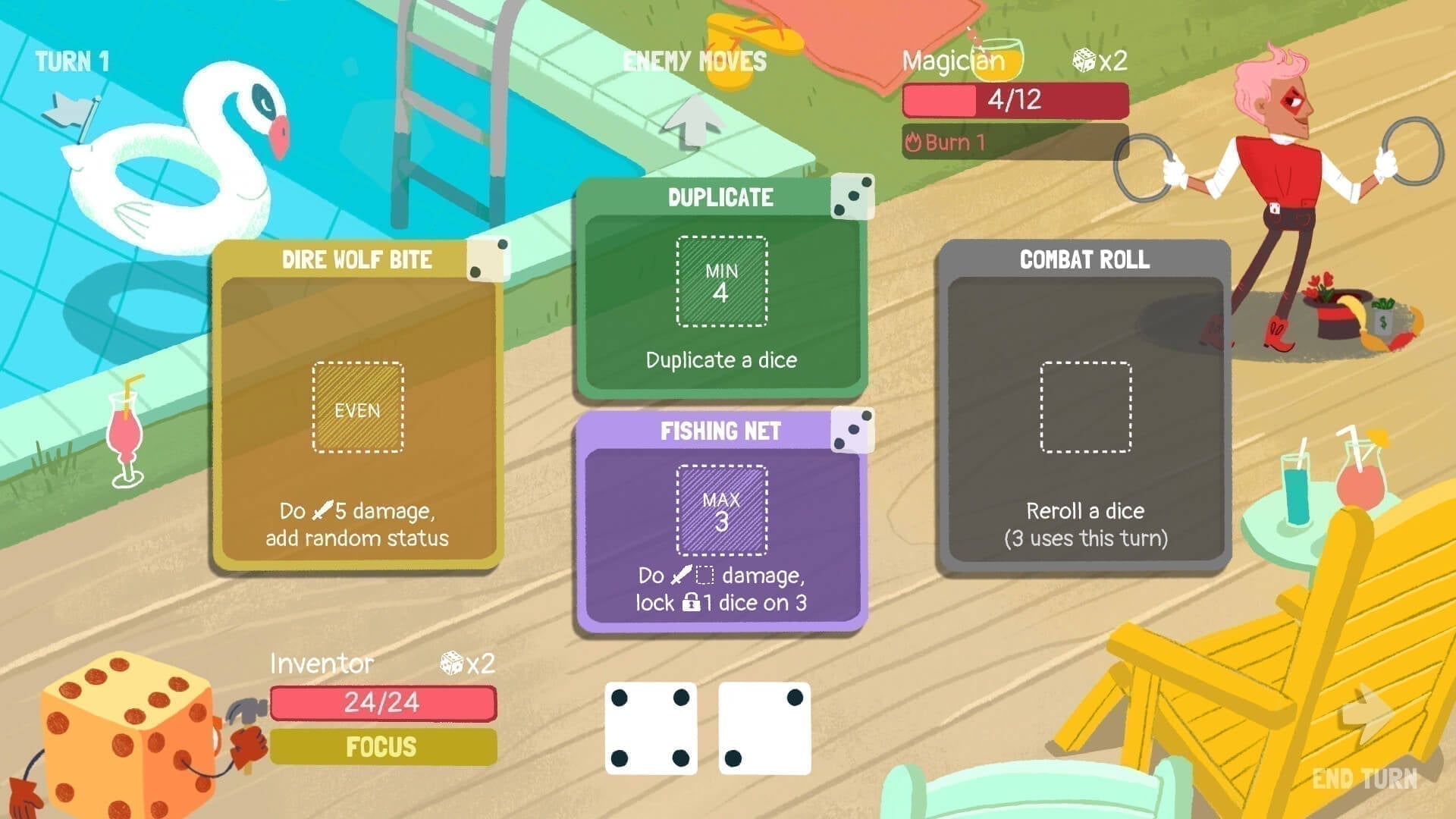
Do not mistake Dicey Dungeons for a lightweight recommendation just because it looks friendly.
The surface is approachable, but the best episodes teach sharp lessons about tempo, equipment efficiency, and how much value you can squeeze out of imperfect rolls.
The structure is easy to understand:
You roll dice.
You place dice into equipment.
You make the best turn you can.
Then you deal with the consequences.
That clarity is the appeal. Dicey Dungeons gives you enough tactical texture to care about every turn without burying the run under too many long-term systems.
A low roll can still be useful if your equipment accepts it. A high roll can be wasted if your build has no clean outlet for it. The game constantly asks whether your tools are flexible enough for the dice you are likely to see.
This makes Dicey Dungeons a great pick for players who want the variance puzzle without heavy rules.
It is also a good bridge game. If Balatro is the poker side of this list, Dicey Dungeons is the clean dice side: quick sessions, clear outcomes, visible odds, and satisfying turn-by-turn choices.
The tradeoff is long-tail depth.
Dicey Dungeons has smart systems and strong tempo lessons, but it does not have the same endless scoring obsession as Balatro or the same dense build friction as Astrea.
It is best when you want sharp, compact dice tactics rather than endless engine excavation.
Die in the Dungeon
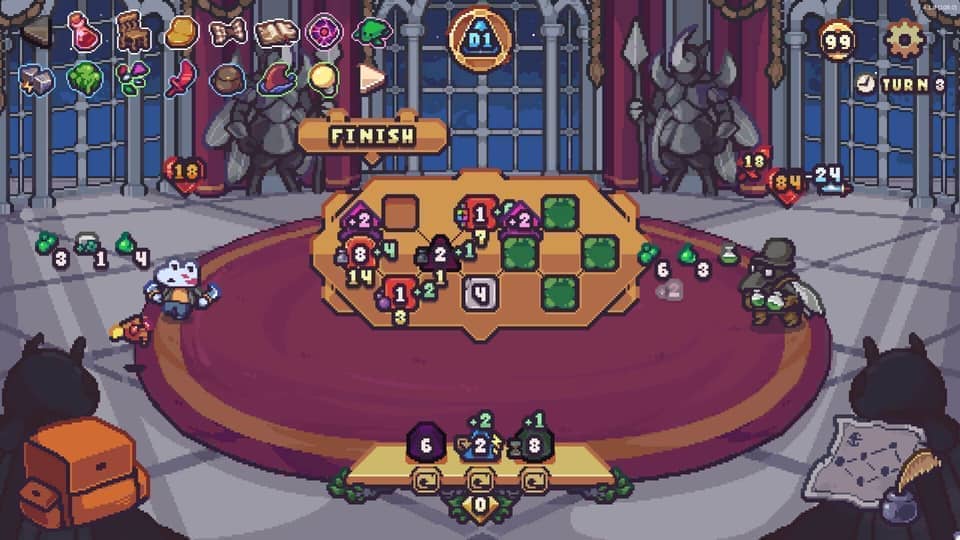
Die in the Dungeon is the pick for players who want dice deckbuilding pushed closer to a dungeon-crawling structure.
Instead of building a deck of traditional cards, you build around dice. The run is shaped by what dice you collect, how reliable they are, how they interact, and how well your setup handles the dungeon’s pressure.
The appeal is build variety.
This is less about poker-style hand valuation and more about committing to a dice-based plan. Your dice are not just random numbers. They are your attacks, defense, support tools, and scaling pieces.
That gives the game a satisfying “what kind of dice engine am I building?” feeling.
Die in the Dungeon makes sense if you already like the idea of dice as the center of a roguelike run and want more paths to test. It is a good fit for players who enjoy experimenting with builds, routes, relic-style bonuses, and different ways to make unreliable outcomes more dependable.
It is also the most conditional recommendation on this list.
If your main interest is poker odds, start with Balatro or Poker Quest.
If you want the friendliest dice learning curve, Dicey Dungeons is cleaner.
If you want the densest dice system, Astrea is stronger.
But if you want dice-based dungeon crawling with build variety, Die in the Dungeon belongs on your list.
Which one should you play first?
Start with Balatro if you want the best overall mix of speed, replayability, scoring, and probability manipulation. It is the easiest game here to recommend broadly.
Choose Astrea: Six-Sided Oracles if you want the most interesting dice friction. It is the best fit for players who enjoy turning bad outcomes into part of the build instead of simply rerolling until things behave.
Pick Dicey Dungeons if you want short, clean dice runs with strong tactical sequencing and low rules friction.
Go to Poker Quest if you want poker hands to drive survival decisions instead of pure score chasing.
Keep Die in the Dungeon on your list if dice-based dungeon crawling and build variety are the draw.
FAQ
What is the best poker roguelike deckbuilder?
Balatro is the best first pick for most players. It is fast, replayable, easy to restart, and turns poker hands into a flexible scoring engine with huge build variety.
Poker Quest is better if you want poker hands to power tactical equipment and survival decisions.
What is the best dice deckbuilding game?
Astrea: Six-Sided Oracles is the strongest pick if you want deep dice systems and meaningful bad outcomes.
Dicey Dungeons is better if you want something faster, cleaner, and easier to learn.
Is Balatro more luck or skill?
Balatro has plenty of luck, but the skill comes from shaping that luck. Strong players build around common hands, manage economy, choose jokers carefully, and avoid relying only on rare outcomes.
Is Dicey Dungeons good for beginners?
Yes. Dicey Dungeons is one of the easiest dice roguelikes to understand quickly. It still has depth, but the basic turn structure is very clear.
Which game is most like Slay the Spire but with dice?
Die in the Dungeon is probably the closest fit from this list if you want a dungeon-crawling roguelike structure built around dice instead of normal cards.
Astrea: Six-Sided Oracles is the better pick if you care more about deep dice mechanics than familiar structure.
Takeaway
The best dice and poker deckbuilders do not remove luck.
They make luck something you can fight with.
Pick Balatro for poker scoring and explosive scaling.
Pick Poker Quest for poker hands as survival tools.
Pick Astrea: Six-Sided Oracles for dense dice systems.
Pick Dicey Dungeons for quick, readable dice tactics.
Pick Die in the Dungeon for dice-based dungeon crawling and build variety.
If you love roguelike deckbuilders because every run asks you to adapt, these games push that idea even harder. They do not ask you to avoid variance. They ask you to build something strong enough to survive it.