Best Roguelike Deckbuilders Where Map Pathing Matters
A ranked list of roguelike deckbuilders where route choices shape fights, upgrades, shops, elites, risk, and survival.
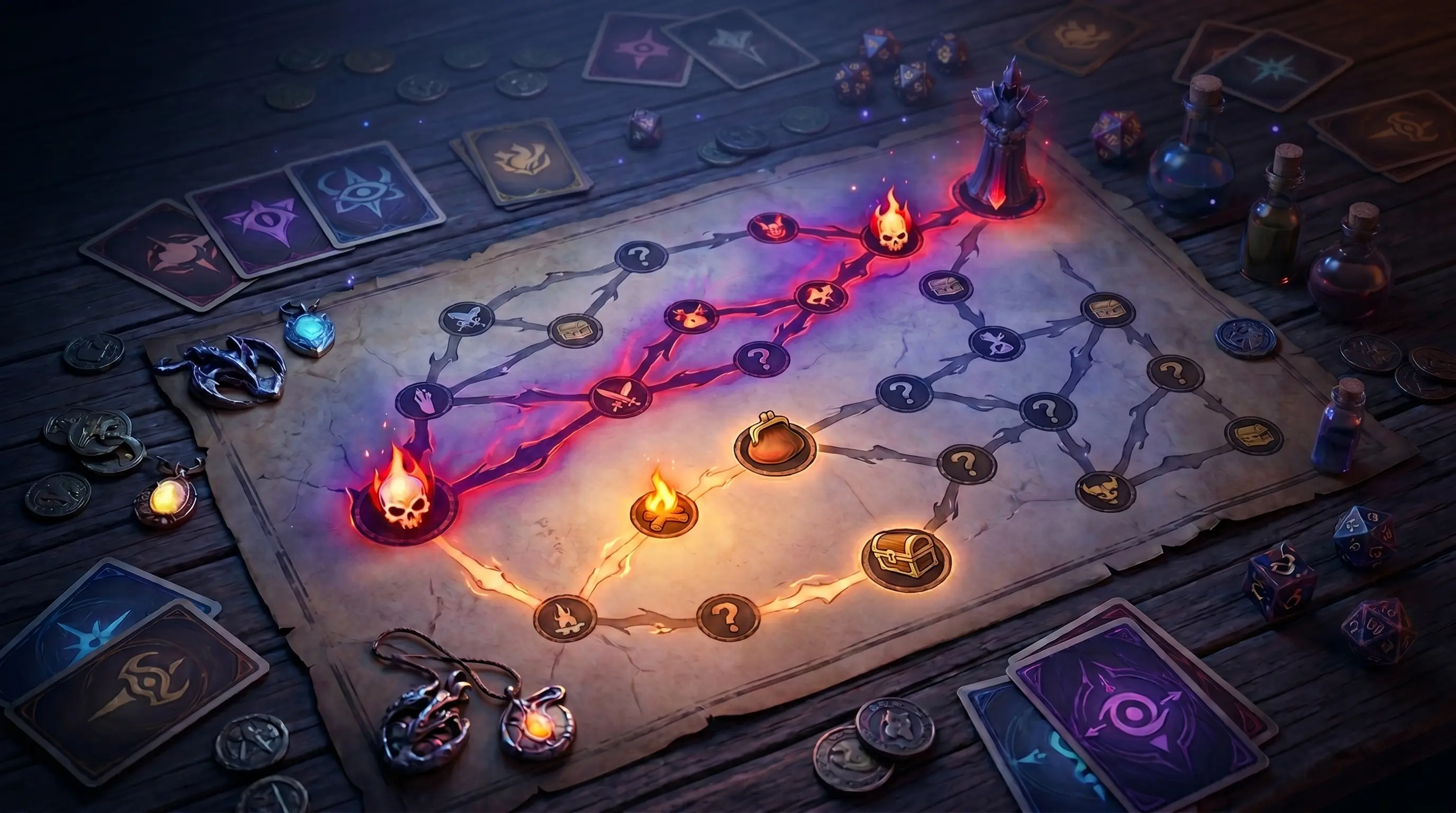
If you are looking for the best roguelike deckbuilders with map pathing, you probably want more than a list of good card games. You want that fork where the greedy elite route might save the run, while the “safe” route quietly leaves your deck too weak to scale.
This ranking is for players who enjoy pausing over elites, campfires, shops, upgrades, removals, and strange detours. The priority here is not map size. It is whether route planning changes your deck, your risk curve, and your actual survival plan.
Quick take
For the strongest roguelike deckbuilder pathing, start with games where the route changes what your deck becomes.
- Best overall map pathing: Slay the Spire
- Best exploration-driven pathing: Roguebook
- Best compact route decisions: Monster Train
- Best co-op party routing: Across the Obelisk
- Best dark fantasy party pressure: Banners of Ruin
- Best expedition-style routing: Deep Sky Derelicts
- Best RPG-flavored partial fit: Tainted Grail: Conquest
- Best tactical card battler with lighter pathing: Wildfrost
The key difference is this: a good map is not just a menu of rewards. It should force you to ask what your deck can survive, what it needs next, and when greed becomes dangerous.
How these were ranked
A big map does not automatically mean good pathing. The best card roguelikes with maps make the route itself feel like a draft decision.
The ranking favors games where pathing affects:
- Elite or hard-fight timing
- Upgrade, rest, shop, or removal access
- Greedy detours with real payoff
- Scouting and information
- Resource strain across multiple fights
- How quickly the route forces a deckbuilding commitment
- Whether the path can rewrite your build plan mid-run
Some excellent deckbuilders rank lower because combat sequencing matters far more than the map. That is not a knock on their quality. It just means they are weaker answers to this specific pathing itch.
1. Slay the Spire
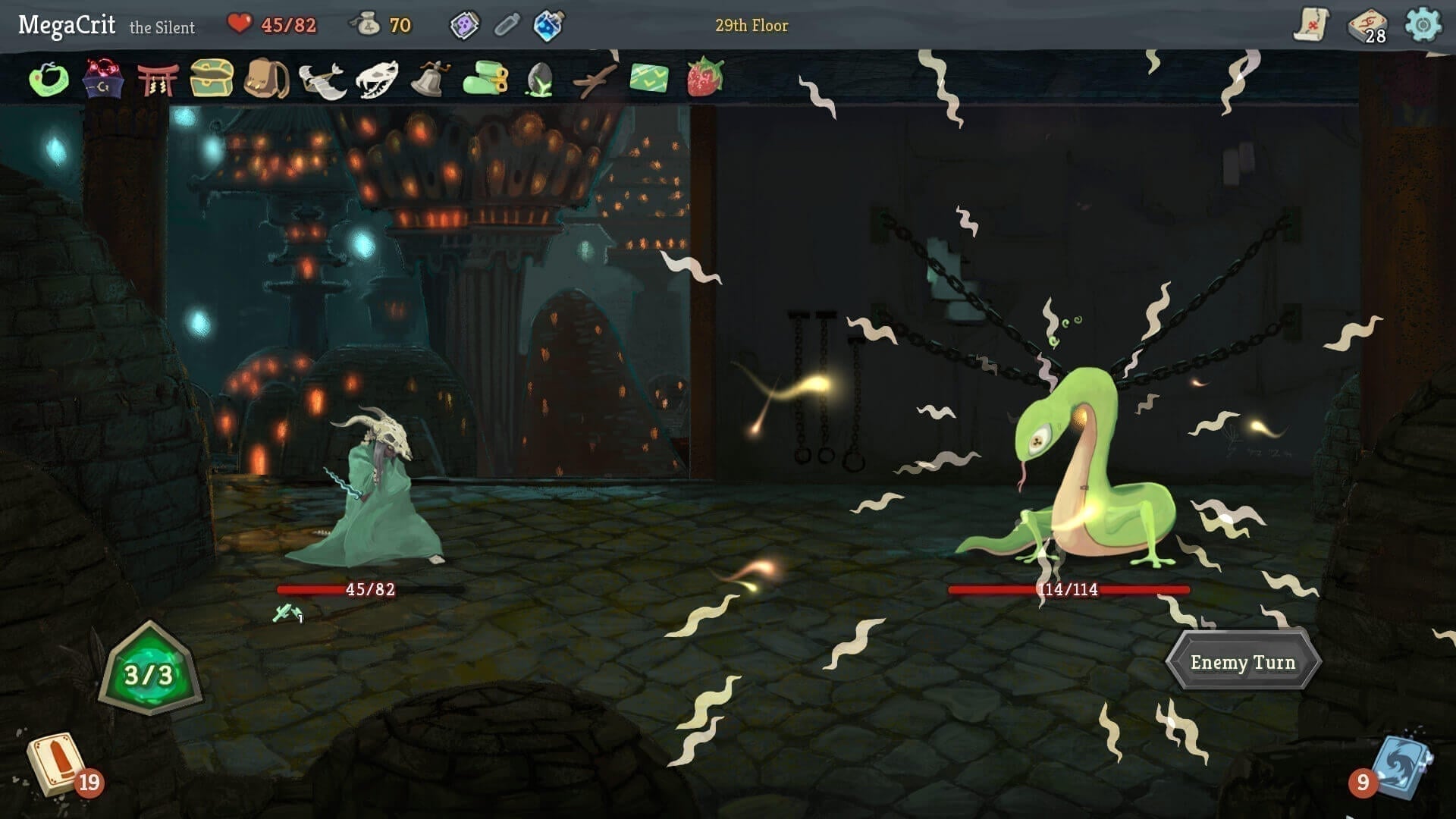
Slay the Spire is still the cleanest benchmark for route tension because every fork asks the same brutal question: what can your current deck actually afford?
The map is readable, but it is never passive. A route with two early elites, a campfire, and a shop is not just “harder.” It is a bet that your current damage, potions, health, and upgrade priorities can convert danger into scaling. A route with too many question marks can look clever, then leave you underdrafted. A route that dodges elites can feel safe, then fail because the deck never found enough relic power.
That is why Slay the Spire remains the best pure version of elite, campfire, shop, and survival calculus. The combat is clear enough that pathing mistakes are usually visible. You often know when you got greedy. You also know when you played too scared.
This clicks most if you want route planning to be as sharp as card drafting. The map constantly tests whether your deck is ahead of the curve, behind the curve, or pretending.
The limitation is that Slay the Spire is not an exploration game. The map is abstract and compact. If you want fog, movement, or spatial discovery, it will feel cleaner than it is adventurous. Its strength is not map spectacle. Its strength is pressure, clarity, and punishment.
2. Roguebook
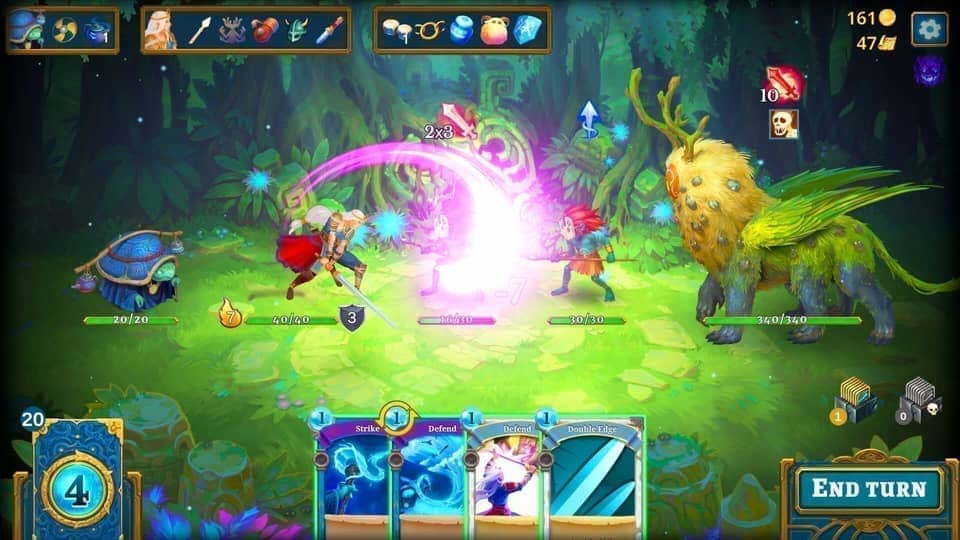
Roguebook is the most map-forward pick here. It turns exploration into part of the build engine.
Instead of only choosing between visible nodes, you move through a hex-map structure where revealing space matters. Ink is not flavor. It is a routing resource. Spend it well and you uncover fights, treasures, upgrades, and options that shape your two-hero build. Waste it and the mistake can feel as bad as a bad combat turn, because you may have cut yourself off from the rewards that would have made the deck coherent.
That makes Roguebook one of the strongest deckbuilders with route planning if you want the map to feel physical. The path is not only “left or right.” It is how much information you buy, which rewards you expose, and when you stop chasing value before the run gets inefficient.
The two-hero structure also gives the routing more texture. A reward that is mediocre for one pairing might be run-defining for another. Good pathing is not just about collecting more. It is about revealing the right kind of support for the build you are already drifting toward.
The tradeoff is pace. Roguebook is roomier and less surgical than Slay the Spire. If you want immediate fork pressure and fast act progression, the exploration layer can feel slow. If you want the map itself to be a puzzle, that same friction is the appeal.
3. Monster Train
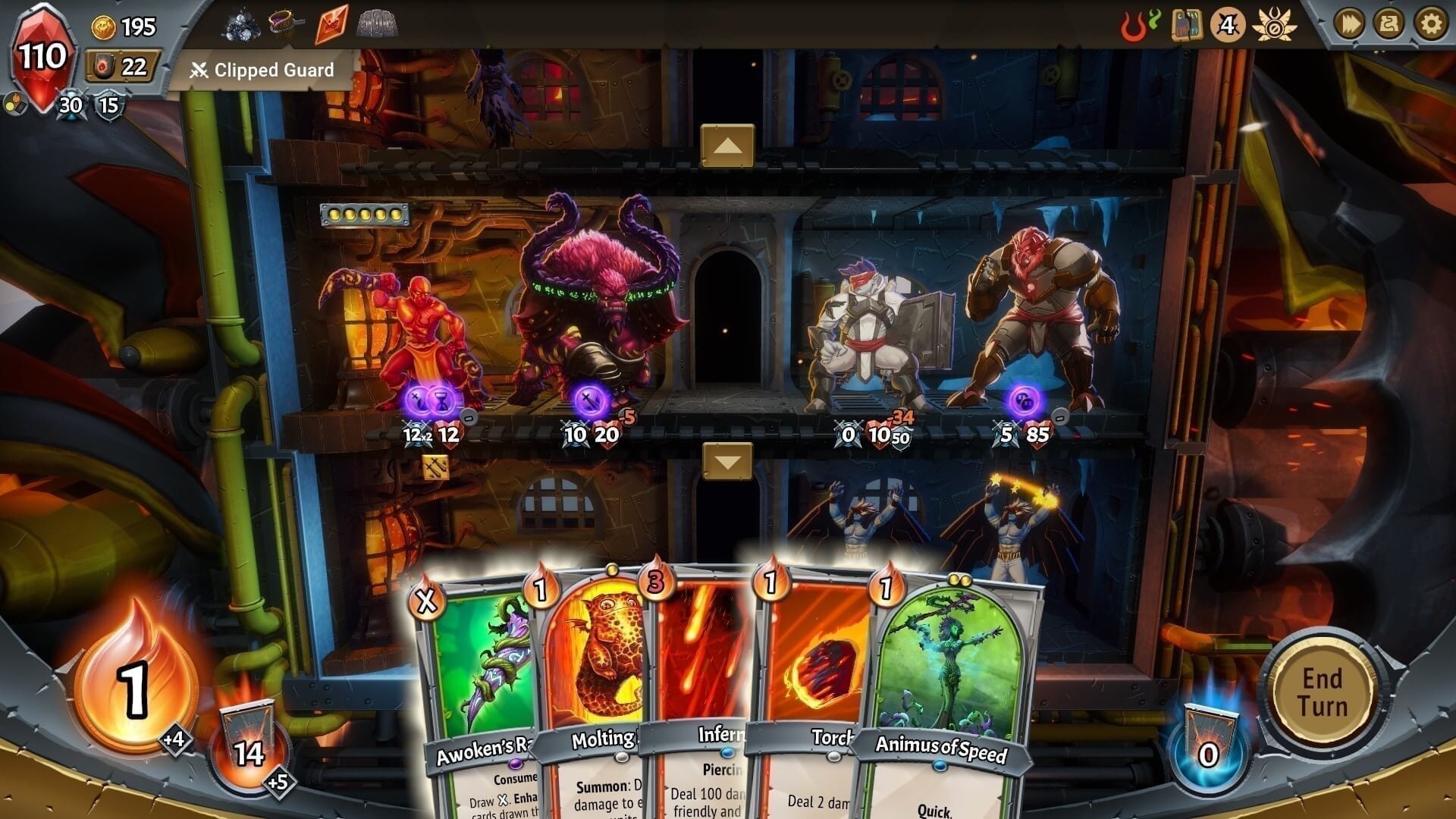
Monster Train proves that map pathing does not need a sprawling map to matter. Its route choices are narrower, but the commitments are sharp.
The important mistake in Monster Train is treating caverns, merchants, and vortexes like simple pit stops. They are deck-shaping commitments. Choosing a side of the ring often means deciding what kind of problem you are allowed to solve right now: unit scaling, spell upgrades, removal, artifact hunting, or a specific support piece that keeps your floors from collapsing.
Because Monster Train is built around explosive combos and unit scaling, routing has a high ceiling. One good merchant sequence can turn a promising unit plan into a run-winning engine. One missed cleanup opportunity can leave the deck clogged with cards that do not belong in the final fight plan.
The run pace is faster and punchier than most map-heavy deckbuilders. That makes the pathing feel efficient. You are not wandering. You are choosing which upgrade economy your build gets to use before the next major test.
The main limitation is scouting depth. Monster Train does not give you the long, branching, act-wide route puzzle that Slay the Spire does. If you want a map you stare at for two minutes before committing, this is not that. If you want compact route choices with huge build consequences, it belongs high.
4. Across the Obelisk
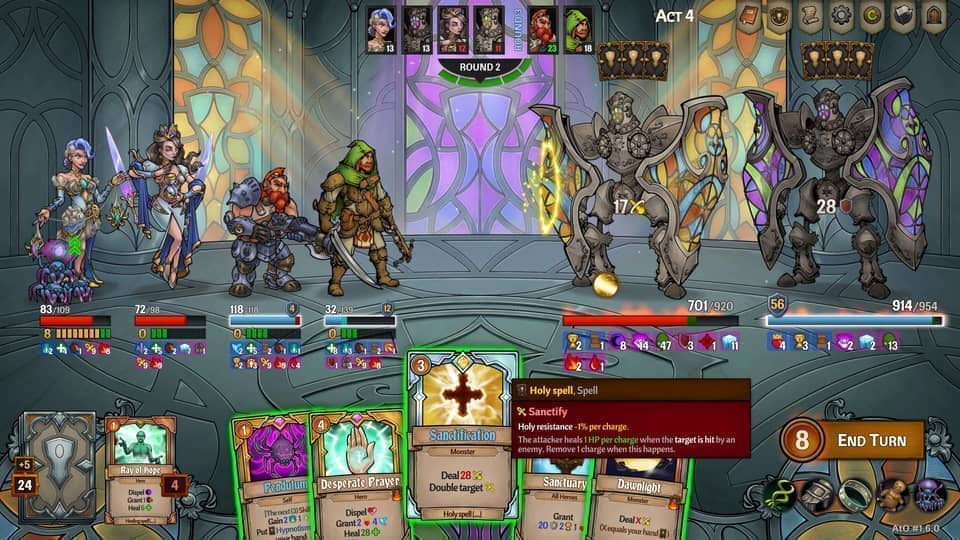
Across the Obelisk makes routing a party resource question. That is the reason it earns its place.
In a solo deckbuilder, a bad detour usually hurts one deck. In Across the Obelisk, your path can starve the role that is holding the party together. A route that looks profitable on paper can become awkward if it feeds the wrong character, delays the wrong upgrade, or pushes the group into fights it is not ready to absorb.
The branching run structure works best when you think of the party as an interlocked engine. Damage, defense, healing, and support all need fuel. Pathing is not just about maximizing rewards. It is about making sure the right part of the party gets the right help before the next pressure spike.
This is also the strongest pick here if you specifically want co-op route planning. The map gives the table something meaningful to argue about: which branch supports the current plan, which detour is too greedy, and whose deck needs help most urgently.
The cost is speed. Across the Obelisk is heavier and longer than the cleaner solo picks above it. Shared progression and party building give it depth, but they also make each run feel less brisk. If you want short, readable route tension, it may feel overbuilt. If you want party-level planning, it is one of the better fits.
5. Banners of Ruin
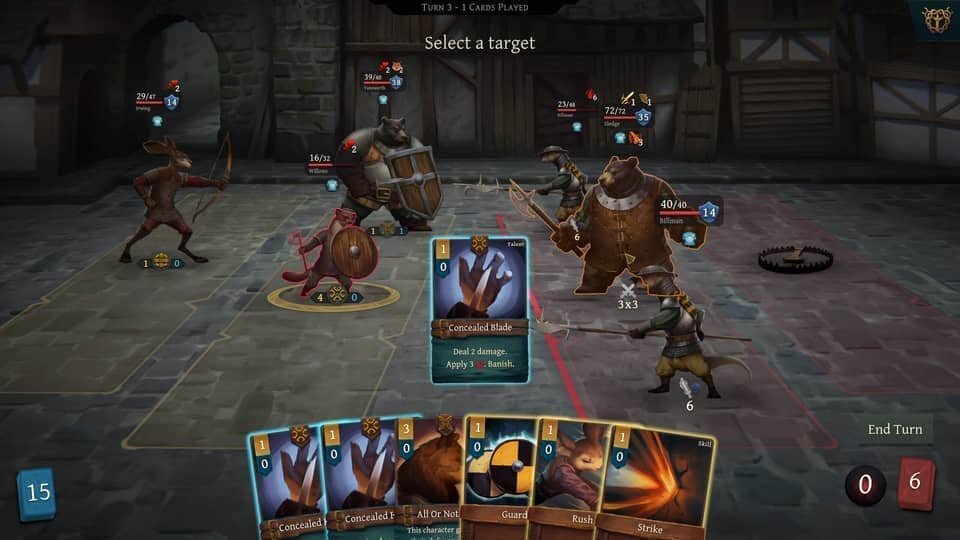
Banners of Ruin is not as crisp as the top picks, but its branching paths matter because party combat makes rewards uneven.
The route is not only asking whether you want more fights or more safety. It is asking what your roster can survive and what kind of support your party actually needs. In a party deckbuilder, a reward that stabilizes one role can matter more than a generically stronger card. That gives pathing a different flavor from pure relic greed.
The dark fantasy tone also helps the run feel more attritional. Route choices carry a sense of pressure because your party is not just a decklist. It is a group that can be taxed, weakened, and forced into bad exchanges.
Banners of Ruin fits players who want deckbuilding games with branching paths but prefer party combat over the clean single-character structure. It is a good middle-ground pick if you want route decisions to affect survival without moving into a huge exploration layer.
The friction is transparency. Compared with Slay the Spire, the route math is less instantly readable. You may not always feel the same clean cause-and-effect between “I chose this path” and “this is why the run failed.” That makes it less elegant, but still meaningfully path-driven.
6. Deep Sky Derelicts
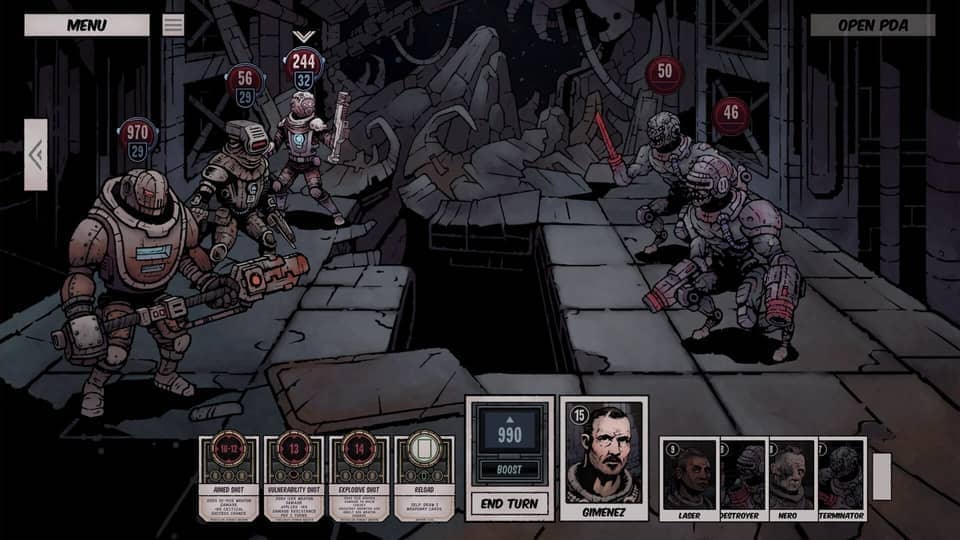
Deep Sky Derelicts is a partial fit, but an interesting one. Its pathing appeal comes less from elite timing and more from expedition pressure.
This is a grim sci-fi crawler with party tactics, scavenging pressure, and card-based encounters. That changes what routing means. You are not only asking which reward node is best. You are managing how far to push, when to turn back, what resources the party can spend, and whether a narrative event is worth the risk.
For players who want deckbuilders with route planning where the map feels like a hostile space, Deep Sky Derelicts has a distinct identity. The route is part of the survival economy. It is slower and more tactical than the pure run-based card battlers, but the pressure of moving through danger gives the deckbuilding a different kind of bite.
The limitation is genre focus. Deep Sky Derelicts shares space with tactical strategy and crawler structure, so the card game is not always the only star. If your main itch is clean roguelike deckbuilder pathing with fast draft tension, it will feel indirect. If you want scavenging, party strain, and navigation pressure, it earns the slot.
7. Tainted Grail: Conquest
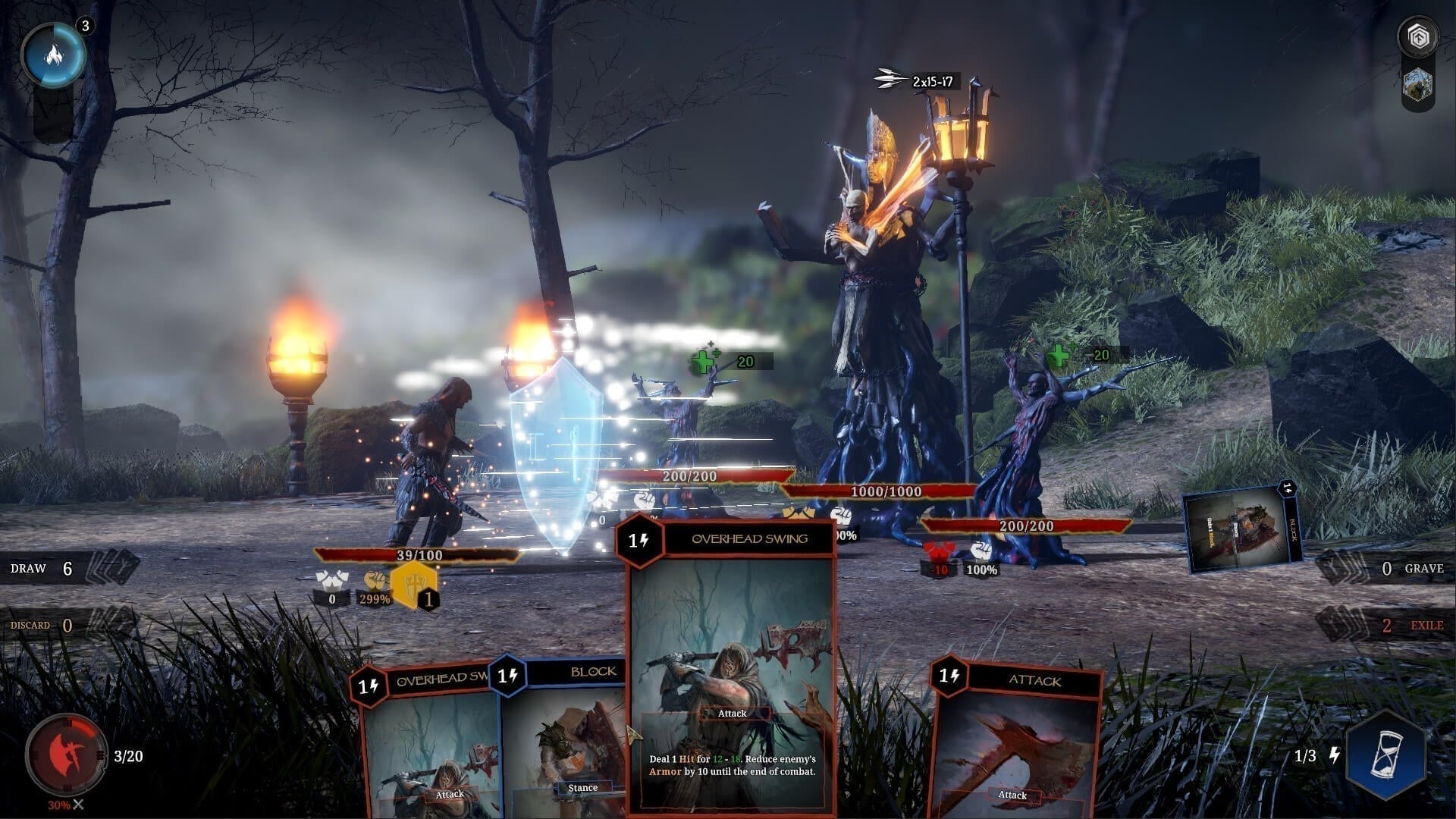
Tainted Grail: Conquest belongs lower because its route layer is not as clean or central as the best games above it. It is still relevant, but the appeal is different.
This is a dark-fantasy deckbuilder with a heavier RPG frame, moodier pacing, and long-run progression. Route decisions often feel tied to survival through a hostile world rather than a tight chain of elites, shops, and campfires. The map supports atmosphere and momentum more than pure fork optimization.
The reason to play Tainted Grail: Conquest is the heavier build fantasy. It suits players who want their deckbuilding wrapped in a darker, more RPG-flavored run structure. When the pathing works, it adds dread and commitment. You are not just calculating value. You are moving through a run that feels rougher and more oppressive.
The downside is friction. Runs are slower to open up, and the strategic clarity is not on the level of Slay the Spire or Monster Train. If you want every route decision to feel like a precise deckbuilding equation, this is a weaker fit. If you want mood and progression alongside card combat, it makes more sense.
8. Wildfrost
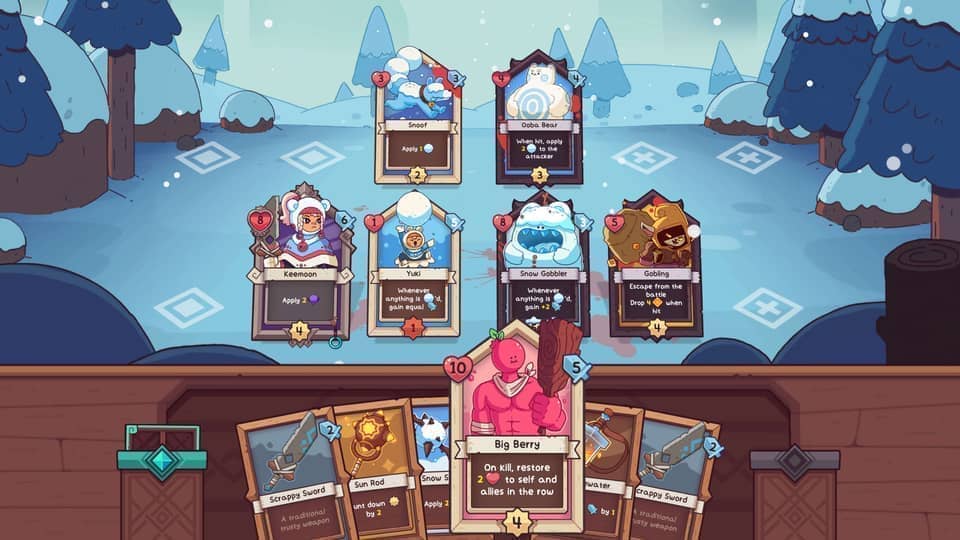
Wildfrost is the narrowest map-pathing recommendation here. It is a strong roguelike deckbuilder, but not primarily because of its route layer.
The real appeal is tactical sequencing. Wildfrost is compact, hard, and position-driven. Its best moments come from arranging units, timing attacks, managing counters, and squeezing value out of a board state that can collapse quickly. The map matters less than the fight in front of you.
That does not make it irrelevant for this list. Compact runs mean decisions outside combat still need to pay off quickly, and build identity forms fast. But if the specific thing you love is pausing over a branching map and deciding whether your deck can handle an elite before a campfire, Wildfrost is not the closest match.
Play Wildfrost if you want tactical card combat where every turn is sharp. Do not pick it first if you are mainly hunting for map-heavy deckbuilding games with branching paths. Its tension is real, but the center of gravity is positioning, not route planning.
Which one should you play first?
If you want the cleanest map-pathing answer, start with Slay the Spire. It still has the best balance of visible risk, route greed, campfire timing, shop access, and elite pressure.
If you want the map itself to become a build engine, play Roguebook. It is the strongest pick for exploration-driven pathing.
If you want fast runs where route choices shape combo scaling, play Monster Train. The map is narrower, but the decisions are high leverage.
If you want party planning and co-op route arguments, play Across the Obelisk. It is slower, but its branching structure gives pathing a team-wide purpose.
If you want dark fantasy party pressure, try Banners of Ruin. It is less elegant, but the branching paths still matter.
If you want scavenging and expedition routing, try Deep Sky Derelicts. It is a partial fit for roguelike deckbuilder purists, but a good fit for players who like resource pressure.
If you want a heavier dark-fantasy RPG frame, try Tainted Grail: Conquest. Expect moodier pacing and less precise map calculus.
If you want tactical positioning first, play Wildfrost. It is excellent, but it is not the strongest answer to the map-pathing itch.
FAQ
What roguelike deckbuilder has the best map pathing?
Slay the Spire is still the strongest overall answer. Its map is simple, but every route can change your elite timing, upgrade plan, shop access, health total, and relic curve.
Is Roguebook better than Slay the Spire for map exploration?
Yes, if you specifically care about exploration. Roguebook makes revealing the map part of the strategy. Slay the Spire has cleaner route pressure, but Roguebook has the more map-forward structure.
Does Monster Train count as a map-pathing deckbuilder?
Yes, but in a compact way. Its routes are not wide or exploratory, but choosing between upgrade paths, merchants, removals, and events can heavily shape the run.
What is the best co-op deckbuilder with route planning?
Across the Obelisk is the best fit here. The route matters because each branch can affect different party roles, and co-op makes those choices more interesting to discuss.
Should I play Wildfrost for map pathing?
Not mainly. Wildfrost is excellent for tactical card combat and positioning, but its route layer is lighter than the top picks on this list.
Final verdict
The strongest roguelike deckbuilder pathing is still about commitment. A good route should change what your deck becomes, not just where your icon moves.
For pure fork pressure, Slay the Spire remains the standard. For exploration as strategy, Roguebook is the standout. For compact, build-defining route choices, Monster Train is the sharpest alternative.
The rest are more conditional, but useful if you know the flavor of friction you want: party logistics, darker attrition, scavenging pressure, RPG weight, or tactical positioning over map greed.