Monster Train Clan Tier List: Best Clans for Beginners and Covenant Climbing
A practical Monster Train clan tier list ranking the best clans for beginners, Covenant climbing, scaling consistency, floor economy, and common draft mistakes.
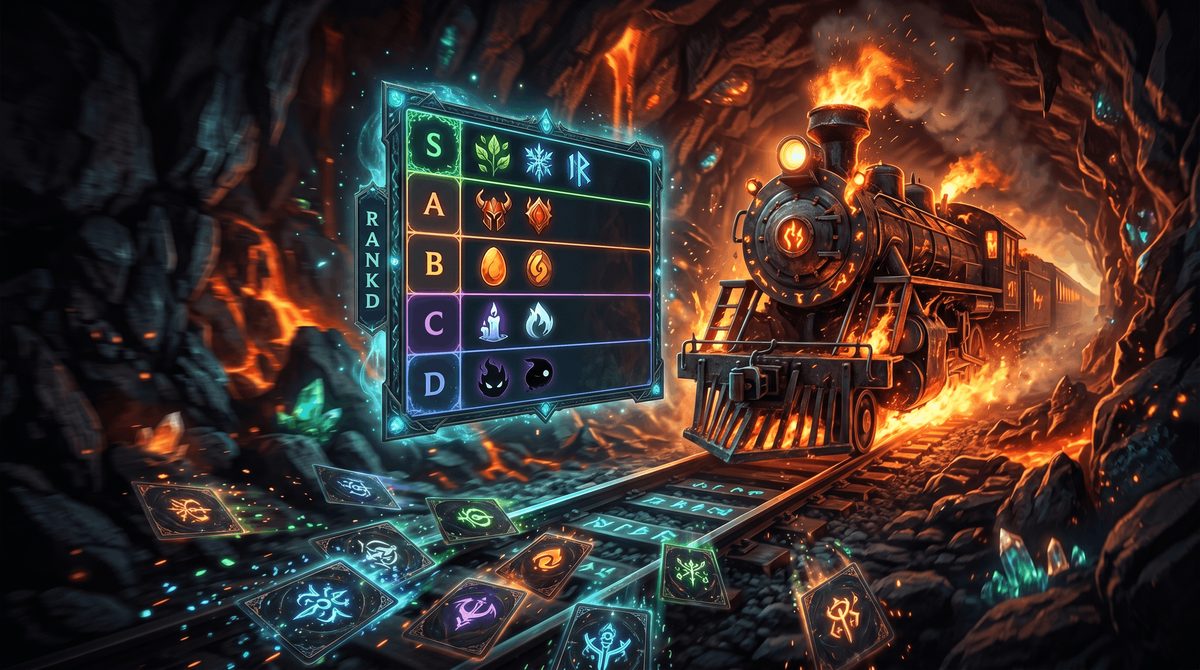
The best Monster Train clan is not always the clan with the most broken highlight run. For beginners and Covenant climbing, consistency matters more than fantasy ceiling.
This Monster Train clan tier list ranks each clan by how reliably it gives you a real plan: survivable floors, clean scaling, useful drafts, and a boss strategy that shows up before the run falls apart.
This tier list is for the original Monster Train with The Last Divinity DLC, not Monster Train 2.
Quick Monster Train clan tier list
| Tier | Clans | Practical read |
|---|---|---|
| S | Awoken, Stygian Guard | Best mix of consistency, scaling, and Covenant-ready fundamentals. |
| A | Hellhorned, Melting Remnant | Strong climb clans, but they punish sloppy floor management and messy drafts. |
| B | Wurmkin | Powerful, but the echo and extract layer makes bad decisions harder to read. |
| C | Umbra | High ceiling, but the easiest clan for beginners to confuse activity with progress. |
Best clans by player goal
| Goal | Best pick | Why |
|---|---|---|
| Best Monster Train clan for beginners | Awoken | Forgiving, readable, and good at teaching sustain, tanking, and floor setup. |
| Best clan for Covenant climbing | Stygian Guard | Turns spell upgrades, sequencing, and boss planning into real control. |
| Best direct combat clan | Hellhorned | Armor, rage, imps, and movement make the combat math easy to understand. |
| Best engine clan | Melting Remnant | Reform, burnout, harvest, and stealth can create brutal scaling if the deck stays clean. |
| Best advanced puzzle clan | Wurmkin | Echoes, extract, inspire, and infused cards reward careful planning. |
| Biggest beginner trap | Umbra | Morsels feel productive, but they often delay the actual boss-killing plan. |
How this tier list is ranked
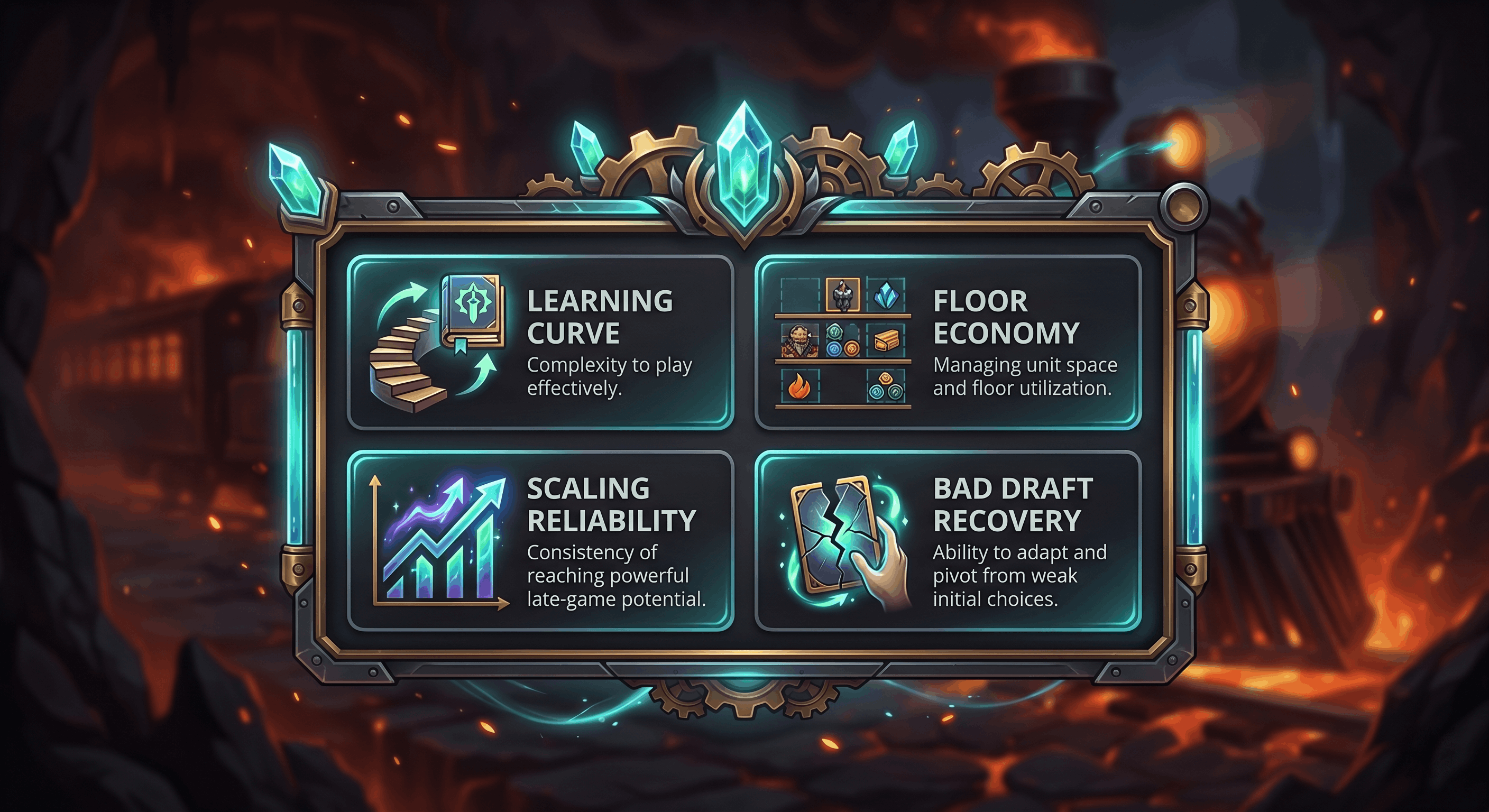
This is not a pure power ceiling list. Every Monster Train clan can win with the right allied clan, relics, upgrades, and route choices.
The question here is more useful:
Which clans make the climb less punishing?
The ranking weighs four things:
Learning curve: How quickly the clan teaches good habits instead of hiding mistakes.
Floor economy: How well the clan uses limited unit space, especially when the run needs one strong main floor.
Scaling reliability: How often the clan finds damage, survivability, or boss control before the late game demands it.
Bad-draft recovery: How well the clan survives awkward early card rewards.
Clan pairing still matters a lot. Your allied clan can completely change a run. But your primary clan shapes your champion, your early fights, and your first draft decisions. That is where many Covenant runs are won or quietly killed.
S-tier: Awoken
Awoken is the cleanest beginner recommendation in Monster Train because it gives you room to learn without asking you to solve three resource systems at once.
You get healing, regeneration, spikes, draw support, and sturdy units. More importantly, Awoken teaches the most important question in the game:
What survives, and what actually kills the boss?
That sounds basic, but it is the whole run. A strong Monster Train deck needs both sides. You need a floor that does not collapse, and you need enough scaling to end Relentless before the boss grinds you down.
Awoken is strong because its defensive tools are useful even before your deck is perfect. Regen can carry a tank through early boss phases. Spikes can clean up smaller enemies. Draw support helps you see upgraded cards more often. The clan stabilizes ugly early fights better than most.
Awoken also has readable floor logic. It is usually obvious which unit belongs in front, which unit needs protection, and whether your deck is missing damage or sustain. That makes it easier to draft with discipline instead of taking every card that looks generically helpful.
The trap is thinking that not dying is the same thing as winning.
Awoken can hide weak scaling for a while. A giant health bar can beat early bosses, then fold later when the run needs to kill heavies, backliners, and a final boss with real speed.
Pick Awoken if you want the most forgiving path into better Monster Train fundamentals. Just make sure your sustain supports a win condition. It cannot replace one.
S-tier: Stygian Guard
Stygian Guard looks fragile at first. Then you realize the clan is not fragile. Your plan is.
Stygian Guard rewards players who understand sequencing. Stack the right debuff, line up the right spell, protect the fragile engine pieces, then cash in. Spell weakness is not a cute damage bonus. In many runs, it is the boss plan.
That is why Stygian Guard is one of the best Covenant climbing clans. Card upgrades translate directly into control. A good spell is not just removal. It can be tempo, scaling, backline control, and boss damage packed into one draw.
The clan also teaches strong habits:
- Keep the deck tight
- Respect spell density
- Know which cards deserve upgrades
- Protect your engine floor
- Plan around the final boss before the final ring
Stygian Guard gets much worse when drafted lazily. If you take random spells without knowing whether the deck is built around incant, frostbite, or spell weakness, the clan thins out fast. Bad early hands can leak enemies. Exposed champions and key units can die before the engine starts.
That friction is real. Stygian asks more from the player than Awoken does.
But once the plan clicks, Stygian Guard becomes one of the sharpest clans in Monster Train. It is the best pick for players who like tactical sequencing, upgraded spells, and controlled burst.
A-tier: Hellhorned
Hellhorned is easy to understand and easy to ruin.
On the surface, the clan is direct. It hits hard, stacks armor, plays imps, moves enemies, and uses rage to scale damage. For newer players, that clarity is useful. You can see what the clan is trying to do.
The reason Hellhorned is not S-tier here is that its common mistakes are brutal.
The biggest one is rage addiction. Newer players see bigger attack numbers and keep taking rage cards. Then the run reaches a fight where rage decay, bad defense, and limited floor space expose the deck. More attack does not matter if your unit dies, your floor is clogged, or your scaling arrives too late.
Hellhorned gets much better when you respect floor space.
Imps are powerful, but they are not free. Armor is strong, but it needs enough damage behind it. Rage is excellent, but only when placed on a unit that can actually carry the run. Movement tools can save fights, but they are not a substitute for a real scaling plan.
The best Hellhorned runs are clean:
Build one serious floor. Protect the carry. Use imps and armor to bridge early turns. Scale damage with purpose. Remove cards that do not help that plan.
Pick Hellhorned if you like direct combat math and obvious power turns. Just do not treat every red card as a strategy.
A-tier: Melting Remnant
Melting Remnant is one of the strongest clans in the game when the deck stays clean.
The clan turns death into a resource. Reform, burnout, harvest, stealth, and extinguish effects all let you recover from situations that would destroy more rigid decks. A unit dying is not always failure. Sometimes it is the engine.
That is what makes Melting Remnant so good for players who enjoy weird, resilient scaling.
Reform can bring back upgraded units. Burnout can create explosive short-term pressure. Harvest can snowball from enemy waves. Stealth can buy the exact number of turns a fragile damage floor needs. The clan has many ways to create value from controlled chaos.
But the word controlled matters.
Melting Remnant demands deck hygiene. If your reform pool is full of disposable junk, your best unit may not come back when you need it. If you draft too many units, your engine becomes inconsistent. If you misunderstand burnout timing, your carry disappears right when the boss arrives.
That is why Melting Remnant is slightly less beginner-friendly than Awoken or Hellhorned. The mistakes are not always obvious when you make them. You often realize the reform pool is polluted only when the boss fight exposes it.
For Covenant climbing, Melting Remnant is excellent in the hands of a player who removes aggressively and drafts with a target. It is a strong clan, but it does not forgive messy deckbuilding.
B-tier: Wurmkin
Wurmkin is powerful, but it is not the smoothest clan for learning Monster Train.
Echoes, infused cards, extract costs, reap, inspire lines, and egg-style setups add another layer of accounting on top of normal floor combat. That extra layer is the appeal, but it is also the problem.
When Wurmkin works, it feels great. Echoes fuel payoff cards. Infused cards keep the resource engine alive. Inspire effects reward sequencing. Consume interactions can create powerful loops. The clan can build serious scaling when the pieces line up.
The issue is draft readability.
A card can be strong in theory and awkward in your actual echo economy. Extract cards can fight each other. Infused density can look fine until one bad hand leaves you short on fuel. Some Wurmkin plans also need setup time, which becomes dangerous as Covenant penalties make early waves harsher.
Wurmkin belongs in B-tier for this list because it is strong but less forgiving. It is a good pick once you already understand compact deckbuilding, floor planning, and upgrade priority.
It is not the best first answer to “which clan makes Covenant climbing easier?”
C-tier: Umbra
Umbra is not bad. Umbra is dangerous because it lies to beginners.
Morsels make every turn feel productive. You feed a unit, numbers go up, and the floor looks stronger. That feedback loop feels good. The problem is that it can hide the real question:
Are you building a boss killer, or are you just feeding a pet?
Umbra’s issue is floor and action economy. Morsels take space. They take draws. They often ask you to spend turns feeding instead of removing threats, scaling faster, or solving backliners. At low difficulty, the game gives you enough time for that. At higher Covenant levels, setup turns get expensive.
Umbra can absolutely produce monster runs. Lifesteal, damage shield, trample, gorge scaling, and strong morsel generation can create a terrifying carry. As an allied clan, Umbra can also provide useful sustain or burst support without forcing the whole deck to revolve around feeding.
But as a primary climbing choice, it is volatile.
Emberdrain lines can wreck your next turn if you do not build around them. Morsel plans can collapse when enemy patterns punish setup. Single-carry strategies can fail if they do not solve both waves and Relentless.
Pick Umbra if you enjoy greedy scaling and accept the risk. Do not pick it because morsels feel safe.
They are often a tactic, not the plan.
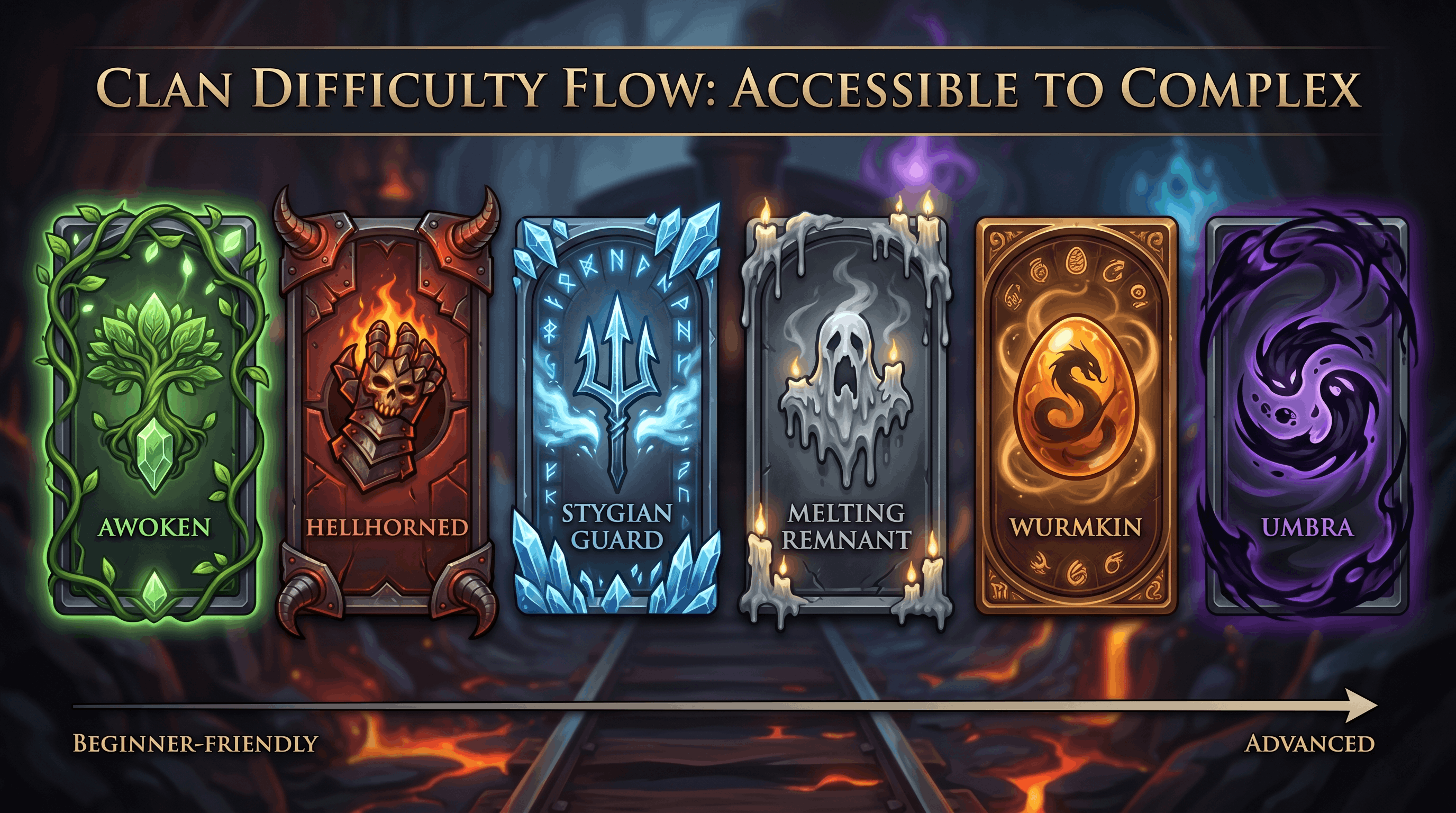
Beginner clan ranking
If the goal is learning Monster Train cleanly, the ranking changes slightly from pure Covenant strength.
| Beginner rank | Clan | Why |
|---|---|---|
| 1 | Awoken | Most forgiving, most readable, and best at teaching survival without overwhelming the draft. |
| 2 | Hellhorned | Clear combat math, but requires discipline around rage, armor, imps, and space. |
| 3 | Stygian Guard | Very strong, but fragile enough that mistakes show up quickly. |
| 4 | Melting Remnant | Powerful lessons, but reform and burnout can confuse newer players. |
| 5 | Wurmkin | Too many extra resource questions for an early climb. |
| 6 | Umbra | Feels productive while often delaying the real scaling check. |
For your first serious Covenant climb, start with Awoken. If you prefer direct damage and armor, Hellhorned is a strong second option. If you want the clan that rewards better play over time, learn Stygian Guard early.
Covenant climbing ranking
For higher Covenant consistency, the list tilts toward clans that convert upgrades and tight sequencing into reliable boss plans.
| Covenant rank | Clan | Why |
|---|---|---|
| 1 | Stygian Guard | Excellent boss planning, strong upgrade payoff, and high control when drafted tightly. |
| 2 | Awoken | Stable, flexible, and rarely helpless after a mediocre opening. |
| 3 | Melting Remnant | Strong recovery and scaling if the reform pool stays clean. |
| 4 | Hellhorned | Very capable, but rage and imp plans punish sloppy floor management. |
| 5 | Wurmkin | High ceiling, but more runs become awkward due to echo or extract mismatch. |
| 6 | Umbra | Can spike hard, but asks for specific support more often than the top clans. |
This does not mean Umbra cannot win. It does not mean Wurmkin is weak. It means they are worse default recommendations for players trying to make Covenant climbing less punishing.
Common clan mistakes to avoid
| Clan | Common mistake | Better habit |
|---|---|---|
| Awoken | Relying on regen while ignoring damage scaling. | Pair sustain with a clear carry, spikes plan, or upgraded damage route. |
| Stygian Guard | Taking spell weakness without a real payoff spell. | Treat spell weakness as a boss plan and build around the cash-in turn. |
| Hellhorned | Drafting too many rage cards. | Secure a tank, respect floor space, and scale one meaningful damage unit. |
| Melting Remnant | Polluting the reform pool. | Keep unit count tight and know which unit you actually want to bring back. |
| Wurmkin | Spending echoes faster than the deck creates them. | Balance infused density, extract costs, and payoff timing before adding more tricks. |
| Umbra | Feeding morsels instead of solving the fight. | Make sure the carry has trample, survivability, or another way to end bosses. |
FAQ
What is the best Monster Train clan for beginners?
Awoken is the best beginner clan because it is stable, readable, and forgiving. It teaches tanking, sustain, draw value, and basic floor planning without burying the player under extra resource systems.
What is the best Monster Train clan for Covenant climbing?
Stygian Guard is the best Covenant climbing clan for players who understand sequencing. Its spell upgrades, spell weakness lines, frostbite plans, and incant scaling give it excellent control when drafted tightly.
Is Umbra bad in Monster Train?
No. Umbra can create extremely strong runs. The problem is consistency. Morsel plans feel productive, but they can waste space, draws, and setup turns if the deck does not have a clear way to kill bosses.
Is Wurmkin beginner-friendly?
Not really. Wurmkin is powerful, but echoes, infused cards, extract costs, and inspire payoffs add a lot of decision pressure. It is better after you already understand clean deckbuilding and floor economy.
Does clan pairing matter more than the main clan?
Clan pairing matters a lot, but the primary clan still shapes the run. Your champion, starter cards, early drafts, and first upgrade decisions all come from that choice. A strong allied clan can rescue a run, but a messy primary plan can still sink it.
Do you need The Last Divinity DLC for Wurmkin?
Yes. Wurmkin was added in The Last Divinity DLC. If you are playing without the DLC, rank the original five clans and ignore Wurmkin.
Final verdict
The best Monster Train clans for most players are Awoken and Stygian Guard, but for different reasons.
Awoken is the best beginner clan because it stabilizes runs and teaches clean fundamentals. Stygian Guard is the best Covenant climbing clan because its sequencing, spell scaling, and boss planning stay strong as the game gets harsher.
Hellhorned and Melting Remnant are excellent once you respect their constraints. Wurmkin is powerful but busy. Umbra is the clan to approach with the most suspicion: fun, explosive, and capable, but very easy to mistake motion for progress.
If you want the least painful climb, start with Awoken.
If you want the clan that rewards sharper Monster Train play over time, learn Stygian Guard next.