Fights in Tight Spaces vs Knights in Tight Spaces: Which One Should You Play?
A clear comparison of Fights in Tight Spaces and Knights in Tight Spaces, covering tactics, positioning, deckbuilding, readability, replayability, and who each game fits best.
The Fights in Tight Spaces vs Knights in Tight Spaces choice is not just about theme.
It is about what kind of tactical pressure you want.
Do you want a clean solo puzzle where one fighter turns movement into damage, or a messier party-based card battler where formation problems can ruin the whole turn?
Both games are built around tight arenas, card sequencing, enemy intent, and positioning. But they do not create the same kind of tension. Fights in Tight Spaces is sharper and easier to read. Knights in Tight Spaces is broader, busier, and more focused on managing multiple units in a cramped room.
This comparison breaks down the real differences: turn feel, positioning, deckbuilding, combat readability, failure, replayability, and which game you should play first.
Quick verdict
Pick Fights in Tight Spaces if you want the cleaner tactical puzzle.
It is the better fit for players who enjoy compact turns, sharp movement decisions, readable combat, and the satisfaction of turning enemy placement against them. The game is at its best when a shove, sidestep, or repositioning card does more work than a normal attack.
Pick Knights in Tight Spaces if you want the same cramped-arena tension with more party chaos.
It asks you to manage multiple bodies, fantasy roles, formation problems, and card sequencing across a team. It is messier than Fights in Tight Spaces, but also more interesting if you want your tactical card battler to feel like a small squad trying not to trip over itself.
| Category | Better pick |
|---|---|
| Cleaner tactical puzzle | Fights in Tight Spaces |
| Party management | Knights in Tight Spaces |
| Combat readability | Fights in Tight Spaces |
| Formation pressure | Knights in Tight Spaces |
| Short-session play | Fights in Tight Spaces |
| Fantasy tactics flavor | Knights in Tight Spaces |
| Easier game to recommend first | Fights in Tight Spaces |
The core difference
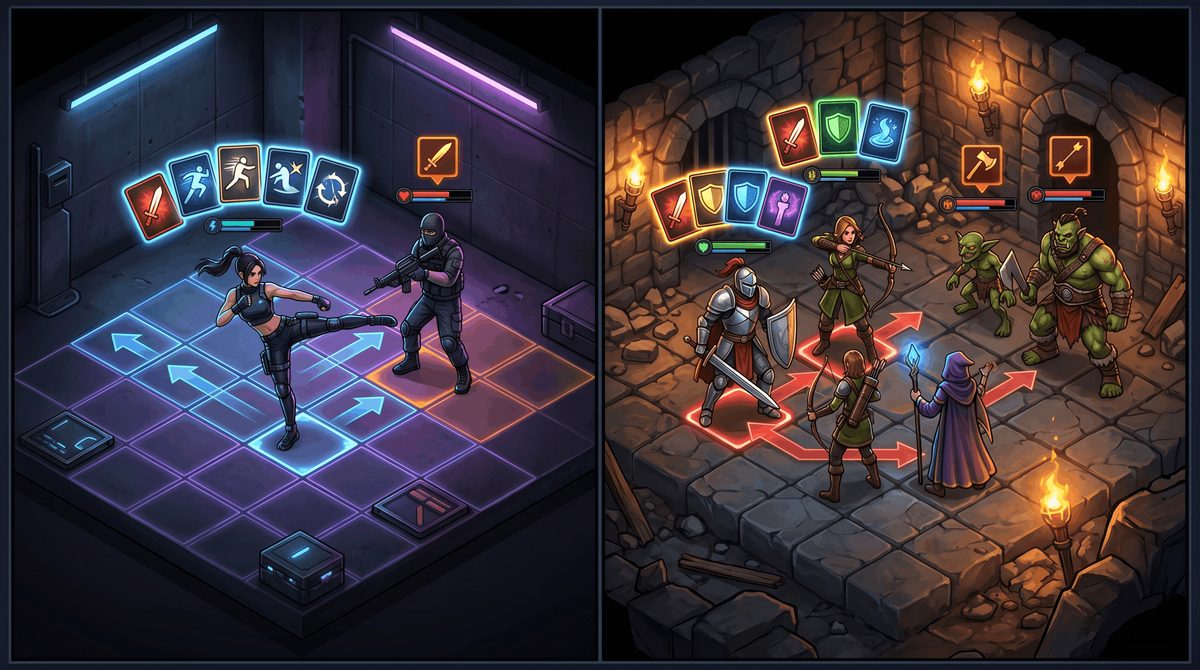
Fights in Tight Spaces is about one character solving one dangerous room.
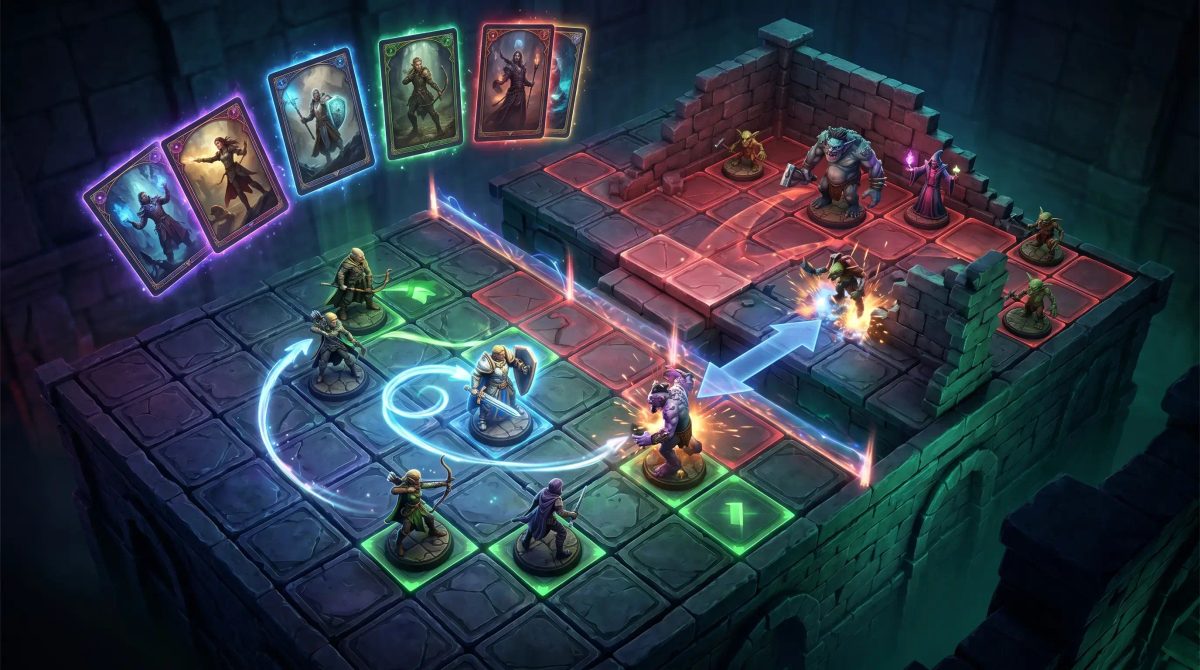
Knights in Tight Spaces is about a party trying to survive the same kind of cramped tactical pressure without blocking each other, wasting cards, or breaking formation.
That sounds like a small difference. It is not.
Controlling one fighter makes Fights in Tight Spaces feel clean. Every card matters because every movement, attack, block, or shove belongs to the same tactical engine. You are always asking one question:
How do I make this turn efficient?
Knights in Tight Spaces adds more bodies to the problem. Now you are asking several questions at once:
Can this unit reach the right square?
Will another unit block the line?
Does this card work with the current formation?
Can the party survive after the turn ends?
That makes Knights in Tight Spaces feel less like a perfect puzzle box and more like tactical traffic control.
For some players, that added chaos is the hook. For others, it is the exact thing that makes Fights in Tight Spaces the stronger game.
Turn feel: solo precision vs party sequencing
Fights in Tight Spaces is at its best when a turn feels like solving a compact physical puzzle.
You are not only asking, “How much damage can I deal?”
You are asking where enemies will stand after each card, who can be baited into attacking someone else, and whether one movement card can create three separate advantages.
That solo focus keeps the tactical read clean. A good turn often has a clear line:
Move.
Strike.
Shove.
Let enemy intent punish itself.
Because you control one main actor, mistakes are easier to understand. When a turn goes wrong, you can usually trace it back to a bad sequence, a weak card choice, or a missed enemy intent.
Knights in Tight Spaces shifts the pressure outward.
The board is still cramped, but now your own party becomes part of the puzzle. Your units can block each other. A card can look useful in your hand and still be awkward because the wrong character is in the wrong square. A strong plan can collapse because the formation is ugly.
That is the main appeal.
It is also the main friction.
If you want sharp one-character mastery, Fights in Tight Spaces has the stronger hook. If you want the extra burden of keeping a team functional in a tiny arena, Knights in Tight Spaces gives you more to juggle.
Positioning: movement is the real weapon
The biggest separator between these games is how positioning creates value.
In Fights in Tight Spaces, movement is not decoration. It is often the strongest thing you can do.
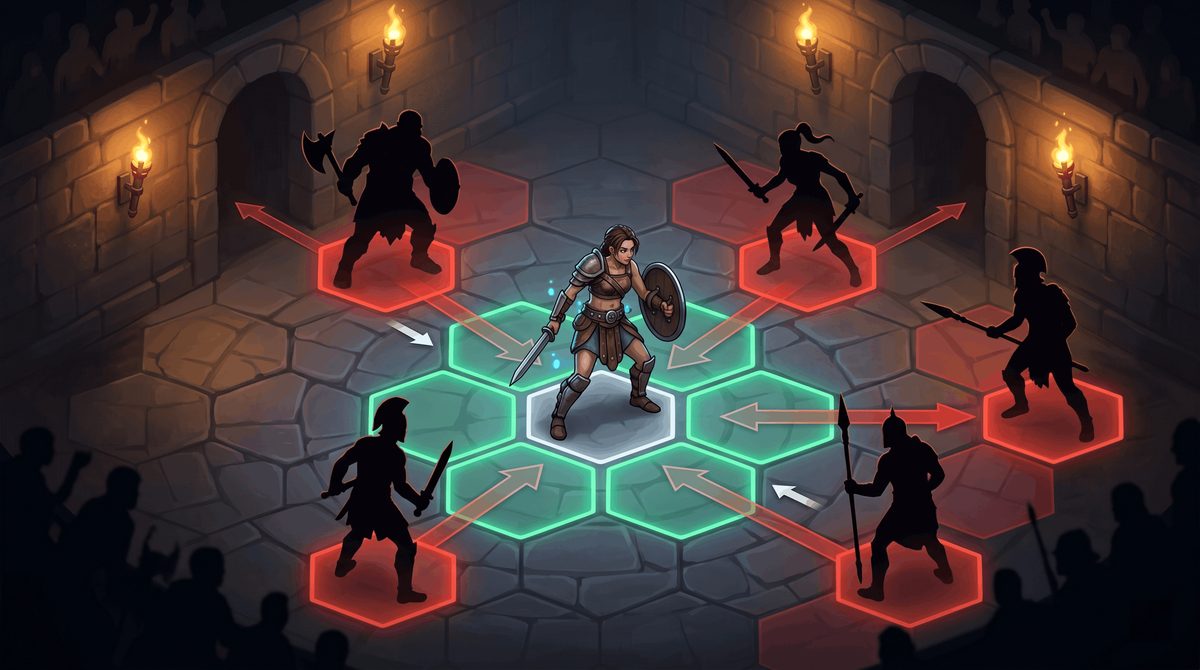
A push into a wall, a sidestep that makes enemies hit each other, or a reposition that avoids damage while setting up a counter can be stronger than simply drawing another attack card.
That is why the game works so well.
It teaches you to stop treating movement as defense and start treating it as damage conversion. The best card is not always the card with the biggest number. Sometimes it is the card that changes the shape of the turn.
Knights in Tight Spaces still cares about positioning, but the party layer changes what positioning means.
It is not only about making enemies miss or collide. It is about keeping your own side usable. A good position is not just safe. It has to preserve access, spacing, role coverage, and future card options.
That makes Knights in Tight Spaces more punishing for greedy play.
If your deck assumes perfect formation too often, the board will expose it. Cards that look strong in isolation can become dead weight when your party is misaligned, blocked, or forced into bad angles.
The difference is simple:
| Game | What positioning feels like |
|---|---|
| Fights in Tight Spaces | Elegant leverage |
| Knights in Tight Spaces | Team logistics under pressure |
Neither approach is automatically better. They just reward different instincts.
Deckbuilding: clean control vs party coverage
Fights in Tight Spaces benefits from focus.
Because the game centers on one fighter, deck bloat is easier to feel and easier to diagnose. If a card does not help you move, control space, defend efficiently, or end fights faster, it starts to look suspicious.
That makes drafting tense in a good way.
The common mistake is taking too many cards that are individually fine. In a cramped tactical card battler, “fine” is not good enough if it dilutes the movement and control pieces that make your turns work.
Fights in Tight Spaces rewards discipline. It wants a deck that finds its best tools consistently.
Knights in Tight Spaces has a different deckbuilding problem.
Party-based play creates more reasons to add cards because there are more jobs to cover. You may need movement, protection, damage, formation fixes, support tools, and role-specific cards.
That gives the game more build expression, but it also makes hands easier to clog.
A hand can be full of cards that are technically useful and still fail because the wrong unit needs them, the spacing is bad, or the board state does not support the combo.
For players who hate dead draws, Fights in Tight Spaces is the safer recommendation.
For players who accept some mess in exchange for party synergy and tactical variety, Knights in Tight Spaces has the more layered deckbuilding puzzle.
Combat readability: sleek puzzle vs controlled chaos
Fights in Tight Spaces has the clear edge on readability.
Its fights are compact, its cause-and-effect lines are easier to parse, and the solo structure helps you understand why a turn worked or failed.
That clarity is a big part of its replayability. The game does not need a long ramp before it starts asking real tactical questions. You can read the room, map a line, play the turn, and immediately understand the result.
This also makes Fights in Tight Spaces better for short sessions.
A fight can be tense without becoming overloaded. When the game is working, it feels fast, tactical, and clean.
Knights in Tight Spaces is less clean by design.
Party positioning creates more tactical texture, but it also increases the number of ways the board can become awkward. That can be exciting if you enjoy imperfect situations. It can be frustrating if you want every failure to feel immediately legible.
This is where taste matters most.
Some players want the crisp satisfaction of a readable tactical puzzle. Others want the added drama of multiple units creating unexpected constraints.
Fights in Tight Spaces is clearer.
Knights in Tight Spaces is busier.
That is not a flaw. It is the tradeoff.
Failure and recovery
Cramped battlefields punish sloppy sequencing.
In both games, you can lose a turn before you realize it by spending the wrong movement card first, leaving an enemy angle open, or wasting a key repositioning option.
Fights in Tight Spaces usually makes those failures feel instructive.
Because the system is cleaner, a bad line often teaches a clear lesson:
You moved too early.
You attacked before repositioning.
You kept a weak card too long.
You ignored enemy intent.
You spent defense when movement would have solved the problem.
Recovery is not free, but the feedback is readable.
Knights in Tight Spaces can feel harsher because party mistakes stack.
A single bad formation can deny attacks, block escape routes, waste a card, or force inefficient play across multiple characters. You are not only repairing health loss. You are repairing board shape.
That makes recovery more tactical, but also more brittle.
If awkward turns make you tilt, Fights in Tight Spaces is easier to live with.
If you enjoy digging yourself out of formation disasters, Knights in Tight Spaces gives you more of that pressure.
Replayability and mastery
Fights in Tight Spaces has the stronger replayability loop if your favorite part of a tactical card battler is refining lines.
The mastery comes from learning how to make small card pools do more work, how to preserve mobility, when to cut weak cards, and how to turn enemy intent into advantage.
It has a clean improvement curve:
Read better.
Draft tighter.
Sequence smarter.
Waste fewer actions.
Knights in Tight Spaces offers a different kind of mastery.
The party-building layer gives you more to think about before and during fights. Instead of perfecting a solo engine, you are learning how group positioning, role coverage, and cramped-grid tactics interact.
That may click harder for players who want tactical variety more than pure run optimization.
It is not as sleek. It may not have the same immediate repeat-run pull for players who care most about clean deck control. But it has a distinct identity: fantasy tactics compressed into a card-driven arena.
Which one should you play first?
Start with Fights in Tight Spaces if you want the sharper baseline.
It is the cleaner recommendation for players who want a focused tactical deckbuilder where movement, enemy intent, and card sequencing combine into satisfying short fights.
It also does a better job showing why positioning can be more valuable than raw damage.
Start with Knights in Tight Spaces if the phrase “party positioning” is the hook.
If you like managing multiple units in tiny arenas and you are willing to accept more formation friction, it offers a more chaotic and team-oriented version of the same broad idea.
The practical recommendation:
Play Fights in Tight Spaces first if you want the cleanest version of the formula.
Move to Knights in Tight Spaces if you want that cramped-card-combat language applied to party tactics.
FAQ
Is Knights in Tight Spaces a sequel to Fights in Tight Spaces?
It is best understood as a related tactical card battler built around a similar cramped-arena idea, but with a much stronger party-based fantasy tactics angle.
The important difference for players is structure: Fights in Tight Spaces focuses on solo control, while Knights in Tight Spaces adds party positioning and team sequencing.
Which game is better for beginners?
Fights in Tight Spaces is the easier recommendation for most beginners.
It is cleaner, more readable, and easier to understand turn by turn. Knights in Tight Spaces adds more formation pressure, which can be more interesting but also more awkward while learning.
Which game has better tactical positioning?
Both games have strong positioning, but they use it differently.
Fights in Tight Spaces uses positioning as elegant leverage. You move enemies, redirect attacks, avoid damage, and turn the room into a weapon.
Knights in Tight Spaces uses positioning as party logistics. You need to keep multiple units useful without blocking your own plan.
Which game is better for short sessions?
Fights in Tight Spaces is better for short sessions because its fights are cleaner and easier to parse quickly.
Knights in Tight Spaces can still work in short sessions, but its party management gives each turn more moving parts.
Which one has more replay value?
Fights in Tight Spaces is better if you want replayability through cleaner mastery, tighter drafting, and sharper sequencing.
Knights in Tight Spaces is better if you want replayability through party variety, formation problems, and tactical experimentation.
Final call
Fights in Tight Spaces is the better fit for players who want elegance.
Its turns are cleaner, its mistakes are easier to read, and its best builds make movement feel like a weapon. It is the stronger choice if your ideal tactical card battler is fast, legible, and built around tight solo sequencing.
Knights in Tight Spaces is the better fit for players who want added formation pressure.
It is more conditional, more chaotic, and more dependent on party management. That makes it less universally clean, but more appealing if you want fantasy tactics layered into your card decisions.
So in the Fights in Tight Spaces vs Knights in Tight Spaces matchup, the deciding question is not which one has positioning.
Both do.
The real question is whether you want positioning to create a perfect solo answer, or to stress-test an entire party in a cramped room.