Best Roguelike Deckbuilders to Play in 2026
The ultimate, updated list of the best roguelike deckbuilders available this year, ranked for both new players and veterans.
The best roguelike deckbuilders in 2026 are the ones that give you sharp run decisions fast, then let broken-looking synergies actually pay off. You want clean combat reads, meaningful deck shaping, and runs that stay tense instead of turning into a bloated card pile by act two.
This list cuts through the shovelware and sticks to 7 deckbuilders that are actually worth your time right now. We’re separating true run-based roguelike deckbuilders from lighter card battlers, and we’re ranking these picks for players who care about combat texture, build expression, and replay value more than novelty for novelty’s sake.
Quick take
- Slay the Spire is still the baseline recommendation. Some classics are still unbeaten, and this is the clearest one.
- Balatro is the easiest game here to replay obsessively, but it scratches a different itch than combat-heavy roguelike deckbuilders.
- Monster Train and Monster Train 2 are the best picks if you want explosive combo turns and more aggressive scaling.
- Vault of the Void is the smart recommendation for players who hate draw RNG deciding everything.
- Slay the Spire 2 is one of 2026’s heavy hitters, especially if you want the familiar formula with new structure and co-op.
The picks
Slay the Spire
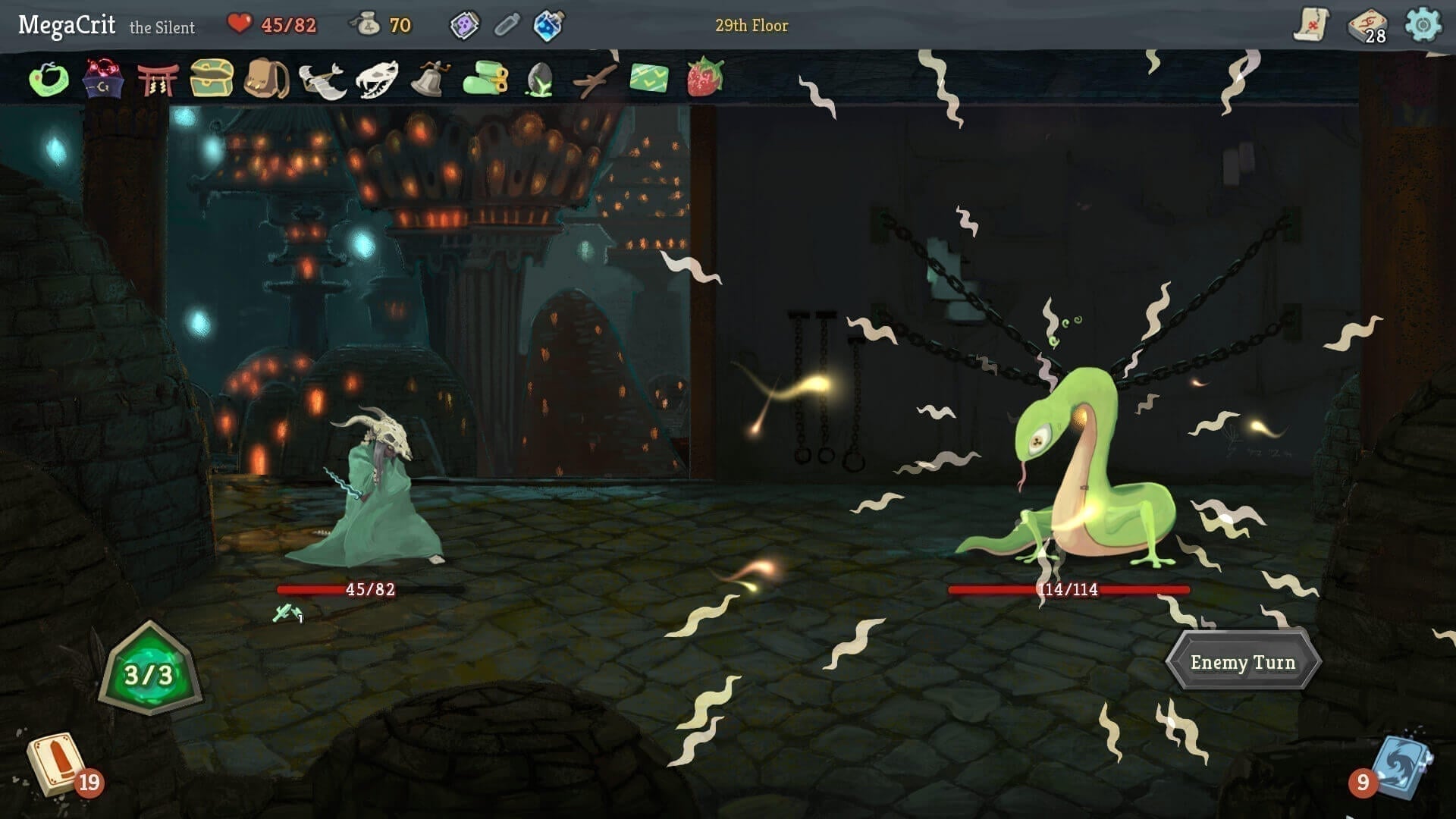
This is still the standard. Slay the Spire nails the core loop better than almost anything else: compact turns, readable enemies, and route choices that matter before you even draw your hand. It fits this list because every run asks the right questions at the right time. Can you survive elites now? Is this card good, or just good in theory? Do you need power, block, or a cleaner deck?
What keeps it on top is how many archetypes feel viable without becoming mushy. Strength scaling, poison, orb setups, exhaust engines, shiv spam, retain lines—each one has enough room to pivot mid-run. New players can understand why they lost. Experienced players can keep finding tighter lines.
Its main limitation in 2026 is simple: if you’ve played it to death, the surprise factor is gone. The systems are still excellent, but the freshness comes more from self-improvement and challenge runs than from discovering unseen content.
Balatro
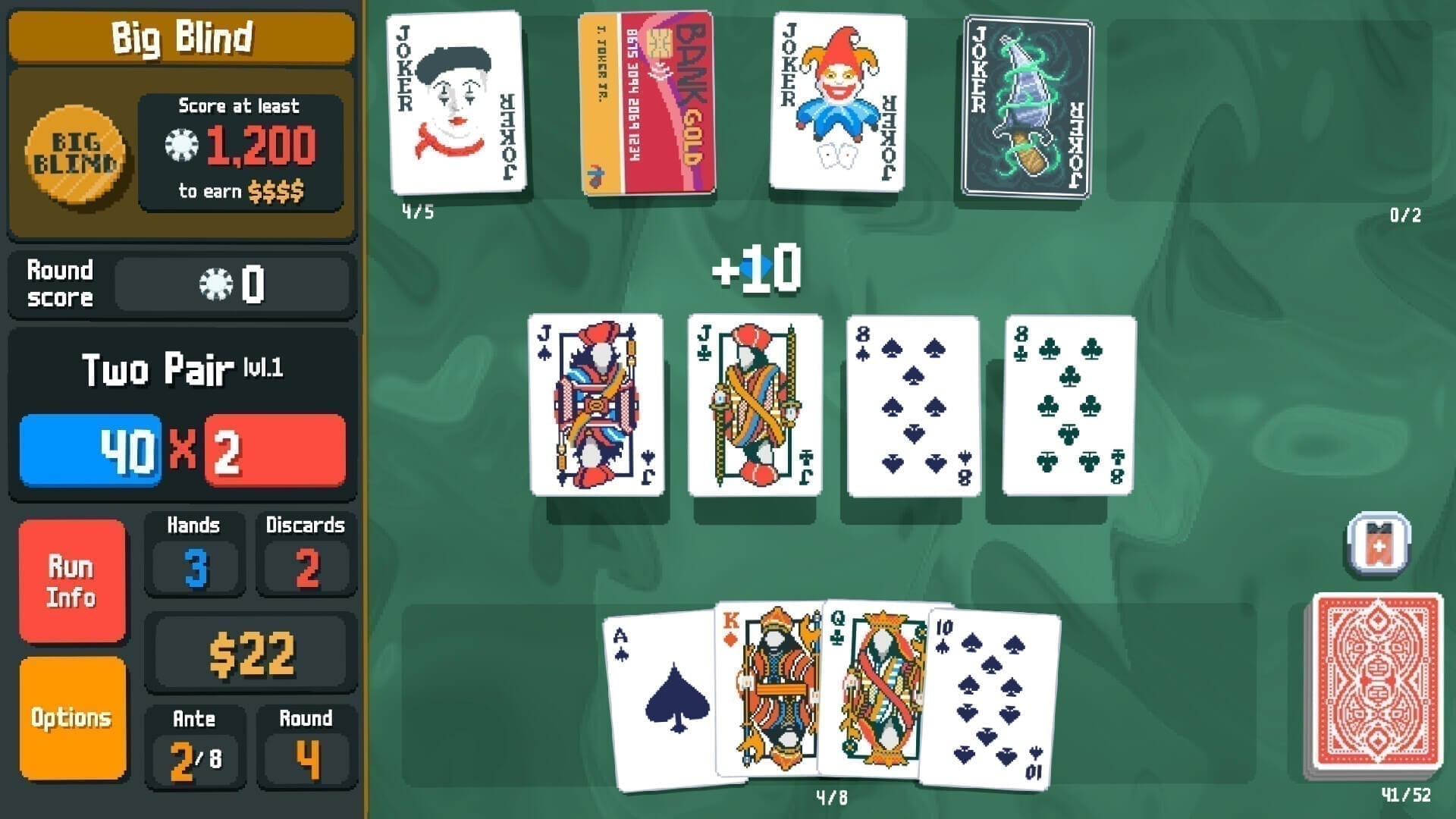
Balatro earns its spot because it understands pacing. Runs move fast, the score-chasing loop is instantly readable, and joker synergies produce the kind of scaling that makes “one more run” feel dangerous in the best way. For many players, it’s the cleanest expression of deckbuilder-style escalation without RPG clutter.
That said, this is where we separate a true combat roguelike from a lighter card battler. Balatro does not deliver the same enemy-by-enemy tactical pressure as Slay the Spire or Monster Train. The fit is strongest for players who love build expression, multiplier stacking, and discovering absurd interactions from a compact ruleset.
The judgment call here is easy: Balatro is one of the best card-based roguelike runs you can play, but if your favorite part of the genre is defensive planning and combat sequencing, it may not replace the heavier tactical games above and below it.
Monster Train
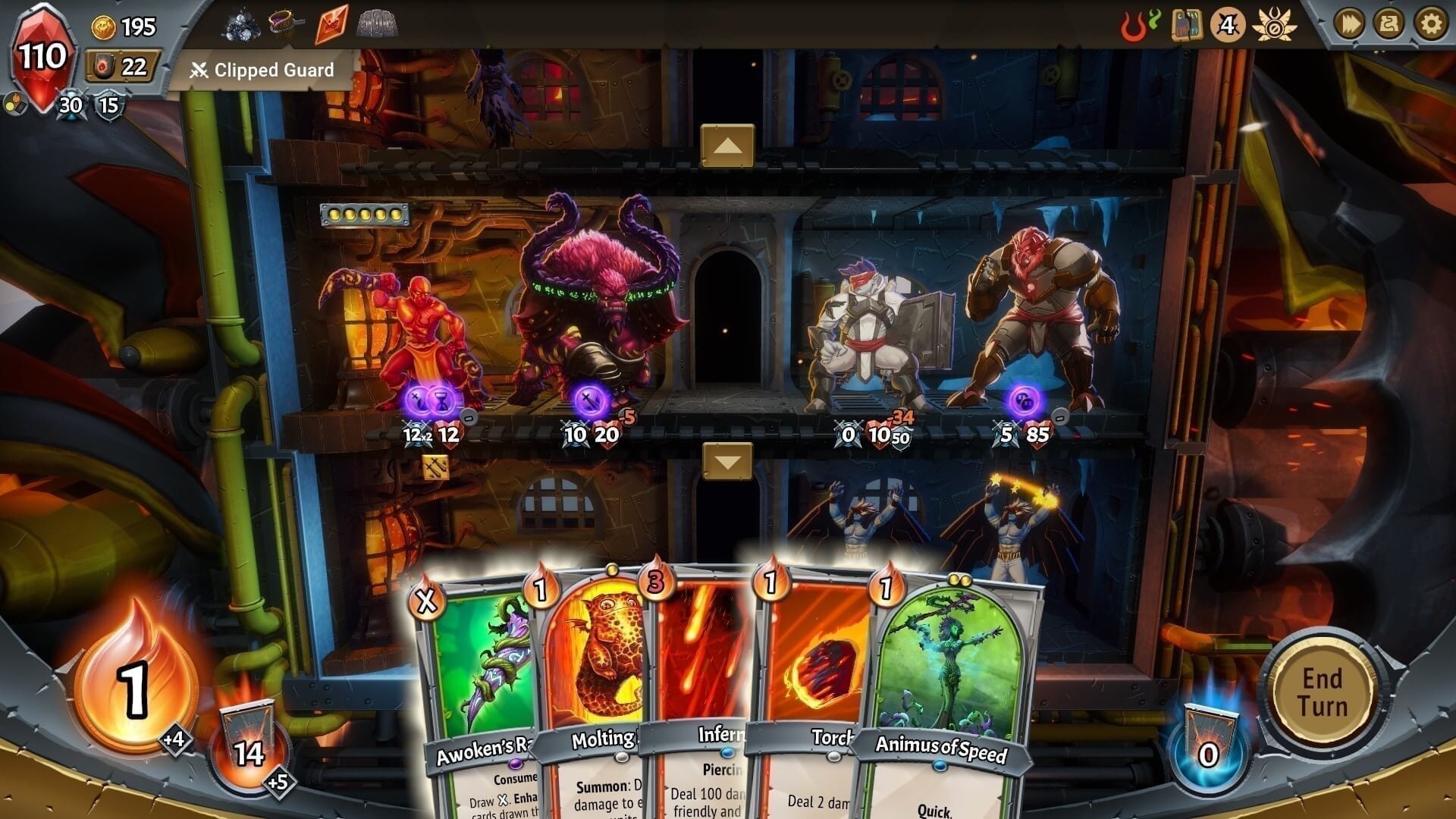
Monster Train is still one of the best answers for players who want deckbuilding with a louder payoff. The lane-based combat gives every fight more board texture than most card battlers, and the clan combination system creates immediate build identity. Few games let you feel a run “turn on” as clearly as this one.
It fits because the synergies are both explosive and legible. You can build around unit scaling, burnout loops, spell weakness, morsel feeding, rage, reform, and more without the whole thing becoming unreadable. The floor-by-floor structure also keeps your decisions active. You’re not just picking cards; you’re managing positioning, survivability, and timing.
The tradeoff is that Monster Train is less clean than Slay the Spire. More effects are firing, more board states get busy, and some runs feel like controlled chaos. For many players that’s the appeal. If you want the neatest possible information flow, though, this is a little messier by design.
Vault of the Void
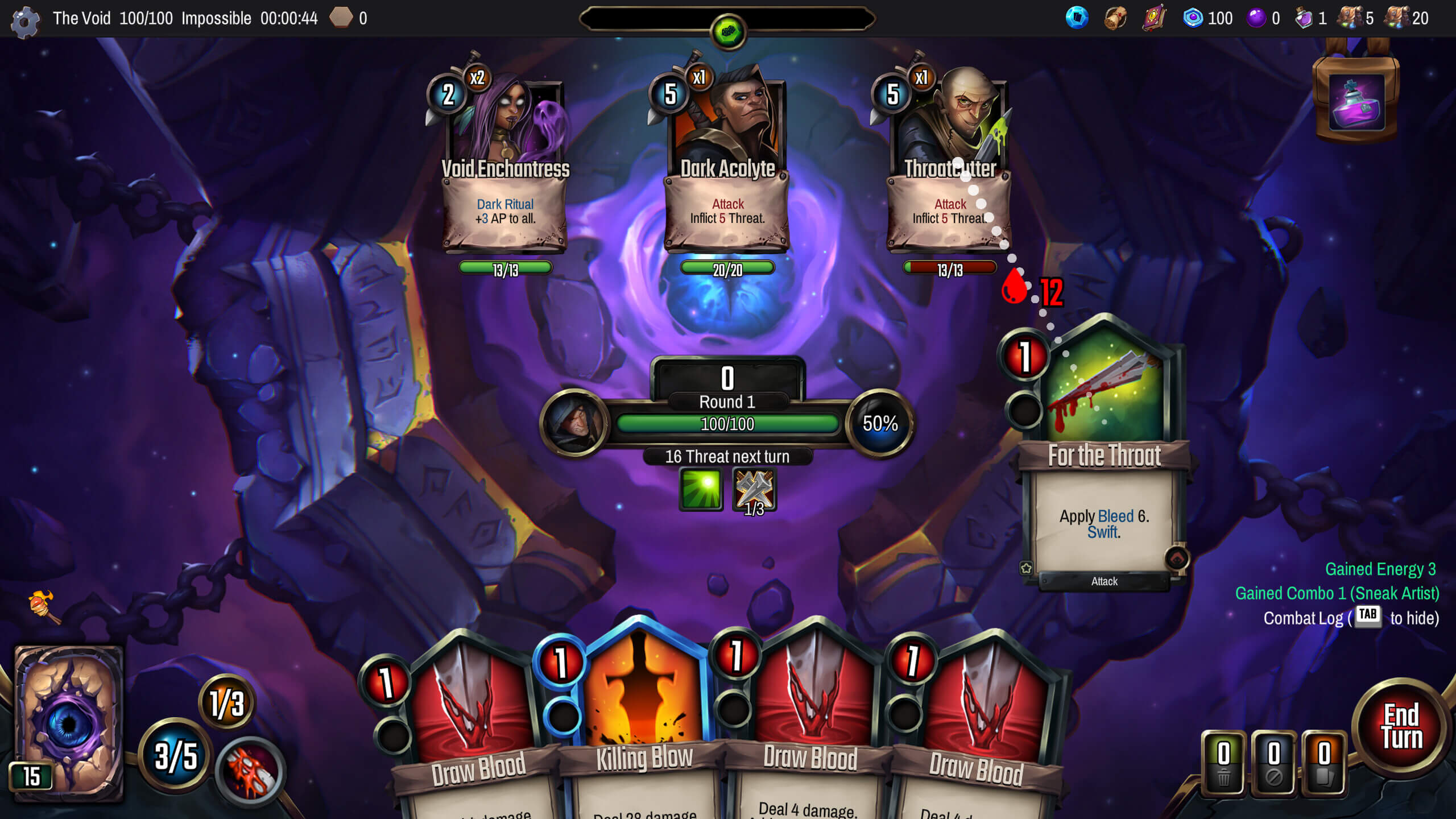
Vault of the Void is the recommendation we make when someone likes deckbuilders but is tired of losing to bad draw order and vague card bloat. Its biggest strength is control. You can trim hard, shape consistency, and make much more deliberate choices around how your deck operates turn to turn.
That extra control changes the feel of the whole run. Instead of hoping your build eventually becomes coherent, you can force coherence much earlier. The combat remains readable, the card text tends to be clear, and the game does a good job supporting players who enjoy planning exact lines rather than improvising around a mess.
Why isn’t it higher? It’s a more niche taste. Some players actually want more volatility, more desperation, and more “make this disaster work” energy. Vault of the Void is excellent, but it clicks most if you value precision over swinginess.
Wildfrost
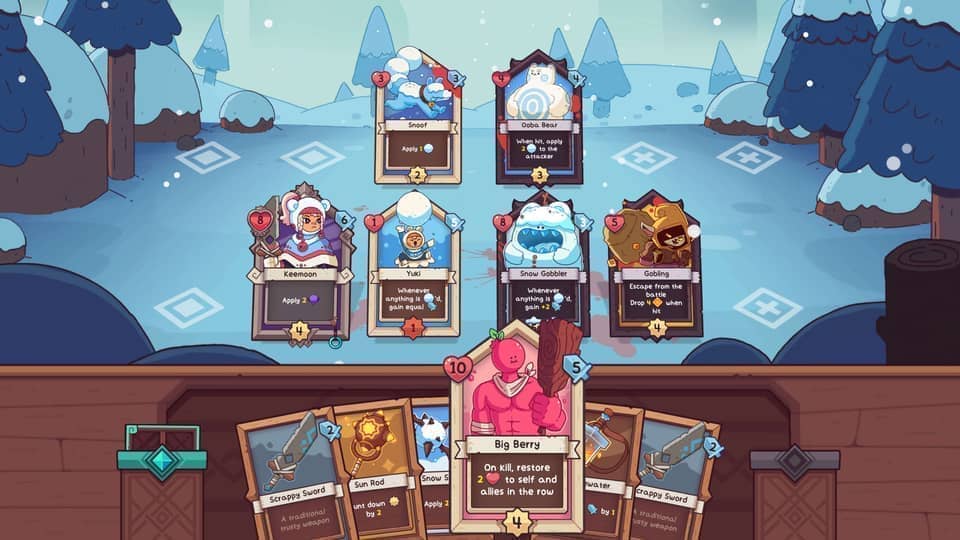
Wildfrost deserves more respect than it usually gets in broad roundup lists. Its runs are compact, its board states matter immediately, and positioning gives it a tactical identity that separates it from more straightforward deckbuilders. This is a strong fit for players who want every turn to feel consequential, not just every reward screen.
The game’s best quality is pressure. You often know what you’re trying to build, but getting there cleanly takes careful sequencing and a good read on what your current team can survive. Status effects, companion use, countdown timing, and row management make victories feel earned rather than automatic.
It’s also one of the harsher picks here. Wildfrost can punish sloppy play fast, and its difficulty curve turns some players away before the systems fully click. That friction is real. Stick with it if you want a more tactical, less forgiving take on the roguelike deckbuilder formula.
Slay the Spire 2
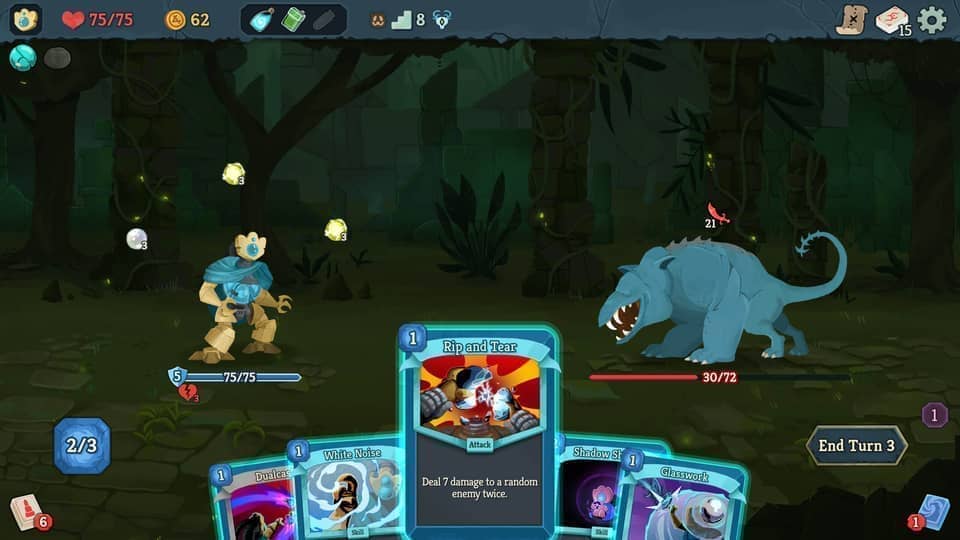
Slay the Spire 2 is here because 2026 brings new heavy hitters to the genre, and this is the most important one for players who want the original game’s logic with a fresh layer of structure. It keeps the appeal of readable combat and flexible deckbuilding while pushing the format forward with new characters and co-op.
The strongest reason to play it is that it doesn’t abandon what made the original so good. It still understands that a great run lives or dies on small decisions: route tension, removal value, efficient defense, scaling timing, and card evaluation under pressure. That foundation matters more than novelty, and plenty of sequels miss that.
Still, it occupies an awkward spot for some players because comparisons to the first game are unavoidable. If what you want is the purest, most settled version of the formula, the original remains easier to recommend. Slay the Spire 2 is more exciting right now, but also a little more for players who want the next step rather than the safest entry point.
Monster Train 2
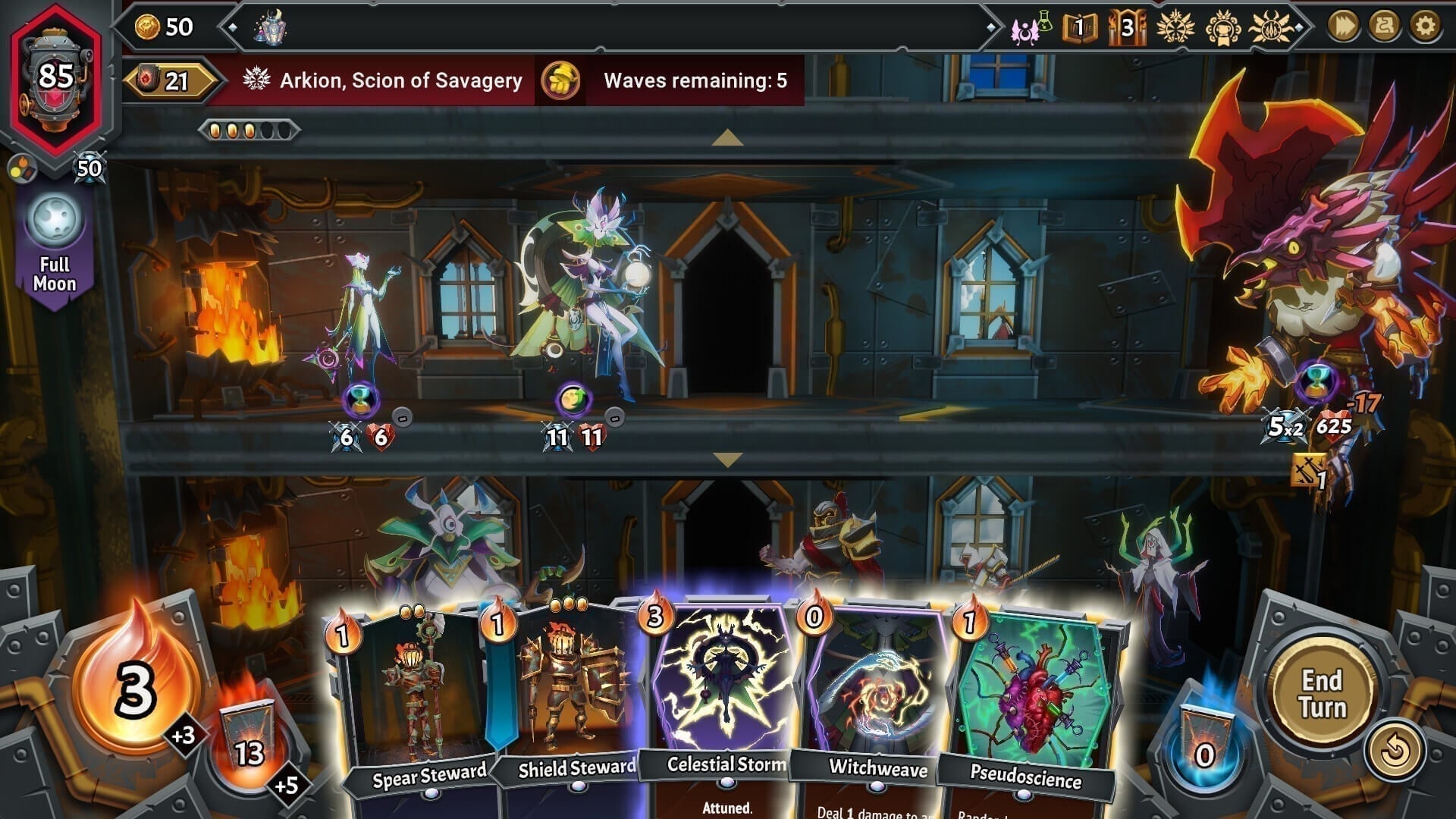
Monster Train 2 is for players who looked at Monster Train and thought, “Yes, but make it even busier.” It doubles down on layered fights, stronger synergy webs, and the kind of combo chaos that makes a run feel half engineered, half barely contained. As a 2026 pick, it lands well for players who already know they enjoy aggressive scaling and board management.
The fit is obvious if you like your deckbuilders loud. Multi-floor planning is back in a sharper form, and the sequel gives more room for those runaway turns where unit placement, trigger order, and spell timing all matter at once. It rewards players who enjoy squeezing value from packed combat states.
That also makes it less universally clean than the best entries above it. Newer players may find Monster Train 2 harder to parse than Slay the Spire, Balatro, or even the first Monster Train. We’d recommend it more as a “you already know your taste” pick than as the default first stop.
Who should play this
- Players who want run-based card games with real build expression, not just collectible card fluff.
- Anyone deciding between the classics that still hold up and the 2026 heavy hitters worth jumping on now.
- Deckbuilder fans who care about tempo, route planning, and synergy payoff more than story or presentation.
- Newer players who want one safe starting point and a few stronger niche options after that.
- Veterans looking to separate true roguelike deckbuilders from lighter score-chasing card battlers.
Common mistakes
-
Picking for theme instead of run structure.
Fix: choose based on what you actually enjoy in a run—clean combat reads, combo blowouts, score scaling, or tactical positioning. -
Starting with the hardest niche option.
Fix: begin with Slay the Spire or Balatro if you want immediate readability, then move into Wildfrost or Vault of the Void later. -
Expecting every card game here to feel the same.
Fix: remember that Balatro is a lighter combat fit, while Monster Train and Wildfrost are much more board-focused. -
Ignoring how much randomness you actually tolerate.
Fix: if bad draws annoy you, prioritize Vault of the Void. If you enjoy adapting to chaos, Monster Train 2 will likely land better. -
Chasing the newest release by default.
Fix: some classics are still the better recommendation. New does not automatically mean better for your taste.
FAQ
What is the best roguelike deckbuilder in 2026?
Slay the Spire is still the best all-around recommendation for most players. It has the strongest mix of clarity, replayability, archetype depth, and run tension. If you want the easiest “just play this first” answer, that’s it.
What’s the best roguelike deckbuilder for beginners?
Slay the Spire is the safest beginner pick because its systems are readable and losses usually teach you something concrete. Balatro is also beginner-friendly if you care more about fast synergy discovery than tactical combat.
Which game here has the best combos?
For pure combo spectacle, Monster Train and Monster Train 2 are the standouts. They create the biggest “my run is going off” moments on this list. Balatro is also excellent if your favorite kind of combo is multiplier stacking rather than combat sequencing.
Which pick is best if I hate bad draw RNG?
Go with Vault of the Void. It gives you unusual control over consistency, trimming, and how your deck actually behaves. That makes it one of the best picks for players who want deckbuilding to feel deliberate instead of swingy.
Is Balatro really a roguelike deckbuilder?
Close enough for this list, but with an asterisk. It absolutely delivers run-based progression, synergy building, and replayable card-driven escalation. It just scratches a different itch than enemy-focused combat deckbuilders, so it’s best viewed as a top-tier adjacent pick rather than a one-to-one substitute.
Takeaway
For the best roguelike deckbuilders in 2026, start with Slay the Spire if you want the safest great pick, move to Monster Train if you want louder synergies, and grab Balatro for pure replayable obsession. The rest of this list is where taste gets more specific, and that’s exactly where the genre gets interesting.