I Stopped Forcing Shiv Builds and Finally Beat Ascension 20 with Silent
I beat Ascension 20 with Silent once I stopped forcing Shiv or Poison every run, valued consistency more, and learned which cards and fights actually mattered.
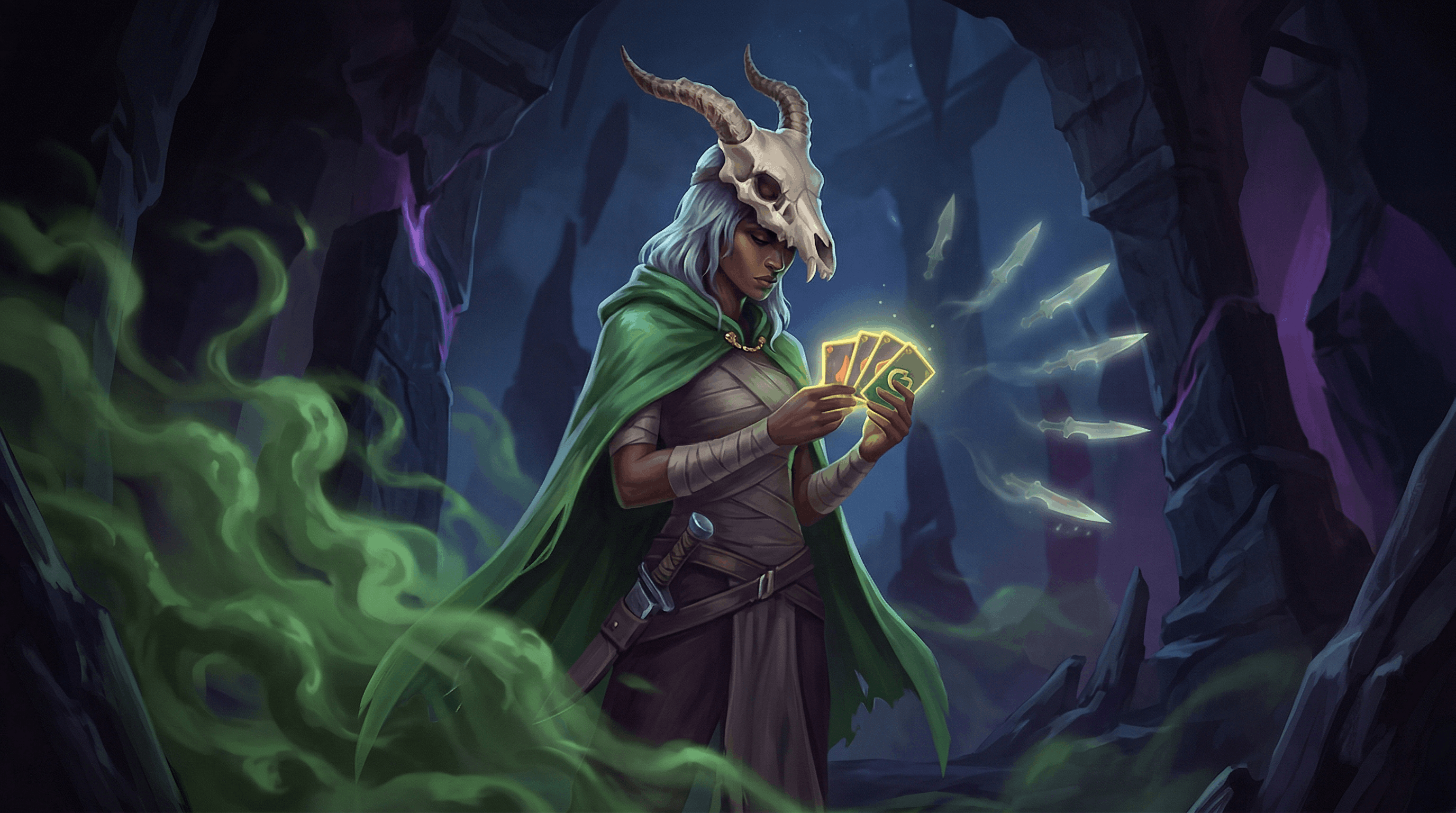
I did not even like Slay the Spire that much when I first tried it. I bounced off it, came back a few months later, picked Silent, and then it finally clicked.
For a long time after that, I was still playing the character the wrong way. I forced Shiv too often, then leaned too hard on Poison once I realized how strong it was. Poison helped me climb to around Ascension 16, but it was not the real breakthrough.
What finally got me to Ascension 20 was simpler: stop trying to force the same deck every run, care more about consistency, and stop taking cards I did not actually need.
Quick take: why I was stuck
- The trap was forcing archetypes instead of solving the next problem.
- Poison helped me climb to around Ascension 16, but it was not enough on its own.
- The real breakthrough was valuing consistency more than flashy payoffs.
- The skip button mattered more than I first understood.
- Beating Ascension 20 with Silent felt less like finding one broken build and more like finally understanding how the game wants you to think.
My A20 seed
I still think this is one of the coolest parts of the run:
I did not get Slay the Spire at first
When I first started playing Slay the Spire, I did not fully get what made it special. I played a bit, moved on, and only really got pulled in when I came back later and started playing Silent much more seriously.
That was when the game opened up for me, and when I started caring less about just surviving runs and more about actually improving.
The archetype trap: forcing Shiv
Early on, I loved Shiv builds.
They felt fast, fun, and satisfying, so I kept chasing them. The problem was that I went into too many runs already decided on what the deck was supposed to become. If the right Shiv pieces did not show up, I would still try to force it anyway, and a lot of those runs died because of that.
Poison was my next big jump
Later on, I discovered how strong Poison could be.
That was my next big breakthrough with Silent. Once I started leaning into Poison more, I climbed all the way to around Ascension 16 and for a while it felt like I had figured the character out.
But then I hit a wall.
The A16 plateau
I stayed there for a long time. After enough failed attempts, it became obvious that I was still looking at the game too narrowly. I was still asking, “How do I get the best build?” when the better question was, “What does this deck need to survive the next few floors?”
The real lesson was flexibility
The biggest change in my play was learning to stop forcing one ideal deck from the start.
Instead of trying to build the version of Silent I wanted, I started paying more attention to what the run was actually offering me. What cards was I seeing? What relics did I already have? What problem did the deck need to solve next?
That sounds simple, but it changed everything. I started judging cards by whether they helped this run, not whether they fit some perfect version of Silent I had in my head.
What flexibility actually looked like in my runs
For me, flexibility did not mean taking random good cards and hoping it worked out. It meant asking a few practical questions over and over:
- Do I have enough front-loaded damage for early elites?
- Am I blocking well enough for Act 2?
- Can I actually draw my important cards when I need them?
- Am I taking this card because it solves a problem, or because I want it to become a build later?
That last question mattered a lot.
A lot of my failed runs came from taking payoff cards too early and assuming the support would show up later. My better runs were usually the opposite. I would take strong, flexible tools first, survive the dangerous part of the run, and let the real win condition become obvious over time.
One run that sticks with me started with me taking a lot of Dodge and Roll early and skipping several Shiv cards I normally would have snapped up. Later, after relics and rewards pushed the deck toward consistency instead of burst, that choice looked much smarter than it did in Act 1. I was not forcing the flashy version of Silent I wanted. I was building around the version the run was actually supporting.
Sometimes that still became Poison. Sometimes it became a more defensive scaling deck. Sometimes it was just a tight Silent deck with good draw, weak, and enough damage to get through the bosses. The important thing was that I stopped trying to name the deck too early.
The cards I started valuing more
One of the biggest differences in my later Silent runs was that I started respecting the boring glue cards much more.
Cards like Backflip, Acrobatics, Leg Sweep, Piercing Wail, Footwork, and Well-Laid Plans started feeling much stronger to me than they used to. They were not flashy, but they solved real problems. They helped me survive bad turns, smooth out draws, and keep fights under control long enough for the rest of the deck to do its job.
That was a major mindset change. Earlier on, I was more excited by cards that looked like they belonged in a specific archetype. Later, I cared more about cards that made the deck function better no matter what direction the run took.
In other words, I got more interested in cards that made Silent more reliable, not just more explosive.
Learning to love the Skip button
The other huge lesson was deck size.
For a long time, I was taking too many cards. Not always terrible cards, but cards that did not really help the deck do what it needed to do. I was making the deck bigger without making it better.
Eventually I understood something that now feels obvious: a smaller deck with useful cards is much stronger than a bloated deck full of filler.
If your deck is tighter, you draw the cards you actually want more often. Your turns become more reliable. Your plan shows up more consistently. That matters a lot, especially at higher Ascensions where mistakes get punished harder.
This was probably one of the biggest hidden reasons I was losing before. I was not just forcing builds. I was also making it harder to draw the important pieces when I found them.
Once I became more selective, my runs got cleaner.
The biggest improvement was not just taking better cards. It was skipping more often.
I got better at passing on:
- cards that only made sense if a very specific package showed up later
- duplicate payoff cards when I still lacked draw, block, or energy support
- filler attacks that looked fine in Act 1 but made the deck worse by Act 2
- cards I was taking out of habit because they matched the archetype I wanted
That made a real difference. Silent gets much stronger when your best turns happen every other turn instead of every five.
The fights that taught me the most
A big part of beating Ascension 20 with Silent was learning what the dangerous fights were actually asking from me.
Gremlin Nob taught me that I could not be too greedy early. If my deck had no real damage yet, I needed to respect that and draft accordingly.
Act 2 elites taught me how important efficient block, weak, and draw really are. A lot of runs that felt good on paper were just not stable enough once those fights started punishing every slow turn.
Time Eater also helped break my habit of overvaluing one-dimensional Shiv plans. Even when Shiv was strong, I needed turns that did more than just spam cheap cards and hope it was enough.
Those fights pushed me toward more balanced decks. Not boring decks. Just decks that could actually answer the game in front of them.
What changed after that
After that, things started moving again.
My runs got cleaner, more consistent, and eventually that carried me all the way through Ascension 20 with Silent. What made that win satisfying was that it did not feel like I had finally high-rolled the perfect run. It felt like I had finally started reading what each run was asking from me.
Common mistakes I made
-
Forcing Shiv too often.
Fix: Stop treating every run like it needs the same payoff. -
Treating one archetype like the answer.
Fix: Poison helped me climb, but it was not the whole solution. -
Taking too many cards.
Fix: A smaller deck with purpose is usually stronger than a bigger deck with clutter.
If you are stuck with Silent, the best advice I can give is to stop trying to name your deck too early. Draft for the problems in front of you, keep the deck tighter than feels natural, and let the run tell you what it wants to become.