7 Best Casino Roguelikes for Deckbuilder Fans
Ranked: gambling roguelike deckbuilders where poker, blackjack, slots, dice, and mahjong become real build decisions instead of decoration.

The best casino roguelikes do more than dress RNG in poker chips. They turn variance into a build problem: when to greed, when to stabilize, when to cut dead weight, and when to let a ridiculous engine carry the run.
This list is for Balatro players and deckbuilder fans who want gambling systems — poker, blackjack, slots, dice, mahjong, physics — doing real work instead of another standard card-battle ladder. The ranking favors run pace, build expression, draft tension, scaling clarity, and whether the gambling mechanism creates decisions rather than excuses.
Worth saying once: none of these involve real money. They borrow casino structure and then hand you the tools to break it.
How these picks were ranked
A good gambling deckbuilder needs more than lucky outcomes. The question that matters is whether the game lets you shape the odds in a meaningful way.
The strongest picks here do three things well:
- They make the core gambling mechanism matter every run.
- They give you enough control to build around variance.
- They become interesting quickly, not only after a long unlock grind.
Some of these are cleaner deckbuilders. Some are messier, louder, and more chaotic. That difference matters, because the right pick depends on whether you want tight hand control, score-chasing acceleration, debt pressure, or physics-driven nonsense that somehow becomes a real engine.
1. Balatro
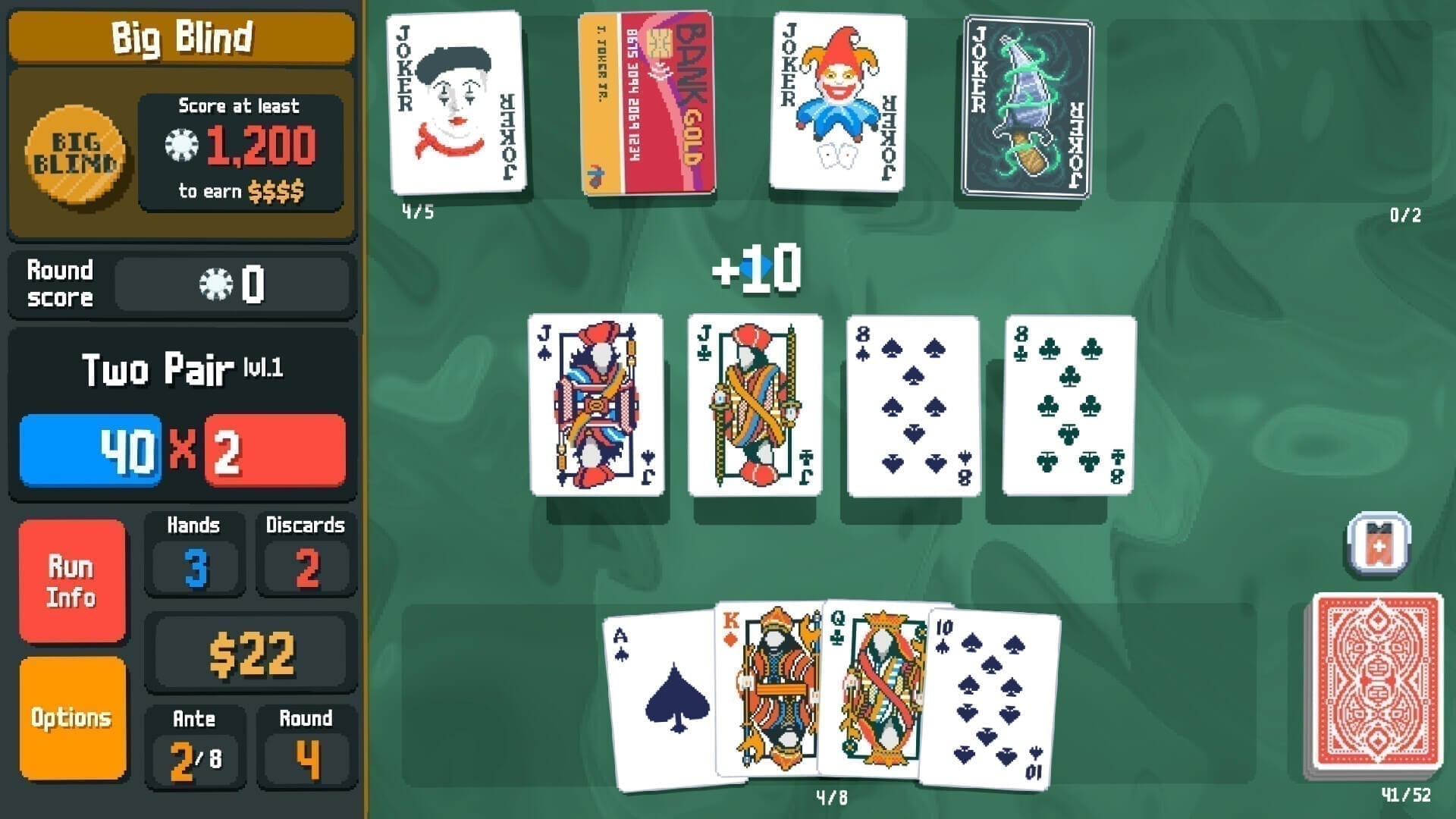
Balatro is still the cleanest answer if you want a casino roguelike that turns a familiar gambling system into sharp deckbuilding. Poker is the skin. The real game is multiplier routing, Joker synergy, card modification, and knowing when your current scoring plan has run out of runway.
Pace is why it sits at the top. Runs become interesting almost immediately. You draft toward a scoring direction, then start asking the questions that decide the run: hand levels, card enhancements, Joker scaling, suit density, or a narrow rank package? Every shop can reshape the run without burying you in rules text.
The build expression is unusually strong for how readable it stays. A good run feels like a clean math engine; a greedy one feels like a slot machine with a steering wheel. That balance is why Balatro works for casual score chasers and disciplined deck-control players alike.
What it mostly avoids is direct adversarial pressure. You are racing score thresholds, not surviving a blackjack duel or a debt trap. If you want gambling to feel hostile rather than arcade-clean, other games here hit harder.
Best fit: players who want fast runs, explosive combo scaling, and the most polished poker-based scoring loop.
2. Dungeons & Degenerate Gamblers
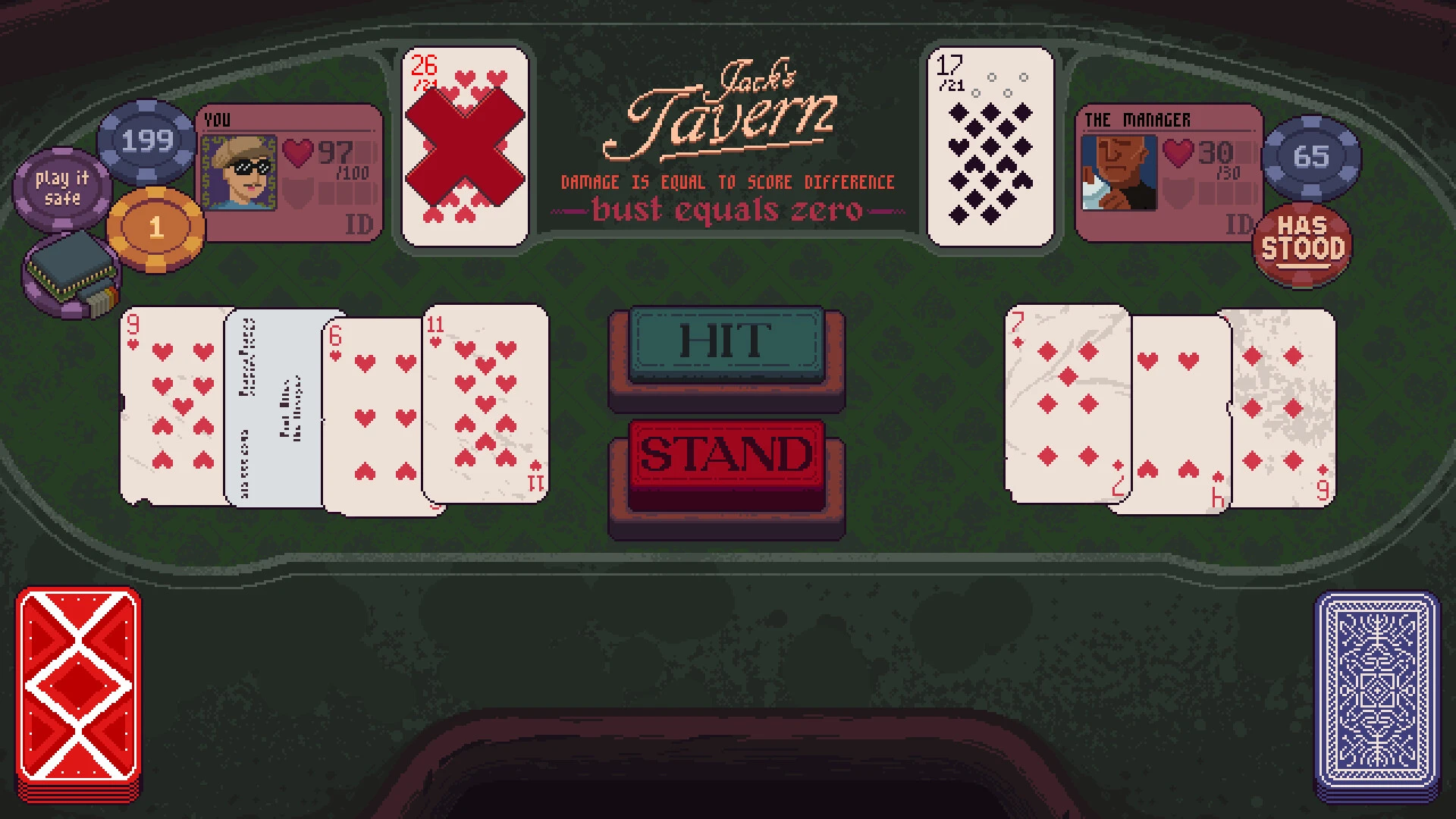
Dungeons & Degenerate Gamblers is the blackjack roguelike deckbuilder to try when you want gambling decisions to feel tactical and confrontational. Instead of building toward abstract poker hands, you are constantly weighing how close to push, when to hold, and how your altered deck has changed the risk of busting.
That sounds simple until the card pool gets weird. Aces, tarot cards, and absurd business cards drag blackjack away from pure probability and into deckbuilder territory. The fun is not hitting or standing. It is building a deck where those decisions are already warped in your favor.
It scratches a different itch than Balatro. Balatro asks whether your engine can outscale the blind. This asks whether your hand survives the next decision. The run feels more immediate and more dangerous, with the card-counting tension that poker scoring rarely provides.
Smoothness is the cost. Narrative events, darker flavor, and situational card effects give it texture but interrupt the arcade flow. For pure score-chasing momentum, Balatro is cleaner. For blackjack pressure with deck manipulation, this is the stronger pick.
Best fit: players who want push-your-luck combat, opponent pressure, and gambling decisions that happen inside each fight.
3. Luck be a Landlord
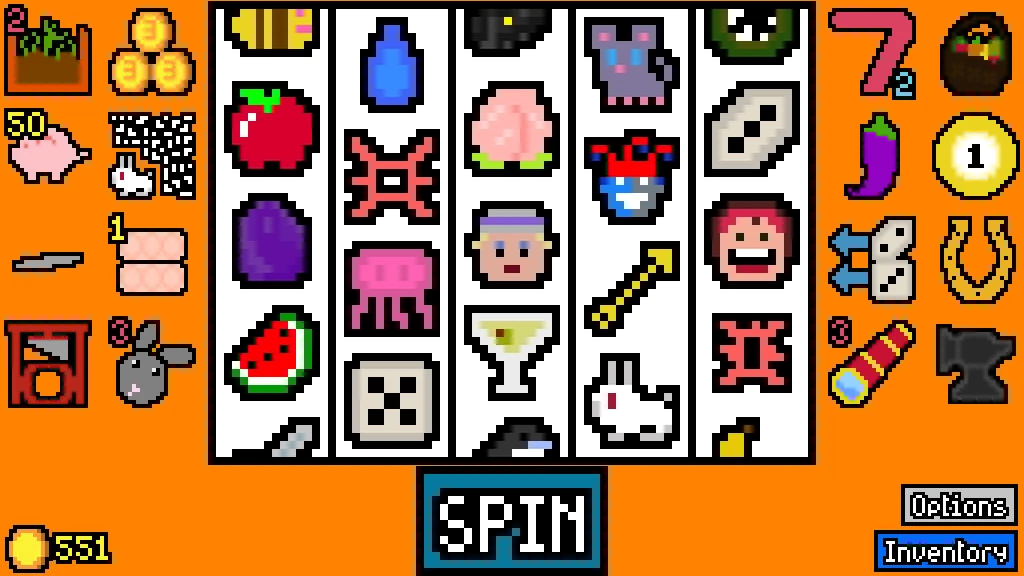
Luck be a Landlord is one of the essential slot machine roguelikes because it understands that the spin is not where the skill lives. The real decisions happen before it, when you choose which symbols enter the pool, which synergies deserve support, and which once-useful pieces have stopped paying rent.
That last part is the whole game. New players treat every positive symbol as progress. Better runs come from recognizing that a symbol can be technically good and still wrong for the current economy. If it does not scale, enable, or stabilize your next payment, it is clutter.
The run feel is compact and readable. There is no hand to manage, no enemy board, no positioning. You are curating a machine. That makes it excellent for players who enjoy engine-building through small draft decisions rather than elaborate turn sequencing.
Individual spins can feel hands-off, though. If you want clever micro-decisions every turn, this will feel passive once the machine is assembled. Its strength is strategic curation, not moment-to-moment tactics.
Best fit: players who like lean symbol economies, rent pressure, and learning when to stop adding "good" pieces.
4. Ballionaire

Ballionaire is the pick for players who want Balatro's pull without poker, and who will trade clean card math for kinetic chaos. The hook is physics-based scoring: pachinko-style boards, cascading interactions, and ridiculous wealth engines that emerge from where things bounce, land, and trigger.
The important distinction is that the physics are not spectacle. They are build space. You shape the board so chaos has better outcomes. Good builds do not remove randomness; they trap it, redirect it, multiply it, or generate enough events that the engine overwhelms bad rolls.
That gives it a very different tempo from card-first gambling deckbuilders. It is fast, loud, and more about positioning a scoring ecosystem than pruning a deck. It keeps the "one more run" pull of a score chaser and adds physical comedy and board-state surprise.
Readability is the tradeoff. When a build pops off, it is harder to parse which interaction actually carried it. If you prefer clean cause and effect, Balatro or Luck be a Landlord feel more controlled. If you enjoy turning a messy board into a money engine, Ballionaire is the standout.
Best fit: players who want physics to be a build-around system, not just random noise.
5. CloverPit
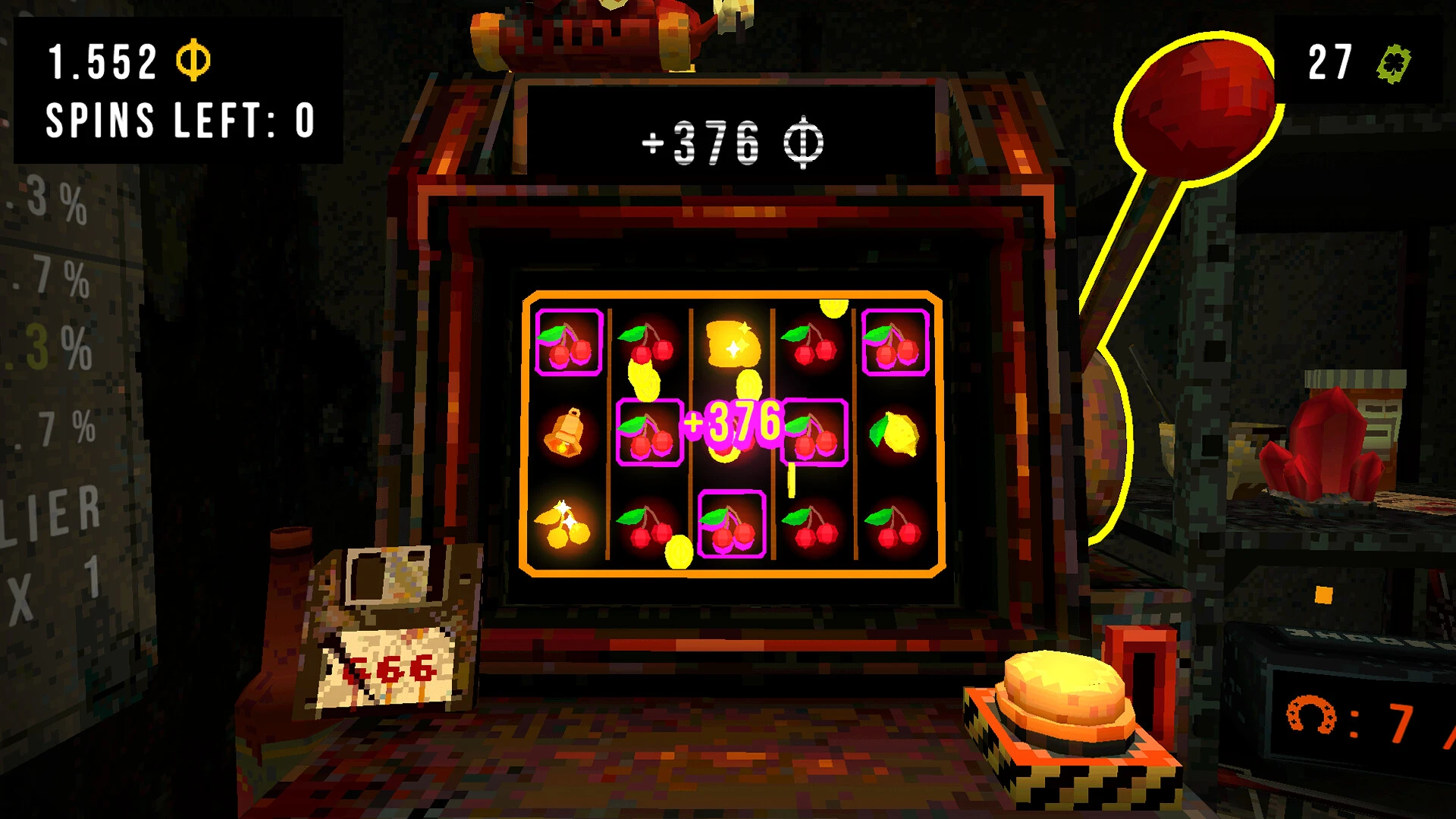
CloverPit takes the slot-machine structure and makes it meaner. You are locked in a grimy cell with a slot machine, an ATM, and a grate in the floor, paying off an ever-growing debt every few rounds. Miss a payment and the floor opens. Where Luck be a Landlord feels like a compact drafting puzzle, this frames every pull as pressure.
That pressure is why it belongs here. A casino roguelike works best when greed has consequences, and CloverPit keeps the consequence directly underfoot. The question is not only whether your charms are profitable. It is whether they pay soon enough to keep you alive.
It fits players who find cozy score chasing too soft. The horror flavor is not decoration; it changes the emotional rhythm of a run. Each pull lands heavier because the game leans into desperation. And the machine is genuinely breakable once you learn which charms bend it — that turn from helpless to exploitative is the payoff.
The mood does narrow things. This is not the breezy "queue up three runs while relaxing" pick, and the debt clock makes experimentation feel more expensive. Choose it when you want the slot machine to bite back.
Best fit: players who want slot-machine drafting with dread, pressure, and a sharper failure feel.
6. Pip My Dice
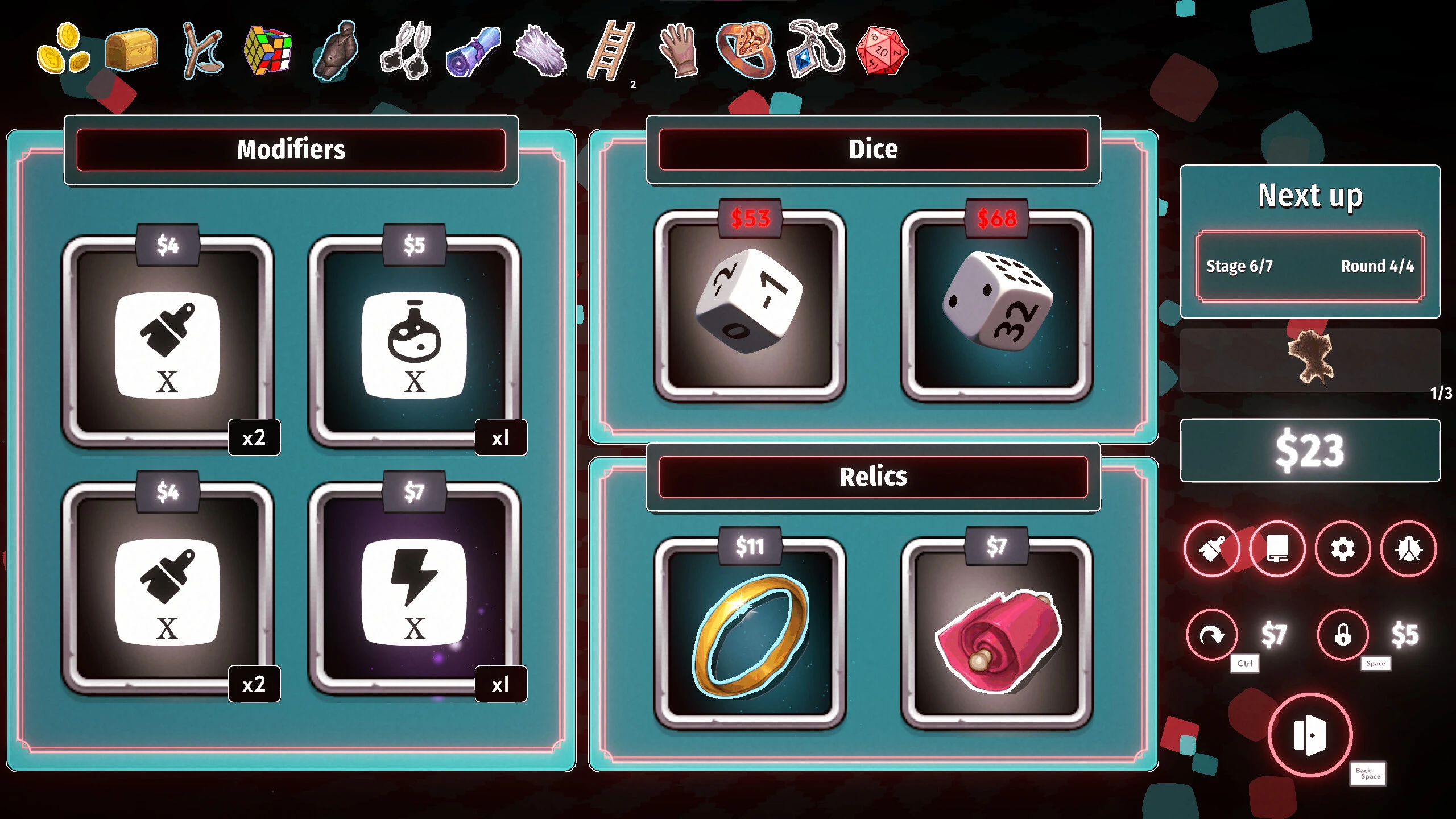
Pip My Dice shifts the idea into dice customization, with Yahtzee rather than a casino floor as the reference point. You are rewriting individual dice faces, collecting relics, and chasing combo-driven score escalation. The appeal is probability control: turning random rolls into a system you have deliberately weighted, right up to stacking a die with identical faces because the relic math says so.
It is a good pick for players who enjoy building engines from small numerical edges. A face upgrade here, a relic interaction there, and a run suddenly has a clear scoring identity. The satisfaction comes from making the dice less fair and more yours. Seeded runs and leaderboards give it a competitive edge if you want to test a build against other people's.
Readability is the friction. A poker hand or a slot board communicates its state instantly. Customized dice ask for more mental tracking, especially once relic effects stack, and the learning curve means the first few runs are murkier than the top picks.
Best fit: players who like dice manipulation, relic synergy, and high-score scaling built from controlled randomness.
7. Aotenjo: Infinite Hands
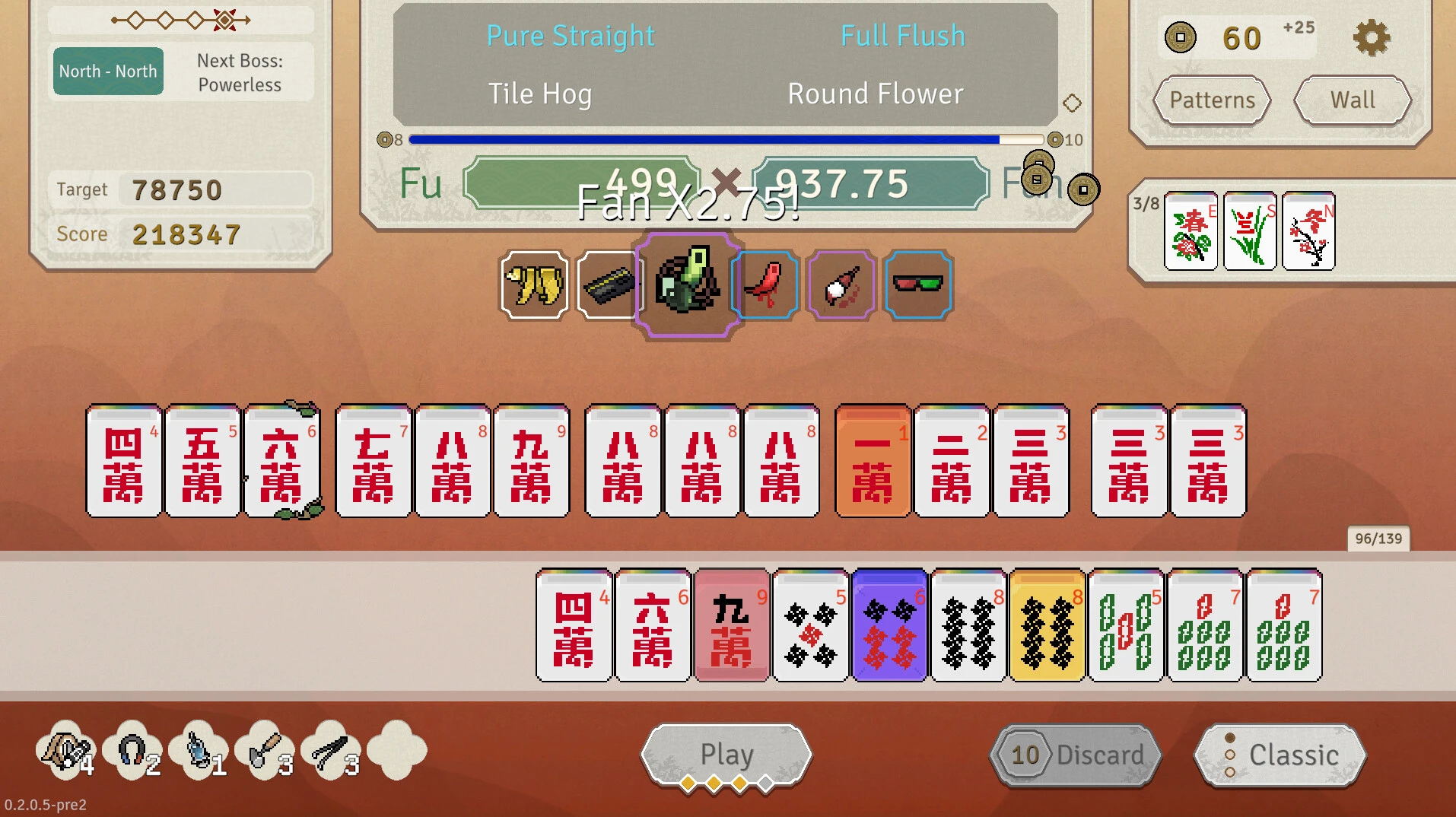
Aotenjo: Infinite Hands is the mahjong pick, and it earns its place by making pattern recognition the gambling mechanism. Runs revolve around tile styles, pattern combos, and scoring escalation rather than card combat or slot output.
That makes it the most distinct entry here. The appeal is not immediate spectacle. It is learning what a hand can become, then drafting and steering toward that pattern. If Balatro turns poker familiarity into explosive scoring, Aotenjo turns mahjong structure into a run-based scoring puzzle.
It clicks hardest if you enjoy learning a scoring language. The decisions get satisfying once tile identity and combo direction start to feel natural, and the run opens into a different kind of deck control: less thinning a card pile, more shaping the hands that are still possible.
Accessibility is why it ranks last. It is the least plug-and-play option for players who want instant casino readability. The mahjong foundation gives it real personality, but it asks for pattern learning before the best decisions become obvious.
Best fit: players who want mahjong-based scoring, pattern mastery, and a less familiar route into roguelike deckbuilding.
Quick picks by gambling mechanism
- Best poker roguelike: Balatro
- Best blackjack roguelike deckbuilder: Dungeons & Degenerate Gamblers
- Best classic slot-machine drafting: Luck be a Landlord
- Best hostile slot-machine pressure: CloverPit
- Best physics-based casino chaos: Ballionaire
- Best dice customization: Pip My Dice
- Best mahjong scoring puzzle: Aotenjo: Infinite Hands
Final recommendation
Start with Balatro if you want the strongest overall mix of speed, clarity, and combo scaling. Pick Dungeons & Degenerate Gamblers if blackjack tension sounds more interesting than pure score racing. Go to Luck be a Landlord or CloverPit for slot machines, depending on whether you want compact drafting or darker debt pressure.
For the stranger edges: Ballionaire is the most exciting chaos engine, Pip My Dice is the dice-tuning pick, and Aotenjo: Infinite Hands rewards pattern learning over familiar card hands. The best choice is not the one with the most casino flavor. It is the one where the odds give you better decisions to make.