7 Best Silent Cards in Slay the Spire for Ascension Runs
A practical ranking of seven Silent cards, with advice on when each solves a problem—and when to pass.
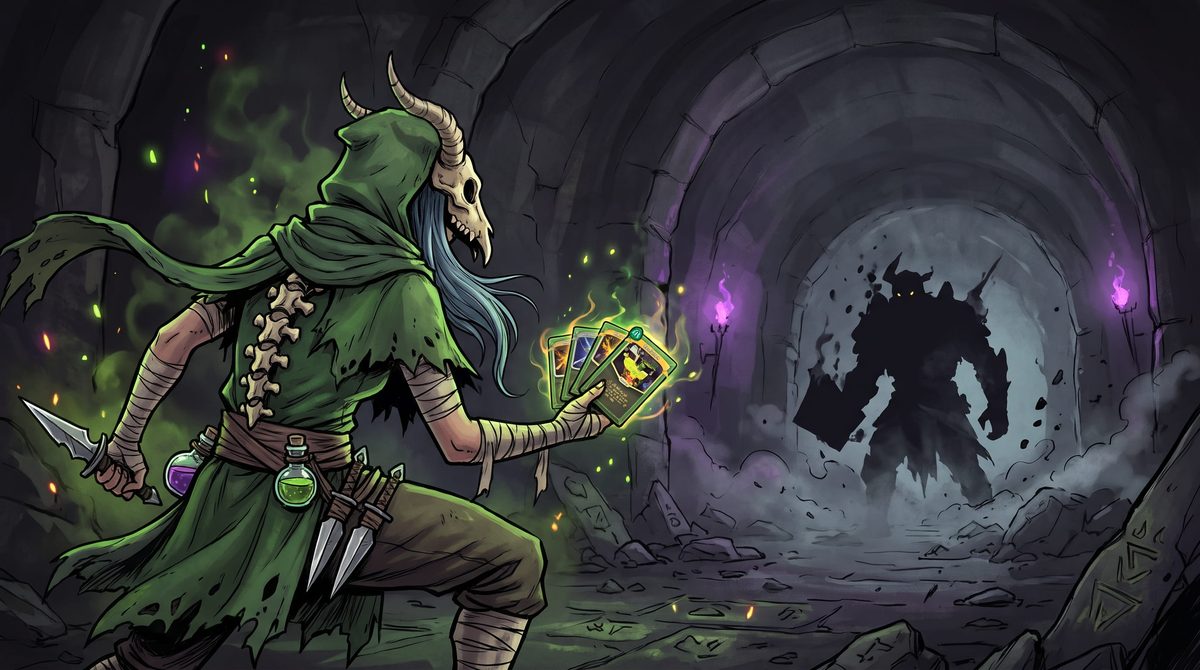
The best Silent cards in Slay the Spire don’t all solve the same problem. A card that saves a late boss fight can be the wrong pick when your deck still struggles to kill an Act 1 elite.
This ranking favors cards that help across difficult Ascension runs without forcing you into poison or shivs. The order reflects general value, but the right pick still depends on your next fight, your current deck, your energy, and your upgrade options.
1. Piercing Wail
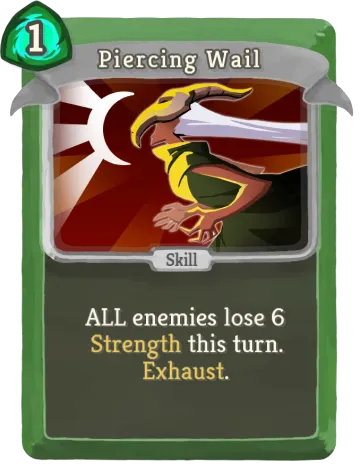
Piercing Wail is one of the Silent’s cleanest answers to a dangerous attack turn. For one energy, all enemies lose 6 Strength for the turn, or 8 when upgraded. Against an enemy attacking three times for at least 6 each, the unupgraded card prevents 18 damage before other modifiers—and it applies that reduction to every attacker at once.
That makes it especially valuable against multi-hit enemies and crowded fights, including the Heart. It also exhausts, so it won’t clog your draws after it has done its job.
The catch is timing. Draw it on a quiet turn and its value drops; use it against a single large hit and it saves much less than you might hope. Enemies with Artifact also ignore the Strength loss.
Take it when: You need efficient defense, particularly for known multi-hit fights.
Consider another pick when: Act 1 damage is your immediate problem. Piercing Wail keeps you alive, but it won’t help you finish an elite.
2. Wraith Form
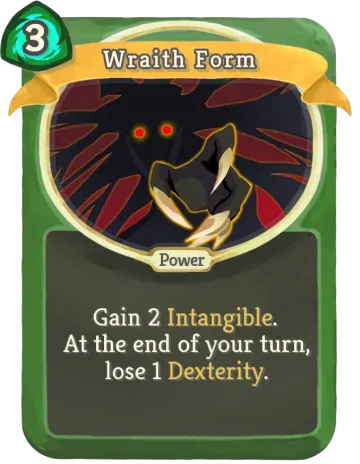
Wraith Form buys turns that ordinary block cards cannot. It grants two turns of Intangible, or three when upgraded, reducing most damage taken to 1 per hit. Against a boss winding up a heavy attack, that can be the difference between stabilizing and losing the run.
The price is steep: Wraith Form costs three energy, and you lose 1 Dexterity at the end of every turn after playing it. Play it too early in a long fight and your block cards may become unreliable before the enemy is dead.
Treat it as a plan for surviving specific turns, not permission to ignore defense. It works best when your deck can end the fight during the Intangible window or has another way to survive afterward. Note that it does not stop effects that cause HP loss rather than damage.
Take it when: You need a strong answer to late-game burst damage and can afford the energy.
Consider another pick when: You lack damage and have no clear way to close fights before the Dexterity loss catches up with you.
3. Adrenaline
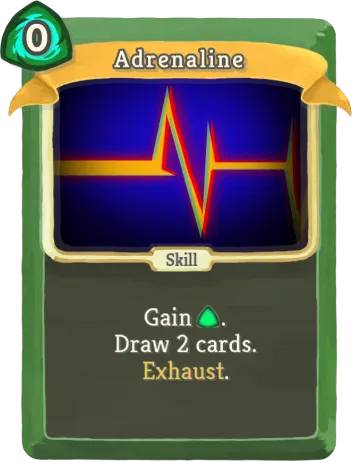
Adrenaline makes good turns easier to assemble. It costs zero, draws two cards, and grants one energy; the upgrade raises the energy to two. It exhausts after use, but free draw plus energy is valuable in almost any deck.
The upgrade is excellent, especially when it lets you play an expensive power without sacrificing the rest of your turn. Adrenaline also finds your answers sooner, which matters when a fight punishes slow setup.
Its main limitation is easy to overlook: it can only draw the cards you already have. An early deck with weak attacks may be better served by a strong damage card, even over a rare as attractive as Adrenaline. Drawing underpowered cards faster is not an Act 1 plan.
Take it when: Your deck has useful cards to find and wants smoother, more flexible turns.
Consider another pick when: An upcoming elite demands immediate damage and your attacks are still inadequate.
4. Alchemize
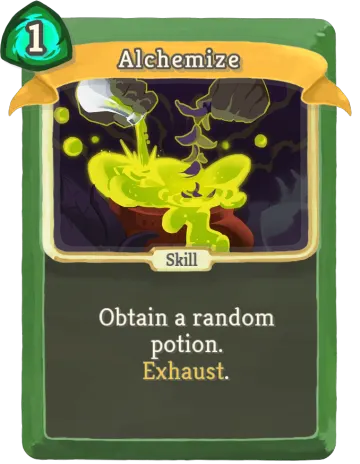
Alchemize gives the Silent a random potion during combat, then exhausts. That flexibility is the appeal: a potion can provide damage, defense, energy, or another effect without your deck needing to contain every answer.
It becomes more attractive once upgraded, which drops its cost from one energy to zero. It also rewards planning around potion slots. On Ascension 11 and above you have only two, so with a full belt you must choose before playing it: use or discard a potion, or accept that Alchemize produces nothing.
Randomness is the tradeoff. You can’t count on the exact potion a particular turn needs, and a potion that helps later doesn’t solve the attack in front of you.
Take it when: You can manage potion space and want flexible value across a run.
Consider another pick when: You need a reliable, immediate answer to a specific fight rather than another random resource.
5. Footwork
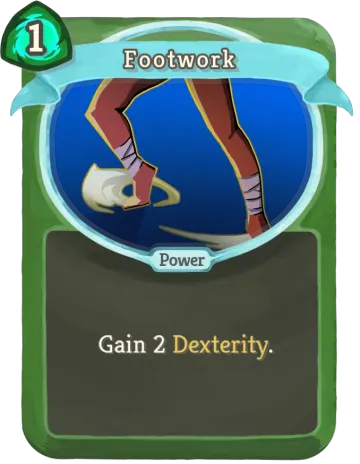
Footwork turns a pile of ordinary block cards into a scaling defense plan. For one energy, it grants 2 Dexterity, or 3 when upgraded. That bonus applies to every block card you play, so its value compounds over longer fights.
It fits decks that already play several block cards per cycle. Get Footwork down early, keep drawing defense, and it can carry a surprising share of the defensive load without demanding a particular damage archetype.
The limitation is that Footwork blocks nothing on the turn you play it. Against a fast enemy, spending energy on a power can leave you exposed. It also needs enough block cards—and enough turns—to pay off.
Take it when: Your deck has a solid defensive base but needs it to scale for bosses and longer encounters.
Consider another pick when: You are dying before setup matters, or a direct damage or block card solves the next fight more reliably.
6. Corpse Explosion
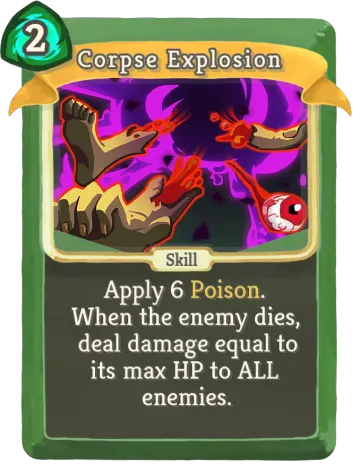
Corpse Explosion earns its place for one reason: it turns a crowded fight into a chain reaction. For two energy, it applies 6 poison and marks the target; when that enemy dies, every other enemy takes damage equal to its maximum HP.
That is powerful against groups with a sturdy enemy you can focus down, and it solves encounters that would otherwise force the Silent to split damage across several targets. The poison helps, but the explosion is the reason to take it.
Against a lone enemy, that payoff disappears. The card still applies poison, but a deck looking for single-target scaling shouldn’t pick it on its group-fight reputation. And the explosion only happens if the marked target actually dies.
Take it when: Multi-enemy fights are a clear weakness and you can kill a suitable target.
Consider another pick when: Your group damage is already covered and your next major problem is a single boss.
7. Well-Laid Plans
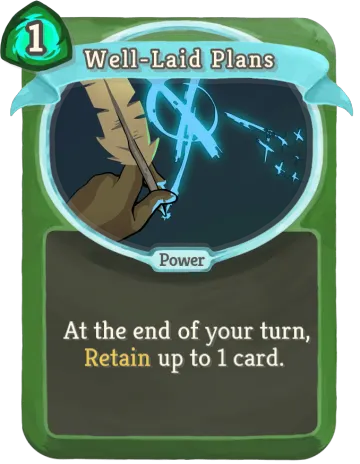
Well-Laid Plans is only as good as the cards you want to hold. Once played, it lets you retain one card at the end of each turn, or two when upgraded. That turns awkward draws into deliberate sequencing.
Holding Piercing Wail for a threatening attack, for example, is far better than drawing it after the danger has passed. Retention also helps you line up an expensive card with the energy to play it.
But it costs an energy and a card draw to set up, and it doesn’t improve what’s in your deck. If your cards are mostly interchangeable attacks and blocks, there may be little worth saving.
Take it when: You already have powerful, timing-sensitive cards and want more control over when they appear.
Consider another pick when: Your deck still needs the answer itself. Retention helps you use a solution better; it doesn’t replace finding one.
How to use this ranking during a run
Before taking the highest-ranked card in a reward, identify the next problem your deck can’t reliably solve.
- Missing early damage? Favor a strong attack over utility, even if Adrenaline is tempting.
- Losing to heavy attack turns? Piercing Wail or Wraith Form may provide the protection you need.
- Struggling in long fights? Footwork scales your existing block; Alchemize adds flexible resources.
- Overwhelmed by groups? Corpse Explosion offers a narrower but often stronger payoff than another general-purpose card.
- Drawing answers on the wrong turns? Well-Laid Plans becomes valuable once those answers are already in the deck.
The best Ascension pick is the one that improves your chance of reaching the next reward—not necessarily the card with the highest ceiling.