7 Best Deckbuilders Without Energy Systems
These deckbuilders replace energy with dice, sacrifices, cooldowns, tiles, and other unusual economies that make every card play matter.
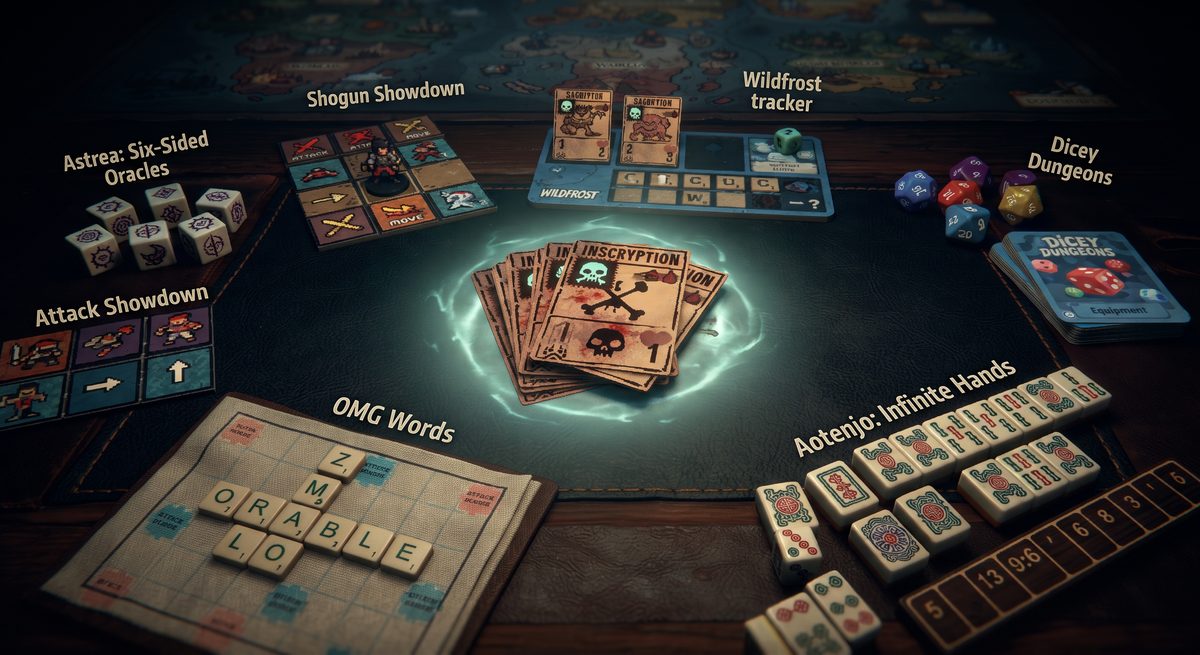
The best deckbuilders without energy systems do not remove resource pressure. They relocate it. Instead of paying from a predictable pool, you sacrifice cards, convert dice, wait through cooldowns, spend a turn and a board slot, or build words and tile patterns.
This list is for players who already understand run-based deckbuilding and want the economy itself to change how turns are evaluated. The ranking prioritizes meaningful tension, readable systems, build expression, and run pace over popularity. A game counts here when its main cost is something other than a standard energy bar, even if it remains demanding in other ways.
The best deckbuilders without energy systems at a glance
| Rank | Game | What replaces energy | Best fit |
|---|---|---|---|
| 1 | Inscryption | Blood and bones | Players who want card value to change based on future costs |
| 2 | Astrea: Six-Sided Oracles | Purification and Corruption dice | Players who enjoy managing unstable resources |
| 3 | Shogun Showdown | Cooldowns, lanes, and attack tiles | Players who prefer tight sequencing over large hands |
| 4 | Wildfrost | One play per turn, counters, and board slots | Tactical players who want every card to matter immediately |
| 5 | Dicey Dungeons | Dice-based action availability | Newer or lighter players who still want meaningful variance |
| 6 | OMG Words | Letter tiles, boons, and word construction | Players who want a puzzle engine instead of a combat economy |
| 7 | Aotenjo: Infinite Hands | Mahjong tiles and pattern scoring | Players who enjoy escalating combo structures and indirect value |
These games are ordered by how strongly their unusual economy reshapes the run. The top entries make resource management the central source of tension. The lower entries are more specialized, but they can be better matches for a very specific player itch.
1. Inscryption is best for sacrifice-driven card evaluation
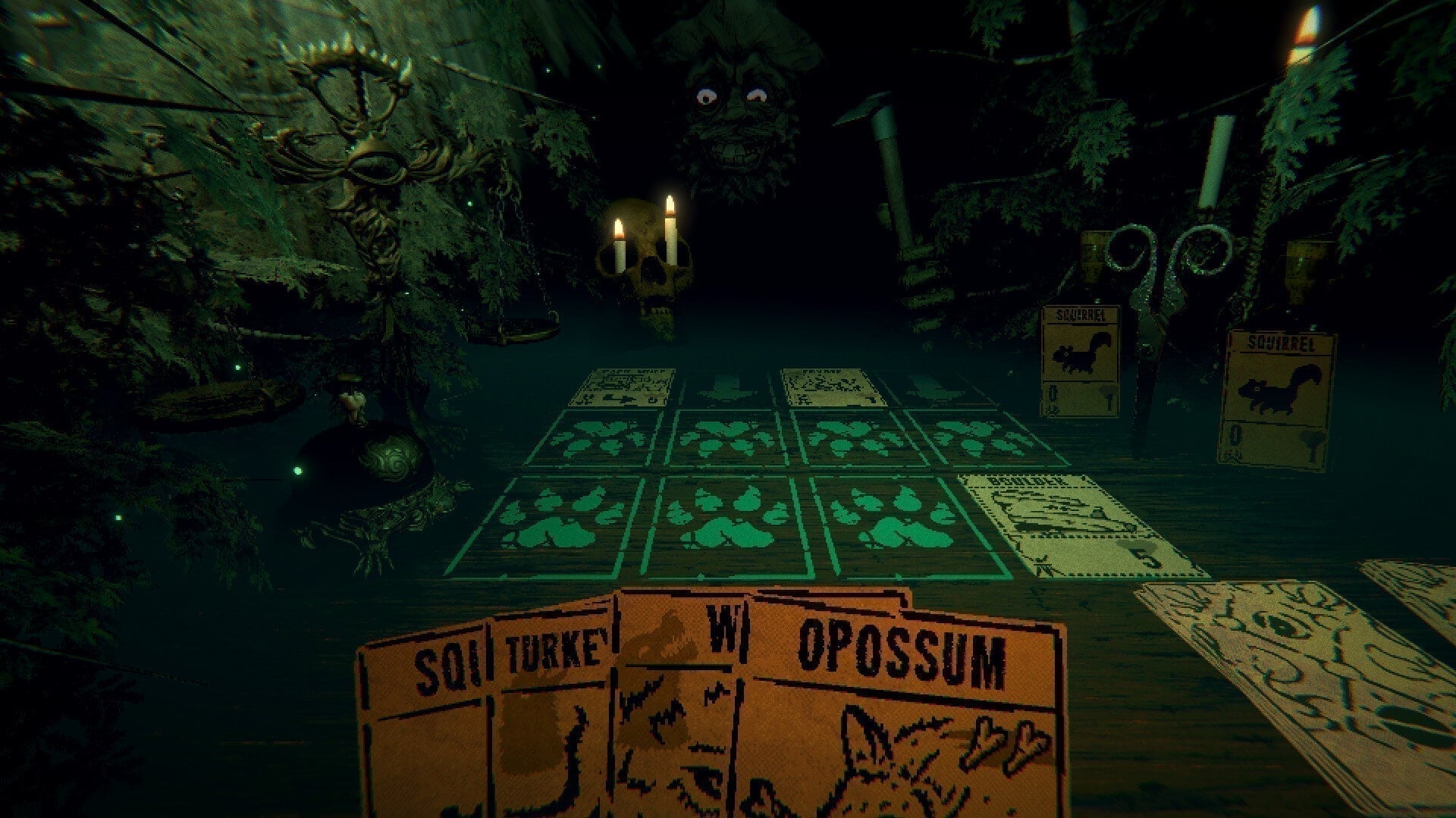
Many deckbuilders make weak cards feel like mistakes. Inscryption makes them potential fuel.
This pick is about the blood-and-bones game that made Inscryption famous: Leshy's cabin, and Kaycee's Mod after it. Later story acts experiment with other costs, including energy, but those are not the economy this ranking is recommending. In the sacrifice game, a card does not need to be a strong attacker to be useful. It may be valuable because it pays for something better on the next turn. A squirrel, a dying blocker, or a supposedly low-impact body can become the piece that opens an awkward board.
That creates a particularly sharp kind of tension. You are not only asking whether a card is good. You are asking what the card is worth when converted into another card's cost. Deck control and sacrifice planning matter more than collecting the biggest effects.
The run feel is moody, compact, and unusually eventful because the card battles sit inside a puzzle-box structure with narrative turns. That makes Inscryption a strong choice for players who want their economy to have a physical, thematic identity rather than behave like an abstract number.
The campaign itself is not a repeatable run laboratory. Kaycee's Mod is the mode that turns the sacrifice economy into a challenge-based roguelike, and that is the version worth chasing if you want more drafting. Even then, the card pool is more authored and compact than the deeper run engines on this list.
2. Astrea: Six-Sided Oracles turns resource management into dice control
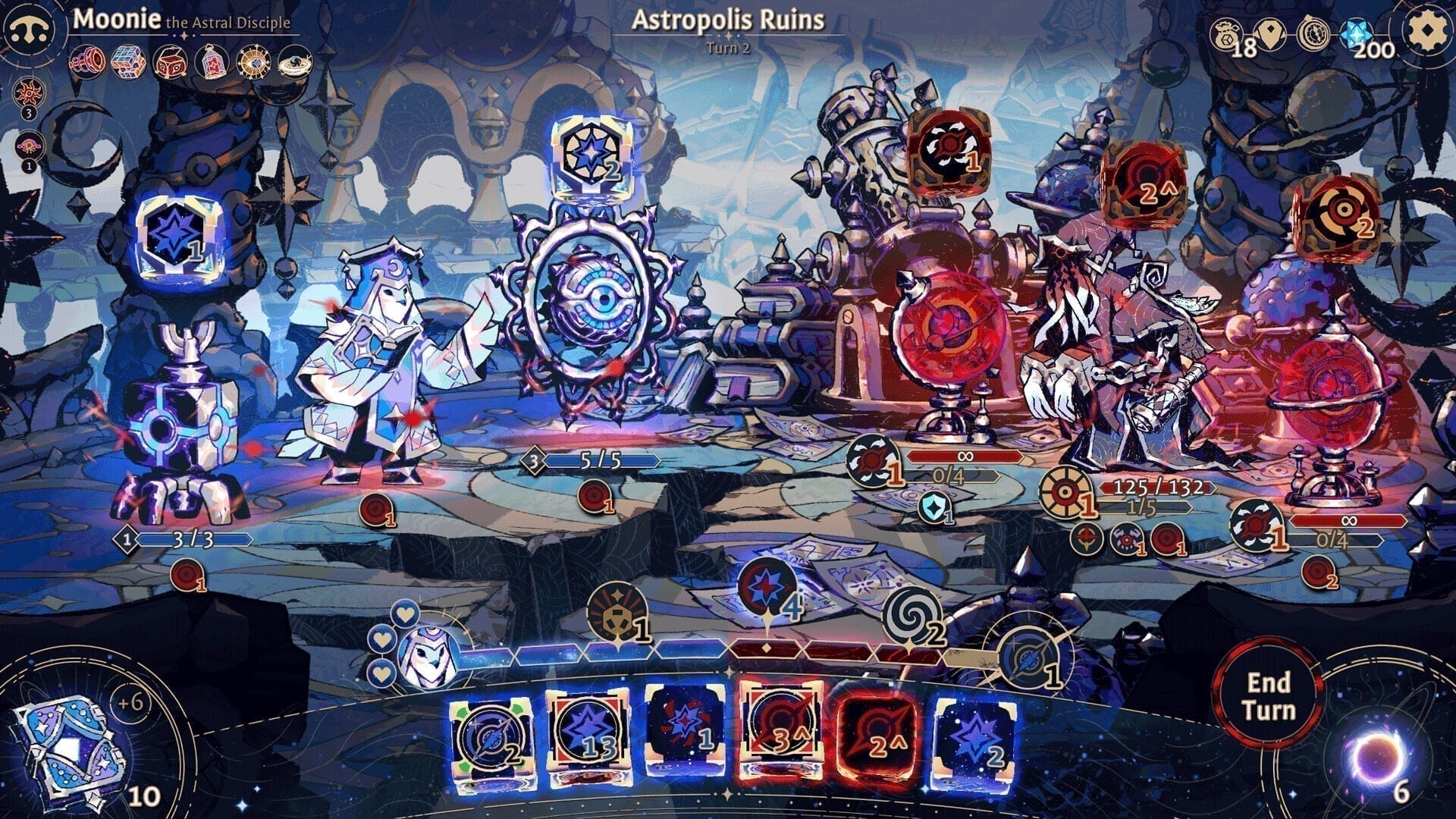
Astrea: Six-Sided Oracles does not hide an energy bar inside the dice. It replaces cards with a dice pool, then replaces a single damage type with two: Purification and Corruption.
Each turn you draw and roll dice, then play them. Purification damages enemies and heals you. Corruption does the reverse. You can often leave a weak Purification result unplayed, but Corruption faces usually have to be spent, which is the real pressure. A die is not simply high or low. It is safe, balanced, or risky, and a bad face can still be converted, rerolled, blocked, or aimed at yourself to trigger Virtues on your health bar.
That creates more expressive recovery than a dead energy curve usually allows. A poor result is not always wasted value. It can become a conversion problem, a self-damage trigger, or part of a strategy that wants Corruption on purpose. The best turns often come from changing the quality of a roll before you commit it.
The appeal is strongest for players who enjoy state management and controlled randomness. Astrea keeps the run-building tension of a deckbuilder while making every roll feel like an evaluation problem.
Where this gets tricky is cognitive overhead. Players who prefer direct card costs may find Purification, Corruption, and die faces harder to read than a conventional energy pool. The game is highly replayable, but its resource language takes longer to internalize than its first few battles suggest.
3. Shogun Showdown makes cooldowns the heart of the sequencing puzzle
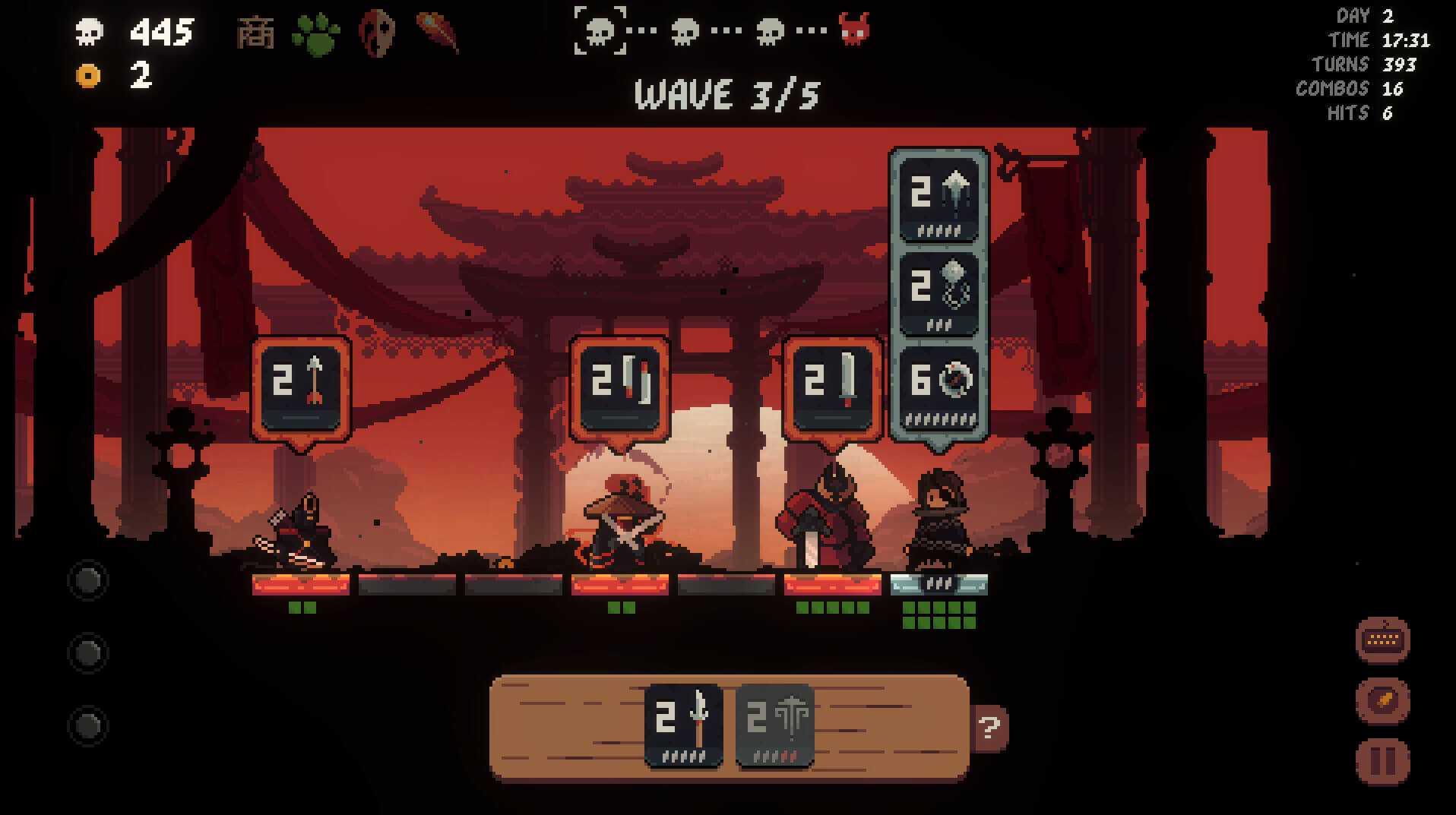
Shogun Showdown does not need a large hand to create difficult turns. A small toolkit of attack tiles, lane positioning, upgrades, and cooldowns creates pressure through timing.
A tile is not simply available or unavailable because of energy. Queuing it puts it on cooldown, changing the shape of the next few turns. That makes the cost of an attack partly temporal: you are spending access to an option and accepting that another option may need to carry the next exchange.
Positioning adds a second layer. A strong attack in the wrong lane or at the wrong distance can be weaker than a modest move that preserves your setup. The result is a run built around sequencing, board geometry, and deciding which action should be unavailable later.
This is the best fit for players who find oversized hands and long card chains less interesting than a small set of highly consequential tools. Shogun Showdown becomes especially satisfying when a modest tile set starts producing reliable patterns through upgrades and careful cooldown planning.
The meaningful difference is that the tactical board often matters more than classic deckbuilding depth. Players looking primarily for card-draw engines or sprawling combo piles may find Shogun Showdown too focused and too positional.
4. Wildfrost replaces energy with timing, counters, and board space
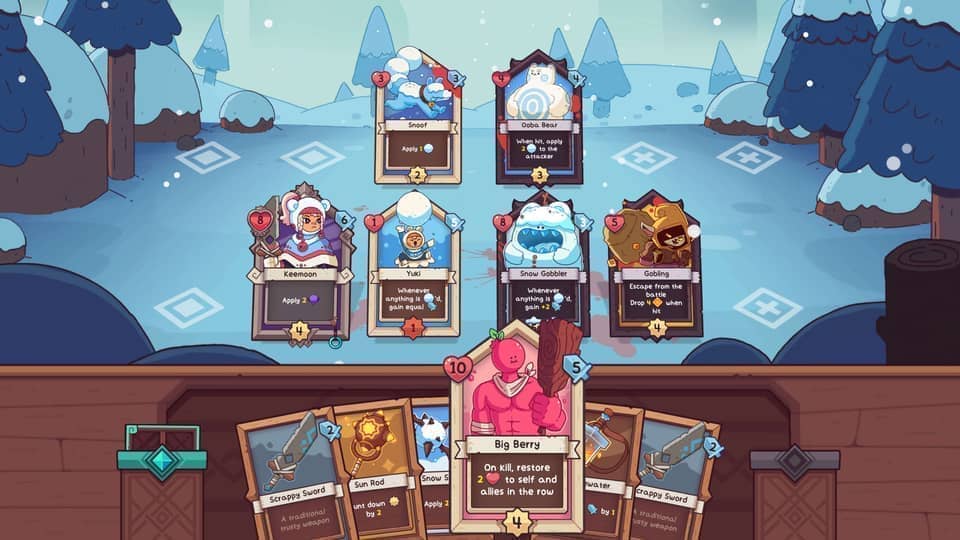
The trick in Wildfrost is that the cards are free and you still cannot afford most of them.
You usually play one card per turn. That play ticks every counter on the board, occupies a slot if the card stays in play, and often ends your window to do anything else. Timing, counters, and limited board space are the cost. Energy never enters the picture because the turn itself is the scarce resource.
A setup effect can be powerful, but only if you have enough turns to benefit from it. A unit with the right counter can be worth more than a stronger unit that arrives at the wrong moment. Playing a companion now can fill the space another unit needs later.
The common mistake is treating free cards as permission to fill every available slot. Wildfrost rewards restraint. A compact, well-timed board is often more reliable than a crowded one with overlapping plans.
Wildfrost fits players who want hard encounters, sharp build identity, and positioning that stays relevant throughout a run. Its main friction is obvious: the difficulty is high, and poor sequencing can punish you before a promising build has time to stabilize.
5. Dicey Dungeons offers a lighter dice-based alternative
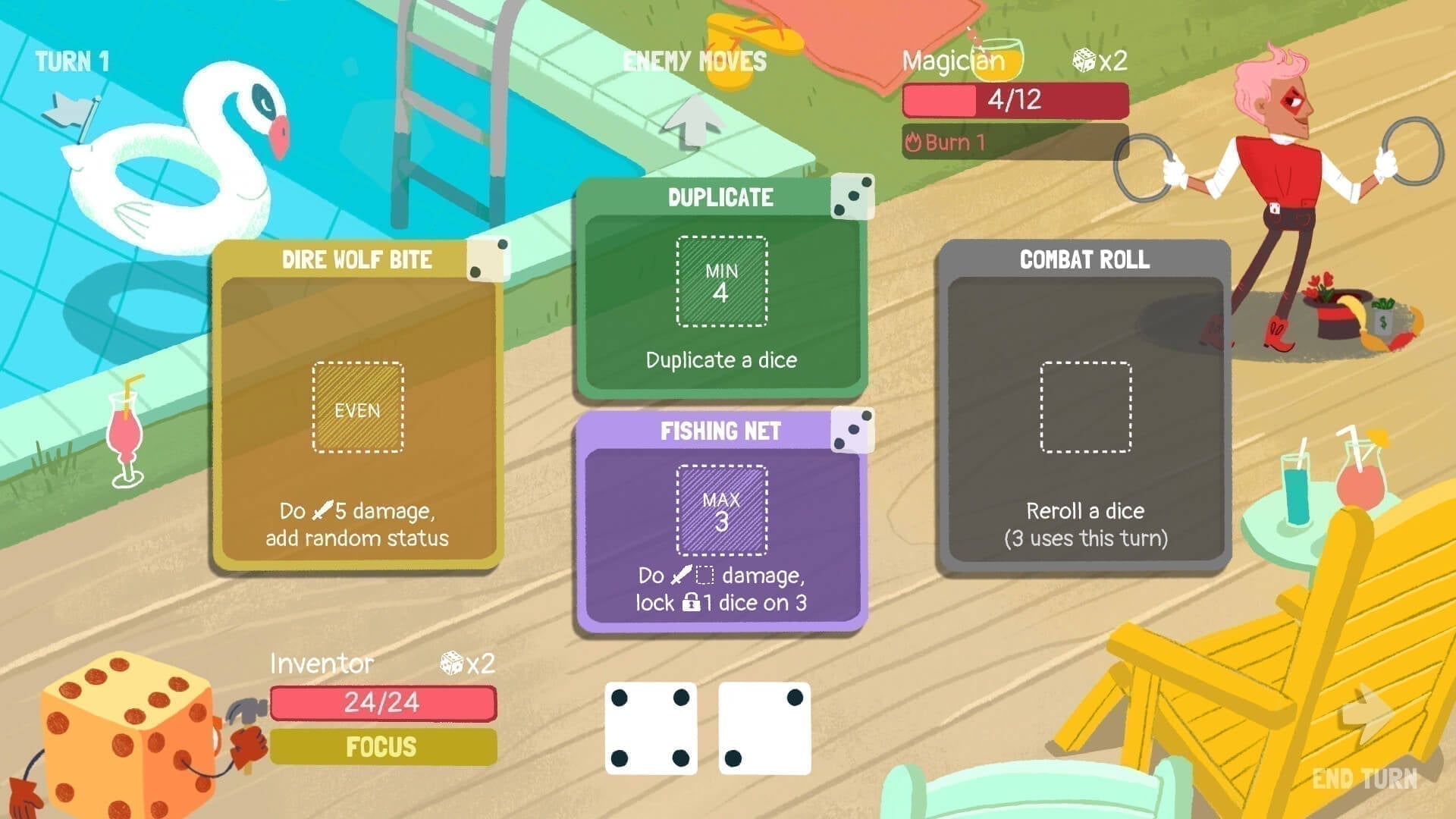
Dicey Dungeons is a good choice when you want to leave energy systems behind without taking on a particularly severe learning curve.
The dice determine which actions are available and how effectively your equipment can operate. That turns each round into a small allocation problem: which roll belongs in which action, and which imperfect result is still worth using? You still build toward a coherent run plan, but the plan has to accommodate what the dice give you.
Its brisk sessions make that uncertainty easy to approach. A bad turn usually reads quickly, and the game's friendly presentation keeps the economy from feeling intimidating. For players new to alternative card costs, Dicey Dungeons is one of the clearest introductions to the idea that randomness can replace a fixed resource pool.
The trade-off is reduced control. A strong build can still be shaped by an awkward roll, and players who want highly deterministic turn planning may find the variance more limiting than exciting. Replayability is also more moderate than in the deeper entries on this list, so it works best as a quick, readable run rather than an endless optimization project.
6. OMG Words turns letter selection into a combo economy
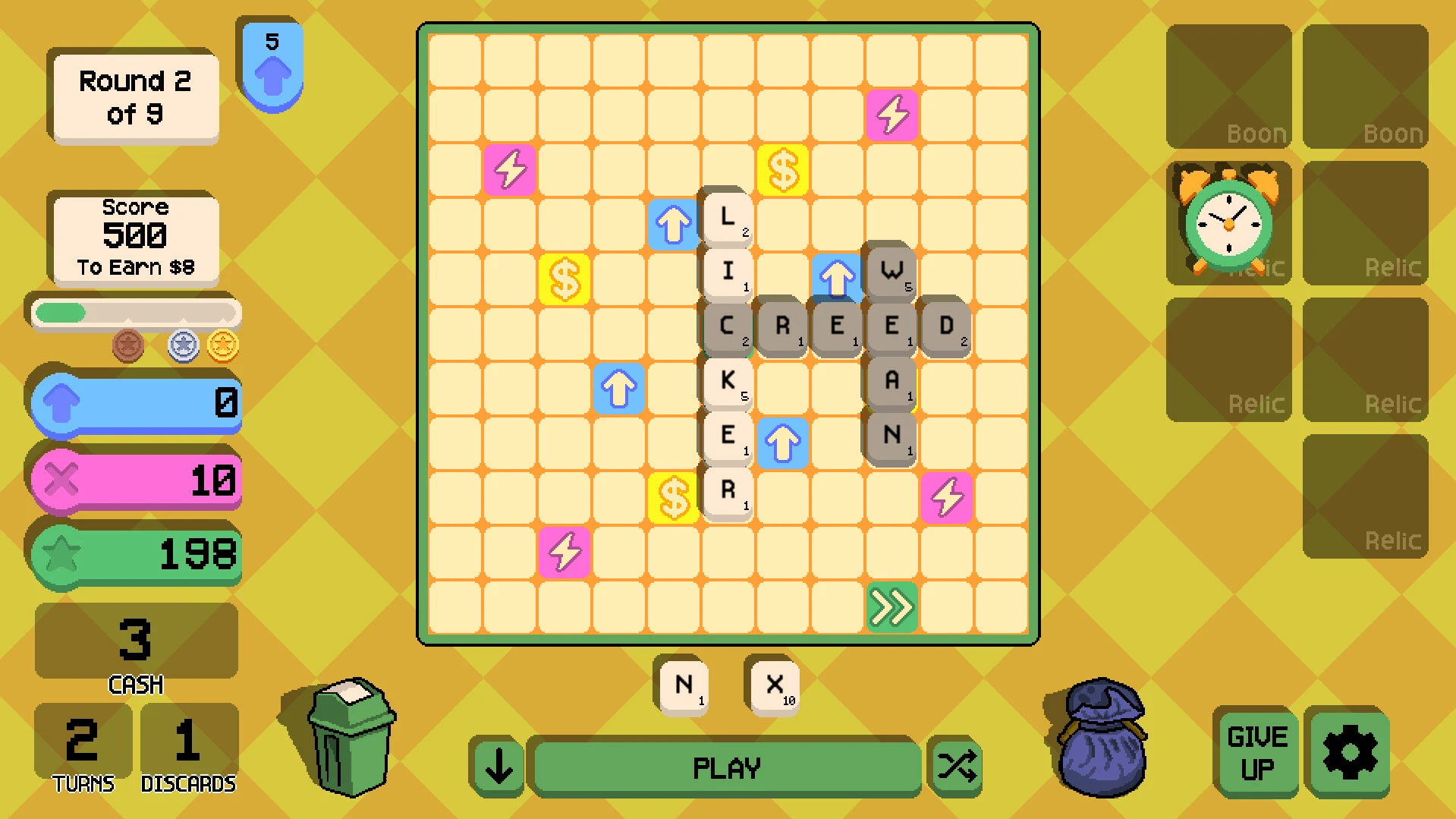
The appeal of OMG Words is not that it imitates a conventional card battler without energy. It changes the basic material of the run.
Letters and crafted tiles are the working resources. Building a word creates the immediate score, while relics, boons, and tile effects determine whether that score stays small or becomes a cascading combo. The important evaluation is not only which effect you drafted, but whether your available letters and tile upgrades can keep that effect active.
That gives OMG Words a different kind of deckbuilding satisfaction. Instead of thinning a deck to draw a particular card sequence, you are improving the quality of the words and tile combinations your run can produce. A strong build feels like a scoring engine that happens to be expressed through spelling.
This clicks most if you enjoy puzzle-solving under pressure and want your resource system to remain visible in every turn. It is also a strong fit for players who like relic-driven scaling but want the underlying action to be more creative than selecting another combat card.
The limitation is the word-game barrier. Your ability to find useful words and interpret the available tiles affects the run in a way that traditional card evaluation does not. Some players will find that expressive; others will see it as an extra skill check that competes with build planning.
7. Aotenjo: Infinite Hands is built around tile patterns and scoring escalation
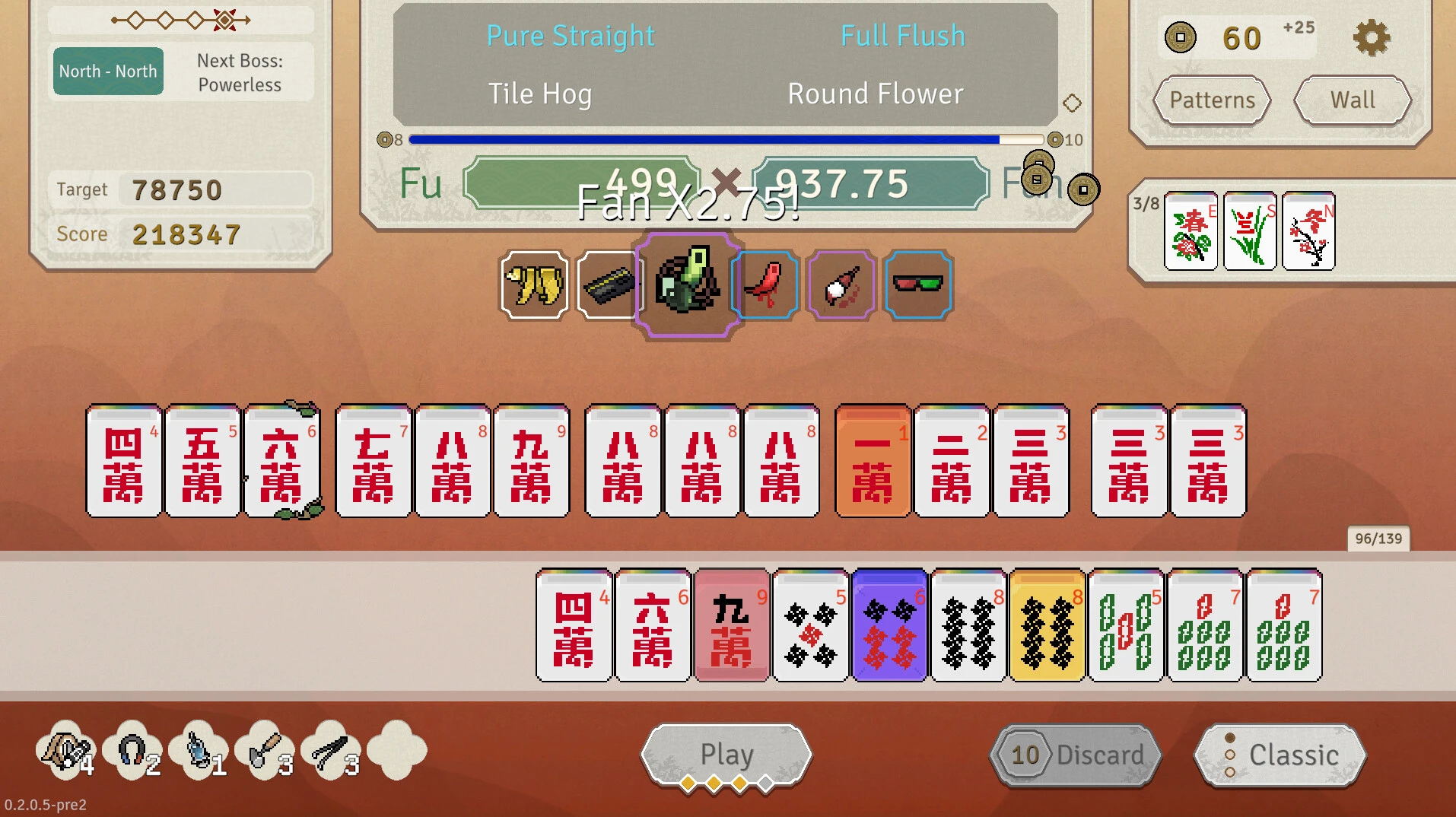
Aotenjo: Infinite Hands is the most specialized recommendation here, but it has a clear reason to be included. Its resource system is not a pool of energy or a hand of combat actions. It is the wall of mahjong tiles, the artifacts that rewrite their value, and the patterns you assemble into a scoring engine.
The central decision is about value preservation. Do you hold a useful tile because it supports a stronger pattern later, or take a smaller score now to keep the run moving? Tile styles and artifacts can change the value of a broad class of tiles, while pattern combos create the kind of escalating payoff that deckbuilder players usually seek from relic and card synergies.
That makes the run feel more like building a scoring economy than trading attacks with enemies. It is a good match for players who enjoy indirect value, probability management, and watching a narrow pattern become a powerful repeatable route.
The friction is that the scoring language is less familiar than a standard card system, and the game is still in Early Access. Aotenjo: Infinite Hands will not satisfy players looking for tactical combat turns or conventional card sequencing. It is here for players who specifically want tile-based combo construction and are willing to learn the pattern vocabulary.
Choose the resource system you actually want to manage
These are not costless deckbuilders. They are deckbuilders with different costs.
The right pick is the constraint you enjoy thinking about: sacrificing a weak card, converting a bad die, waiting out a cooldown, leaving a board slot empty, or holding a tile for a better pattern. If a run still feels like Slay the Spire with the energy number scratched out, it is the wrong game for this itch. The strongest picks here make the replacement economy the reason you keep playing.