8 Games Like Balatro for Joker-Brained Score Chasers
Eight Balatro alternatives that understand the real appeal: escalating score targets, rule-breaking modifiers, rigged odds, and builds that spiral out of control.
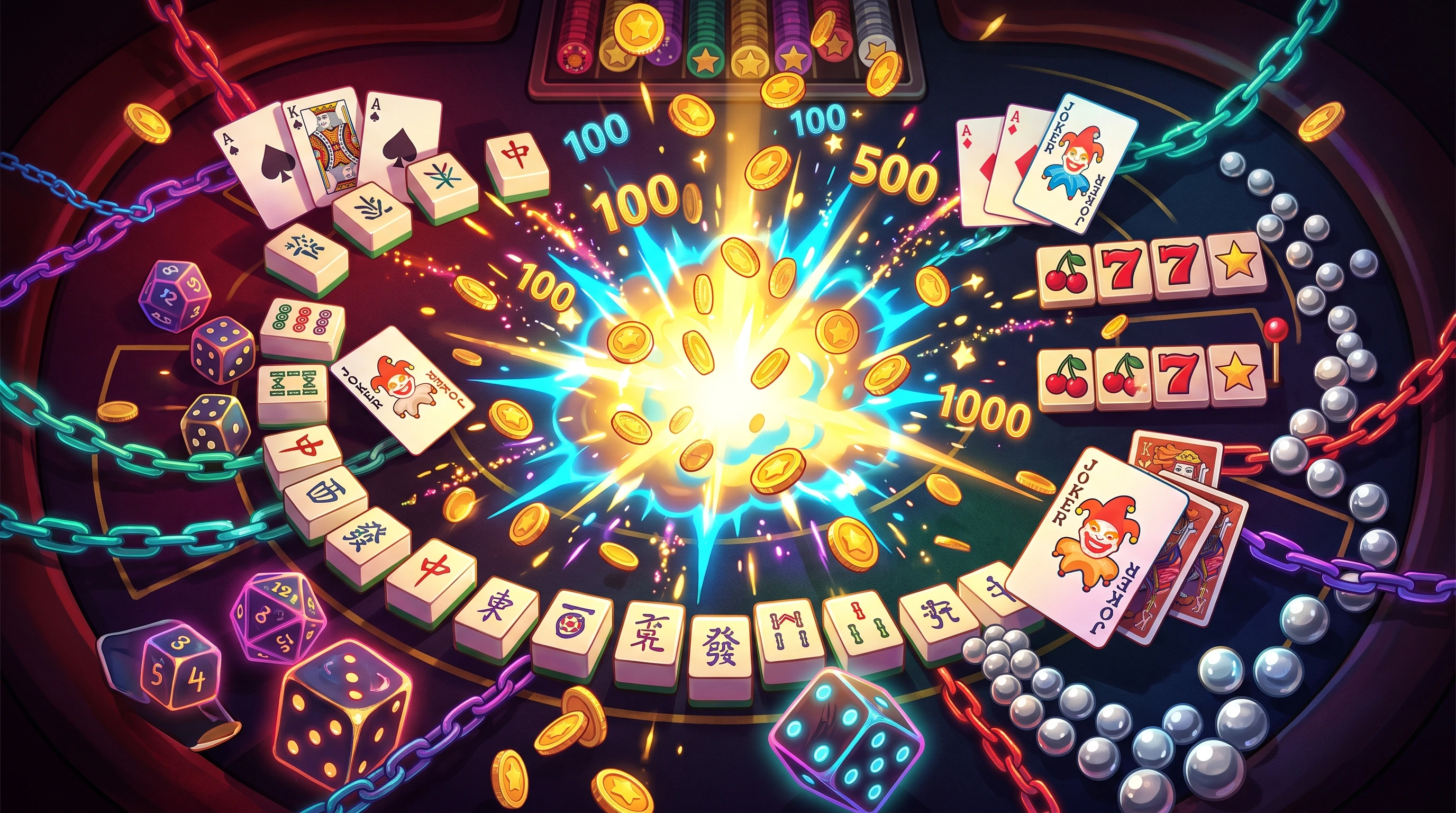
Balatro is not addictive because it uses poker. It is addictive because it takes a familiar ruleset, gives you a shop full of ways to corrupt it, and keeps raising the score target until your carefully assembled machine either goes vertical or falls apart.
That distinction matters when looking for games like Balatro. Plenty of excellent roguelike deckbuilders have cards, relics, and random runs. Far fewer recreate the specific pleasure of turning a modest hand into an obscene number through multipliers, deck manipulation, and one modifier that suddenly makes every earlier decision look smarter.
The eight games below understand that loop. They swap poker for mahjong, blackjack, slots, pachinko, dice, memory matching, and word games, but they preserve the important part: build an engine, bend the odds, beat the target, and immediately start another run because you just thought of a worse idea that might score better.
Quick fit guide
| Game | It replaces poker with | Best for |
|---|---|---|
| Aotenjo: Infinite Hands | Mahjong | The closest overall structural match |
| Dungeons & Degenerate Gamblers | Blackjack | Players who still want real playing cards |
| CloverPit | A slot machine | The wildest charm-driven combo explosions |
| Luck be a Landlord | Slot symbols | The cleanest draft-and-synergy loop |
| Ballionaire | Pachinko | Watching a built engine physically detonate |
| Pip My Dice | Yahtzee-style dice | Rigging probability one die face at a time |
| Replicat | Memory matching | A lighter rule-breaking score chase |
| OMG Words | Word tiles | Building multipliers through spelling |
If you want the closest thing to "Balatro, but not poker," start with Aotenjo: Infinite Hands or Pip My Dice. Pick Dungeons & Degenerate Gamblers if the playing cards are part of the appeal. Choose CloverPit or Ballionaire if you mainly want to watch a ridiculous combo unfold after spending the run assembling it.
1. Aotenjo: Infinite Hands — Balatro with mahjong patterns
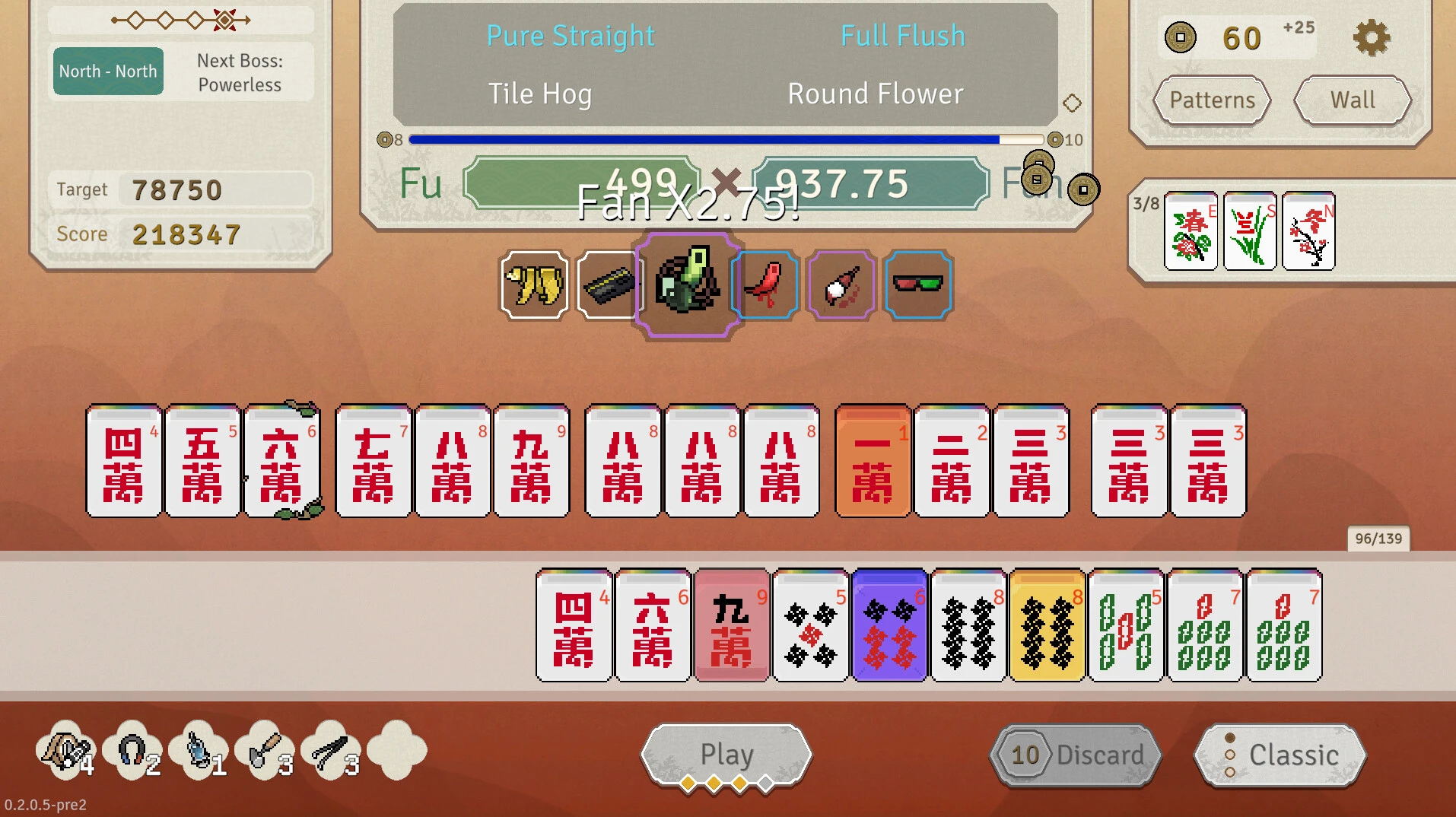
Aotenjo: Infinite Hands is the cleanest translation of Balatro's structure into another traditional game. You build mahjong patterns, improve how those patterns score, collect artifacts that rewrite their value, and try to clear increasingly unreasonable targets before the run catches up with you.
The important similarity is not the tiles. It is the way a run develops a thesis. Early on, a basic sequence or triplet is just a way to put points on the board. Then an artifact rewards a particular pattern, tile editing makes that pattern more reliable, and another multiplier gives you a reason to narrow the entire build around it. By the end, you are no longer playing sensible mahjong. You are manufacturing the exact hand your scoring engine demands.
Aotenjo also captures Balatro's tension between immediate score and long-term deck quality. Spending extra discards may rescue the current round, but it can also expose how inconsistent the wall has become. Adding, deleting, and modifying tiles matters because probability only becomes friendly after you have bullied the pool into cooperating.
Best for: Players who want hand construction, escalating score checks, shops, artifacts, and exponential scoring in almost the same proportions as Balatro.
The catch: Mahjong patterns are less instantly familiar to many players than poker hands, and Aotenjo remains in Early Access as of July 2026. Its interface has more concepts to teach before the scoring starts feeling effortless.
2. Dungeons & Degenerate Gamblers — blackjack with a corrupted deck
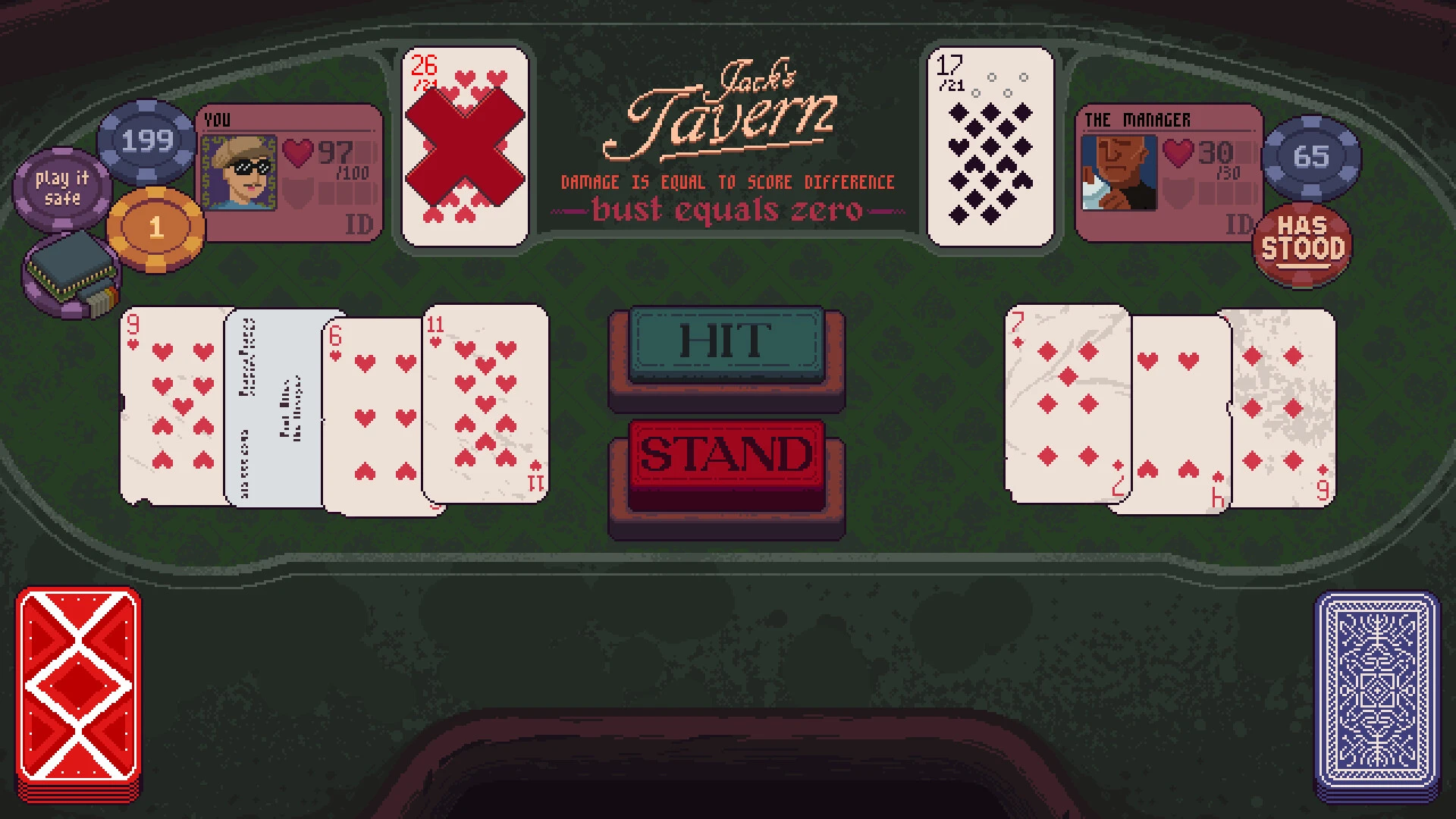
Dungeons & Degenerate Gamblers looks like the obvious "Balatro but blackjack" answer, but it makes one major change: hands deal damage instead of chasing a score quota. You move through a tavern, fight opponents under corrupted blackjack rules, and build a deck from ordinary cards mixed with tarot cards, business cards, birthday cards, and other things that have no business sitting beside an ace.
That strange deck is the reason it belongs here. Suits have mechanical identities, cards can heal or protect you, and removing the wrong value can be as important as adding a powerful effect. A deck that consistently reaches 20 is useful; a deck that turns reaching 20 into healing, armor, currency, and extra damage is a build.
The decision texture feels familiar. Shops tempt you with amusing cards that may dilute the plan. A card that looks weak in isolation can become essential once another effect changes how its value behaves. You are still trying to make a recognizable card game produce outcomes its original rules were never built to handle.
Best for: Balatro players who want to keep traditional playing cards, deck editing, suits, and probability while adding opponents and health management.
The catch: It is a combat roguelike rather than a pure score attack. Its randomness can also feel harsher because a bad draw costs health, not merely one hand from your allowance.
3. CloverPit — the darkest and loudest combo machine
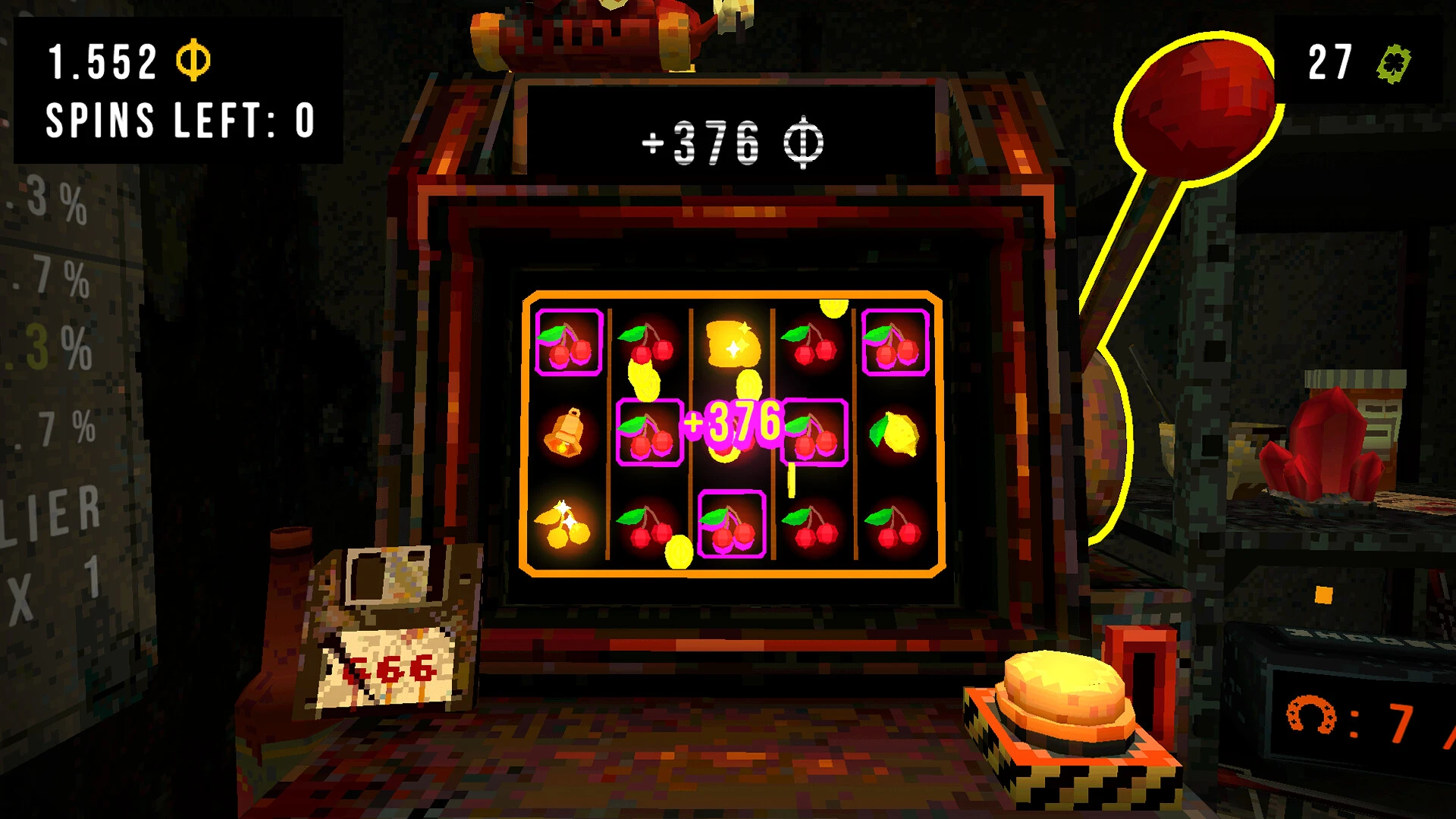
CloverPit takes Balatro's escalating score pressure and puts it inside a rusty cell. You spin a slot machine, buy charms and prizes, and pay an increasing debt at the ATM before the floor opens beneath you. There are no real-money purchases; the slot machine is the system you are trying to break.
Structurally, the debt is an ante. Each deadline asks whether the engine has grown quickly enough, and each shop gives you another chance to define what the engine actually does. Charms change the value of symbols, create new triggers, and reward combinations that can snowball from a reasonable payout into a screen full of numbers.
The slot itself gives you less direct control than a Balatro hand. Much of the strategy happens before the spin: which charms you keep, what interactions you build around, and whether you have created enough redundancy for the machine to fire consistently. Pulling the lever is the reveal, not the whole decision.
Best for: Players who loved assembling Jokers and then watching one hand trigger a ludicrous chain of effects. Endless Mode also gives dedicated score chasers somewhere to push the engine after survival stops being the main concern.
The catch: The oppressive horror framing is far from Balatro's relaxed card-table mood, and the slot-machine presentation can feel more passive if choosing individual cards was your favorite part.
4. Luck be a Landlord — the essential Balatro ancestor
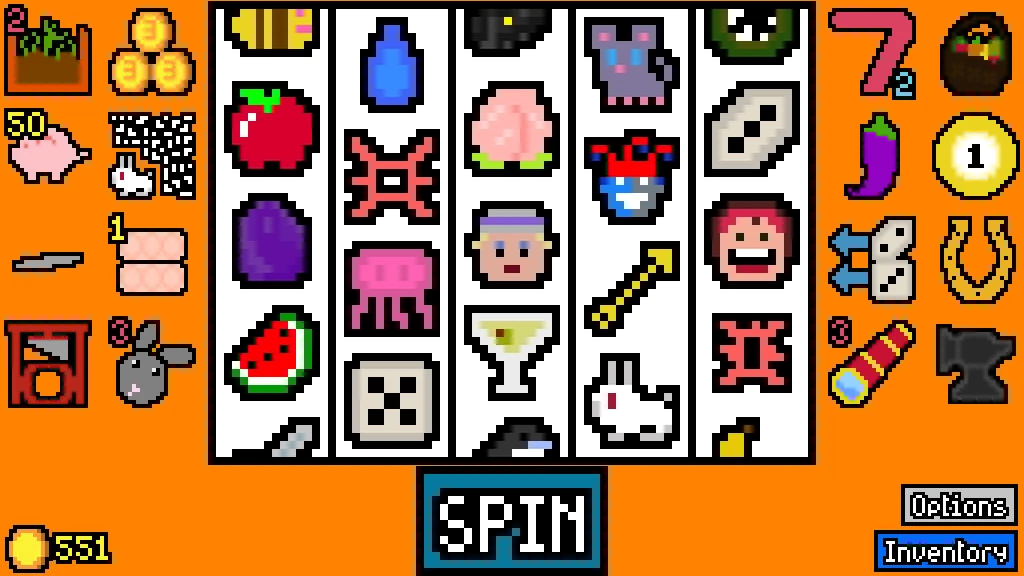
Luck be a Landlord predates Balatro, and its influence is easy to feel. You add symbols to a slot machine, choose items that change how those symbols interact, and earn enough coins to meet a rent payment that keeps climbing. The rules fit on a napkin; the interaction web does not.
Every draft asks a Balatro-shaped question: does this improve the build, or is it merely good in a vacuum? A flower produces a little money. Rain boosts flowers. A sun multiplies them further. Individually reasonable symbols become a real engine once the pool contains the right proportions and the supporting items start compounding their value.
It is also excellent at teaching restraint. Taking a symbol after every spin fills the machine with noise. Strong runs come from recognizing a family of interactions, refusing unrelated value, and removing pieces that have stopped earning their place. The format is a slot machine, but the skill is deckbuilding.
Best for: Players who want short runs, simple inputs, constant drafting, and a large library of symbol interactions to discover.
The catch: You make fewer decisions during the actual spin than during a Balatro hand. The pleasure lives mostly in drafting and pruning the symbol pool rather than sequencing cards turn by turn.
5. Ballionaire — Balatro as a pachinko board

Ballionaire turns the score engine into a physical object. You place triggers on a pachinko board, drop a ball, and watch it bounce through the system you built. New triggers can add money, spawn more balls, move the ball, repeat effects, or create interactions that transform a quiet board into a kinetic disaster.
The Balatro connection becomes obvious as the targets rise. A basic trigger that pays a fixed amount soon stops mattering. To keep up, you need multiplication, repeated activations, and a layout that makes the best parts of the board fire more often. One addition can connect two previously separate ideas and produce an order-of-magnitude jump in income.
There is more positional planning here than in Balatro. An incredible trigger in a dead corner is still a dead trigger, while a modest effect placed in a busy route may activate constantly. Drafting and spatial design therefore feed the same combo.
Best for: Players who want game-breaking synergies with a spectacular payoff. Few alternatives make the finished engine so visible: you built the board, you release the ball, and then physics decides exactly how smug you are allowed to feel.
The catch: Once the ball drops, control is limited. Players who dislike watching probability resolve may find the best part less interactive than choosing and ordering a poker hand.
6. Pip My Dice — the closest dice-based alternative
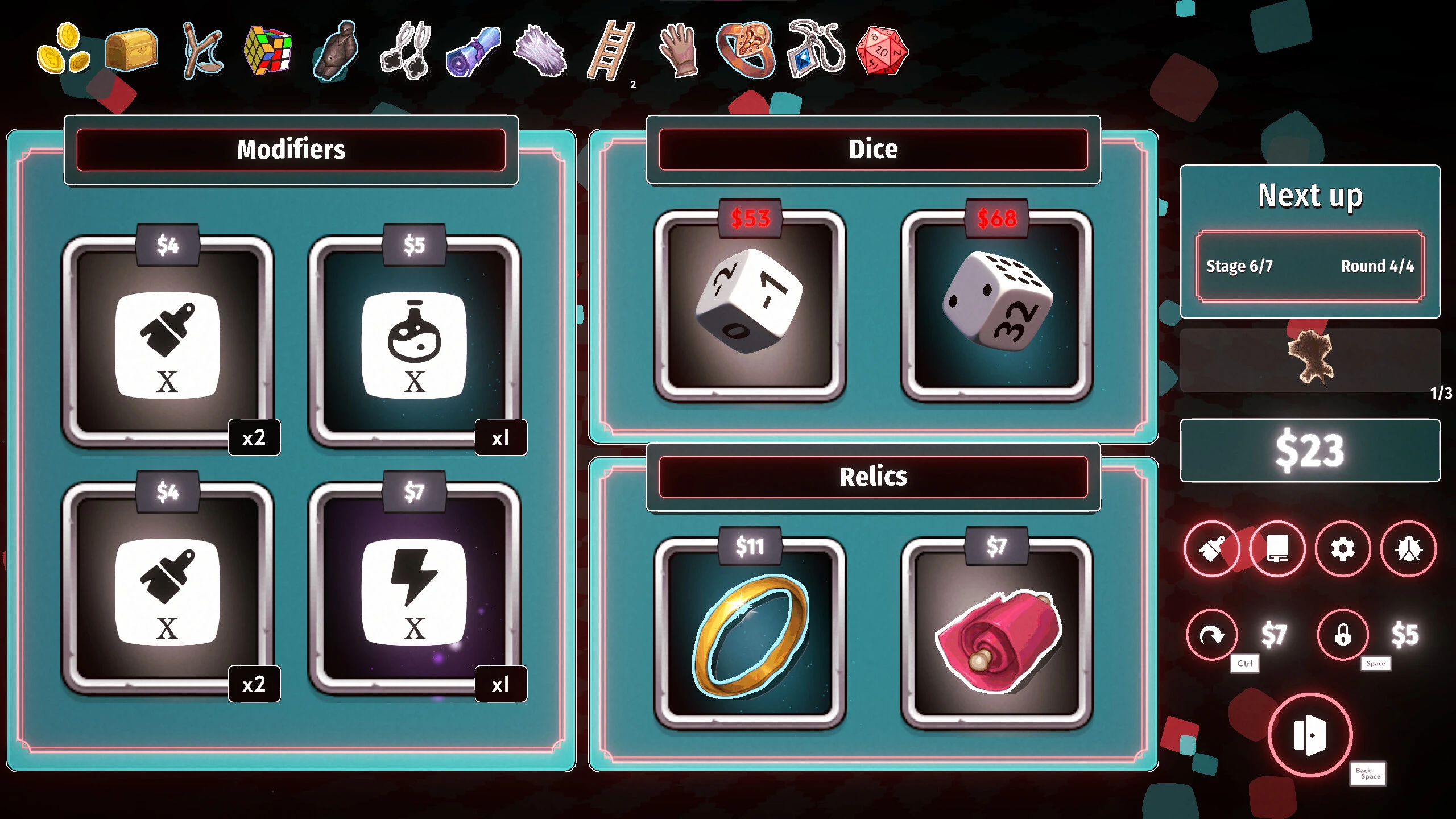
Pip My Dice uses a Yahtzee-style scoring sheet, but its real subject is probability vandalism. You roll dice, hold useful results, score combinations, and buy relics or customizers between rounds. Then you begin altering individual faces until a die stops being random in any honest sense of the word.
That last part makes it a particularly strong Balatro alternative. Standard dice combinations provide the readable base rules. Relics reward specific strategies. Combination slots can improve over the run. Face customization lets you change the underlying pool so the desired result appears more often—or make every side identical when subtlety has completely left the building.
The score target keeps the run honest. A cute relic interaction is not enough unless it scales, and a high-value combination is unreliable unless the dice support it. As in Balatro, the strongest run is usually the one where scoring power and consistency improve together.
Best for: Players who want rerolls, recognizable combinations, escalating score requirements, relics, shops, seeded runs, and direct control over the odds.
The catch: It is a smaller and less lavish production than Balatro. The appeal is mechanical closeness and dice customization, not the same level of audiovisual polish.
7. Replicat — memory matching with Jokers and multipliers
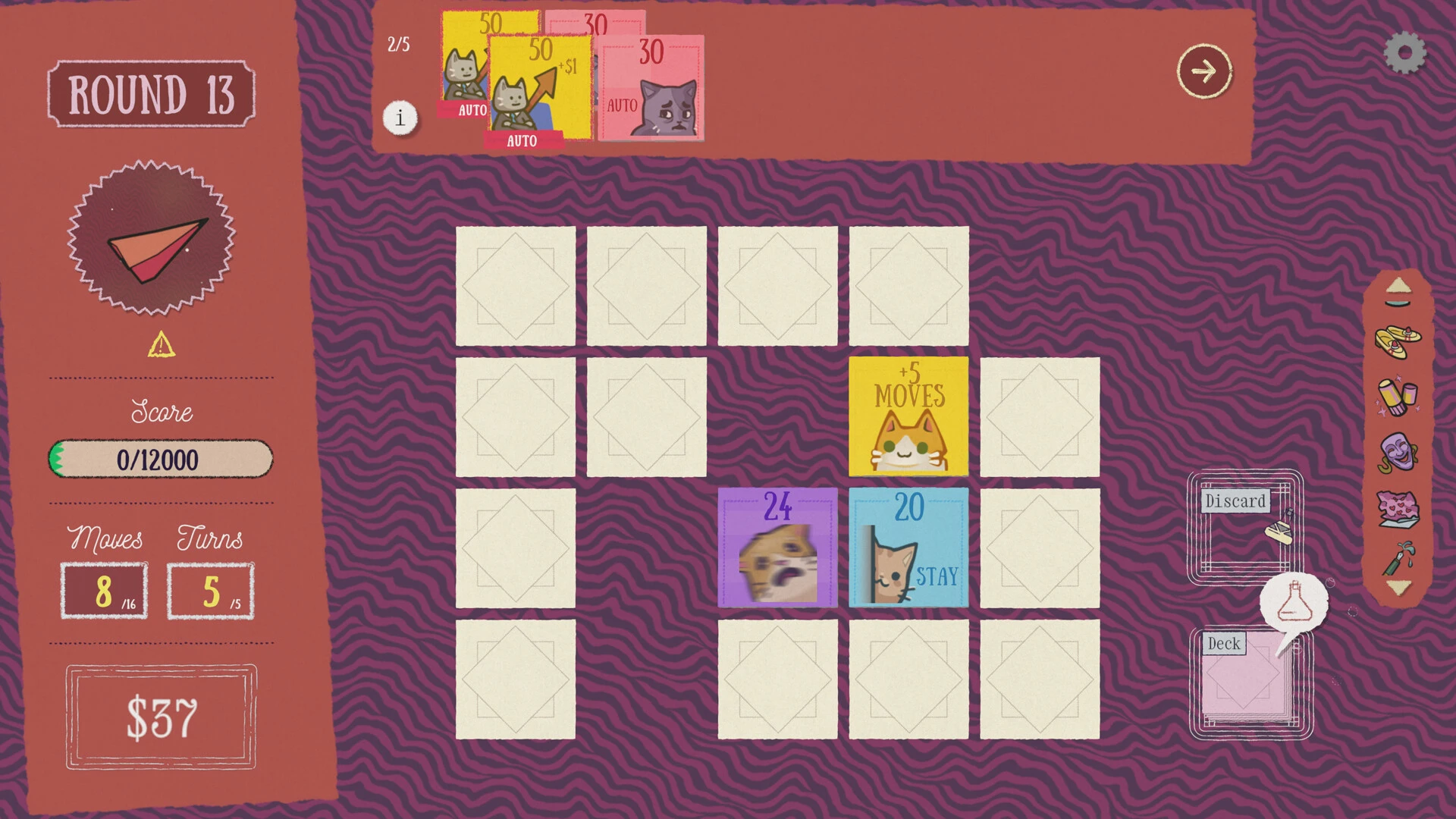
Replicat starts from the card-matching game everyone learned as a child: flip two cards, find a pair, remember where the misses went. Then it adds a deck, curios, Jokers, multipliers, boss modifiers, and items that let mismatched cards count anyway. The innocent base game does not survive for long.
The closest connection to Balatro is the pleasure of earning permission to cheat. Extra reveals reduce the memory burden. Wild matches rescue bad flips. Turn manipulation changes how aggressively you can dig through the board. What begins as recognition becomes an engine shaped around the exact rule your build is best at breaking.
Because the board remains visually simple, it is easy to see why a combo worked. The cats, bright presentation, and forgiving base concept also make Replicat less intimidating than many roguelike deckbuilders without making its build choices meaningless.
Best for: Players who want a lighter, friendlier score chaser built around rule-changing items and clear synergies rather than combat.
The catch: Memory still matters, especially before a build acquires enough ways to expose or manipulate cards. It also has a smaller strategic footprint than Balatro's enormous Joker and deck-modification space.
8. OMG Words — the word-game version of the formula
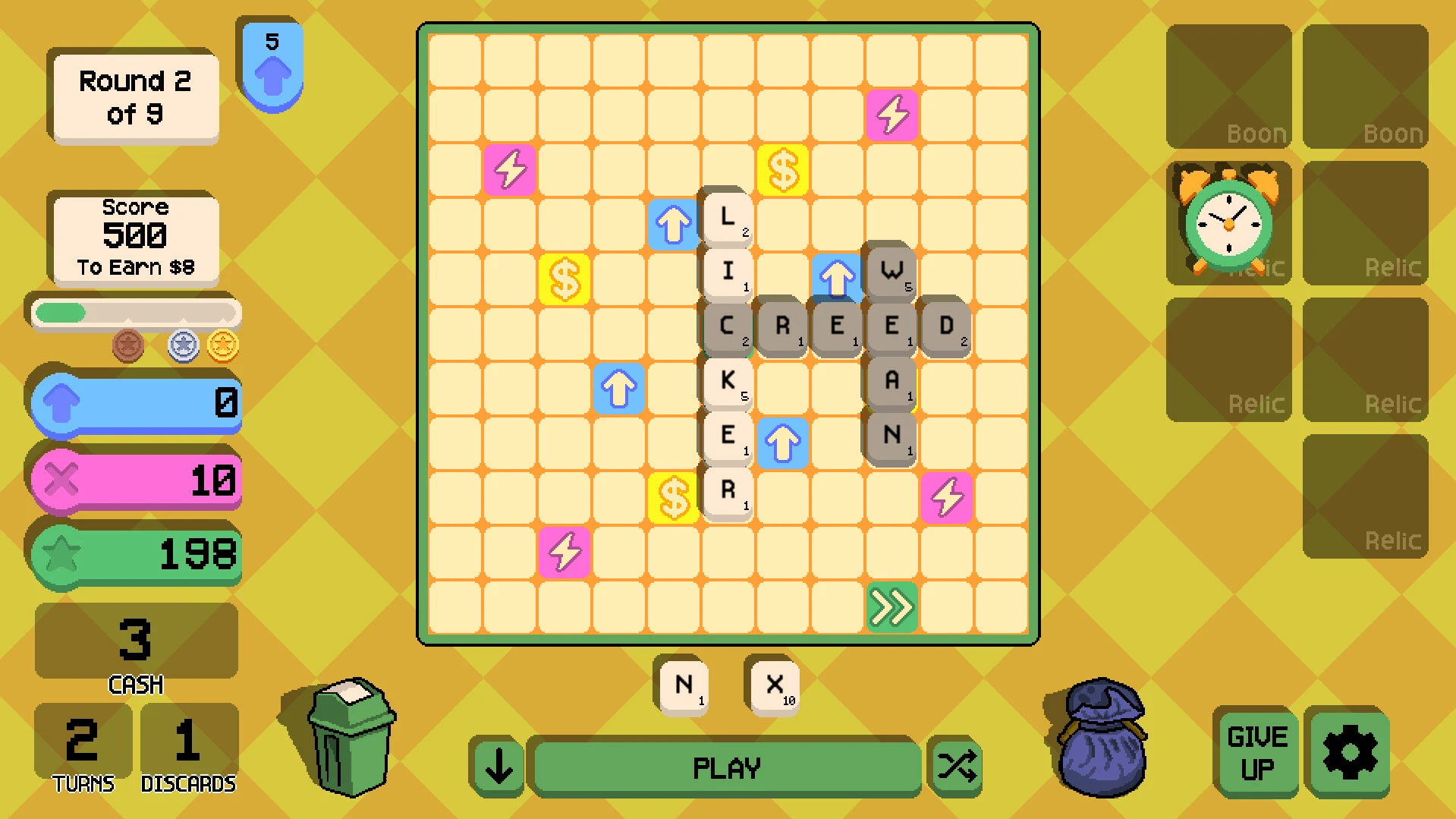
OMG Words takes the same design bet with spelling. You build words from tiles, earn points and multipliers, spend winnings in shops, and collect relics and boons that change your board, tile bag, and scoring priorities.
The best runs stop being about finding the longest word available. A relic may make a particular letter, word shape, or board condition more valuable, so the correct play becomes whatever feeds the engine. Tiles can gain points and abilities, punctuation can enter the bag, and a normal word-game decision gradually turns into the same kind of build-specific arithmetic Balatro creates with poker hands.
It is a useful reminder that Balatro's structure can work with any base game that offers recognizable patterns and enough room to distort their value. Poker has pairs and straights; word games have letters, lengths, placement, and rarity. The shop simply teaches you which part of that vocabulary to exploit this run.
Best for: Players who want score multiplication and relic-driven builds but would rather search for words than poker combinations.
The catch: Your enjoyment depends heavily on liking word games, and its presentation and content pool are more modest than the biggest games on this list.
Why Monster Train, Wildfrost, and Slay the Spire are not the main answers
They are excellent roguelike deckbuilders, but they solve a different problem. Their central question is usually how to defeat an enemy who attacks, blocks, or changes the tactical state. Balatro asks whether your engine can produce enough score before a limited number of hands runs out.
That difference changes the feel of a run. Combat deckbuilders value damage mitigation, enemy intent, and turn-by-turn survival. The closest Balatro alternatives value pattern recognition, economy, probability control, and multiplicative scoring. There is overlap—especially in drafting discipline and build identity—but "contains cards and relics" is not enough by itself.
If the combat part is what you want next, Monster Train remains the best route to absurd scaling, while Wildfrost is the sharper test of sequencing. They just should not displace games that reproduce Balatro's actual score-chasing structure.
What should you play first after Balatro?
Start with Aotenjo: Infinite Hands if you want the closest overall translation. It replaces poker with mahjong but preserves hands, pattern upgrades, artifacts, deck manipulation, and escalating score checks.
Choose Pip My Dice if you want the same idea with dice and more direct control over probability. Choose Dungeons & Degenerate Gamblers if traditional playing cards are non-negotiable and you do not mind replacing score targets with combat.
For a build-and-watch style of play, CloverPit delivers the biggest charm-driven snowballs, while Ballionaire turns your engine into a pachinko board you can watch physically trigger. Luck be a Landlord is the cleanest choice when drafting synergies matters more than controlling each individual result.
Replicat and OMG Words are the discovery picks. Neither has Balatro's scale, but both understand the real trick: begin with a familiar game, let the player violate its assumptions, and make the resulting number large enough to feel slightly irresponsible.
That is the common thread. The best games like Balatro are not poker clones. They are games that give you a respectable old ruleset, a shop full of bad influences, and permission to break it.