Deckbuilder Complexity Tier List: 10 Games Ranked by Strategic Complexity
A tier list of 10 deckbuilding games ranked by strategic complexity, so players can move from approachable runs to systems-heavy challenges without mistaking difficulty for depth.
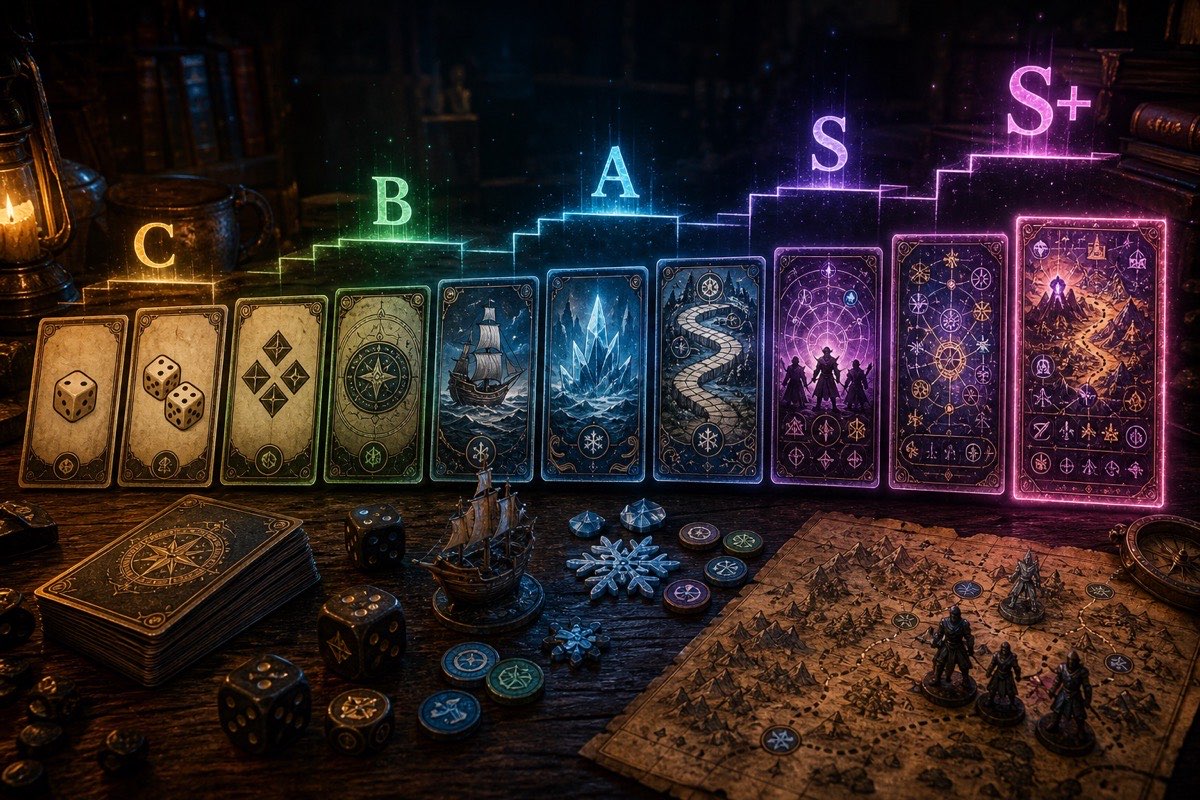
If your runs stop being interesting once the obvious archetype comes together, this deckbuilder complexity tier list is for you. These ten games are ranked by the mental workload of playing well, not by how quickly they punish a mistake.
Hard deckbuilding games do not automatically rank highly. A compact tactical puzzle can be brutal without being especially complex, while a readable game can hide years of strategic depth.
The ranking at a glance
The list runs from the most approachable at number 10 to the most systems-heavy at number one. Tiers measure complexity, not overall quality.
| Rank | Tier | Game | Primary source of complexity |
|---|---|---|---|
| 10 | C | Dicey Dungeons | Dice allocation and equipment efficiency |
| 9 | C | Breach Wanderers | Custom card pools and pre-run experimentation |
| 8 | B | Cobalt Core | Positioning, crew interaction, and combat alignment |
| 7 | B | Wildfrost | Countdown management and tactical positioning |
| 6 | A | Slay the Spire | Long-horizon card evaluation and recovery |
| 5 | A | Hadean Tactics | Deck play layered over auto-battler positioning |
| 4 | A | Monster Train 2 | Multi-layer scaling and explosive synergy construction |
| 3 | S | Vault of the Void | Draw control, trimming, and consistency planning |
| 2 | S | Chrono Ark | Party timing, resource pressure, and boss scripts |
| 1 | S+ | Erannorth Chronicles | Long-form character building and systemic breadth |
How this ranking works
Complexity is not the same thing as rules volume. It is the amount of meaningful information and decision-making a strong run asks you to manage.
The ranking weighs five factors:
- Deck evaluation: How difficult it is to judge additions, skips, upgrades, and removals.
- Combat branching: How many credible lines a turn can produce.
- Information management: How much positioning, timing, draw knowledge, or enemy behavior must be tracked.
- Build recovery: Whether an imperfect draft can be redirected without collapsing.
- Mistake punishment: How far ahead you must plan to avoid consequences that cannot be repaired later.
A game can score highly on one factor and still sit mid-list if the others stay light. That is why a sharp combat puzzle can feel harsher than its rank, while a broader systems game can climb even when individual fights stay readable.
C Tier: Approachable decision spaces
10. Dicey Dungeons
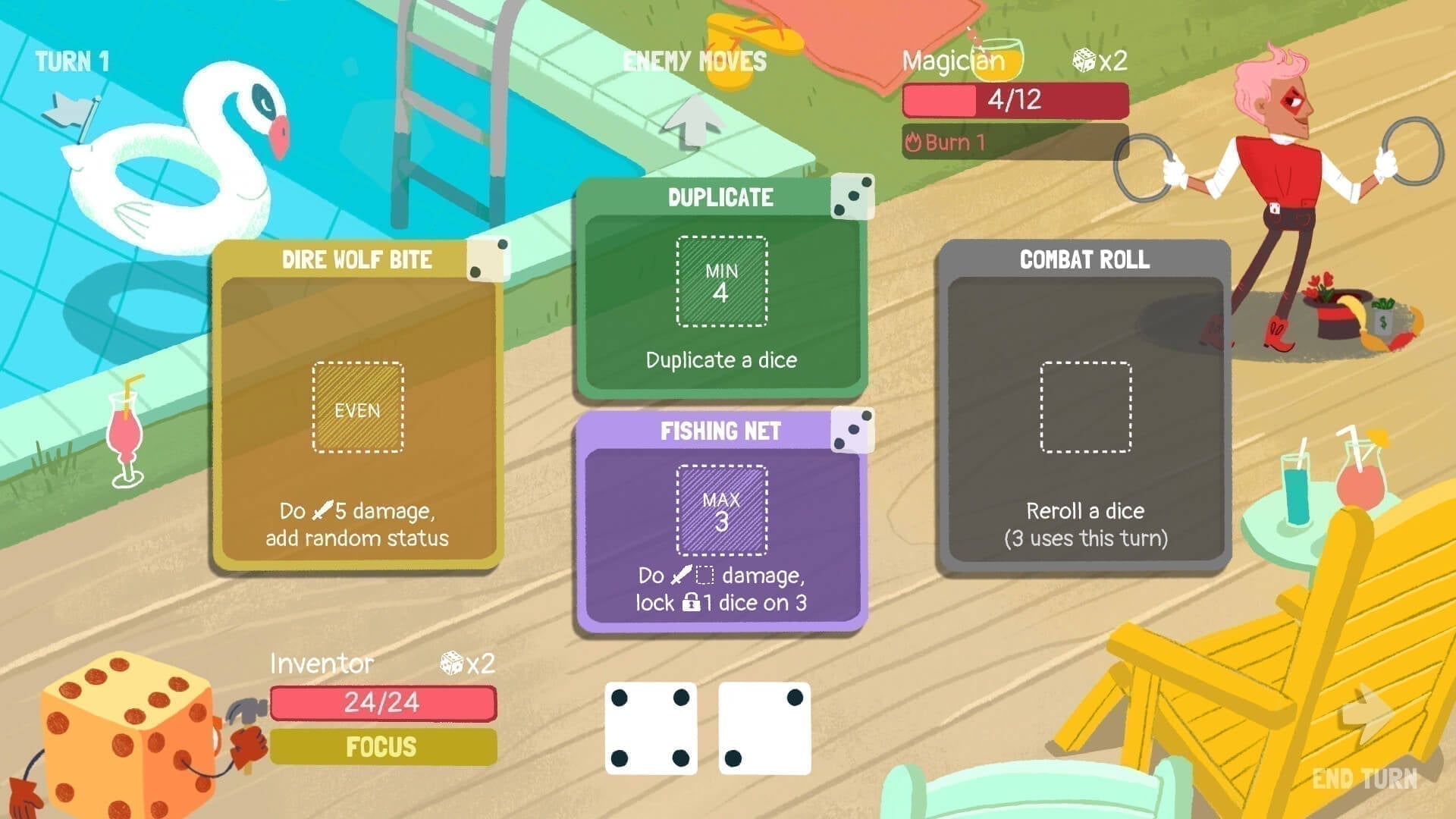
Dicey Dungeons is the cleanest entry point on the list. Its dice mechanics turn every hand into an allocation puzzle: the question is not simply what an effect does, but which die should power it and what that prevents elsewhere.
That creates legitimate tactical sequencing without overwhelming the player with persistent systems. Equipment choices remain readable, sessions move quickly, and bad turns are usually understandable after the fact. It is a useful fit for players who want to sharpen expected-value thinking without spending half a run parsing interactions.
Its limitation is also why it ranks tenth. The constrained action space keeps information management and build recovery relatively light. Dicey Dungeons can be difficult in specific situations, but its brisk structure rarely creates the sustained workload found higher on this list.
9. Breach Wanderers
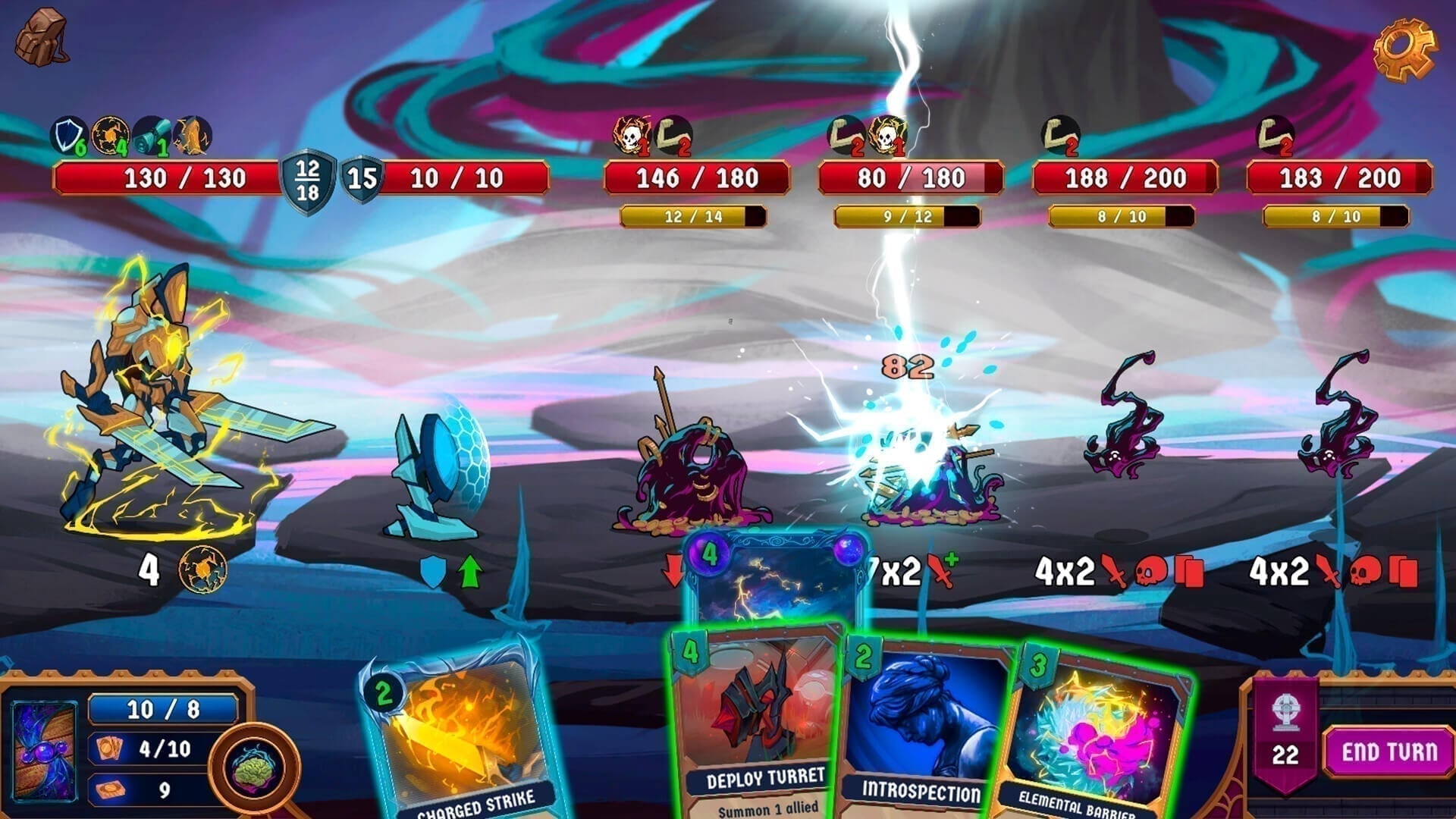
The real appeal of Breach Wanderers is controlled experimentation. Custom starting decks and curated card pools let players shape the draft around a build rather than accept every run as a completely uncontrolled reward stream.
That raises the strategic ceiling above its approachable difficulty rating. Planning starts before individual combats, and the room to tune loadouts rewards players who enjoy testing packages, tightening card pools, and hunting for repeatable synergy.
Breach Wanderers remains low in the ranking because broad customization does not always translate into dense turn-by-turn branching. Once a coherent package is established, execution can be more straightforward than the amount of available content initially suggests. It is deep enough to support extensive experimentation, but not one of the most complex deckbuilding games in raw combat workload.
B Tier: Tactical layers without heavy system overload
8. Cobalt Core
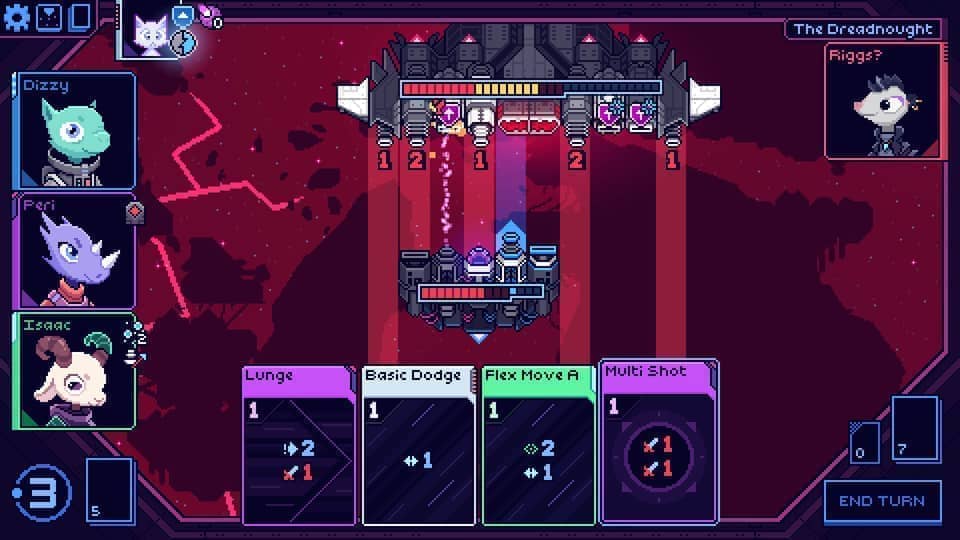
Cobalt Core adds a spatial problem to familiar card evaluation. Attacks need to line up, ship movement affects both offense and defense, and crew combinations shape what kinds of turns the deck can produce.
The result is immediately interesting without becoming unreadable. A card can be efficient in isolation and still be wrong because it leaves the ship in a bad position. That extra axis gives combat more texture than a standard damage-and-block exchange, while clear presentation keeps the board state manageable.
This clicks most for players who want positional sequencing but still value a fast, legible run. The main constraint is that the available combat space remains compact. Crew synergy and alignment matter, but the game usually asks you to solve a focused situation rather than coordinate several sprawling subsystems at once.
7. Wildfrost
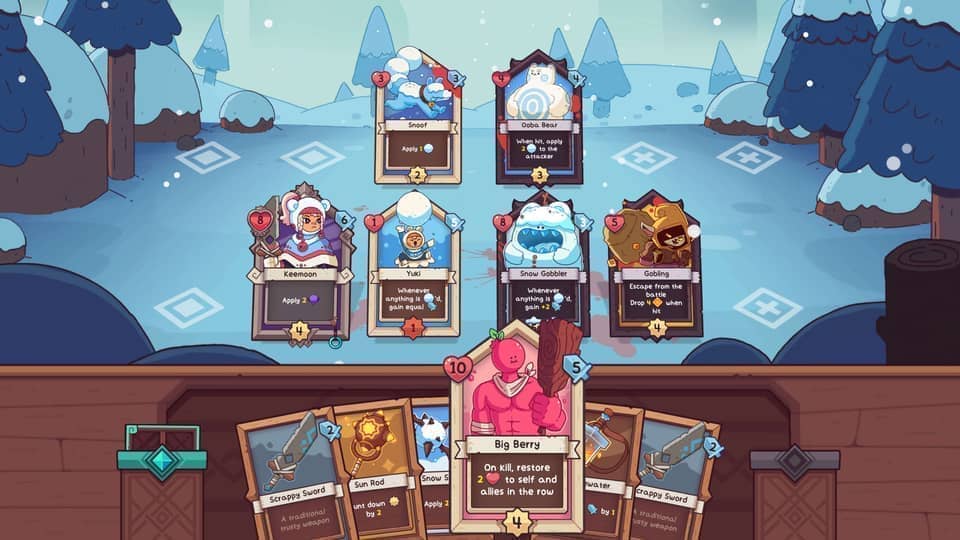
Wildfrost is the clearest example of difficulty and complexity pulling in different directions. Its positioning and countdown systems can punish one careless move immediately, making individual battles feel harsher than its seventh-place ranking might imply.
What this actually rewards is timeline control. You must consider where units sit, when they will act, which threat resolves first, and how today’s move changes the board several countdowns later. Compact encounters produce high tactical density because almost every slot and timing adjustment matters.
The reason Wildfrost does not rank higher is scope. Its combat puzzles are sharp, but the total number of systems competing for attention remains relatively contained. Players seeking precise sequencing will find plenty to master. Players seeking enormous build trees or elaborate deck manipulation should look further up the ranking.
A Tier: Deep run management
6. Slay the Spire
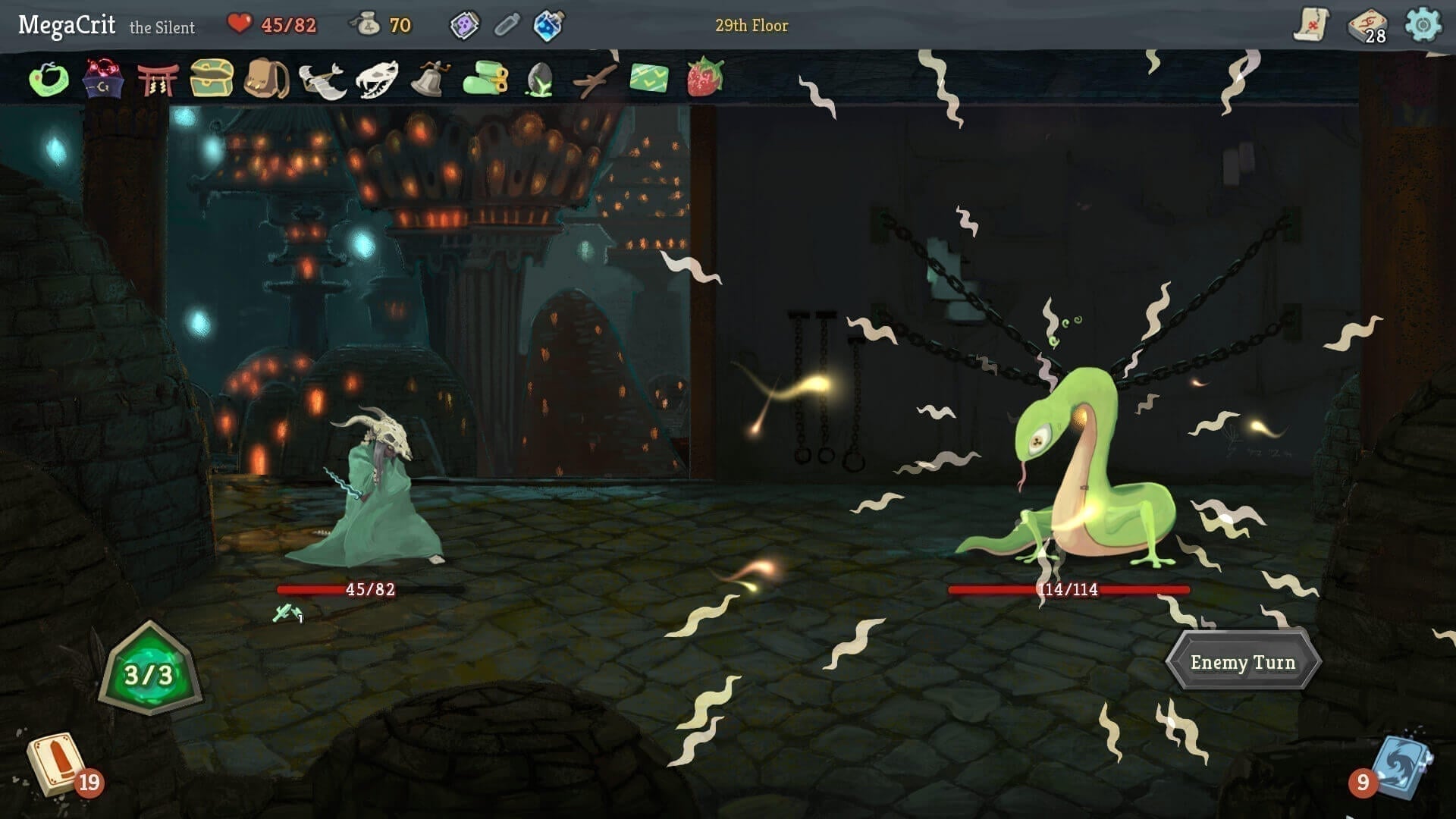
Slay the Spire earns its depth through interaction rather than clutter. Combat is readable, card functions are generally clear, and early runs do not demand encyclopedic system knowledge. That simplicity is deceptive.
Strong play requires constant negotiation between immediate survival and future scaling. Route selection changes how greedy a deck can afford to be. Relics, resources, card rewards, and upcoming encounters affect one another. Most importantly, card evaluation evolves throughout the run: a strong early pickup can become a damaging late addition, and learning to skip good cards is a major dividing line between competent and expert play.
Ascension 20 exposes that mastery curve particularly well. Winning is less about finding a proven build and more about assembling enough damage, defense, and scaling from imperfect rewards while still solving different threats.
Why only sixth? Slay the Spire has extraordinary depth with relatively low rules overhead. Its complexity comes from difficult judgment inside an elegant framework, not from monitoring the largest number of simultaneous systems.
5. Hadean Tactics
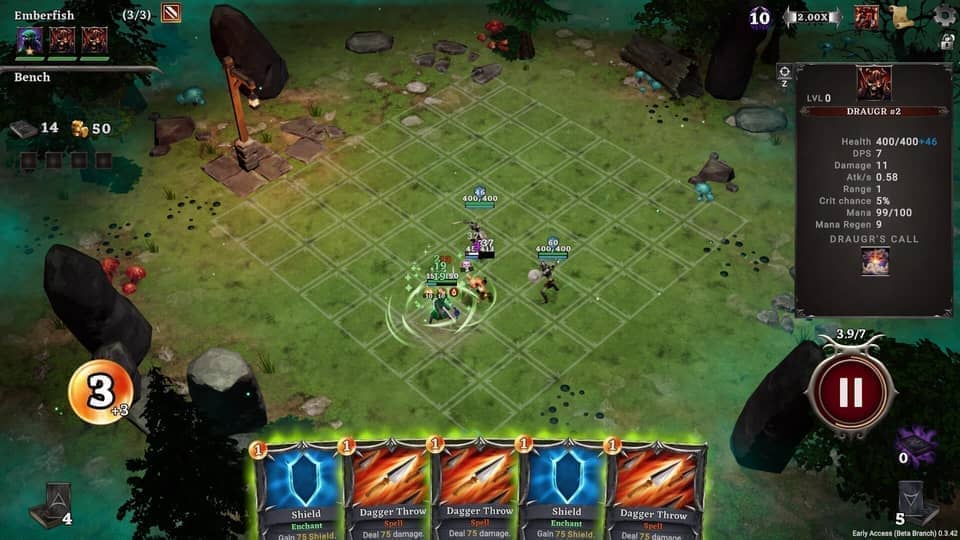
Hadean Tactics splits attention between deckbuilding and board behavior. Its auto-battler elements mean a card is not merely an isolated effect; it can alter positioning, unit interactions, and the direction of a fight already in motion.
That creates two connected planning layers. You need to understand what the board will do without intervention, then decide when spending a card improves that outcome enough to justify the resource. Positioning adds further tension because a strategically sound deck can still underperform when units are arranged poorly.
For players who enjoy reading board states, this hybrid design offers more information pressure than a conventional card battler. The friction is that control feels less absolute. Some deckbuilder veterans prefer to calculate every action directly, while Hadean Tactics asks them to manage and redirect a partially automated system. That split focus is the source of both its depth and its messiness.
4. Monster Train 2
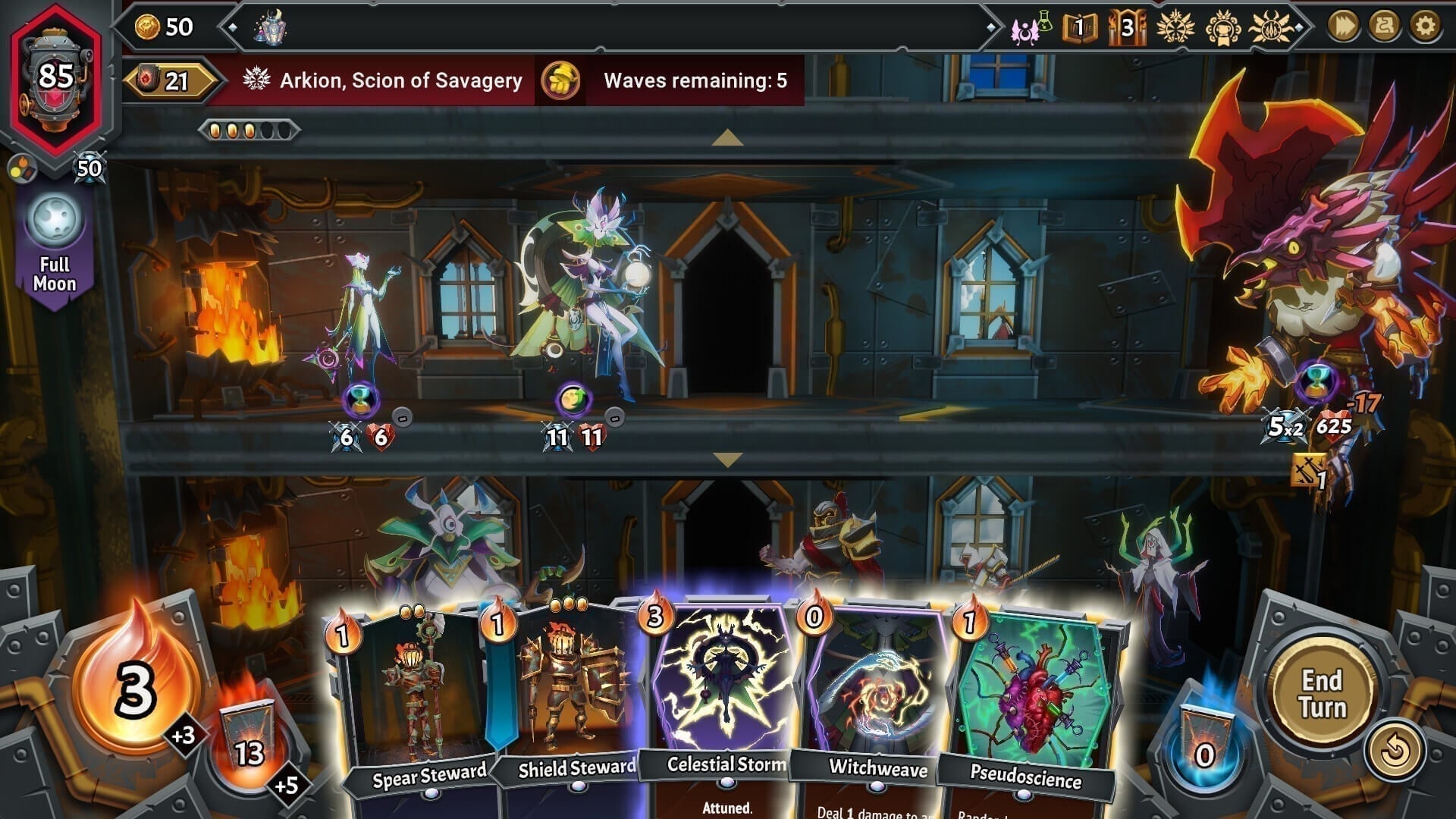
Monster Train 2 is built for players who want layered fights and combo scaling that can become gloriously excessive. Unit placement, deck composition, upgrades, and cross-system synergies all feed into whether a build merely functions or grows fast enough to dominate later encounters.
The draft tension comes from commitment timing. Taking a narrow synergy piece early can produce an absurd engine, but it can also leave the deck carrying dead weight while the rest of the package fails to appear. Strong runs require recognizing when to keep drafting toward an explosive payoff and when to stabilize around the tools already available.
Its complexity is substantial, but not constant. Once a powerful engine becomes self-sustaining, later turns can become more about deploying the established machine than solving fresh tactical problems. Players who value build expression and spectacular scaling may consider that the reward. Those who want every late-run draw to remain a close calculation may prefer the next three games.
S Tier: Expert-level control and coordination
3. Vault of the Void
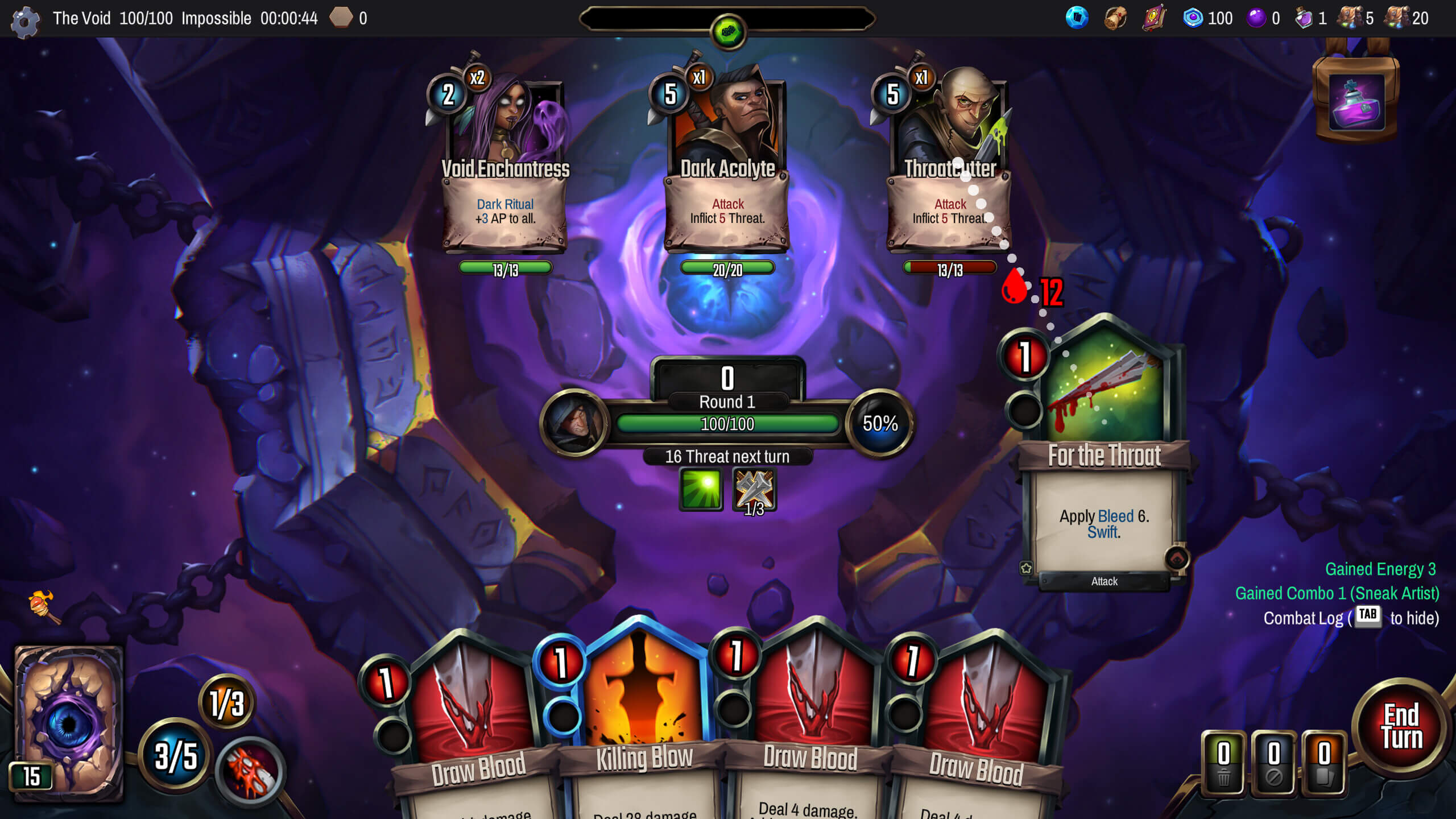
Vault of the Void makes consistency feel less like luck and more like a problem the player is personally responsible for solving. Fixed deck size, between-fight tuning, and unusually strong draw control remove many of the excuses that looser deckbuilders allow.
That control creates extra decisions everywhere. A weak draw is not only an unlucky event; it may reflect a flaw in how the deck was prepared. Card evaluation therefore includes immediate power, future sequencing, draw reliability, and the opportunity cost of carrying one more situational answer.
The game is highly readable, which makes its complexity unusually clean: you can often see the relevant information, and the challenge is using it with discipline. Players who enjoy deck-thinning, controlled lines, and repeatable execution will find one of the strongest mastery curves on the list. The tradeoff is analytical friction. If you prefer improvisational chaos or discovery-driven drafting, Vault of the Void can feel procedural rather than exploratory.
2. Chrono Ark

Chrono Ark asks you to operate a party and a deck at the same time. Character combinations, resource costs, action timing, survival demands, and boss-focused encounters all compete for attention.
A brilliant combo line can still feel fragile because it rarely exists in isolation. Spending resources to complete it may disrupt another party member’s turn, leave insufficient room for defense, or collide with a boss script that demands an immediate answer. The best plan is often not the most powerful line available, but the one that preserves enough flexibility for the next phase.
This is a strong fit for players who want heavy combo planning without reducing combat to solitary engine assembly. Party construction creates more dependencies, while layered bosses test whether those dependencies remain functional under pressure.
Where this gets tricky is knowledge load. Boss scripts can make failure feel partly instructional, and learning when a planned sequence is unsafe may require familiarity with encounter behavior. Chrono Ark is difficult because its systems overlap, but some of that difficulty also comes from remembering what the next threat expects.
S+ Tier: The systems maximalist
1. Erannorth Chronicles
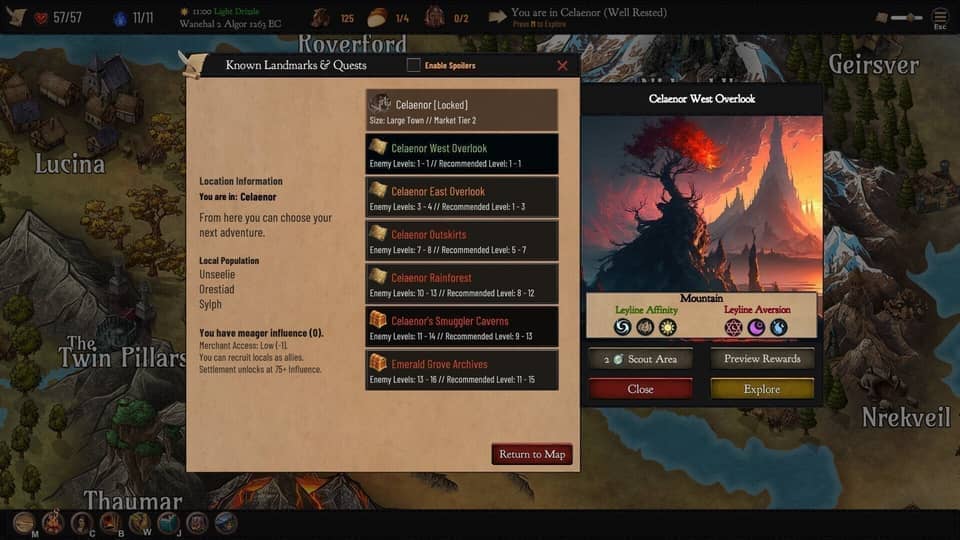
Erannorth Chronicles is not merely complicated. It asks the player to enjoy constructing a character and deck across a long campaign rather than chasing the clean shape of a 45-minute run.
Its top ranking comes from systemic breadth. Deck decisions sit inside a larger structure of character customization, progression, and long-form planning. Evaluating a card means considering more than the current combat package. It must fit the developing character, future interactions, and the broader direction of the campaign.
That produces the highest total information load in this ranking. It also changes the satisfaction being offered. The payoff is not only a tight deck that comes online during one run; it is an extensively customized build whose identity develops over a much longer arc.
That distinction is the warning label. Erannorth Chronicles is the right choice for maximalists who enjoy research, experimentation, and sprawling build construction. It is only a partial fit for players whose favorite part of roguelike deckbuilding is rapid drafting under pressure. If you want dense decisions inside a clean run loop, Vault of the Void or Chrono Ark is the better destination.
Which complexity tier should you choose?
Complexity is only valuable when it adds the kind of decisions you enjoy.
- Dicey Dungeons or Breach Wanderers if you want approachable systems with room to experiment.
- Cobalt Core or Wildfrost if you want sharper combat texture without a huge rules stack.
- Slay the Spire, Hadean Tactics, or Monster Train 2 if you want deep run management and broader build trees.
- Vault of the Void or Chrono Ark if you want expert-level control and coordination.
- Erannorth Chronicles only if long-form character construction sounds better than a compact roguelike run.
For players coming from Ascension 20-style decision-making, Vault of the Void is the cleanest next step. Chrono Ark adds party coordination pressure. Erannorth Chronicles leaves the compact-run model behind. That difference matters more than any simple label such as easy, medium, or hard.