Best Sci-Fi Deckbuilders and Card Battlers for Futuristic Runs
A focused roundup of sci-fi card games where ships, mechs, derelict crawls, arcade grids, and comic-book chaos reshape familiar deckbuilding decisions.

The best sci-fi deckbuilders do more than replace swords with lasers. They make the setting change the run.
Sometimes that means dodging missiles with a spaceship. Sometimes it means controlling a mech on a tactical grid, crawling through derelict ships, managing a party's resources, or trying to keep a real-time card battle from overwhelming your hands.
This roundup is for players who want futuristic deckbuilder games with real mechanical identity, not just a sci-fi coat of paint. I prioritized draft tension, encounter flow, synergy quality, deck control, replayability, and how quickly each game starts asking interesting questions.
Quick picks
| Game | Best fit | Run feel | Main friction |
|---|---|---|---|
| Cobalt Core | Clean space deckbuilding with movement as defense | Readable, tactical, high-replay | Less appealing if you want huge combo sprawl |
| StarVaders | Mech-based tactical card battles | Fast, grid-focused, pressure-heavy | Not the pick for slow crawl pacing |
| Deep Sky Derelicts | Party tactics and scavenging attrition | Grimy, tactical, resource-conscious | Slower and less breezy than run-first deckbuilders |
| Zet Zillions | Comic-book sci-fi chaos with readable combat | Brisk, stylish, synergy-focused | The loud tone can distract from the strong core |
| One Step From Eden | Deckbuilding under real-time execution pressure | Explosive, hard, highly replayable | Mechanical execution can overwhelm planning |
Cobalt Core

Cobalt Core is the cleanest answer if you want a sci-fi deckbuilder where the spaceship matters mechanically. The key idea is simple but powerful: movement is defense.
That one shift changes the whole run. Dodging a lane, lining up a cannon shot, and protecting your hull all pull from the same hand-management puzzle. Good turns are not just about playing your strongest attack. They are about sequencing movement, defense, and damage so the enemy's intent quietly falls apart.
The crew system gives Cobalt Core its build expression. Different crew combinations push different draft priorities, and the time-loop structure gives the game a strong reason to keep runs compact and readable. It is tactical without becoming messy.
Pick Cobalt Core if you want the safest first stop for sci-fi deckbuilders: short-run efficiency, ship positioning, crew synergy, and clean space combat. Skip it if your favorite part of deckbuilders is building a bloated engine that breaks the screen. Cobalt Core is more disciplined than that.
StarVaders
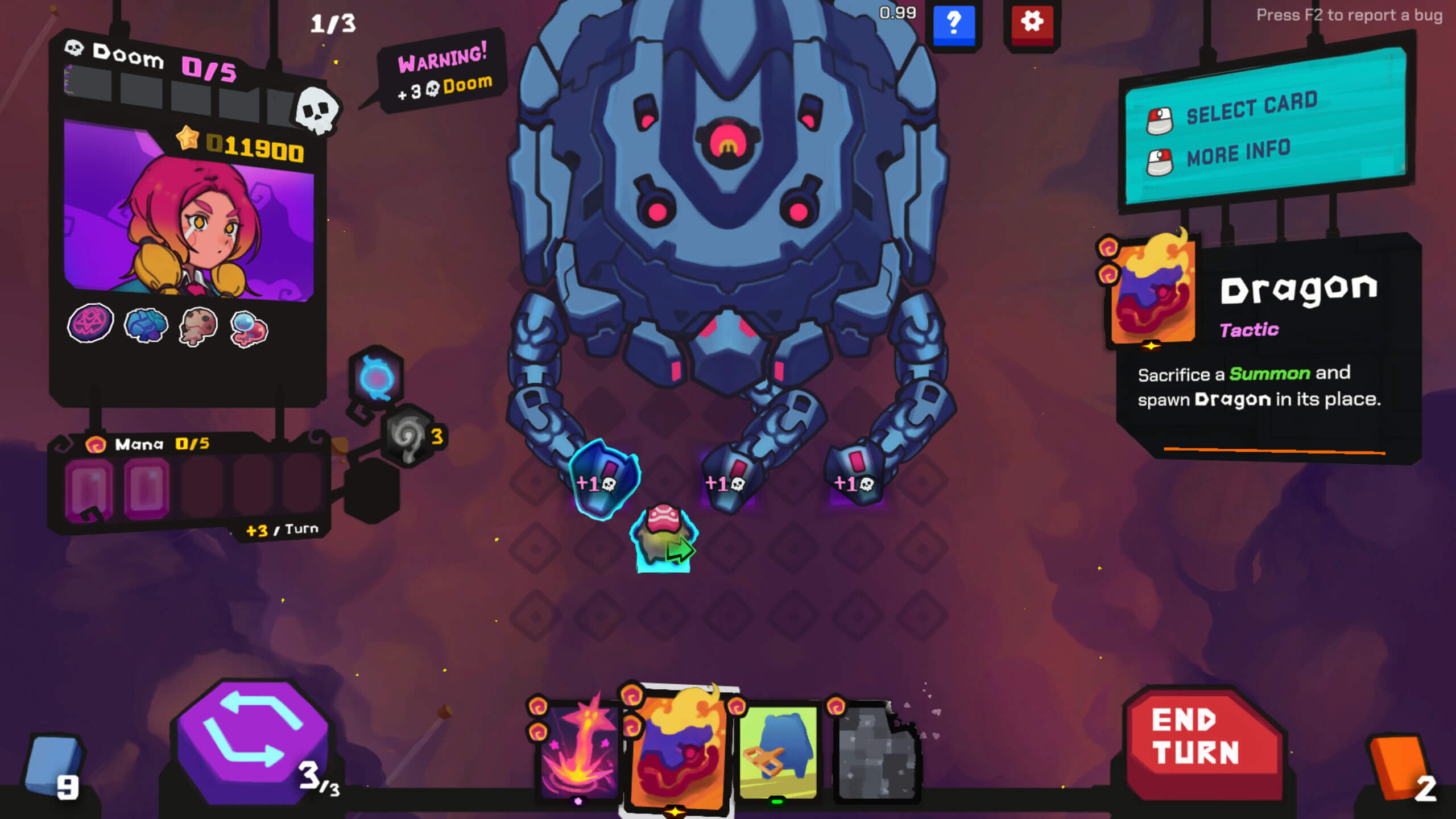
StarVaders is the pick for players who want sci-fi card battles with more arcade pressure and grid-based tactics. Instead of commanding a spaceship, you are piloting a mech and using cards to control movement, attacks, defense, and positioning.
That makes its sci-fi identity feel active. The battlefield matters. Enemy placement matters. Your card choices are not only about damage numbers, but also about where you can stand, what you can hit, and how much pressure you can remove before the next wave gets worse.
StarVaders works well next to Cobalt Core because both games care about readable tactical positioning, but they push that idea in different directions. Cobalt Core is about ship lanes and controlled sequencing. StarVaders is faster, more grid-focused, and more aggressive.
The limitation is pace. If you want a slow sci-fi crawl where the pleasure comes from scavenging, party management, and long-term attrition, StarVaders is not the best first stop. Its reason to be here is momentum.
Pick StarVaders if you want a futuristic card battler that feels sharp, tactical, and energetic.
Deep Sky Derelicts
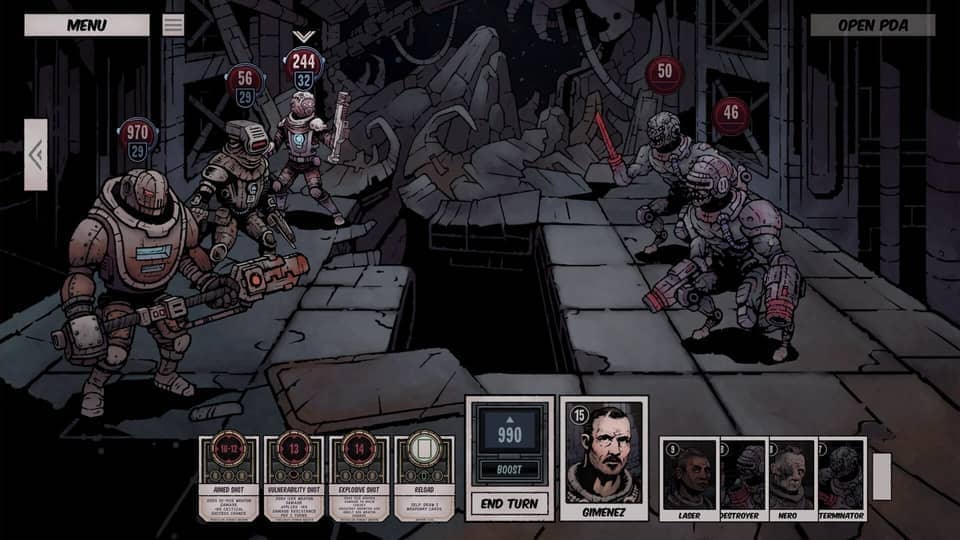
Deep Sky Derelicts is the grimy option. It earns its place because the sci-fi setting affects how greedy you can be between fights.
This is not just a card battler with a derelict backdrop. The party-building, scavenging, gear, and exploration layers make each encounter part of a larger risk calculation. You are not only asking, "Can this hand win the fight?" You are also asking, "How much can this team afford to spend before the next problem?"
That gives its card decisions a different texture. Greedy upgrades look great when you imagine the perfect combat turn. They look less obvious when your party is tired, resources are tight, and the crawler layer is slowly taxing your expedition.
Deep Sky Derelicts is best for players who like tactical friction, party identity, and a heavier atmosphere. The tradeoff is pace. Compared with sharper run-first deckbuilders, it can feel slower and more grindy.
Pick Deep Sky Derelicts if you want sci-fi attrition to matter. Skip it if you mainly want fast resets and clean deck-thinning.
Zet Zillions

Zet Zillions looks chaotic, but the best runs still come down to clear synergy selection. That is why it works as one of the more interesting sci-fi card battlers on this list.
The comic-book presentation gives it a loud first impression. Under that, the real appeal is brisk battles and readable combo building. You are sorting through strange energy, big personality, and messy sci-fi flavor, but the deckbuilding question is familiar in the right way: what is this run actually doing, and which cards make that plan stronger?
That makes Zet Zillions a good pick if you want a futuristic deckbuilder that feels less sterile than a spaceship tactics sim. It has more voice, more style, and more weirdness than Cobalt Core or Deep Sky Derelicts.
The main friction is taste. If you want quiet tactical purity, the comic-book chaos may feel like noise before it feels like flavor. Replayability is also more focused than endless.
Pick Zet Zillions if you want style, speed, and strange combos without giving up readable card combat.
One Step From Eden
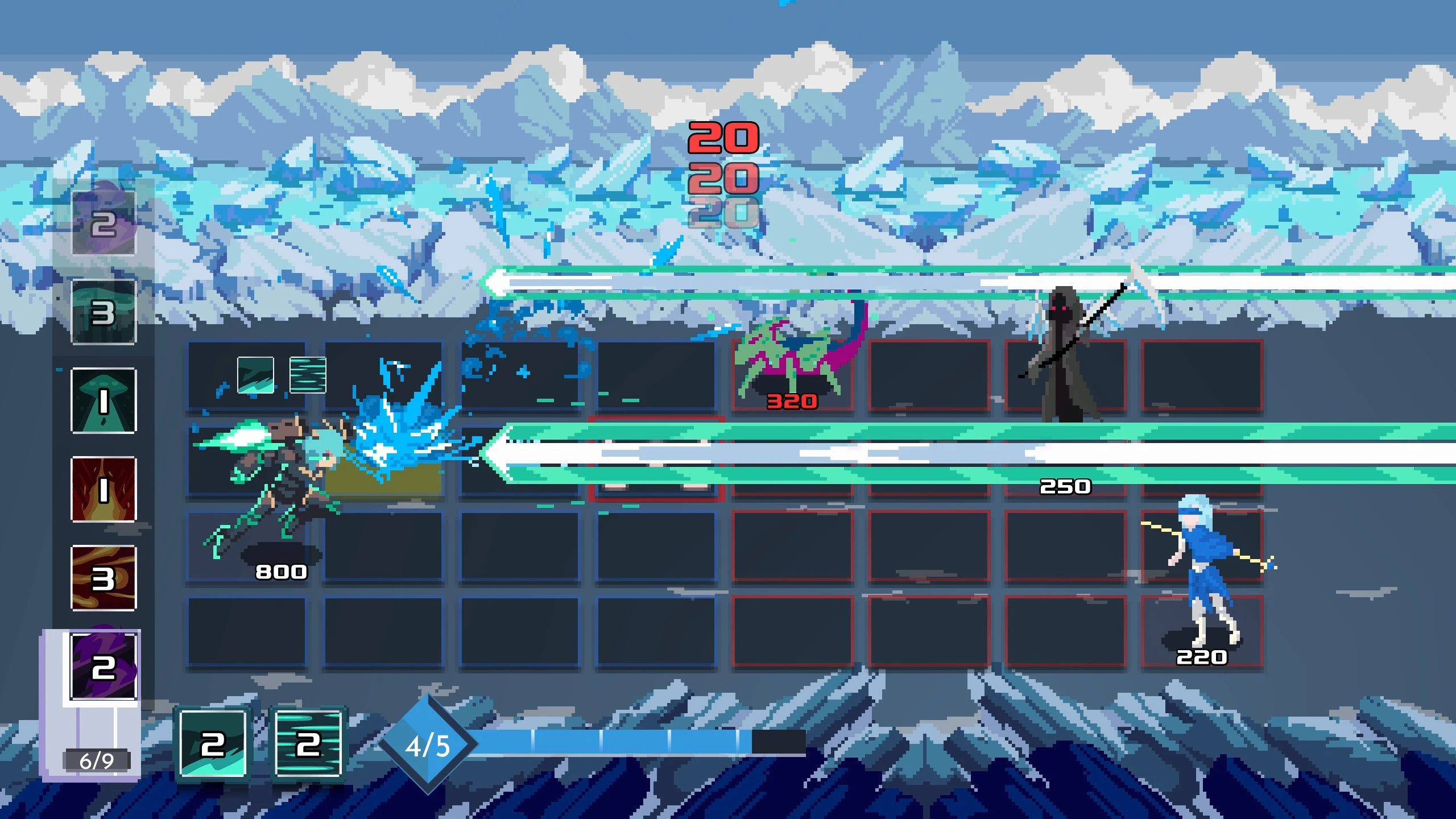
One Step From Eden is the partial fit with the sharpest warning label. It belongs here because it asks a brutal question: can your deckbuilding decisions survive real-time execution?
Instead of letting you solve every turn at a comfortable pace, One Step From Eden makes you cast, dodge, aim, and adapt while the fight keeps moving. That changes the value of cards. A powerful spell is not just a draft reward. It is a test of whether you can actually use it under pressure.
That makes deck control especially important. A clean, executable deck can outperform a pile of individually exciting cards because your hands need to work while the screen is trying to kill you.
The game is hard, and that hardness is not only about card evaluation. It is about execution, pattern reading, and keeping your plan intact when the battle gets hostile.
Pick One Step From Eden if you want a futuristic arena-style card battler with high replayability and a serious skill ceiling. Avoid it if your favorite part of deckbuilders is slow tactical sequencing. Here, the sequencing still matters, but your hands have to keep up.
Which sci-fi deckbuilder should you play first?
If you want the safest overall recommendation, start with Cobalt Core. It has the clearest connection between sci-fi theme and deckbuilding decisions, and its movement system gives every run a distinct tactical texture.
Pick StarVaders when you want grid-based mech combat with arcade energy and high replayability. It is the better call when speed, positioning, and pressure matter more than expedition management.
Pick Deep Sky Derelicts if you want a harsher crawl where resources between fights affect your drafting greed. It is less breezy, but the attrition gives its card decisions real weight.
Pick Zet Zillions when you want style, brisk fights, and synergy selection wrapped in comic-book sci-fi. It is louder than the other picks, but not shallow.
Pick One Step From Eden only if real-time pressure sounds exciting rather than annoying. It is one of the most demanding games here, and that is the point.
How to choose
Choose based on the kind of sci-fi friction you want:
- Want clean spaceship tactics: Cobalt Core
- Want fast mech-grid pressure: StarVaders
- Want derelict crawling and attrition: Deep Sky Derelicts
- Want comic-book combo chaos: Zet Zillions
- Want real-time execution pressure: One Step From Eden
For most players chasing the best sci-fi deckbuilders, Cobalt Core is the clean first stop. After that, the right choice depends on what kind of pressure you want your run to create: tactical positioning, arcade speed, resource attrition, loud combo-building, or real-time survival.
FAQ
What is the best sci-fi deckbuilder to start with?
Cobalt Core is the best first pick for most players. It is readable, tactical, replayable, and its spaceship movement system makes the sci-fi theme matter in every fight.
Which sci-fi card battler is the fastest?
StarVaders and One Step From Eden are the fastest-feeling picks here. StarVaders is fast because of tactical grid pressure. One Step From Eden is fast because its combat happens in real time.
Which game is best if I want something more tactical?
Cobalt Core is the clean tactical pick, while StarVaders is better if you want grid-based mech tactics with more immediate pressure. Deep Sky Derelicts is also tactical, but in a slower party-RPG way.
Which pick has the strongest atmosphere?
Deep Sky Derelicts has the strongest grimy sci-fi atmosphere. Zet Zillions has the loudest style. Cobalt Core is cleaner, brighter, and more readable.
Is One Step From Eden a normal deckbuilder?
Not really. It has deckbuilding, drafting, and card synergy, but the fights are real-time. That makes execution just as important as planning.
Takeaway
The best sci-fi deckbuilders are not just card games with futuristic art. They use the setting to change how you think: ship movement in Cobalt Core, mech-grid pressure in StarVaders, derelict attrition in Deep Sky Derelicts, comic-book synergy in Zet Zillions, and real-time survival in One Step From Eden.
Start with Cobalt Core if you want the cleanest overall recommendation. Move outward from there based on the kind of sci-fi pressure you want your next run to have.