Games Like Balatro
If you love Balatro's poker hands, joker synergies, and quick runs, these games deliver similar satisfaction in different packages.
You want more games that hit the Balatro sweet spot: fast runs, obvious build hooks, and combos that snowball without asking for a full evening. The real itch is not just cards. It is that clean loop of spotting a broken interaction early and riding it hard.
These 10 picks lean into quick decision-making, readable systems, and strong run-to-run variety. Some are direct fits for Balatro fans who want low-friction synergy chasing. A few are slightly more tactical or niche, but still nail that same one-more-run feeling.
Quick take
- Dicey Dungeons is the best pick if you want short runs and instantly readable combo building.
- Monster Train and Monster Train 2 are great for players who love explosive scaling and seeing a build come online fast.
- Slay the Spire is slower and more deliberate than Balatro, but it remains one of the clearest examples of deckbuilding depth without bloat.
- Astrea: Six-Sided Oracles is a strong fit if you like Balatro’s clean math and build expression but want dice instead of poker hands.
- Wildfrost is excellent once it clicks, though it asks for more tactical discipline than Balatro does.
The 10 picks
Dicey Dungeons
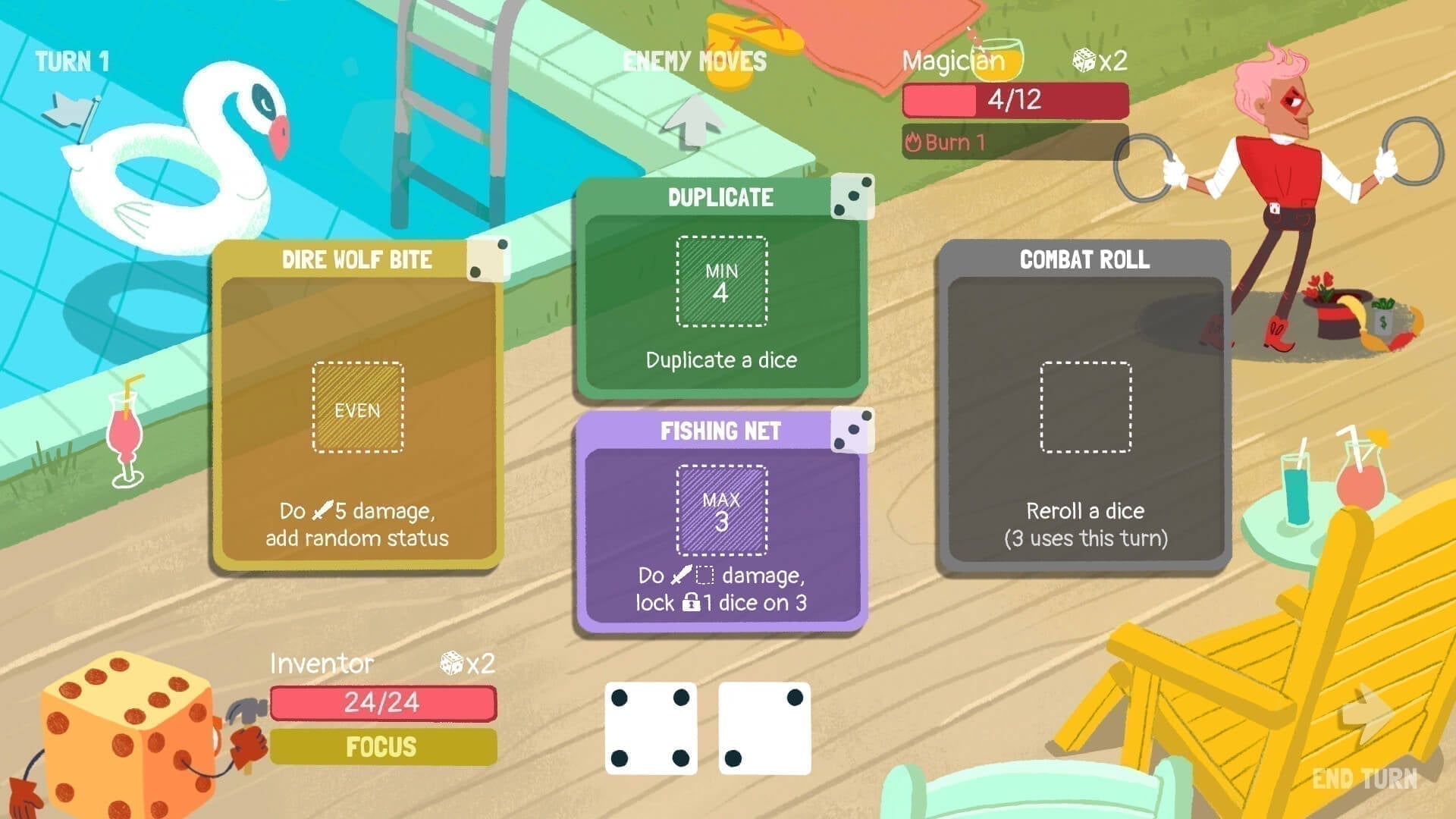
This is the cleanest overall recommendation for Balatro fans who want short, punchy runs with low setup time. Each character changes the rules enough to keep the game fresh, and the dice-based combat creates the same kind of satisfying "I found the angle" feeling that a good Joker stack does in Balatro.
Its biggest strength is readability. You can look at a build, understand the engine, and start making it better almost immediately. That makes it easy to get into a run, test an idea, and bail out without feeling like you wasted time.
The tradeoff is that it is more constrained than Balatro at its wildest. You get strong synergies, but not quite the same absurd score-scaling energy or sandbox-like build freedom.
Monster Train
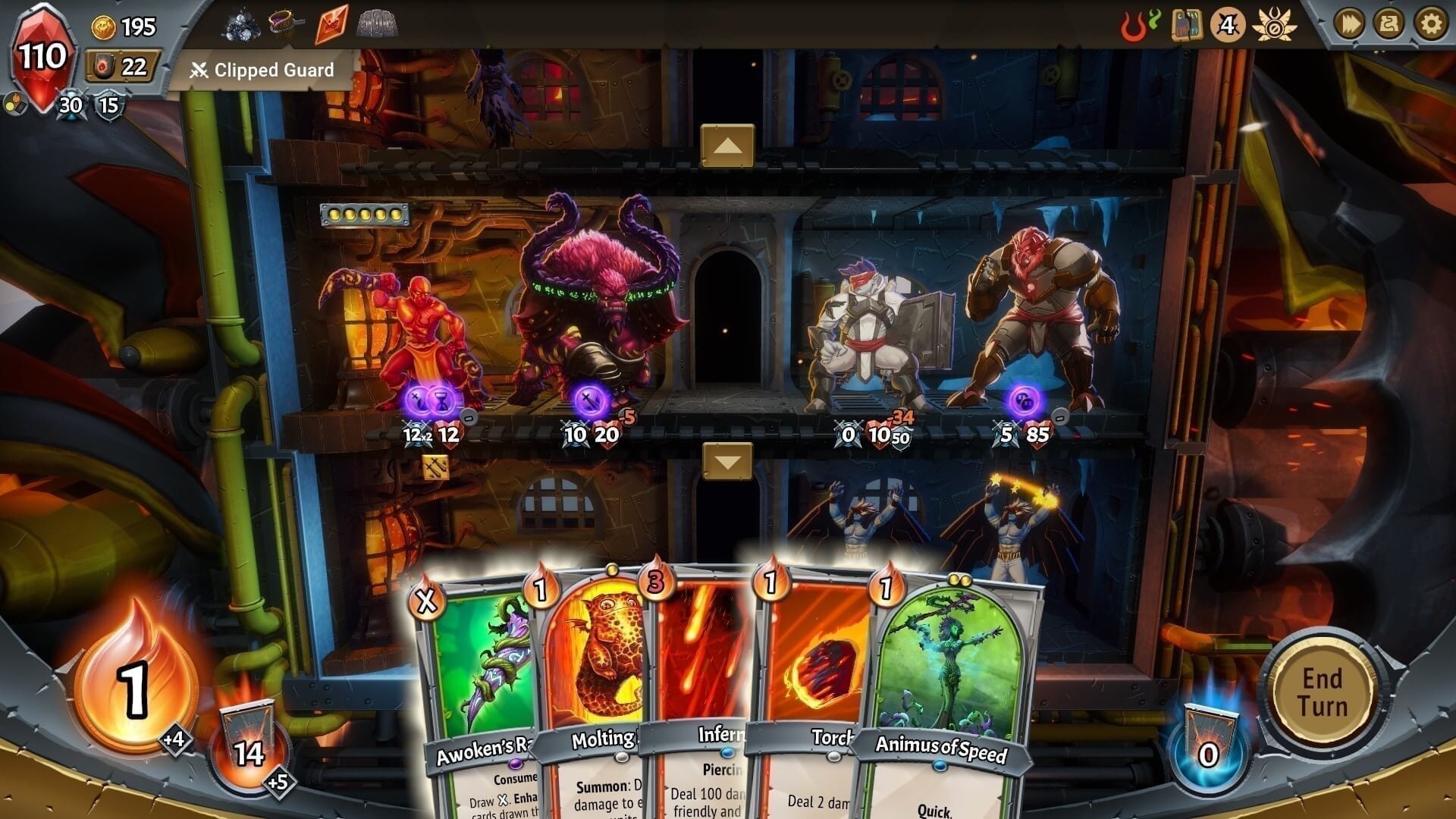
Monster Train delivers the same kind of run acceleration Balatro fans usually want. Builds often become interesting very early, and once your unit setup, artifacts, and card upgrades start lining up, the whole run can feel like a machine you engineered on purpose.
It fits especially well if your favorite part of Balatro is watching a strategy snowball fast instead of waiting forever for a deck to stabilize. The upgrade system helps with that. You are not just drafting cards. You are tuning a build every few fights.
What changes here is the tactical load. Positioning units across floors matters, and combat has more moving parts than Balatro’s clean hand-scoring loop. It is still fast by deckbuilder standards, but not quite as breezy.
Monster Train 2
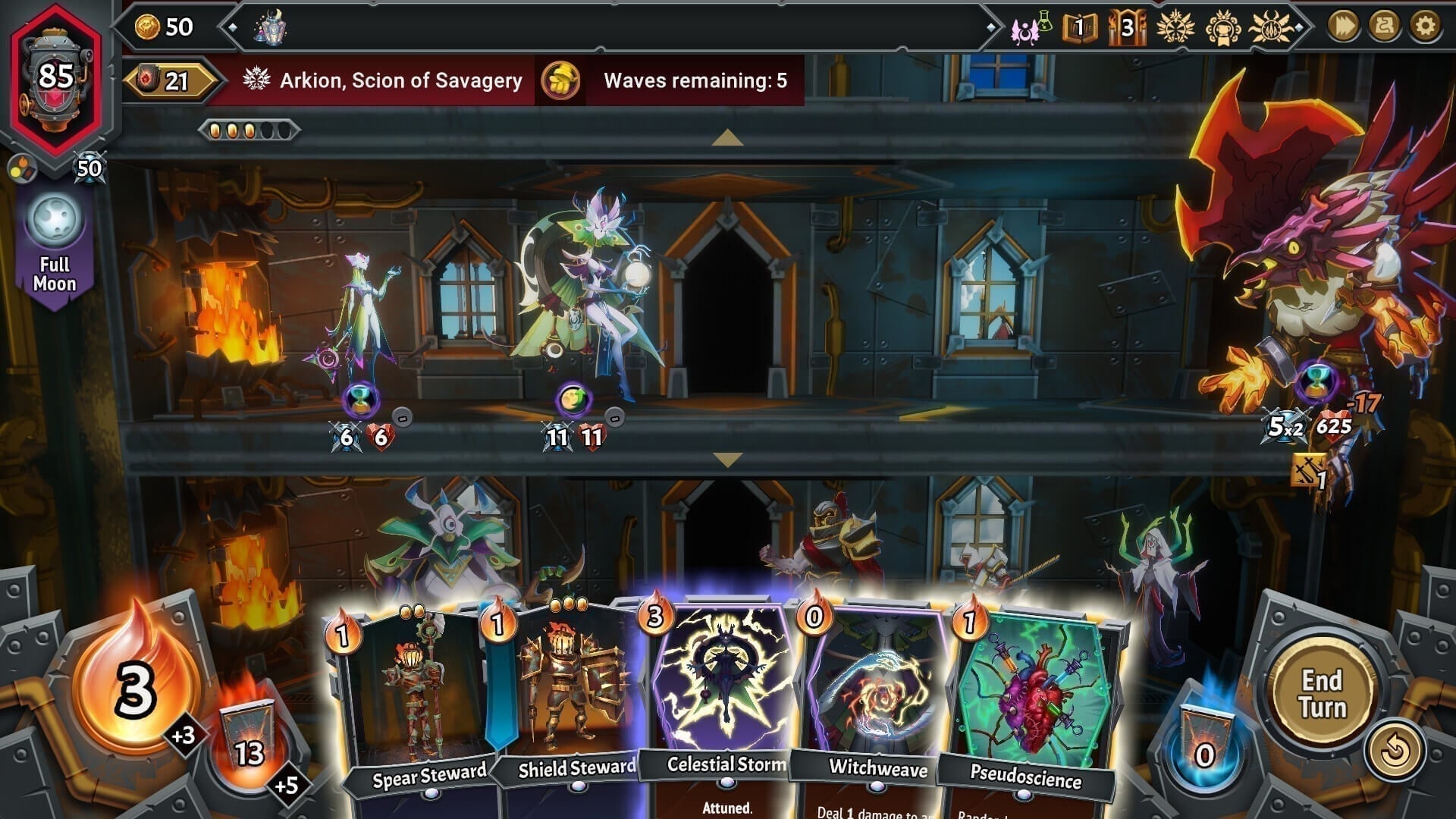
Monster Train 2 keeps the same core appeal as the first game: quick build identity, explosive scaling, and runs that become distinct early. For Balatro players, that matters more than theme or format. You want a game that gets to the good part fast, and this one does.
The big reason to play it over a lot of other deckbuilders is how often your build feels live. You can see an engine forming well before the endgame, then spend the run sharpening it instead of hoping the deck eventually works. That mirrors Balatro’s best runs, where one smart pivot turns everything on.
It is still a busier game than Balatro, and it leans harder into combat management. If you mainly want pure combo discovery with very little board-state friction, the original appeal is there, but the format is more demanding.
Slay the Spire

Slay the Spire is not as fast or as instantly explosive as Balatro, but it absolutely belongs near the top because it is still one of the best games at turning a handful of card choices into a coherent, replayable run. If your favorite Balatro runs are the ones where every pick tightens the engine, this lands.
The fit comes from decision quality. Cards, relics, and route planning all matter, and the game is excellent at making small upgrades feel meaningful. It also stays readable even when a build gets strong, which is a big part of Balatro’s appeal.
Just know the pace is more deliberate. Slay the Spire asks for more careful defense math, more attrition management, and less pure high-roll momentum than Balatro does.
Astrea: Six-Sided Oracles

Astrea is one of the best picks here if what you really love in Balatro is clean system logic and satisfying build shaping. It swaps cards for dice, but the core pleasure is familiar: identify what your run wants, stack support pieces, and watch consistency improve fast.
The purification and corruption systems give the game a strong internal logic, so your decisions tend to feel legible rather than messy. That matters for Balatro fans who enjoy games that are easy to read but still reward smart sequencing and synergy hunting.
It is a bit more mechanical on first contact, though. Even with good readability, the terminology and structure take longer to absorb than Balatro’s poker-hand foundation.
Blood Card

Blood Card is a more niche recommendation, but a good one for players who want combo-heavy deckbuilding without too much ceremony. It has that rough, direct quality where a run can quickly become about exploiting a very specific interaction, and that maps well to Balatro’s "build around the weird thing that works" energy.
Another point in its favor is how little it wastes your time. The game gets moving quickly, and the core appeal is still about finding a line that breaks the run in your favor rather than slowly assembling a generic good-stuff deck.
The obvious limitation is polish. It is less refined and less elegant than the top picks on this list, so it fits best for players who care more about mechanical payoff than presentation or balance smoothness.
Phantom Rose 2 Sapphire
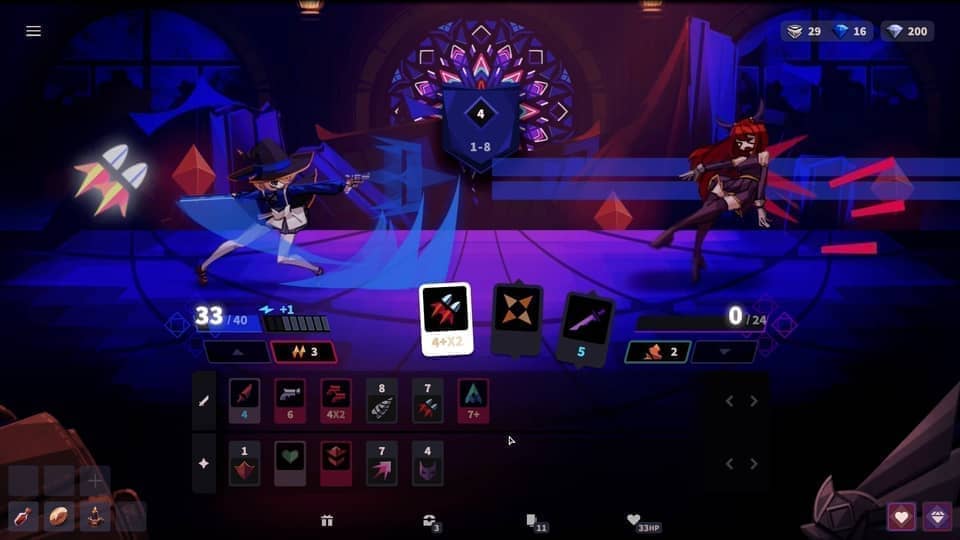
Phantom Rose 2 Sapphire is a smart pick for Balatro players who like low-friction runs but do not need the exact same kind of scoring spectacle. Its deck system stays approachable, and the pace is steady enough that you can test ideas without getting bogged down.
What makes it fit is the clarity. Runs are easy to parse, card roles are readable, and the game does not bury the fun under too many layers of systems. That helps it hit the same "one more run" loop, especially if you value smooth onboarding and compact sessions.
It is less explosive than Balatro, though. The synergies are real, but they usually feel controlled rather than outrageous, so players chasing pure combo chaos may want one of the earlier picks first.
Vault of the Void
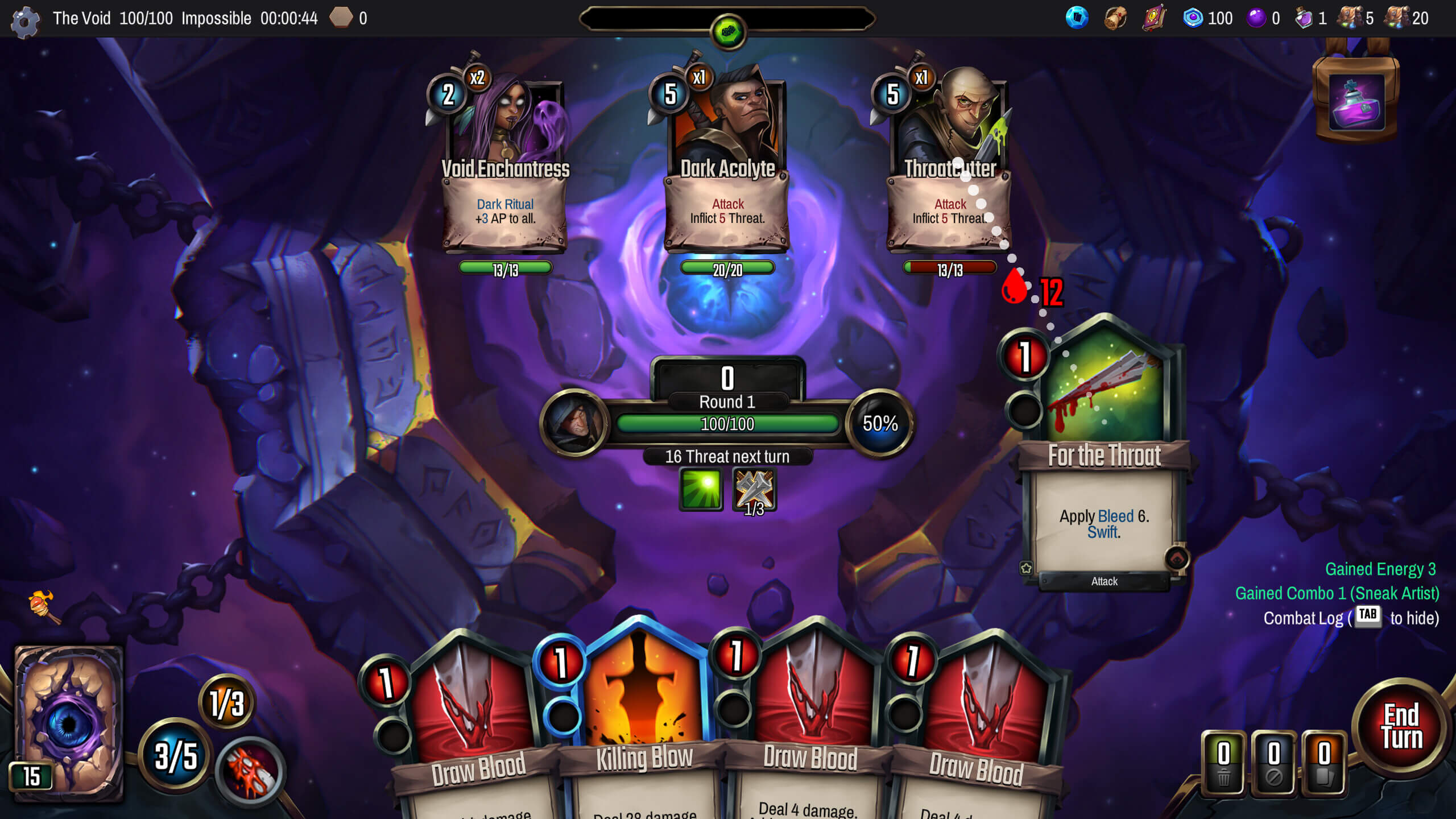
Vault of the Void is for Balatro players who want deck control and build precision more than pure randomness. It is excellent at letting you shape a plan and execute it with intention, which scratches a similar itch to steering a Balatro run around a key Joker package.
A big reason it works here is that interesting decisions happen constantly. You are not waiting ages for a run to reveal itself. The game gives you enough agency that the build feels like yours early and often, and that keeps replayability high.
Still, this is one of the more thoughtful and less breezy options on the list. It has more tactical friction, more planning, and less of Balatro’s casual pick-up-and-rip-another-run feel.
Roguebook

Roguebook fits Balatro fans who want replayability and readable deck growth, but with a bit more map texture and traditional roguelike structure. The hero pairing system gives runs identity quickly, and the game is good at making synergy pieces feel meaningful once they start connecting.
Its appeal here is less about crazy combo spikes and more about momentum. You can usually tell what your build is trying to do, and the run structure supports that sense of gradual sharpening without becoming a slog.
Compared to Balatro, it takes longer to fully get rolling. The map exploration layer and more standard deckbuilder pacing mean it does not hit the same instant, snack-sized run profile as the strongest fits above.
Wildfrost

Wildfrost earns its place because it can produce that same "this build is doing something nasty" satisfaction once you understand its systems. The charm is not the point. The point is that stacking the right companions, items, and triggers can create very sharp run identities.
For Balatro fans, the strongest overlap is in replayable build expression. You are chasing interactions, not just raw stats, and successful runs often come from recognizing a strong line early and committing to it.
It is also the least breezy of the top-level fits. Wildfrost can be punishing, and mistakes are easier to make if you are not paying close attention to turn order and board state. Great game, but more tactical friction than Balatro by a decent margin.
Who should play this
- You love Balatro’s fast runs more than its poker theme specifically.
- You want combo-driven games that become interesting within the first few minutes.
- You prefer readable systems and clear build hooks over giant walls of mechanics.
- You like replayable runs with strong synergy chasing and low commitment.
- You are fine with some picks being more tactical, as long as they still deliver that snowball feeling.
Common mistakes
-
Picking only by genre label.
Fix: Prioritize pace, combo feel, and run structure over whether the game is technically a card battler. -
Expecting every recommendation to feel as breezy as Balatro.
Fix: Start with Dicey Dungeons or Monster Train if low friction matters most. -
Choosing the deepest game when you really want quick hits.
Fix: Save Vault of the Void for when you want more planning and control. -
Ignoring niche picks because they are less famous.
Fix: Try Blood Card or Phantom Rose 2 Sapphire if you want direct, compact runs with less overhead. -
Treating tactical friction as a bonus by default.
Fix: If you mainly want one-more-run momentum, move Wildfrost and Roguebook lower on your list.
FAQ
What game is most like Balatro overall?
Dicey Dungeons is the closest overall fit for most players. It is quick, readable, and great at delivering compact runs built around strong interactions.
What should I play after Balatro if I want bigger combo payoffs?
Go with Monster Train or Monster Train 2. Both games are excellent at making builds snowball fast and feel powerful before a run drags.
Which of these is easiest to get into?
Dicey Dungeons and Phantom Rose 2 Sapphire are the smoothest entry points. Their systems are clear, and they get to the interesting decisions quickly.
What if I want more control and less randomness than Balatro?
Vault of the Void is the best fit. It gives you more agency over your build and rewards deliberate planning.
Are any of these actually about poker?
No. The overlap is not theme. It is the feel of fast runs, synergy hunting, and satisfying build scaling.
Takeaway
Balatro fans usually are not just chasing another card game. They want quick runs, obvious build hooks, and combos that pay off fast. Start with Dicey Dungeons, Monster Train, and Monster Train 2 for the strongest overall fit, then move into the more tactical or niche picks if you want that same itch in a slightly different shape.