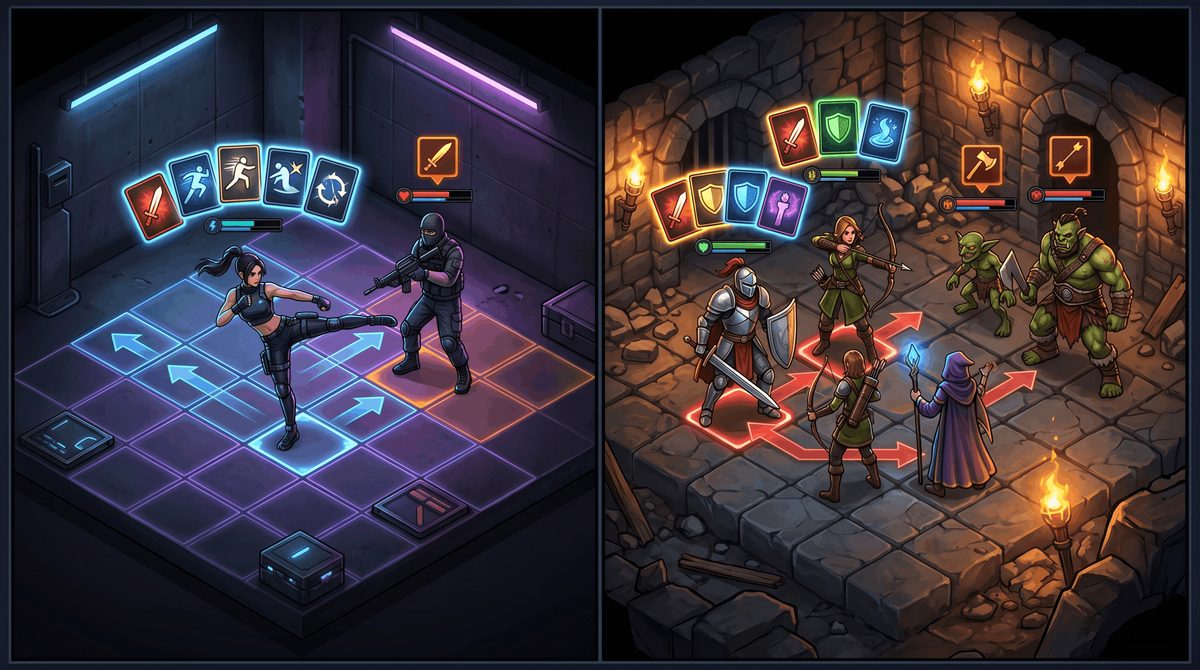
Best Tactical Deckbuilders Where Positioning Actually Matters
A curated list of deckbuilders and card battlers where grids, lanes, knockback, party placement, and formation decisions matter as much as card draw.
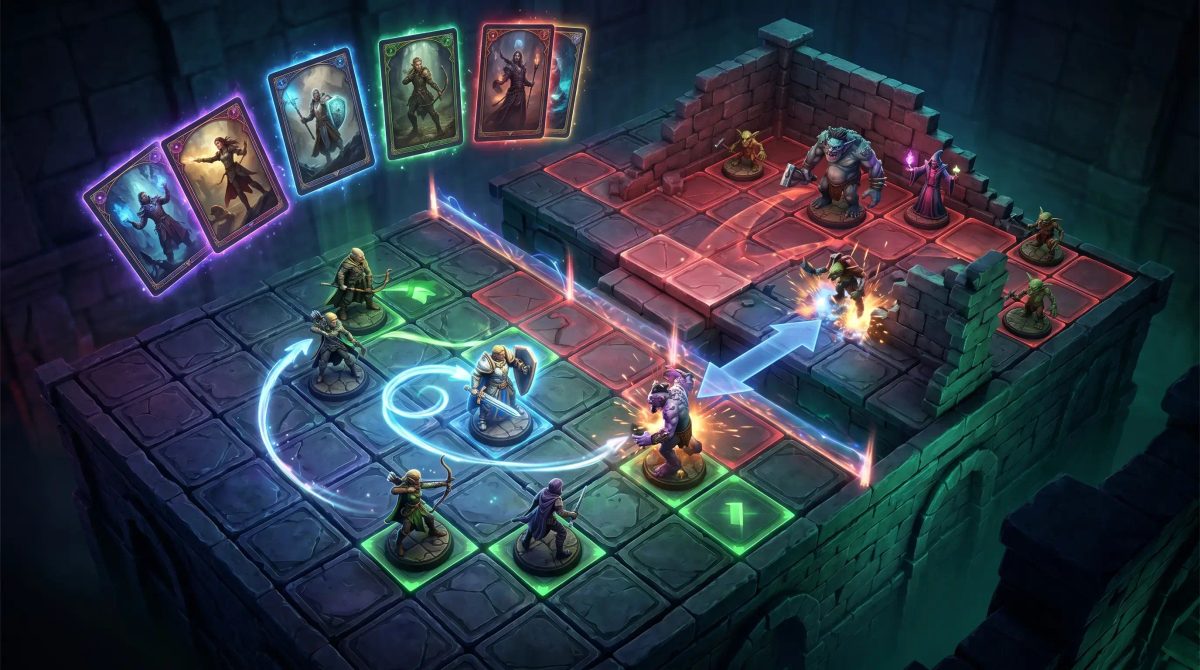
The best tactical deckbuilders do not just ask what card you draw. They ask where you are standing when you draw it.
This list is for players who like drafting, scaling, and run pressure, but want the board to fight back. The priority here is spatial consequence: movement, lanes, knockback, formation, threat direction, and how much positioning changes card value.
Some of these are true grid-based deckbuilders. Some are tactical card battlers with lanes, party placement, or auto-battler structure. All of them make space part of the deck.
Quick recommendations
| If you want... | Start with... | Why |
|---|---|---|
| The cleanest card-plus-positioning tactics | Fights in Tight Spaces | Every hand is shaped by enemy angles, movement, and room layout |
| Knockback and hex-grid pressure | Alina of the Arena | Spacing, shoves, and threat manipulation define survival |
| Compact synergy with brutal formation choices | Wildfrost | Lane placement and countdown timing make small boards dangerous |
| Party tactics in tight arenas | Knights in Tight Spaces | Multiple units add role coverage and formation decisions |
| Fast lane-based tactical runs | Shogun Showdown | Small move sets create sharp positioning puzzles |
| Auto-battler formation plus deckbuilding | Hadean Tactics | Drafting and placement combine into a board-state stress test |
| Mythic movement-based card combat | Pyrene | Positioning supports flavorful elemental run identity |
| Tactical card combat with crawler pressure | Deep Sky Derelicts | Party building and scavenging matter as much as card play |
What makes a tactical deckbuilder worth playing?
For this list, positioning had to do real work. Not just cosmetic placement. Not just enemies standing in rows while the card text does everything.
The strongest picks here do at least three things well:
- They change card value based on board state.
- They make movement, push, pull, swap, or formation cards matter.
- They punish lazy sequencing.
- They create readable tactical tension.
- They make runs interesting quickly.
- They support builds without making the board irrelevant.
The important test is simple: if the same hand would play differently in a different position, the game belongs in this conversation.
1. Fights in Tight Spaces
Best for: players who want the cleanest version of card-driven positioning
Run feel: sharp, readable, and constantly tactical
Main friction: the puzzle-like structure can feel strict if you want wild engine scaling
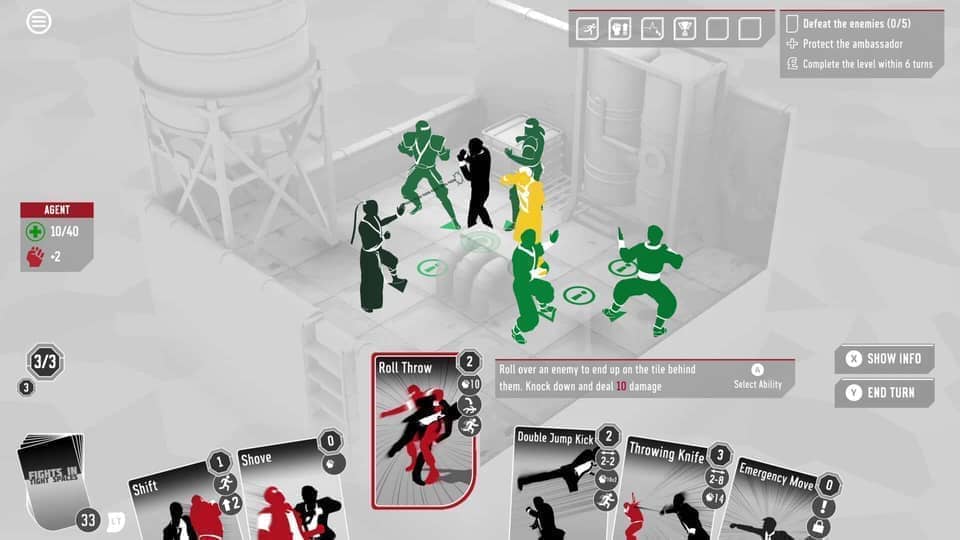
Fights in Tight Spaces is the obvious anchor for this topic because it understands the core fantasy: the strongest play is often not the biggest attack. It is stepping out of a line of fire, shoving an enemy into another enemy, or making the room’s layout do half the work.
This is one of the best tactical deckbuilders if you care about enemy intent and movement economy. Every card has a physical implication. A push card can be removal. A sidestep can be defense. A weak strike can become excellent if it moves you into safety or forces an enemy to waste their turn.
The appeal is not huge deck bloat or absurd combo fireworks. It is precision. You are managing angles, adjacency, walls, incoming attacks, and action order. A good turn feels like choreographed violence, but the game earns that feeling through clear tactical constraints.
If you are looking for card games like Fights in Tight Spaces, the key thing to chase is not just “cards plus grid.” It is the way the board rewrites hand quality. This game does that better than almost anything else here.
2. Alina of the Arena
Best for: players who want knockback, spacing, and threat manipulation to decide fights
Run feel: tense, physical, and often brutal
Main friction: small positioning mistakes can punish you quickly
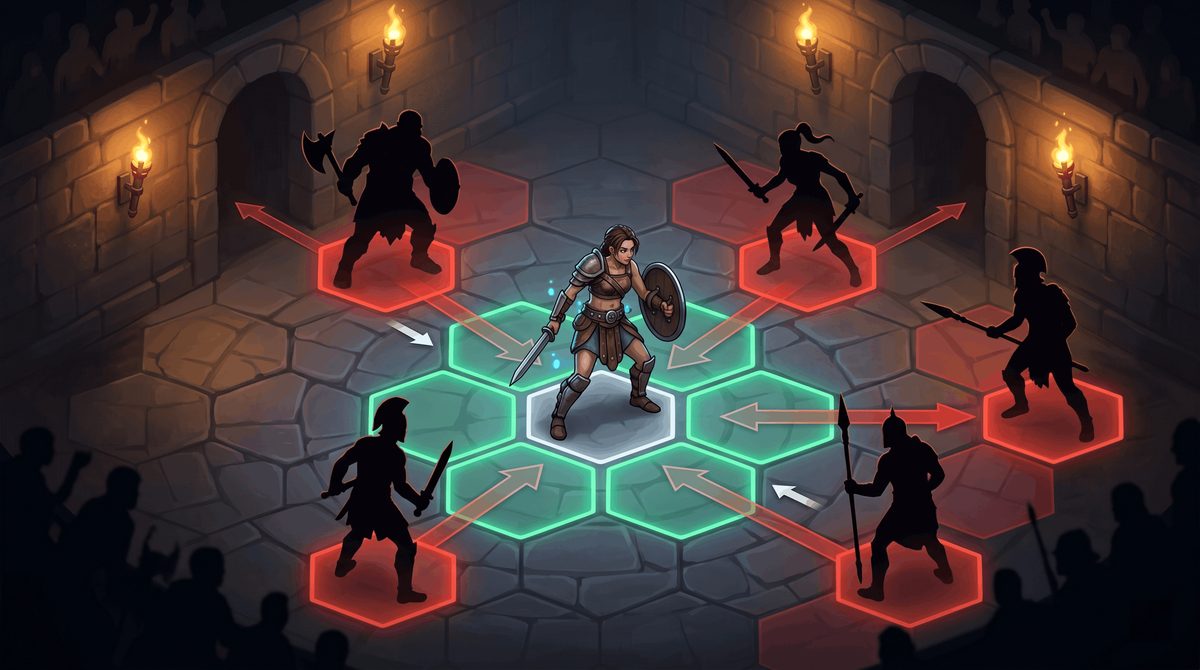
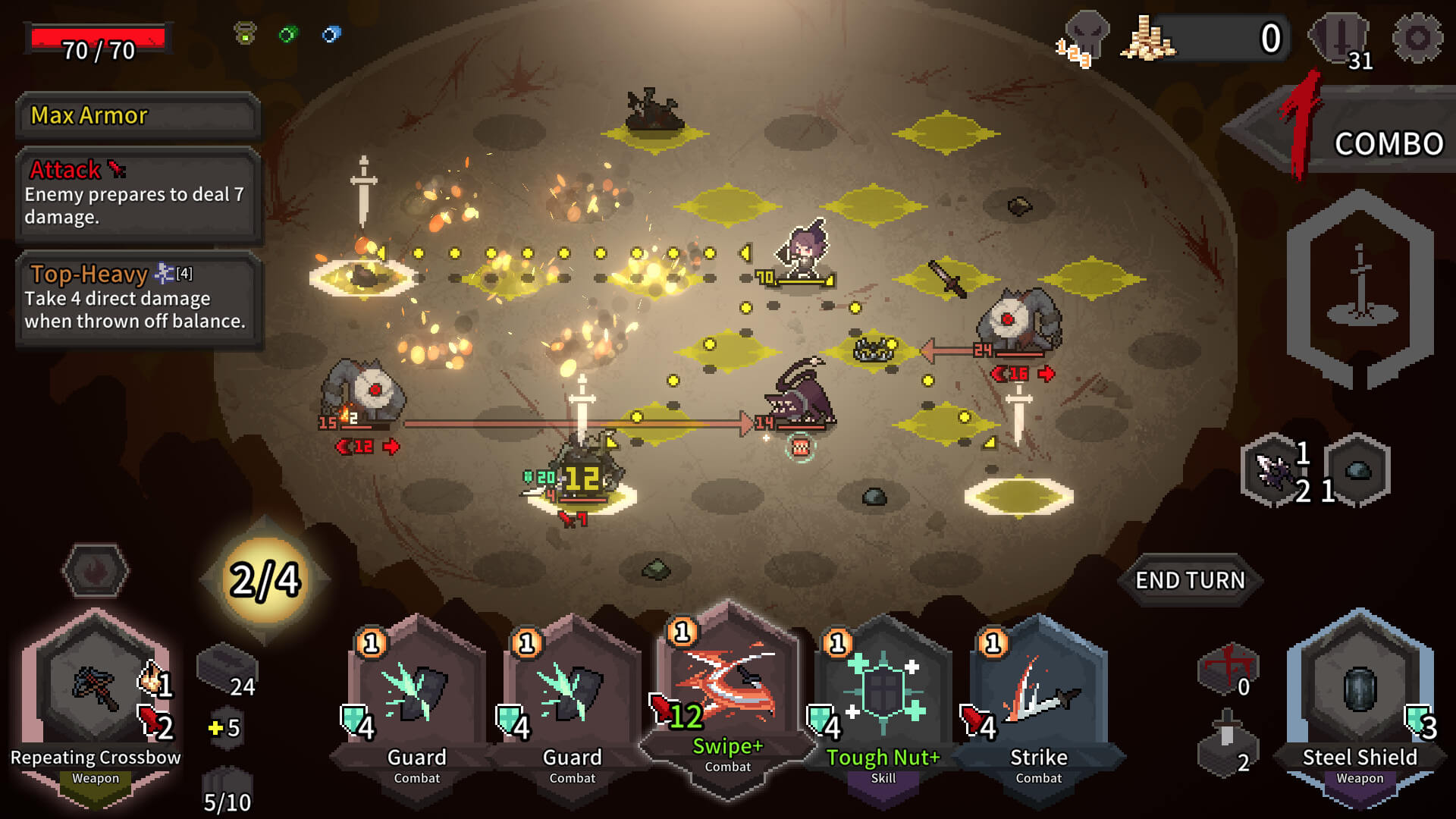
Alina of the Arena turns arena geometry into a weapon. The hex grid matters because enemies are not just targets. They are hazards, blockers, collision tools, and future problems waiting to close in.
The real satisfaction is making a mediocre hand work because the positioning is right. A basic attack can become a run-saver if it shoves an enemy into another threat or opens a path out of danger. Movement is survival. Knockback is damage. Spacing is mitigation.
It also has strong draft tension. You are not simply asking, “Does this card scale?” You are asking whether your deck can create distance, exploit corners, handle being surrounded, and convert awkward enemy placement into value.
The tradeoff is pressure. Alina of the Arena is less forgiving than some medium-weight tactical card battlers. If you enjoy clean positioning puzzles with real punishment behind them, it is an easy recommendation. If you mostly want relaxed combo discovery, it may feel hostile.
3. Wildfrost
Best for: players who want compact runs where placement mistakes echo several turns later
Run feel: brisk, punishing, and synergy-rich
Main friction: early losses can feel harsh until enemy timing clicks
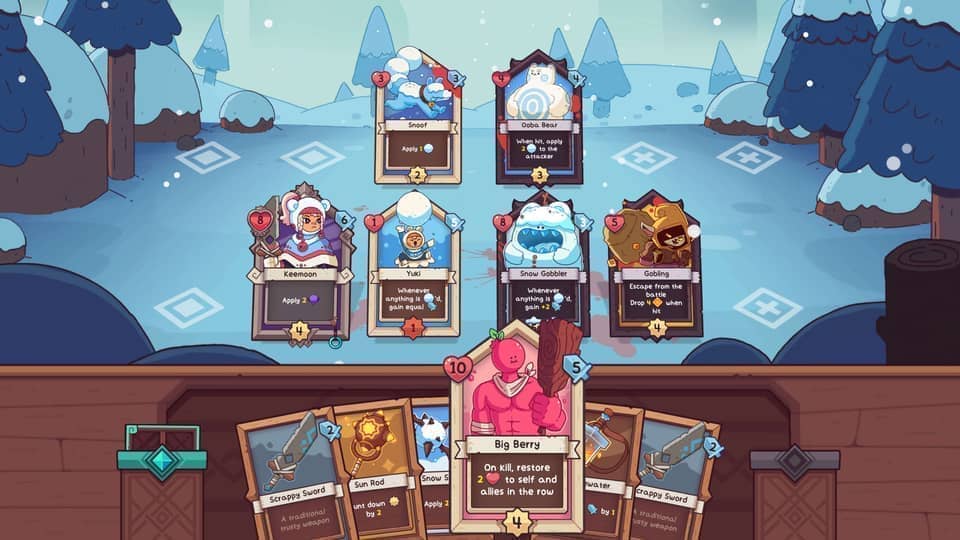
Wildfrost is not a grid tactics game in the same way as Fights in Tight Spaces or Alina of the Arena. Its positioning is more about lanes, targeting, frontline exposure, and turn countdowns.
That difference matters. This is not about dancing around a map. It is about formation discipline.
The reason it belongs high on a list of deckbuilding games with positioning is that placement changes the entire fight clock. A bad frontline decision can doom a battle several turns before the damage actually lands. A strong unit in the wrong lane is not strong. A fragile support piece exposed too early can collapse a build that looked stable on paper.
Wildfrost also has excellent build identity. Charms, companions, effects, and timing interactions create real scaling routes. But the game keeps dragging those synergies back onto the board. You still have to protect the right pieces, sequence around countdowns, and understand when a short-term sacrifice preserves the run.
This clicks most if you like tactical card battlers that punish autopilot. It is not always gentle, and it can look simpler than it is. The board is small, but the consequences are not.
4. Knights in Tight Spaces
Best for: players who like the Fights in Tight Spaces structure but want party tactics and fantasy roles
Run feel: clean, tactical, and more team-oriented
Main friction: party management makes it less purely about one-unit positional mastery
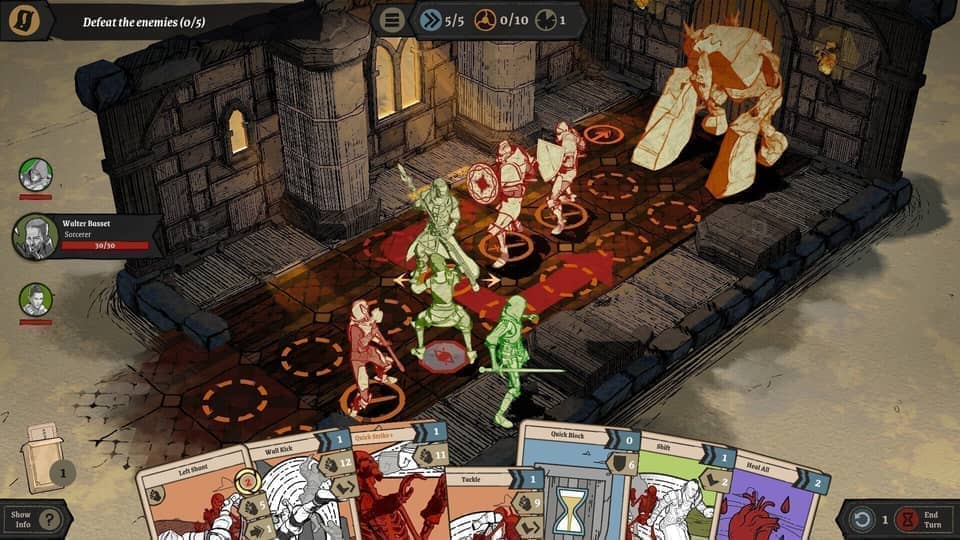
Knights in Tight Spaces takes the tight-arena idea and shifts the pressure toward a party. That one change gives the game a different tactical texture. You are no longer only solving for one body moving through danger. You are managing multiple characters, their roles, and how their positions support or expose each other.
The best part is the sequencing clarity. You can read the arena, identify the immediate threat, and decide which unit has to move, strike, block, or set up the next action. It has the same appeal as other grid-based deckbuilders where small spatial adjustments can swing a turn, but party building gives the decisions a wider tactical base.
That also creates a meaningful tradeoff. If you want the pure elegance of one character manipulating a room, Fights in Tight Spaces is cleaner. If you want formation choices, role coverage, and fantasy party identity layered onto tactical cards, Knights in Tight Spaces is the better fit.
It is a strong pick for players who want positioning to matter but do not want every run to feel like a solo puzzle box.
5. Shogun Showdown
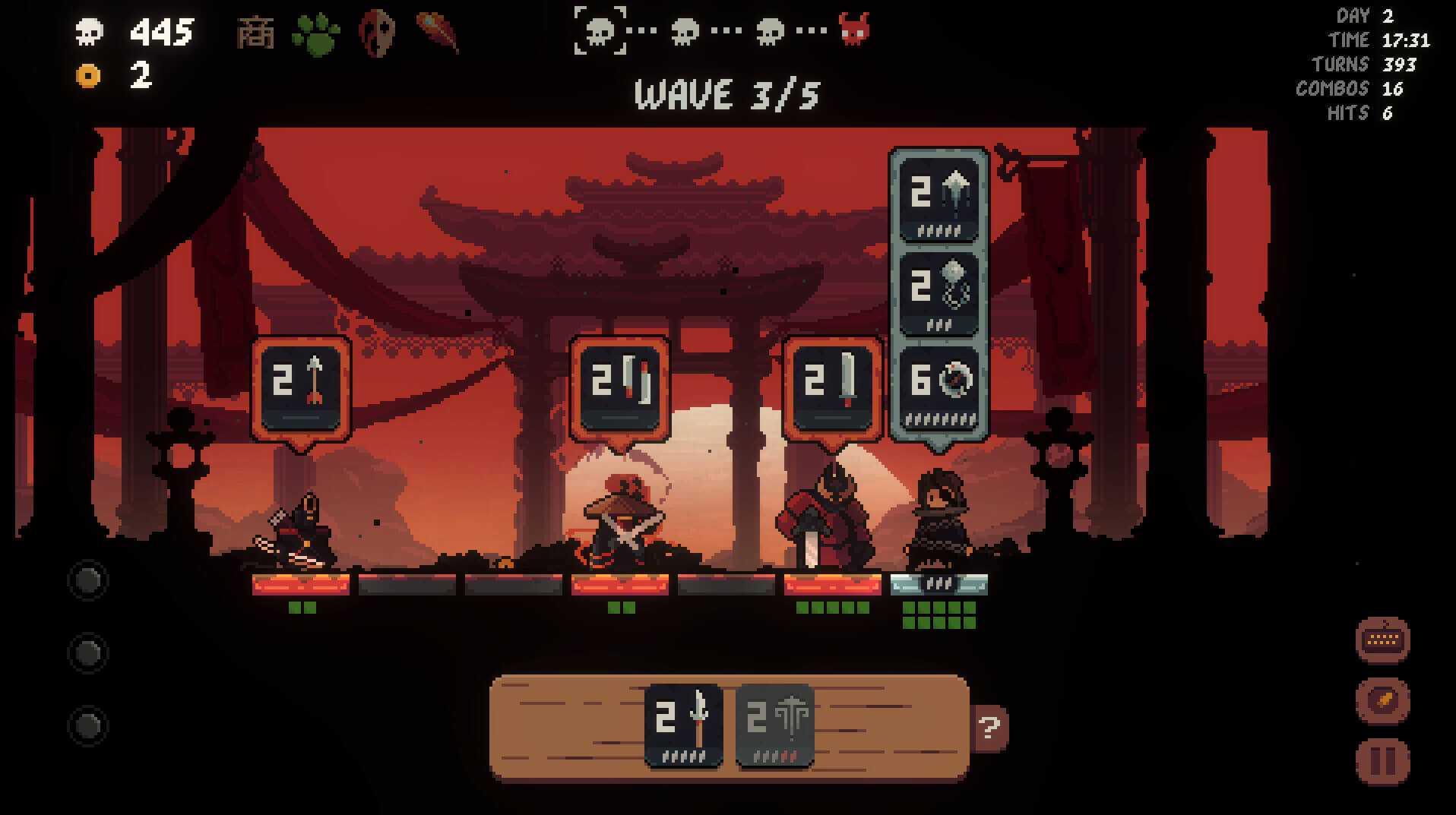
Best for: players who want lane tactics, compact decision chains, and upgraded move tiles
Run feel: fast, lethal, and highly readable
Main friction: its “deck” structure is leaner and more tile-like than traditional card drafting
Shogun Showdown is a slightly different beast, but it belongs in this conversation. Its lane-based combat makes positioning immediate. You are constantly thinking about where enemies are, which direction attacks will fire, when your move options refresh, and how to line up upgraded tiles before the board overwhelms you.
The game’s strength is efficiency. It wastes very little time before becoming interesting. A turn can hinge on stepping into danger now to set up a kill next turn, or delaying an attack because the lane is not yet worth spending it on. That creates a satisfying rhythm of preparation, release, and repositioning.
Compared with broader roguelike deckbuilders, Shogun Showdown is more compact and more deterministic. That is good if you value clear tactical consequences. It is less ideal if your main joy is drafting a large deck and discovering strange synergies through card volume.
Think of it as one of the best strategy deckbuilders for players who want every move to have board weight, even if the deckbuilding layer is tighter and more restrained.
6. Hadean Tactics
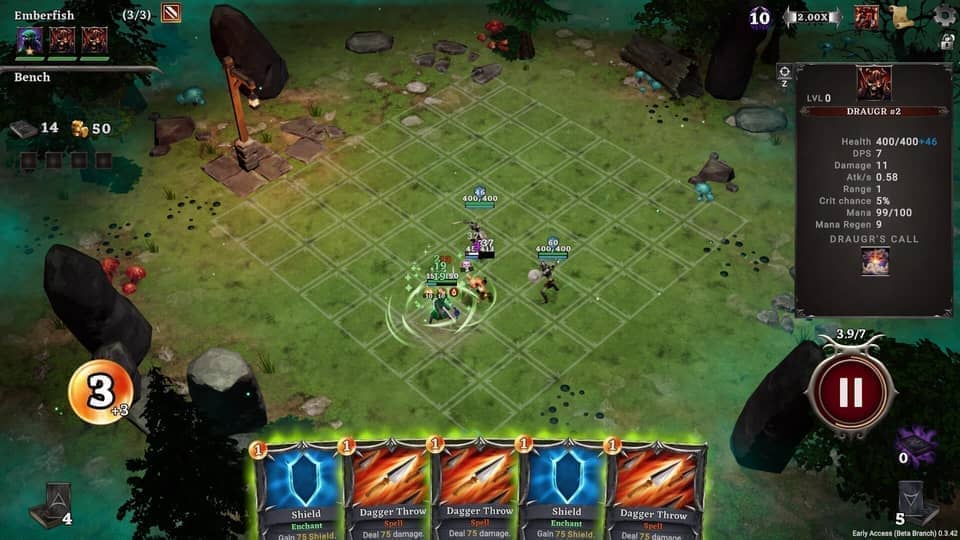
Best for: players who want deckbuilding fused with auto-battler formation puzzles
Run feel: strategic, layered, and more indirect than grid-combat games
Main friction: you draft and position, then the fight reveals your mistakes without full direct control
Hadean Tactics has a distinct hook: you build a plan, place your units, use cards, and then watch the formation prove whether your plan actually works. It blends auto-battler positioning with roguelike deckbuilding, which makes it less about perfect turn-by-turn movement and more about pre-fight structure, board roles, and timing support.
That indirectness is the point. Drafting is not only about card power. It is about whether your formation can survive long enough for those cards to matter, whether your units are positioned to do their jobs, and whether your synergies hold under pressure.
A build that looks elegant in the draft can fall apart if your board cannot absorb enemy pressure.
Hadean Tactics is especially good for players who enjoy formation theory. Frontline durability, backline safety, unit behavior, and card support all feed into the same run plan. It has high replayability because the tactical question changes with both your draft and your board.
The limitation is control. If you want to personally steer every attack and movement decision, this may feel one step removed. If you like drafting a system and then stress-testing it through formation, it is one of the sharper picks here.
7. Pyrene
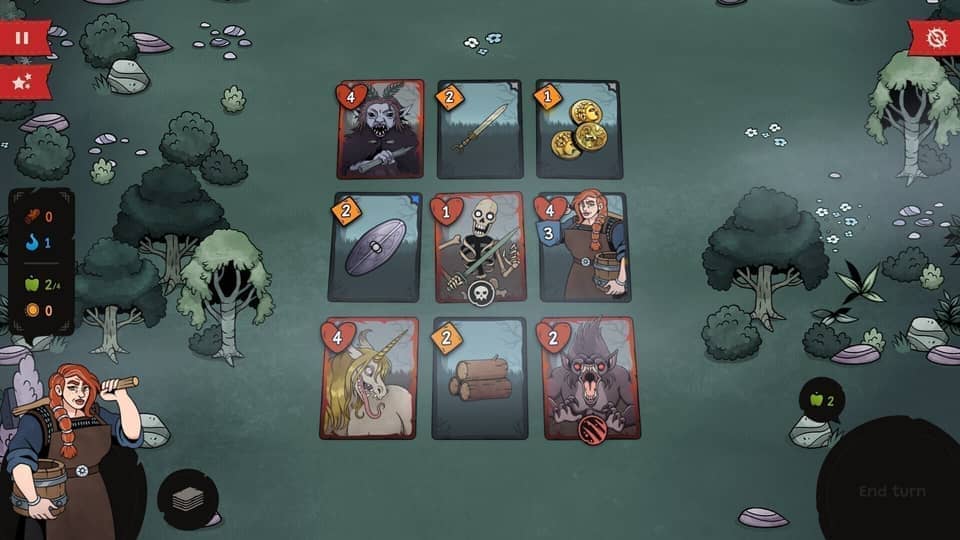
Best for: players who want mythic flavor, movement-based combat, and tactical deckbuilding with elemental identity
Run feel: flavorful, mobile, and build-driven
Main friction: less pure if your main priority is tight arena manipulation
Pyrene brings a different flavor to tactical card battling. Its appeal sits in the blend of movement-based combat, fantasy mythology, and elemental build identity. The positioning matters, but the draw is not just “solve the room.” It is how movement and card choices support a broader tactical rhythm.
This is a good pick if you want deckbuilding games with positioning that feel less like sterile chess problems and more like myth-tinged run craft. The tactical layer gives your decisions physical shape, while the deckbuilding layer provides the longer-term identity.
The caveat is that players looking specifically for the most precise knockback-and-grid puzzle may prefer Alina of the Arena or Fights in Tight Spaces first. Pyrene fits the topic, but it is better framed as a movement-forward tactical deckbuilder than as the purest spatial puzzle on the list.
Choose it when you want positioning to matter alongside atmosphere and elemental build texture.
8. Deep Sky Derelicts
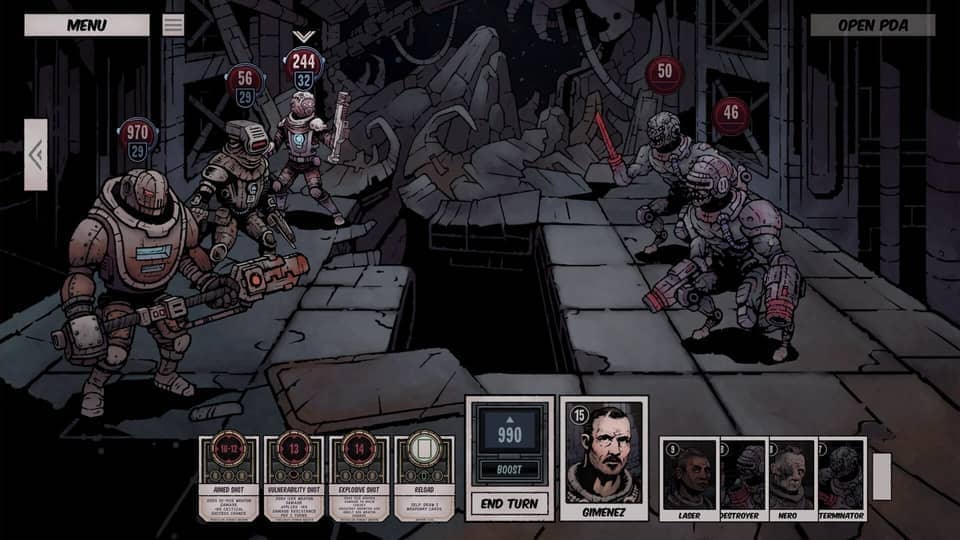
Best for: players who want party-based card tactics with exploration and scavenging pressure
Run feel: slower, grittier, and more campaign-like
Main friction: positioning is less central than party composition, resource pressure, and encounter management
Deep Sky Derelicts is the most conditional recommendation here. It is a card-based tactical strategy game with party building, sci-fi crawling, scavenging pressure, and narrative events. It belongs because formation and party roles matter, but it is not the pick if your main itch is tight grid movement.
The appeal is broader run texture. You are managing a crew, handling encounters, pushing through grim derelicts, and making card-based tactical decisions under resource pressure. It has more crawler DNA than the cleaner roguelike deckbuilders higher on this list.
That makes it useful for a specific player: someone who wants tactical card combat embedded in a harsher expedition structure. If you want every card to be transformed by physical positioning, this is not the strongest match. If you want party tactics and card play inside a sci-fi survival loop, Deep Sky Derelicts earns its slot.
Which tactical deckbuilder should you play first?
If you want the strongest overall answer, start with Fights in Tight Spaces. It is the clearest example of a tactical deckbuilder where the board constantly changes what your cards mean.
If you want something harsher and more physical, pick Alina of the Arena. If you want compact runs with brutal formation consequences, pick Wildfrost. If you want to draft a plan and watch your formation expose its weak points, pick Hadean Tactics.
The important distinction is this: the best tactical deckbuilders are not just deckbuilders with a board attached. They make position part of the hand, part of the draft, and part of the failure state.
That is where the genre gets interesting.
FAQ
What is a tactical deckbuilder?
A tactical deckbuilder is a card game where deck construction matters, but board position also changes your decisions. Movement, lanes, enemy intent, range, formation, knockback, or unit placement can all affect which card is actually best.
What is the best tactical deckbuilder with positioning?
Fights in Tight Spaces is the cleanest overall pick because almost every card has a physical consequence. Movement, push effects, enemy angles, and room layout all change how your hand plays.
What should I play after Fights in Tight Spaces?
Try Alina of the Arena if you want more brutal hex-grid combat and knockback. Try Knights in Tight Spaces if you want a similar tight-arena structure with party tactics. Try Shogun Showdown if you want faster lane-based tactics.
Is Wildfrost a tactical deckbuilder?
Yes, but not in the same way as grid-based games. Wildfrost is more about lanes, countdown timing, frontline exposure, and formation discipline. It is tactical because placement can decide the fight before the damage lands.
Is Hadean Tactics more deckbuilder or auto-battler?
It is both. Hadean Tactics combines roguelike deckbuilding with auto-battler-style formation planning. You draft cards and units, position your board, then watch whether the plan survives pressure.
Which tactical deckbuilder is best for beginners?
Fights in Tight Spaces is the clearest starting point if you want readable tactical decisions. Shogun Showdown is also a good pick if you want something faster and more compact. Wildfrost is excellent, but it can punish early mistakes hard.
Takeaway
The best tactical deckbuilders make position part of the card text.
A push card is not just a push card if it sends an enemy into a wall. A weak attack is not weak if it moves you out of danger. A support unit is not safe if it is standing in the wrong lane.
Start with Fights in Tight Spaces if you want the cleanest version of card-driven positioning. Pick Alina of the Arena if you want brutal spacing and knockback. Pick Wildfrost if you want small-board formation pressure. Pick Hadean Tactics if you want deckbuilding mixed with auto-battler planning.
The best games in this niche do not just ask what is in your hand. They ask whether you are standing in the right place to use it.