Games Like Slay the Spire
If you want another deckbuilder with smart route choices, tight combat, and great run-to-run replayability, start here.
If you want more runs built on hard choices, fragile plans, and sharp deck control, these are the 12 games to queue up next. Some chase the same clean combat rhythm. Others twist the formula with dice, lanes, poker hands, timing puzzles, or heavier narrative. All of them scratch that same replayable, high-skill deckbuilder itch.
Quick take
- Monster Train is the easiest recommendation if you want another run-based deckbuilder with route planning, scaling builds, and brutal fights.
- Balatro is less fantasy and more card alchemy, but it hits the same obsession loop of drafting, synergy hunting, and run-saving pivots.
- Vault of the Void is for players who care more about precision than surprise and want more control over every turn.
- Griftlands stands out if you want deckbuilding with stronger character identity, story decisions, and separate combat systems to master.
- Cobalt Core is the clean pick if you want readable fights, constant positioning decisions, and runs that stay approachable without feeling shallow.
- Shogun Showdown is the one to play if you want tiny-board fights where timing, spacing, and enemy intent matter every turn.
- Astrea: Six-Sided Oracles is the best pick here if you want the same brain-burn in a stranger, riskier format.
The 12 picks
Monster Train
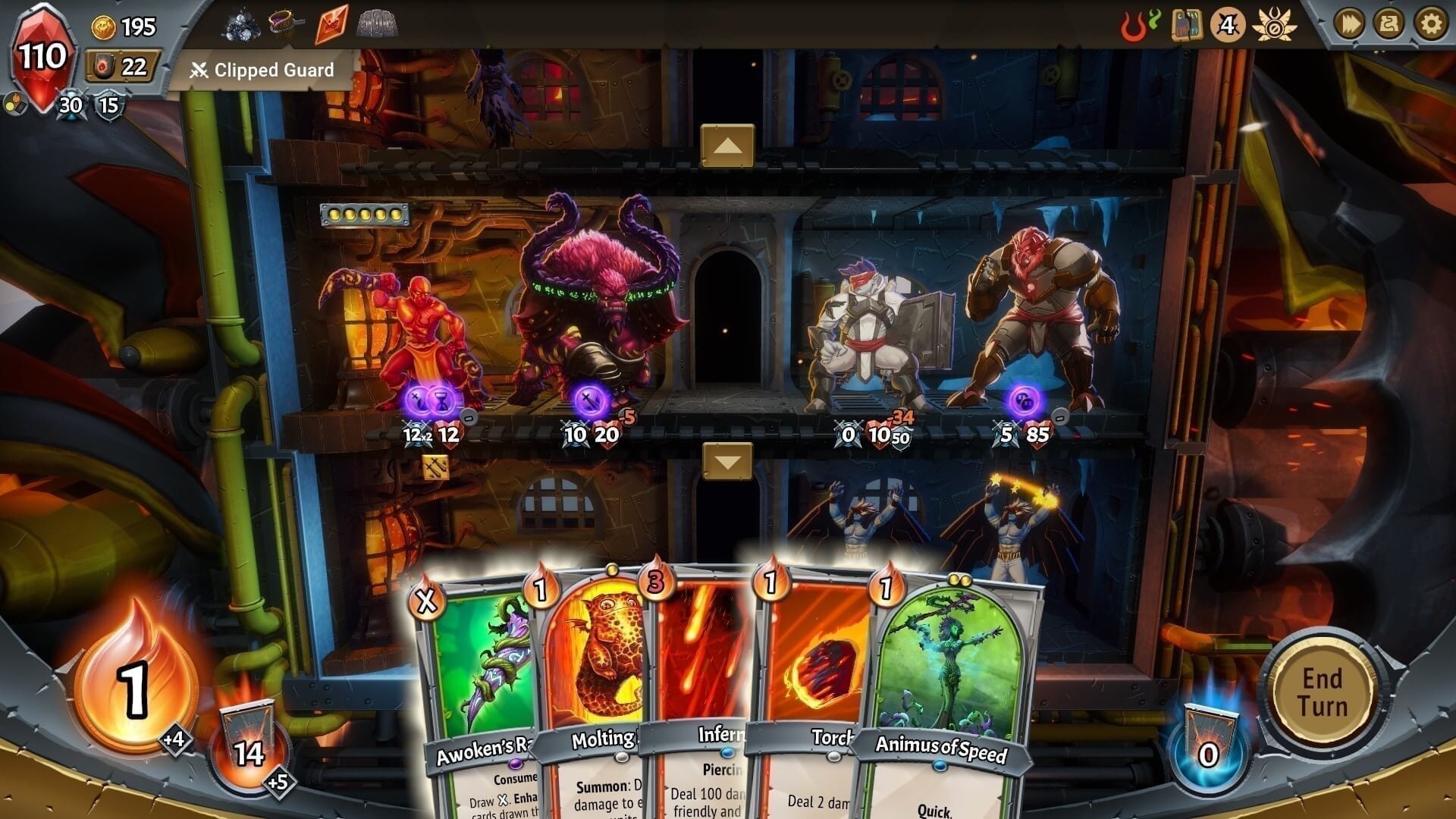
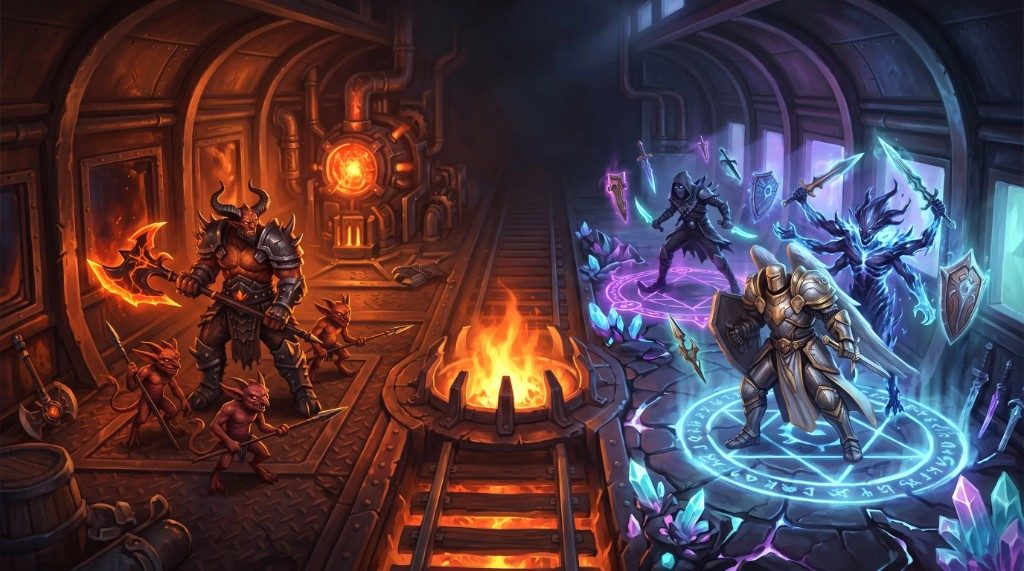
If your favorite part of Slay the Spire is building toward absurd scaling while surviving increasingly unfair fights, Monster Train lands immediately. Its multi-floor battles create more tactical texture than a simple front line, and clan combinations give runs a huge amount of replayability. You are still chasing engines, dead draws still hurt, and route choices still matter.
Its biggest strength is how quickly a build reveals its identity. Upgraded units, spell synergies, and relic-like artifacts can turn a shaky deck into a machine in just a few fights. It also rewards aggressive planning. You are not only asking what card is good now, but where it belongs and what floor wins the long game.
The caveat is that it is louder and more explosive than Slay the Spire. Some runs snowball hard, and the board can get busy in a way that feels less elegant than Spire’s one-lane clarity. If you want the closest match in structure and replayable run quality, though, this is still the first stop.
Balatro
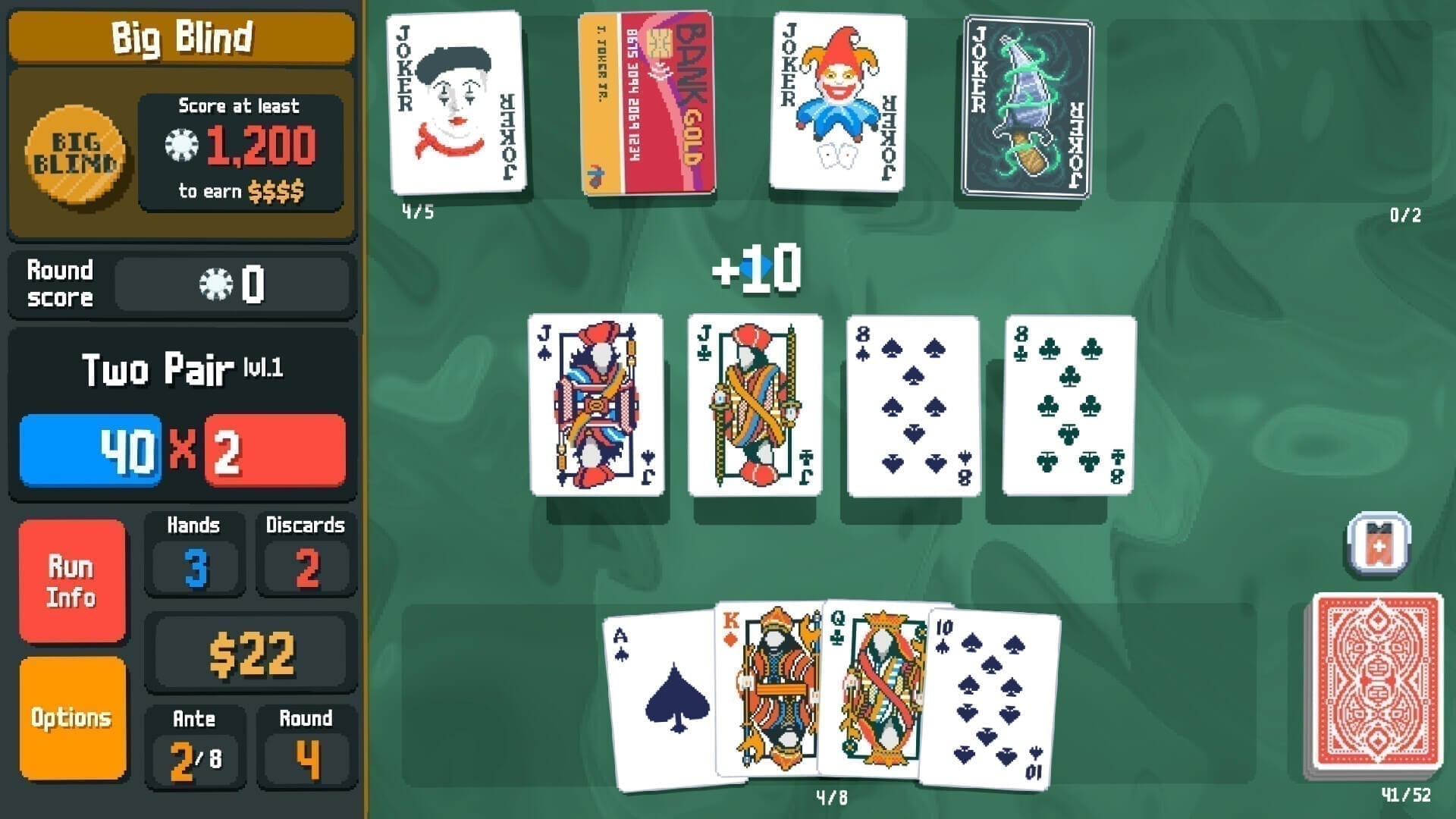
Balatro is not trying to mimic fantasy combat, but it absolutely understands what makes a run-based deckbuilder click. You are still trimming weak pieces, chasing multipliers, and trying to turn a rough draft into a terrifying engine. Instead of blocking and attacking, you are manipulating poker hands and Joker synergies until the numbers bend.
The concrete strength here is flexibility. A run can pivot off one strange pickup, and weak-looking tools can become central once the right support appears. It captures that great Slay the Spire feeling where one smart decision five fights earlier suddenly explains the whole run.
The limitation is obvious: if you need enemies, HP management, and classic fantasy combat framing, Balatro is operating on a different plane. It shares the addictive structure more than the exact genre mood. For players who care about replayable decision density above all else, that trade is worth it.
Monster Train 2
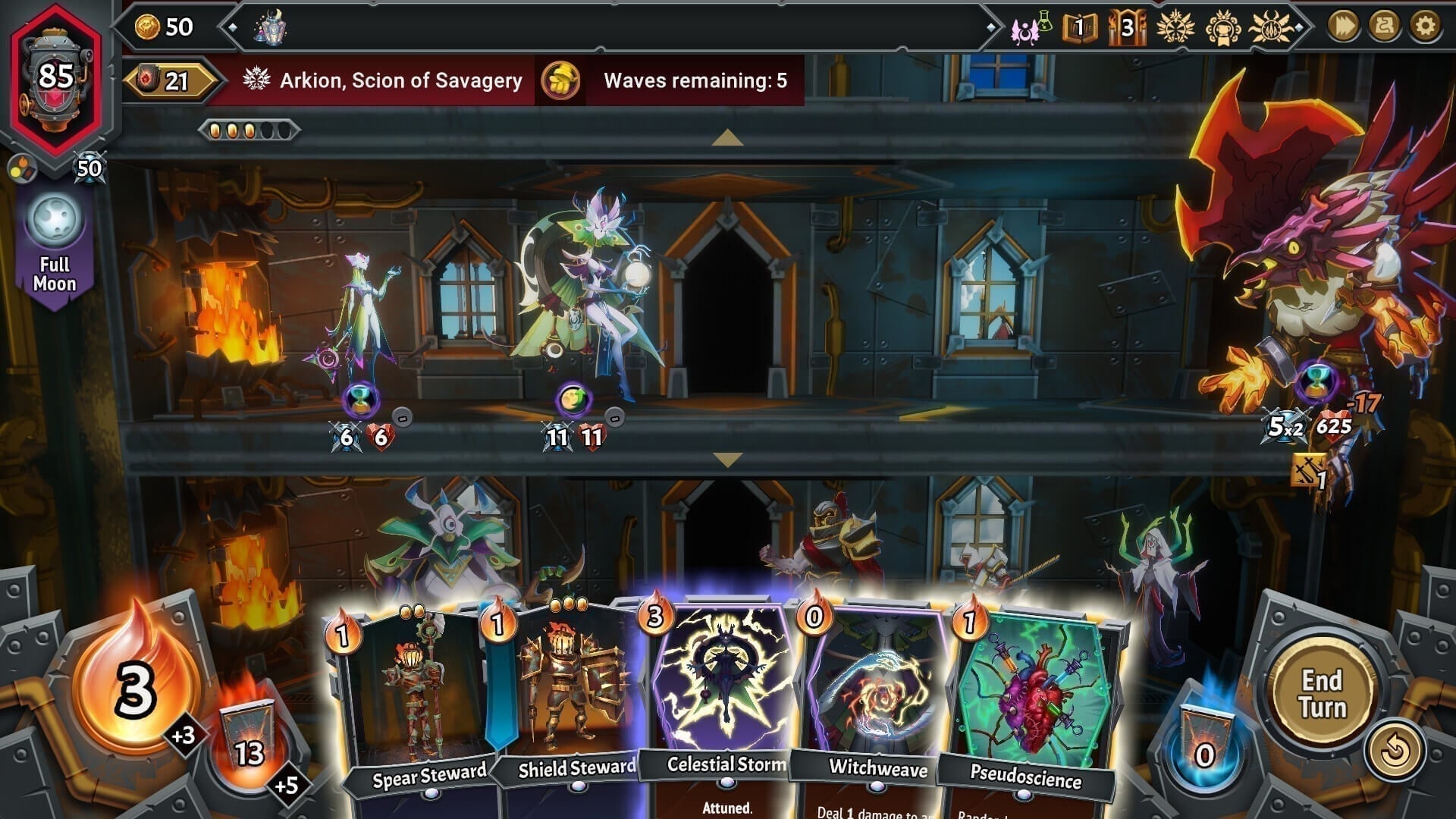
If you liked what Monster Train did but wanted another pass at the same core strengths, Monster Train 2 belongs on the list. It keeps the lane-based combat and scaling-focused deckbuilding that made the first game such a natural post-Spire pick, while offering new combinations and fresh puzzle space to chew on.
Its main draw is obvious: more room for experimentation without abandoning the formula. If you enjoy learning faction interactions, squeezing value out of upgrades, and finding the exact breakpoint where your deck stops surviving and starts dominating, this gives you more of that good friction.
The caveat is also obvious. If the first Monster Train already felt too engine-heavy or too visually noisy compared to Slay the Spire, a sequel built from that DNA will not solve your issue. This is for players who want another layered, replayable deckbuilder in the same family, not a reset to cleaner minimalism.
Roguebook

Roguebook pushes closer to Slay the Spire in battle flow than some games here, but its map exploration gives it a different rhythm. Instead of simply choosing a route, you reveal and shape the map with limited resources, which makes pathing feel more active and more tactical.
Its best feature is the dual-hero system. Building around two characters at once adds strong synergy potential and makes turns feel less linear. You can set up combinations that feel clever without requiring the explosive chaos of something like Monster Train. It also keeps one foot in fantasy, which helps if that tag matters to you.
The downside is that its runs can feel a little less razor-sharp than Slay the Spire at peak tension. The exploration layer is interesting, but not everyone will prefer it over clean node-to-node routing. Still, if you want a fantasy deckbuilder with meaningful planning and a different take on map control, Roguebook is a solid fit.
Vault of the Void
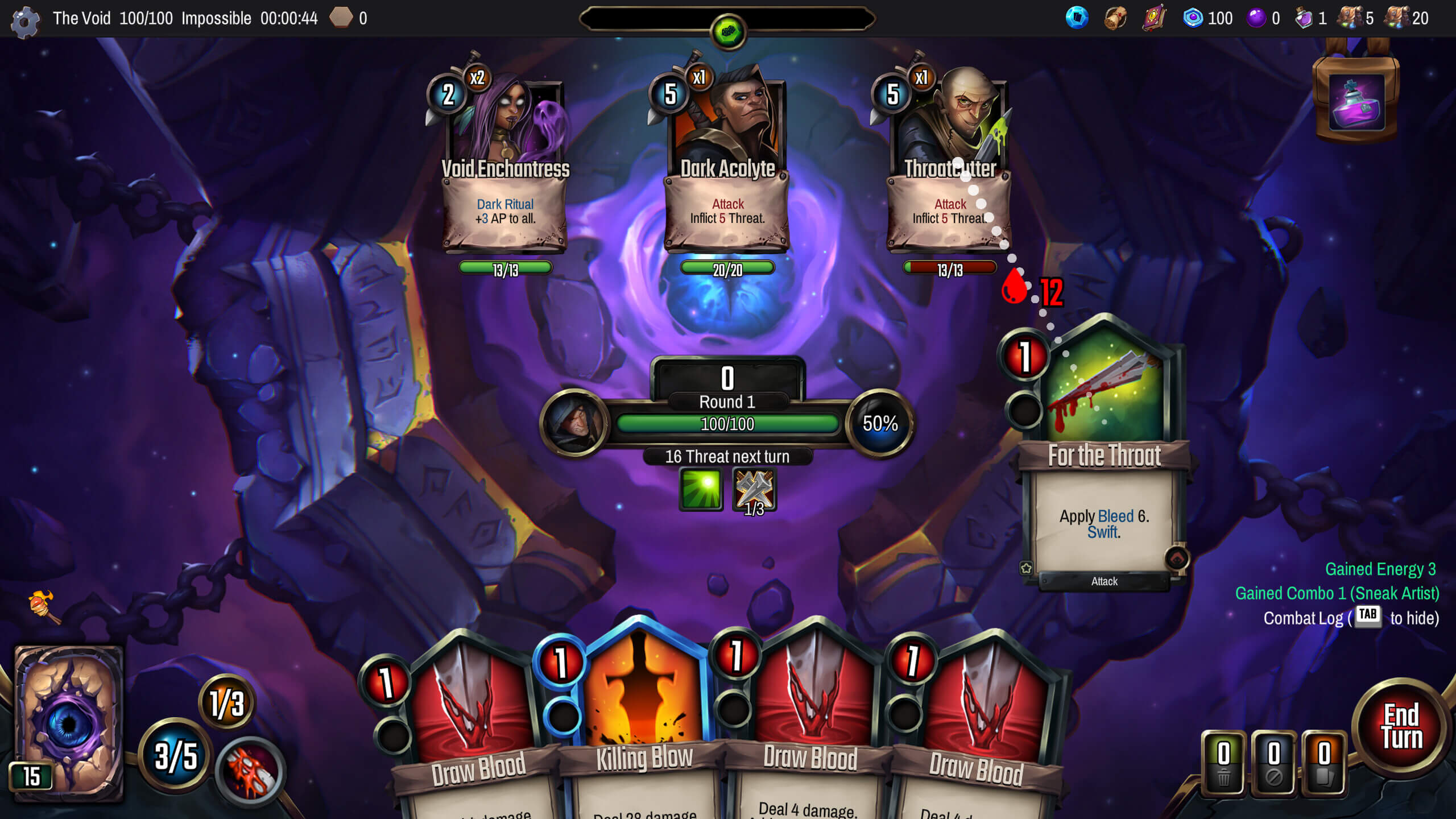
Vault of the Void is for players who love Slay the Spire most when it becomes a math problem with teeth. This game gives you a remarkable amount of control over deck use and turn planning, which means wins feel earned and losses usually feel explainable.
That control is the core strength. You can manipulate your hand, plan around enemy intent, and shape your deck with less randomness getting in the way. If you are the kind of player who gets annoyed when a run dies to one ugly shuffle, this game feels refreshingly fair. It leans hard into skill expression.
The tradeoff is that some of the wild roguelike volatility is reduced. For some players, that means a cleaner and better combat system. For others, it means fewer desperate miracle moments. If you want a hard deckbuilder that rewards deliberate play over gambling, Vault of the Void is one of the strongest picks on this list.
Griftlands
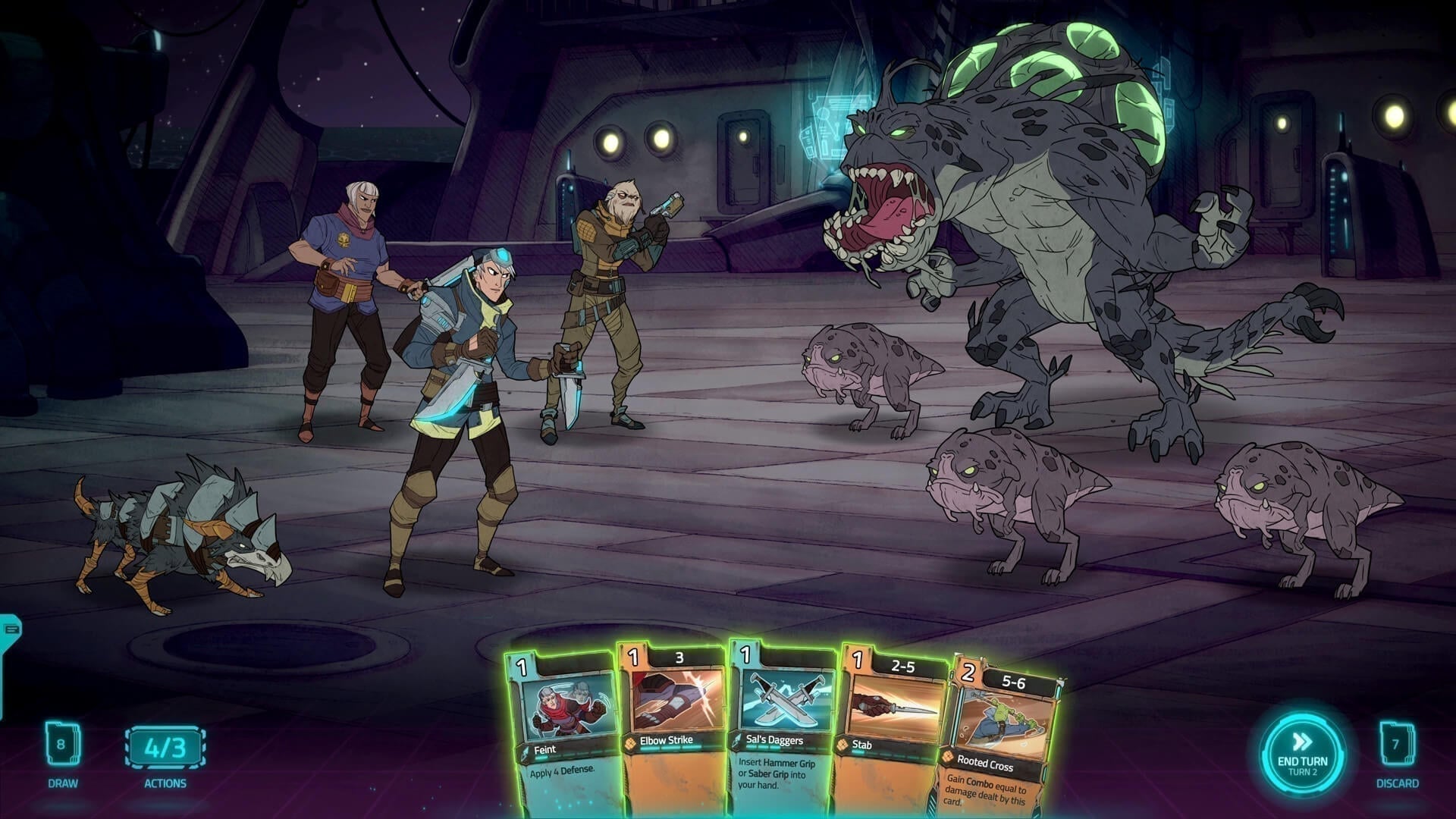
Griftlands takes the deckbuilding core and wraps it in stronger narrative framing, faction relationships, and character-driven runs. Most importantly, it does not stop at one battle system. Negotiation and combat each have their own decks and their own logic, so choices ripple in more directions than usual.
Its strength is variety with purpose. Story events are not just padding between fights; they shape your resources, alliances, and future options. That gives runs a different kind of tension than Slay the Spire. You are not only solving combat encounters. You are managing a life full of consequences.
The caveat is pacing. If you want pure mechanical efficiency with minimal interruption, Griftlands can feel heavier and slower. The added worldbuilding is the point, but it does mean less of that immediate “one more run” velocity. For players who want deckbuilding plus character drama, though, it is one of the most distinct alternatives available.
Cobalt Core
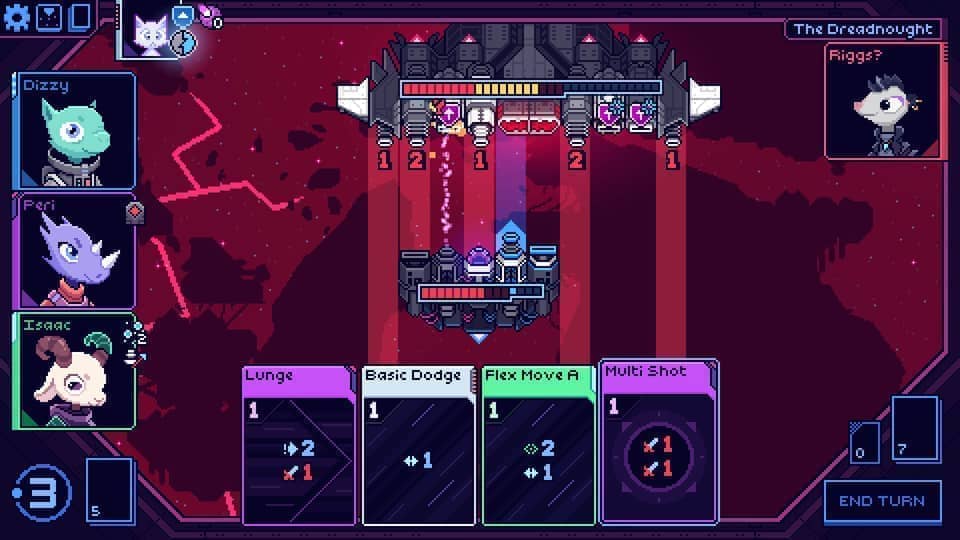
Cobalt Core is one of the best fits for Slay the Spire players who care about readable combat and clean decision-making. The ship-based battles give every turn a strong tactical shape, because attacking, defending, and repositioning are all tied together. You are not just asking whether a card is efficient. You are asking whether it fixes the board.
That is what makes it such a strong recommendation here. It keeps runs easy to parse, but there is still real skill in how you sequence movement, shield timing, and crew effects. Different ship and crew combinations also do a good job of making runs feel distinct without drowning you in system bloat.
The limitation is scale. Cobalt Core is a little lighter than the most hardcore entries in the genre, so if you want maximum complexity or the harshest possible long-run optimization, Vault of the Void or Monster Train may hook you harder. If you want tight, elegant runs that respect your time, though, it lands.
Shogun Showdown
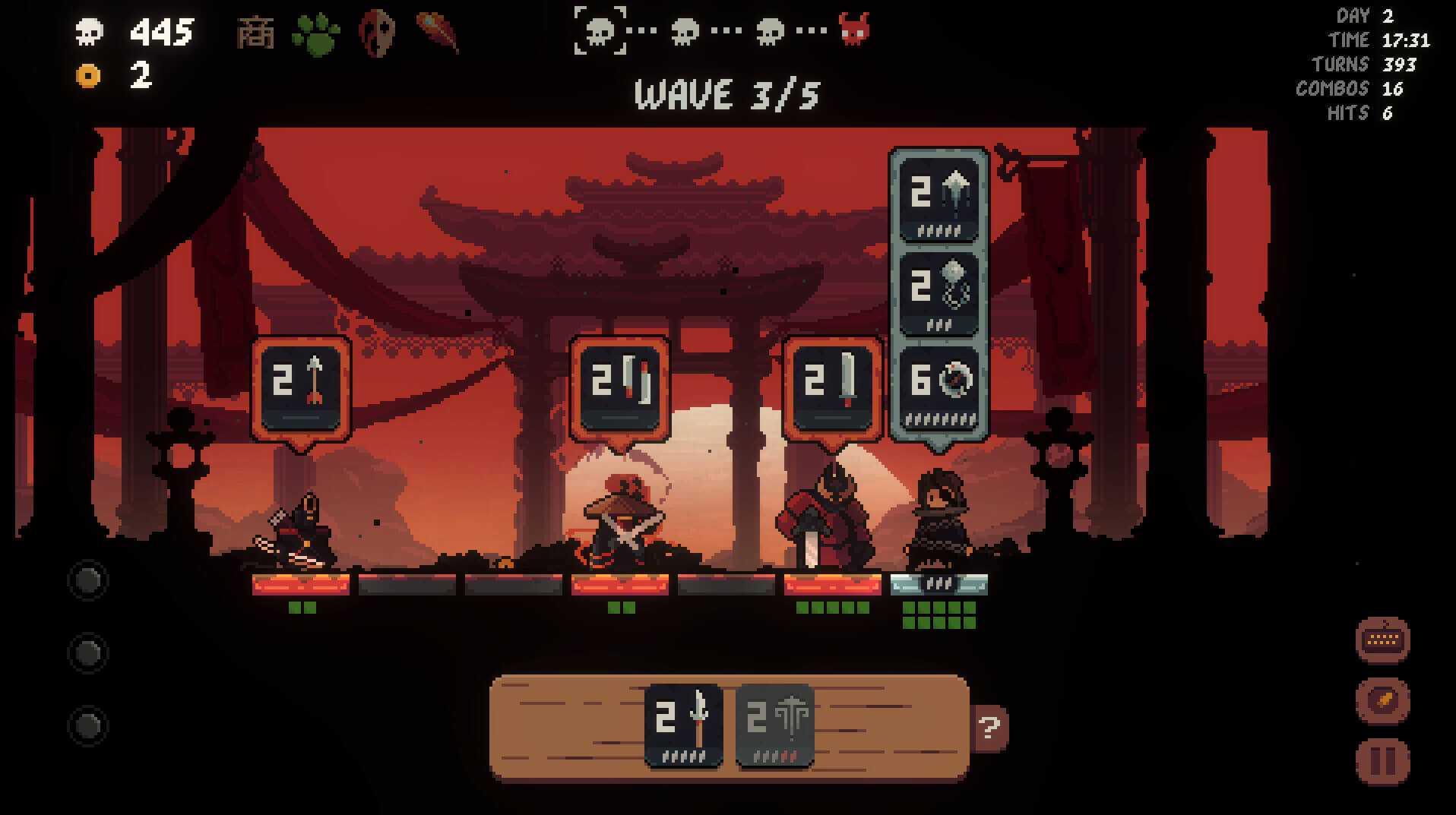
Shogun Showdown is one of the best alternatives here if what you really love about Slay the Spire is readable combat under pressure. Its tiny battlefield makes every action legible, but the decisions are still sharp because movement, facing, attack timing, and enemy intent all matter. Small mistakes snowball fast, which gives runs that same satisfying feeling of losing because you misread the fight, not because the game was vague.
Its biggest strength is how cleanly it turns tactics into deckbuilding value. Cards are not just damage or block equivalents. They are tools for controlling space, manipulating turn order, and setting up safer future turns. That makes it feel surprisingly close to Slay the Spire's best runs, where the real skill is not just building a strong deck, but seeing the next few turns more clearly than the game expects.
The caveat is scope. Shogun Showdown is more stripped-down and spatial than most of the games here, so it does not deliver the same relic-heavy fantasy climb or broad run structure as Monster Train or Griftlands. But if you want tight, repeatable runs with almost no wasted motion, it absolutely earns the slot.
Astrea: Six-Sided Oracles
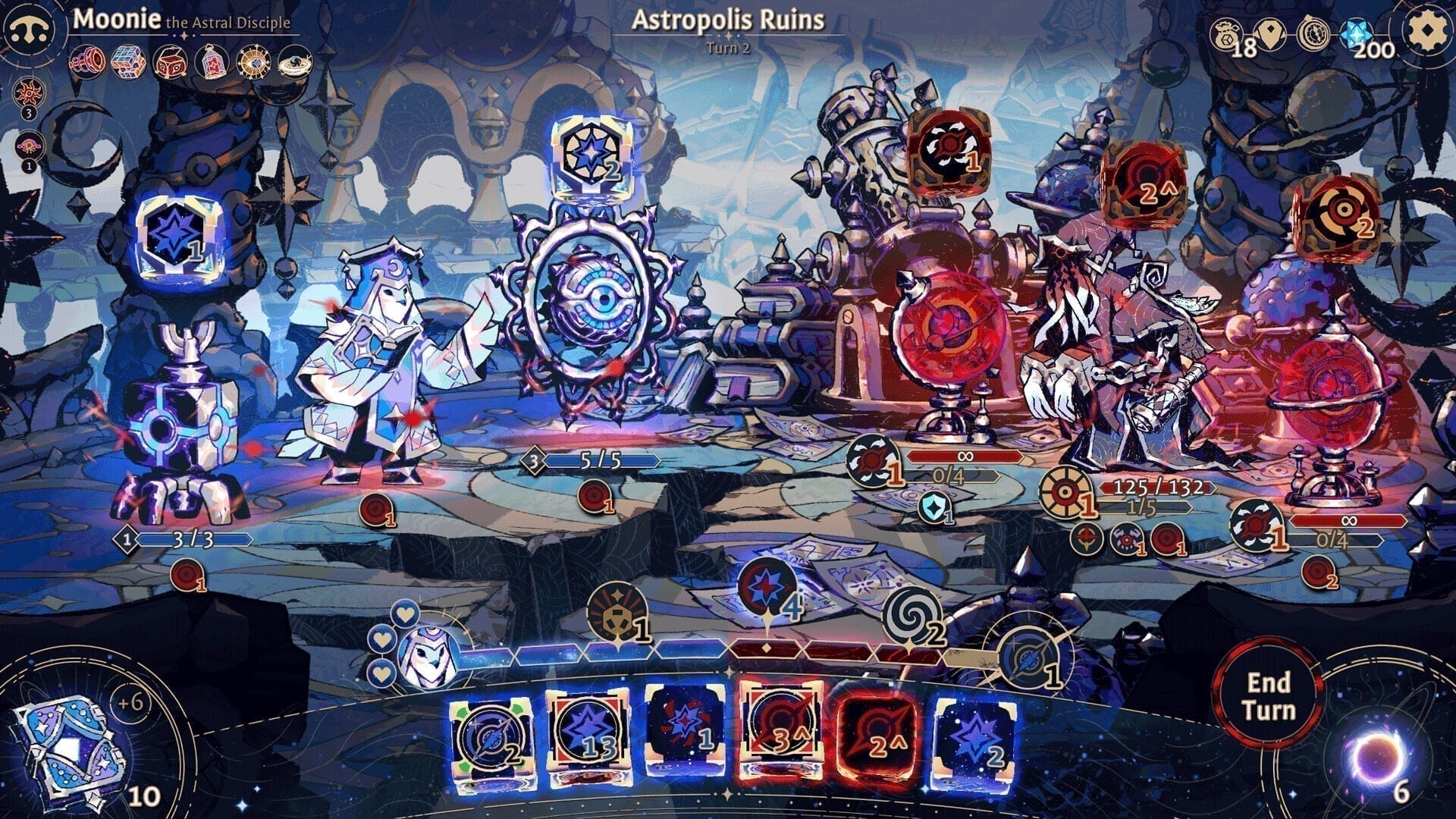
Astrea: Six-Sided Oracles swaps cards for dice, but the decision texture is close enough that Slay the Spire fans should pay attention. You are still building a focused toolkit, managing risk, and trying to survive long enough for your synergies to take over. It just expresses that through a purification/corruption system that feels more volatile and more original.
Its biggest strength is that it does not feel like a clone. The dice format changes probabilities, targeting, and build structure in ways that force real adaptation. The corruption system adds tension to almost every choice, and that makes many runs feel like they are balanced on a knife edge.
The drawback is readability at first. It asks you to learn its own language, and the early hours can feel more opaque than Slay the Spire’s clean attack-block loop. Stick with it and the payoff is excellent, but this is not the easiest onboarding on the list.
Breach Wanderers
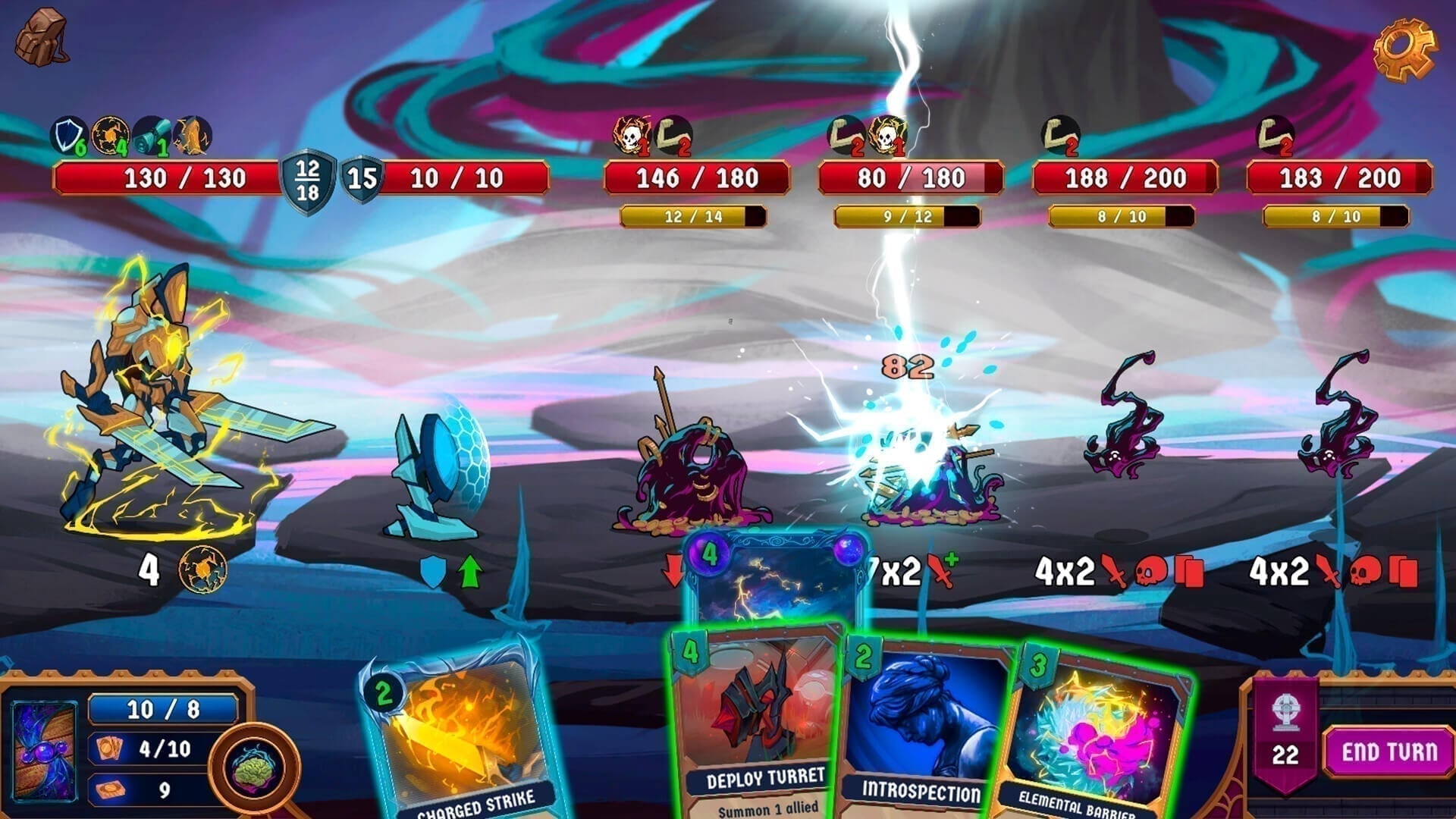
Breach Wanderers is a good pick if your favorite part of Slay the Spire is tuning a deck over many runs and experimenting with different starting conditions. It gives you a lot of room to customize, test ideas, and shape how a run begins before the first fight even starts.
That extra control is the strength. Instead of waiting for a run to randomly become interesting, you can push toward archetypes more directly and explore how small changes alter consistency. For players who enjoy buildcraft and long-term experimentation, that can be extremely satisfying.
The caveat is that more customization can blunt some of the harsh purity that makes Slay the Spire so sharp. A perfectly constrained run often creates better tension than a highly managed one. If you want more agency and replayable tinkering, Breach Wanderers works. If you want strict elegance, it may feel looser.
Dicey Dungeons
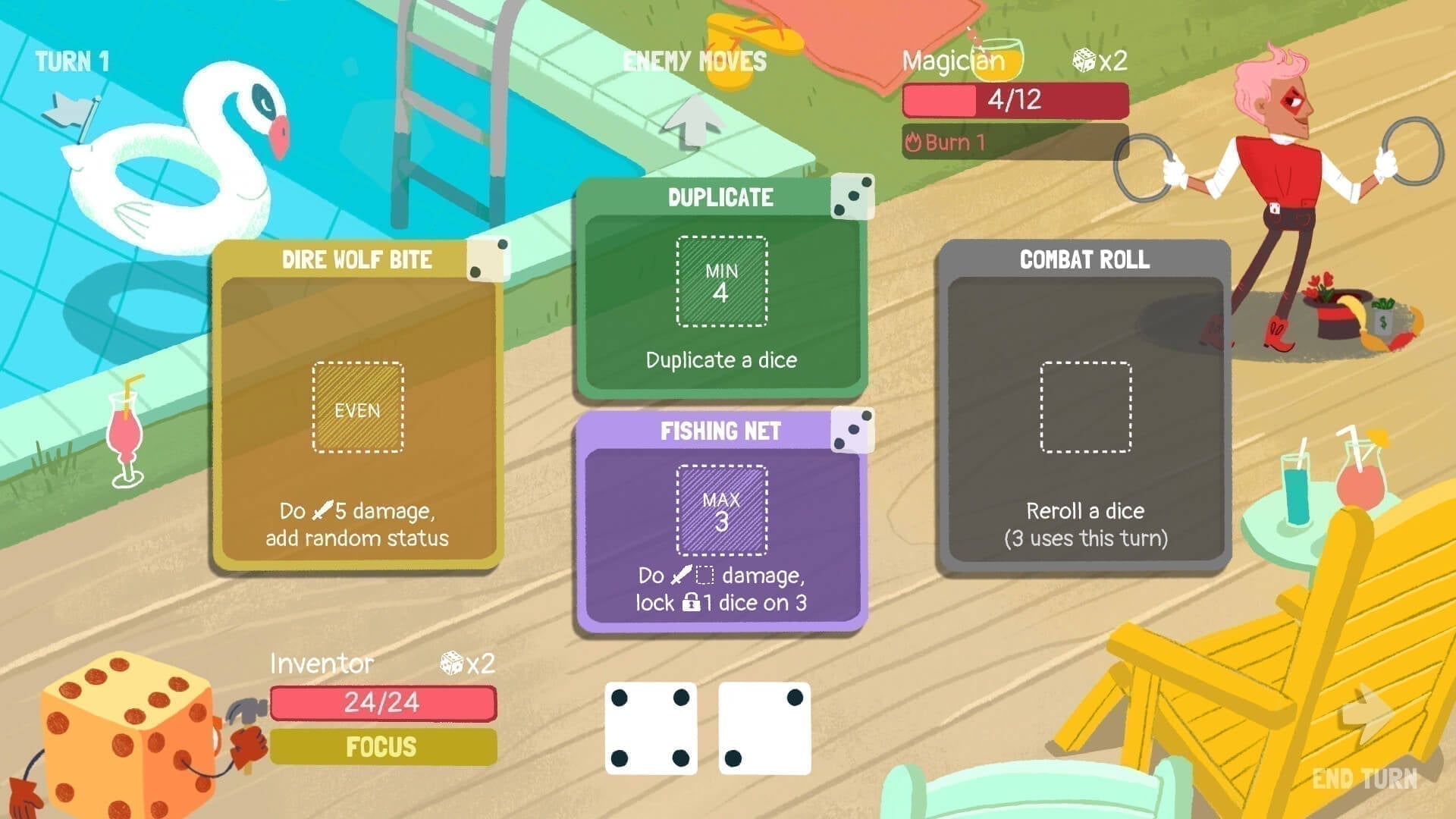
Dicey Dungeons is lighter in tone, but it still delivers the same core pleasure of building around constraints and finding broken interactions inside a run. Each character changes the rules enough that you are constantly relearning what “good” looks like, which keeps the game fresh in the same way class variety does in Slay the Spire.
Its strength is clarity. Runs are easy to read, turns move quickly, and the dice-based systems create immediate tactical puzzles. It is a great palate cleanser if you want something replayable and hard without the full weight of dark fantasy presentation.
The limitation is depth ceiling. It can be brutally clever, but it usually does not produce the same long-form deck tension or route-planning obsession as the best Slay the Spire alternatives. That makes it a strong side recommendation, especially if you want shorter, cleaner runs rather than sprawling build marathons.
Tainted Grail: Conquest
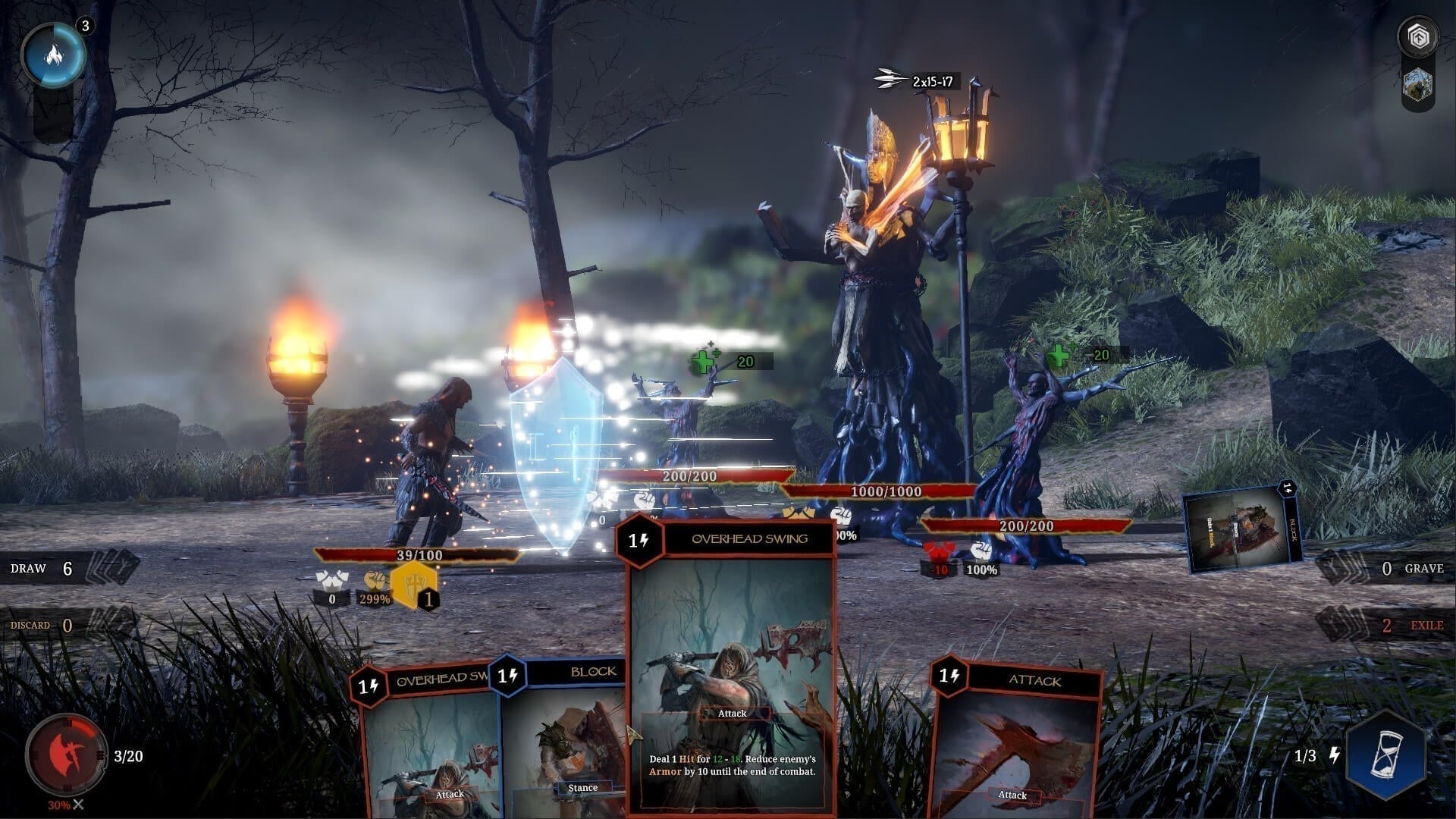
Tainted Grail: Conquest leans hard into dark fantasy mood, and that alone may sell it if the tone of Slay the Spire matters to you. Under the gloom, it is still a run-based deckbuilder built on resource pressure, evolving builds, and survival through ugly encounters.
Its strength is atmosphere paired with familiar structure. The classes feel distinct, the combat asks for real planning, and the cursed world gives runs a stronger sense of place than many genre peers. If you want your replayable deckbuilding wrapped in bleak fantasy rather than abstract systems, it hits that note well.
The caveat is that mood can carry some weight the mechanics do not always match move for move. If you are chasing the purest combat tuning and the cleanest readability, other games on this list are tighter. If you want fantasy first and still need solid roguelike-deckbuilder bones, it is an easy recommendation.
Who should play this
- You want another deckbuilder where every card reward matters and bad route choices punish you later.
- You like hard runs that reward learning enemy patterns, deck ratios, and scaling windows.
- You care about replayability more than story completion.
- You want fantasy vibes, or at least games with strong build identity and mechanical mystery.
- You do not mind losing runs while learning a system.
Common mistakes
-
Picking by theme alone.
Fix: choose based on what you actually loved in Slay the Spire—tight combat, route planning, scaling, or build experimentation. -
Assuming every deckbuilder should feel equally clean on turn one.
Fix: give stranger systems like Astrea: Six-Sided Oracles or Balatro a few runs before judging them. -
Ignoring caveats around pacing.
Fix: if you want pure mechanics, prioritize Vault of the Void or Monster Train over more narrative-heavy picks like Griftlands. -
Chasing the closest clone instead of the best fit.
Fix: if what you really want is replayable combo discovery, Balatro may hook you harder than a more literal fantasy combat game. -
Overvaluing complexity.
Fix: shorter, cleaner games like Dicey Dungeons can still deliver the same hard decision-making in a lighter package.
FAQ
What is the closest game to Slay the Spire on this list?
Monster Train is the closest overall fit. It has the same run-based structure, heavy replayability, strong scaling builds, and constant pressure to make smart drafting and route decisions.
Which of these is the hardest?
Vault of the Void and Astrea: Six-Sided Oracles are strong picks if you want demanding systems with a lot of room for skill expression. They ask for careful planning and punish sloppy play.
Which game here has the best fantasy feel?
Tainted Grail: Conquest, Roguebook, and Monster Train all lean into fantasy more directly than the rest. If dark fantasy matters most, start with Tainted Grail: Conquest.
What should I play if I care more about replayability than theme?
Start with Monster Train, Balatro, Cobalt Core, or Shogun Showdown. All four make repeated runs feel meaningfully different, though they do it in very different ways.
Which one should I avoid if I want fast runs?
Be cautious with Griftlands if your main priority is quick, pure run cycling. It is good, but the narrative layer makes it feel less immediate than the leaner picks here.
Takeaway
If you want the safest bet, play Monster Train. If you want the smartest precision, play Vault of the Void. If you want a cleaner, more tactical board game feel, play Cobalt Core or Shogun Showdown. If you want a weirder obsession, play Balatro or Astrea: Six-Sided Oracles. All 12 are worth a run, but the right pick depends on which part of Slay the Spire got its hooks into you.