Monster Train vs Monster Train 2: Which Should You Play?
Monster Train is cleaner and easier to learn; Monster Train 2 is broader and more tactical. Here is which roguelike deckbuilder fits you.
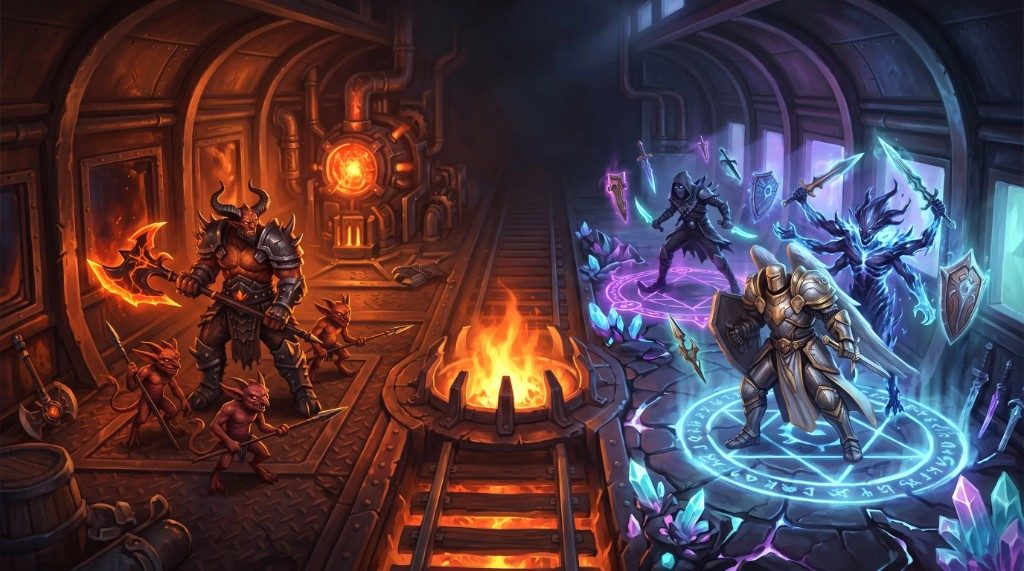
Monster Train vs Monster Train 2 is not a simple choice between an old game and its improved replacement. Both ask you to defend three train floors, combine two clans, and turn a small deck into an absurd scaling engine. The difference is how much machinery sits around that engine.
Monster Train is the better first game. Its fights are easier to read, its failures are easier to diagnose, and its strongest runs reach the “one floor becomes unstoppable” fantasy quickly.
Monster Train 2 is the better choice for experienced players who want more decisions. Room Cards, Equipment Cards, Pyre Hearts, and more complicated clan interactions give you extra ways to build and repair a run, but they also create more opportunities to lose focus.
Monster Train vs Monster Train 2 at a glance
| Monster Train | Monster Train 2 | |
|---|---|---|
| Best for | New players and clean combo builders | Experienced players and system tinkerers |
| Core feel | Direct, readable, engine-focused | Layered, flexible, sequencing-heavy |
| Build focus | A few upgraded units or spells | Units, spells, equipment, and room effects |
| Learning curve | Easier to understand | More systems to track from the start |
| Drafting style | Commit early and remove distractions | Stay flexible, then connect several packages |
| Combat after setup | Often fast and decisive | More likely to require continued adjustment |
| Best reason to choose it | Elegant cause and effect | Greater variety and tactical expression |
| Main drawback | Winning lines can become familiar | Strong builds can feel busy or overbuilt |
The short recommendation is simple:
- Start with Monster Train if you have never played either game.
- Choose Monster Train 2 if you already understand lane-based deckbuilders or want the game with more moving parts.
- Stay with Monster Train if you enjoy refining compact engines more than discovering new subsystems.
- Move to Monster Train 2 if the original now feels solved or too procedural.
What both games do differently from other deckbuilders
Most roguelike deckbuilders ask you to protect one health total across one battlefield. Monster Train divides combat across three floors. Enemies enter at the bottom, fight on each floor, and climb toward the Pyre if they survive.
That vertical structure makes positioning part of deckbuilding. You are not only asking whether a card deals enough damage. You are deciding:
- Which floor will hold your main army
- Whether a unit deserves limited floor capacity
- How you will kill weak backline enemies
- What happens when a tank survives but the damage dealer does not
- Whether your essential cards return quickly enough
Both games also let you combine a primary clan with an allied clan. One clan might supply the main carry, while the other provides armor, healing, spell damage, card draw, reform effects, or another missing piece.
If that structure sounds exciting, either game can work. The real decision is whether you want its cleanest form or its most expandable form.
The biggest difference: one engine or several connected systems
Monster Train usually gives you a direct path from idea to execution. You find a promising unit or spell, apply the right upgrades, duplicate an essential card, remove weak starters, and build one floor that can answer the run’s damage and durability checks.
The strategy is still deep, especially at high Covenant levels. The important part is that the cause and effect stay visible. When a run fails, the reason is often recognizable:
- Your frontline could not survive
- Your damage scaled too slowly
- You had no answer for enemy backliners
- Your deck was too large to redraw its best cards
- You committed to the wrong floor
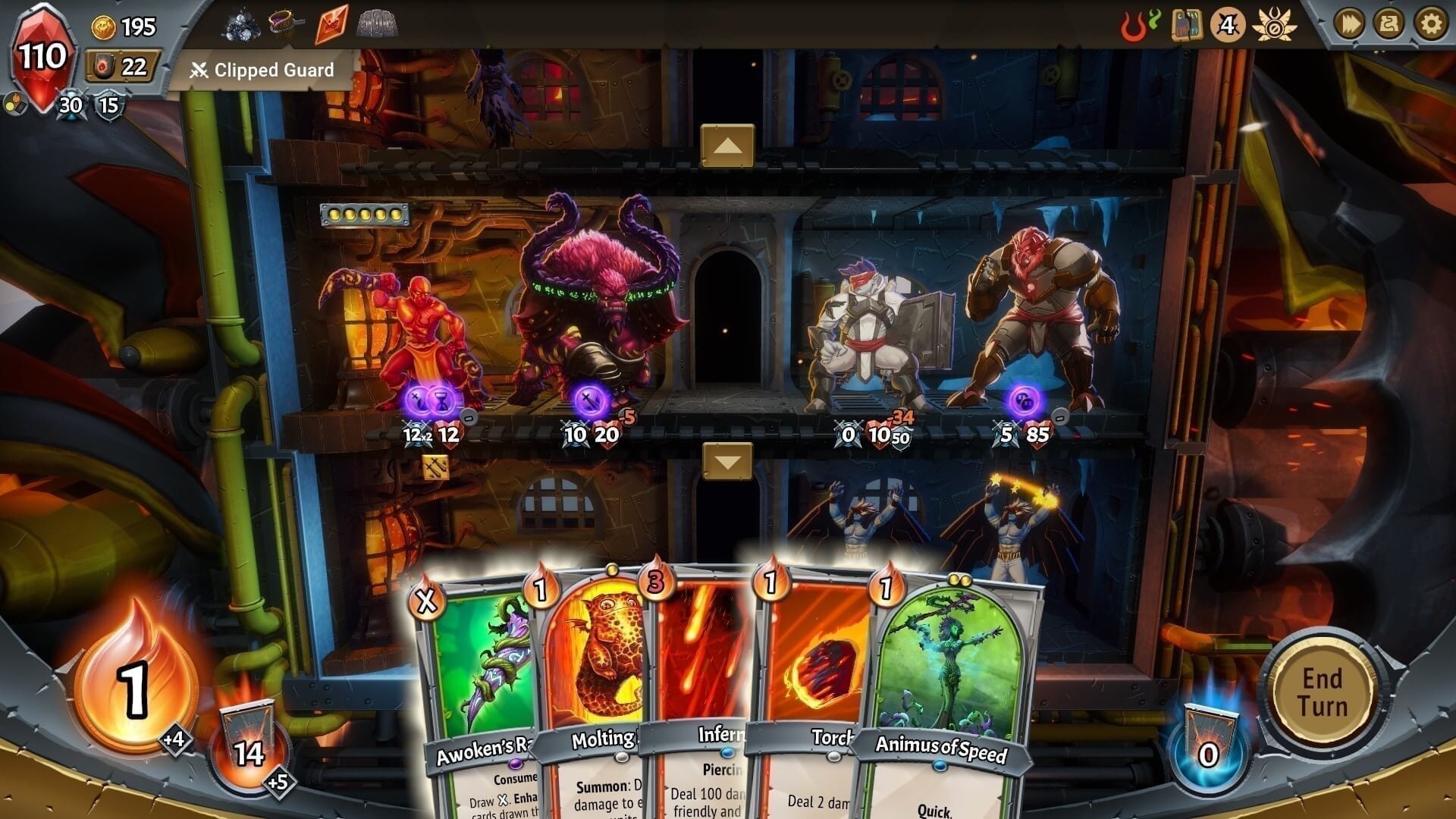
Monster Train 2 keeps that foundation and adds more places for power to live. Room Cards modify a floor. Equipment Cards change what an individual unit can do. Pyre Hearts alter the run before it begins. The sequel’s clans and enemies are also designed around these broader tools.
That means a successful Monster Train 2 build may not have one obvious centerpiece. Its power can come from the relationship between a room effect, an equipped unit, a spell package, and the order in which those pieces enter play.
This is the sequel’s greatest strength and its main source of friction. You have more ways to rescue an imperfect run, but more ways to draft several interesting ideas that never become one reliable plan.
Combat readability: Monster Train wins
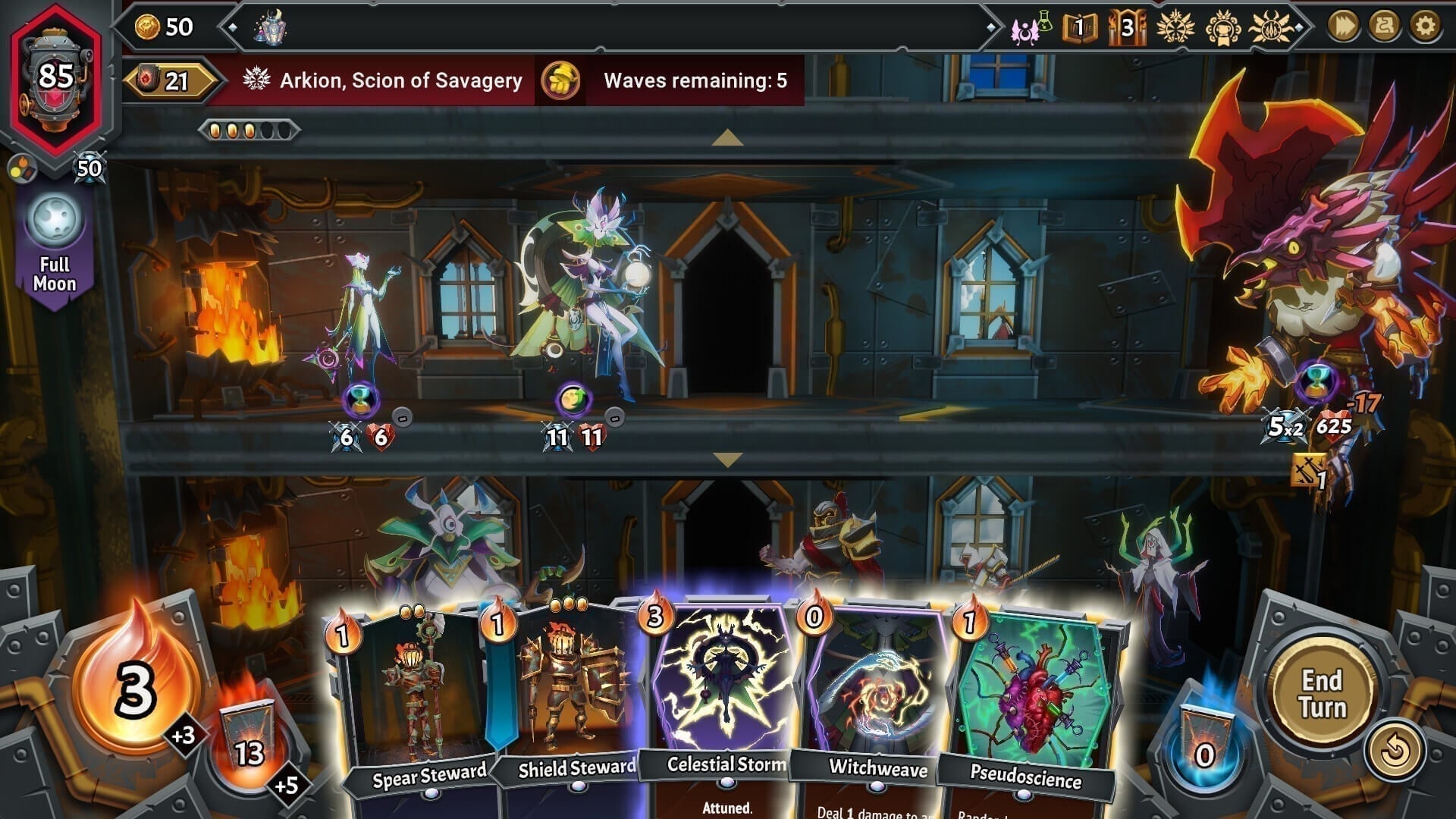
Monster Train has the clearer combat language. Once you know where your main floor belongs, the rest of the turn often becomes a clean question of scaling, defense, and card order.
That clarity makes experimentation rewarding. If a new upgrade or clan pairing fails, you can usually see why. The game teaches you to value floor capacity, deck size, draw consistency, and concentrated scaling without hiding those lessons beneath too many overlapping effects.
The downside appears after enough successful runs. Once a floor is fully online, some battles become a check that the engine still works rather than a fresh tactical problem. The numbers keep growing, but your meaningful decisions may shrink.
Monster Train 2 deliberately keeps more of the turn alive. Equipment can change a unit’s role, Room Cards can make floor selection part of the build itself, and more effects compete for the right timing. A strong setup may still need attention instead of playing itself.
For some players, that is exactly what the original was missing. For others, it weakens the original’s satisfying sense of inevitability.
Choose based on which feeling sounds better:
- Monster Train: “I built the machine correctly, and now it runs.”
- Monster Train 2: “I built the machine, but I still get to operate it.”
Scaling and deckbuilding: elegance versus flexibility
The defining pleasure of Monster Train is concentrated scaling. A great run often revolves around a tiny number of heavily upgraded cards. Every removal improves the chance of drawing them. Every duplication strengthens the same plan. Every support card exists for a clear reason.
This creates excellent drafting tension because a decent card can still make the deck worse. If it delays your carry unit or critical scaling spell, its individual power may not matter.
Monster Train 2 does not remove that discipline, but it tests it differently. The sequel offers more synergy hooks, so it is easier to mistake possibility for progress.
A Room Card, a piece of Equipment, and a unit package belong together only when they support the same win condition or solve different weaknesses. If they all require separate setup without helping one another, you have built three partial decks instead of one complete deck.
The sequel is therefore more forgiving when you need a new answer, but less forgiving when you collect answers without a plan.
Pick Monster Train if you enjoy cutting a deck down to its sharpest form. Pick Monster Train 2 if you enjoy connecting several systems and changing the plan as new pieces appear.
Clan variety and replayability
Monster Train launched with five clearly defined clans. Combining a primary and allied clan creates most of its replay value, while alternate champions and The Last Divinity expansion push those combinations further.
Its clan roles are generally easy to recognize, which makes mastery satisfying. You learn which clan can carry, which one can support, and when an unusual pairing requires you to reverse those roles. Over time, though, strong upgrades and familiar scaling patterns can make promising routes announce themselves early.
Monster Train 2 launched with five new clans and builds its interactions around a wider card system. The sequel has also grown through free updates, including the return of Wurmkin, while the optional Destiny of the Railforged expansion adds the Railforged clan and Soul Savior mode.
That larger possibility space keeps drafts unsettled for longer. A card can strengthen the current plan, enable a pivot, or become a dependency that only pays off when another piece appears. Experienced players get more room to improvise, but weaker drafts can become harder to diagnose.
The original rewards recognition and refinement. The sequel rewards adaptation and orchestration.
Which game is better for beginners?
Monster Train is the better introduction, even though neither game is easy.
The original teaches the series’ most important ideas with fewer simultaneous systems:
- Build around a small number of important cards
- Commit to a floor for a reason
- Protect damage dealers with the right frontline
- Solve both heavy enemies and fragile backliners
- Remove cards that slow the deck down
Monster Train 2 is still playable as your first entry. You do not need knowledge of the original to understand the new story or mechanics. It is simply a busier teacher.
Start with the sequel if extra mechanical density is part of the appeal. Do not start with it only because sequels are usually assumed to replace the first game.
Which game is harder?
Monster Train 2 is more complicated, but that does not make every run strictly harder.
The original gives you fewer systems to manage, so early mistakes are easier to understand. At high difficulty, however, its cleaner rules demand precise drafting and scaling. You cannot always invent a new solution after committing to the wrong engine.
The sequel creates more tactical pressure inside combat, but its additional systems also provide more recovery tools. A Room Card or Equipment effect can solve a problem that would have ended an original Monster Train run. Those same systems can punish poor sequencing or an unfocused draft.
Think of the difficulty this way:
- Monster Train is harder to bluff. Your engine either meets the run’s checks or it does not.
- Monster Train 2 is harder to parse. The answer may exist, but finding and sequencing it can take more work.
What about the DLC and free updates?
This comparison uses the two base games as the starting point, but their expanded versions make the contrast even stronger.
Monster Train: The Last Divinity adds Wurmkin, Pact Shards, unit synthesis, and an extra final boss. Pact Shards let you accept more power while strengthening future enemies, so the expansion adds risk management without changing the original’s clean foundation.
Monster Train 2 has received free card and enemy updates, and Wurmkin returned in a free 2026 update. Its paid Destiny of the Railforged expansion adds the Railforged clan and Soul Savior, a separate run mode built around upgradeable Souls.
If you buy every major expansion, Monster Train remains the more contained package. Monster Train 2 moves even further toward layered systems and long-term variety.
One practical difference also matters: the original Monster Train is available on iOS and Android, while Monster Train 2 is focused on PC and current consoles. If you specifically want to play on a phone or tablet, choose the original.
Is Monster Train 2 worth it if you own Monster Train?
Yes, if you still enjoy Monster Train’s core combat but want it to surprise you again.
Monster Train 2 does not abandon the three-floor structure or the joy of building an outrageous engine. It adds more decisions around those ideas. That makes it a meaningful sequel rather than a new set of clans placed inside the same run.
It may not be worth switching immediately if your favorite part of Monster Train is its economy of design. The sequel is broader, but broader is not always better. More card types and more sequencing can make a winning turn feel inventive, or simply slower, depending on what you value.
Final verdict
Choose Monster Train if you want the cleaner game. It is easier to learn, faster to read, and better at showing exactly why an engine succeeds or fails. Its strongest runs deliver the purest version of turning one train floor into an unstoppable machine.
Choose Monster Train 2 if you want the broader game. Its Room Cards, Equipment Cards, Pyre Hearts, newer clans, updates, and optional expansion create more ways to build, pivot, and recover. The tradeoff is a noisier decision space.
For most newcomers, Monster Train should come first.
For returning players who want familiar lane combat to demand fresh decisions, Monster Train 2 is the better long-term home.
The sequel has more machinery. The original makes it easier to appreciate why the machine works.