5 Best Party-Based Deckbuilders for Solo Players
Find five party-based deckbuilders for solo play, ranked by team-building fit, with clear picks for combo planning, tactical arenas, and RPG campaigns.
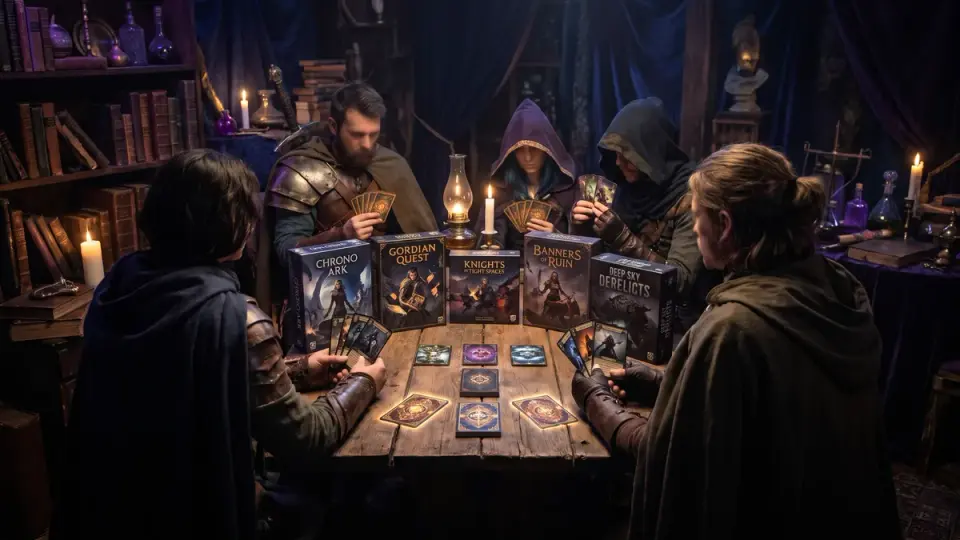
The best party-based deckbuilders give you a reason to build a complementary team, not just a stronger individual deck. Choose Chrono Ark for demanding party combos, Gordian Quest for campaign management, or Knights in Tight Spaces for arena positioning and sequencing.
All five picks suit solo play, but they ask you to care about different things. The real choice is where you want your team decisions to matter: boss fights, campaign progression, tight arenas, branching paths, or scavenging pressure. That matters more than rank.
How these party-based deckbuilders are ranked
This order ranks fit for party-centered card strategy, not overall game quality. Demanding combo planning leads because it most directly answers the desire to make a team work together. Campaign management follows, then positioning and sequencing. The final two picks serve more specialized tastes, branching party combat and a scavenging crew under pressure, rather than being lesser substitutes.
Difficulty is a separate consideration, not a quality score. The wrong kind of party-management complexity can be less satisfying than a demanding game built around decisions you enjoy.
Compare the five solo party deckbuilders
Read the decision-context column first: it shows where your party choices will matter. Then use difficulty to judge whether that context sounds inviting or exhausting.
| Game | Party hook | Decision context | Difficulty | Best-fit player |
|---|---|---|---|---|
| Chrono Ark | Heavy combos | Layered bosses | hard | Combo planner |
| Gordian Quest | Party management | Campaign progression | medium | Campaign builder |
| Knights in Tight Spaces | Party positioning | Tight arenas | medium | Sequencing enthusiast |
| Banners of Ruin | Party combat | Branching paths | medium | Branching-route fan |
| Deep Sky Derelicts | Party tactics | Scavenging pressure | medium | Crew-minded scavenger |
1. Chrono Ark — for demanding party combo planning
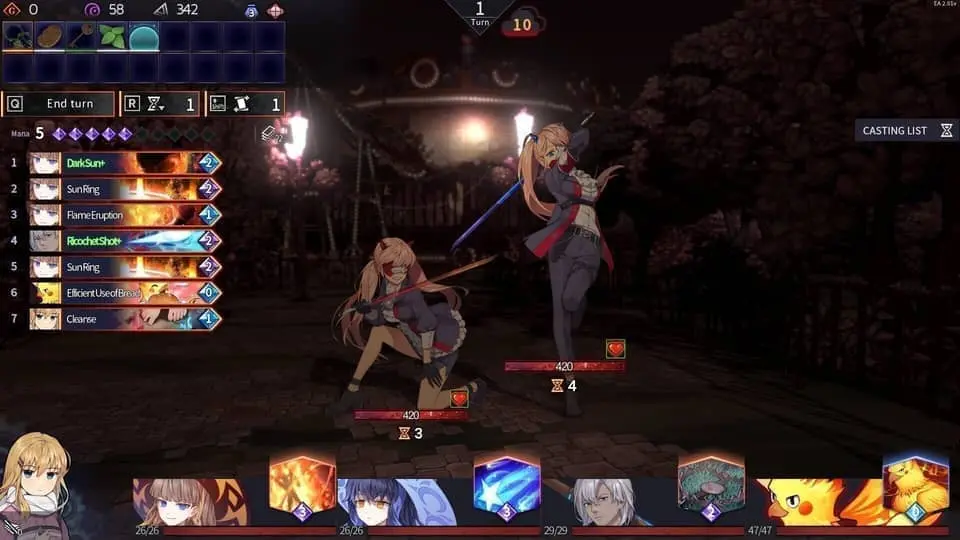
This is the strongest recommendation when your next build needs to be a team. Heavy combo planning and layered boss fights make coordinating the group the attraction, not an extra responsibility.
Its features are party building, narrative events, boss-focused runs. That puts narrative events alongside boss-focused runs, while the anime presentation gives it a distinct identity.
For a solo player, the appeal is owning the whole team-planning problem. The tradeoff is commitment: its difficulty is hard, compared with medium for Gordian Quest. Choose it if demanding coordination sounds satisfying; pass if you mainly want campaign management or a gentler entry into party strategy.
2. Gordian Quest — for party management across a campaign
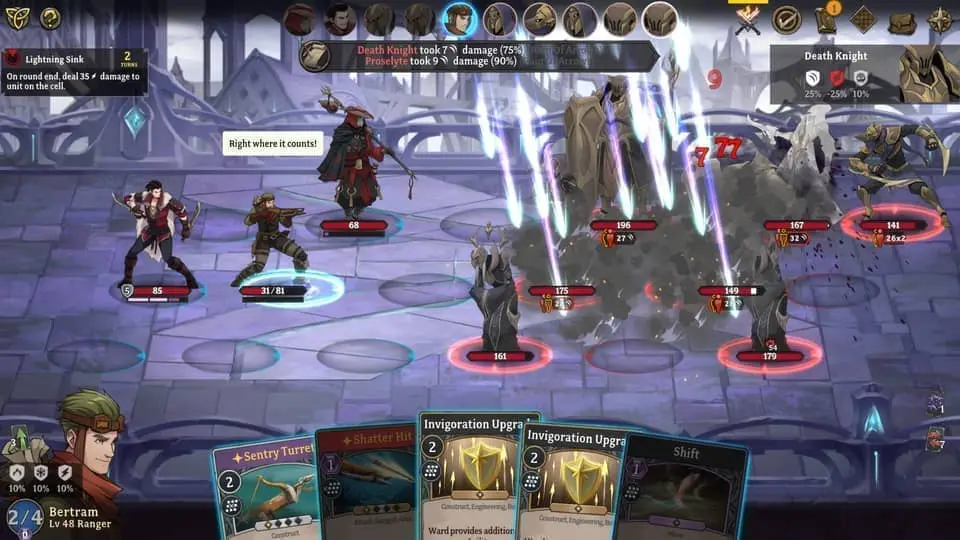
Choose this deckbuilding RPG when you want responsibility for a party across campaign progression, with tactical combat as part of the package. Party management is central here, not just a theme wrapped around card encounters.
Narrative events make it a better match for players seeking an RPG-shaped experience than for those who only want an arena puzzle. Its replayability rating is high, which strengthens the case if you want a campaign game to revisit.
The tradeoff is scope. If managing a party across a campaign sounds like overhead, pick a more combat-focused option. Otherwise, explore more deckbuilding RPGs for story and campaigns.
3. Knights in Tight Spaces — for party positioning and sequencing
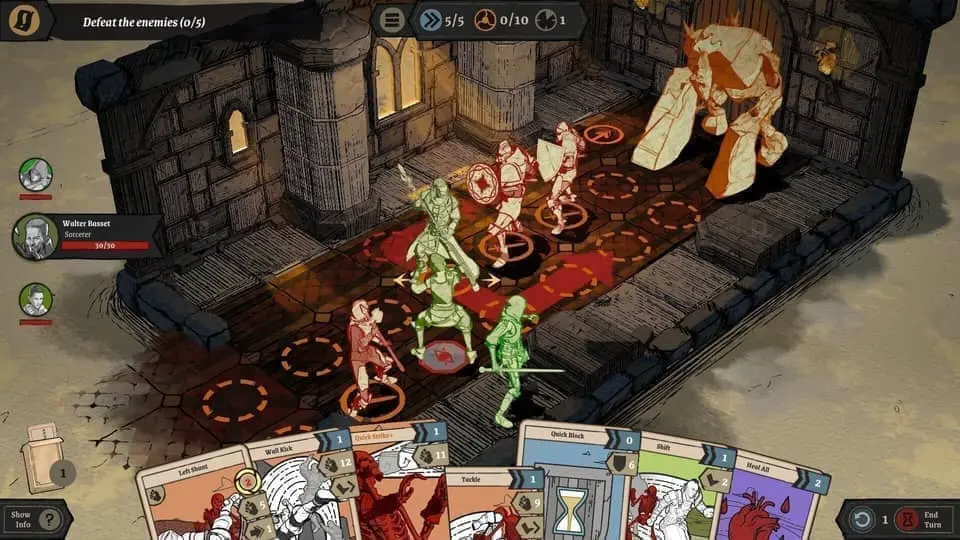
Here, the reason to care about the team is spatial. Party positioning, tight arenas, and sequencing define the appeal, framing team decisions as a tactical battlefield problem rather than boss-combo planning or campaign management.
Choose it when “how should this team act in this space?” sounds more exciting than overseeing a longer campaign. Skip it if positioning is the complexity you hoped to avoid; a lower difficulty rating than the leader doesn’t make it the same experience with less resistance. For a closer tactical comparison, read Fights in Tight Spaces vs Knights in Tight Spaces.
4. Banners of Ruin — for branching party combat
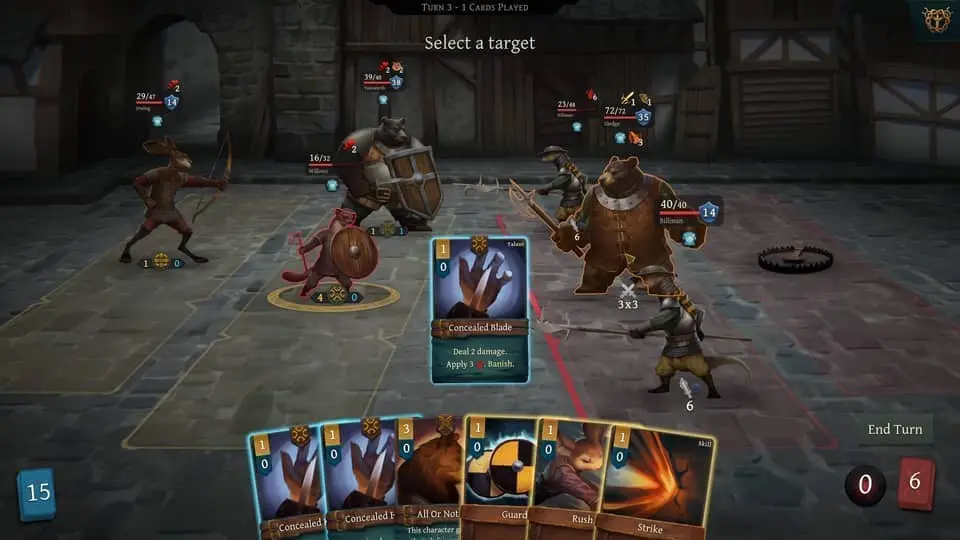
Party combat and branching paths make this the pick for a solo player who wants a team within a branching journey. The dark-fantasy setting sets it apart in atmosphere, but the strategic reason to choose it is pairing party combat with route choices.
It ranks fourth because that preference is more specific than the leader’s direct combo-planning appeal. If branching journeys are your favorite context for team decisions, move it to the top.
Its replayability rating is high, worth weighing if repeat play is a priority. Just don’t expect the campaign management of the second pick or the tight-arena positioning of the third.
5. Deep Sky Derelicts — for a scavenging crew under pressure
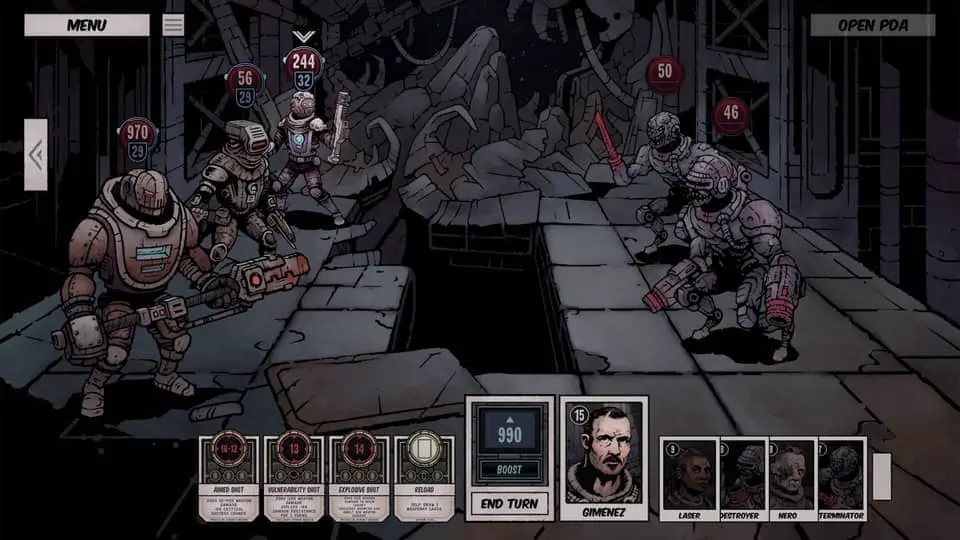
This grim sci-fi crawler blends party tactics, scavenging pressure, and card-based encounters. It gives the solo team a different context: a crew under scavenging pressure rather than a party built for boss combos or arena sequencing. Narrative events add depth beyond the combat premise.
Scavenging is part of the attraction, not something to ignore. If you want team coordination without that emphasis, look higher on the list. If you specifically want a sci-fi scavenging crew, this is the most relevant starting point.
Which party deckbuilder should you choose?
Override the ranking whenever your preferred decisions point elsewhere:
- Chrono Ark: demanding combos and layered boss fights.
- Gordian Quest: party management tied to campaign progression.
- Knights in Tight Spaces: positioning and sequencing in tight arenas.
- Banners of Ruin: party combat within branching paths.
- Deep Sky Derelicts: crew tactics shaped by scavenging pressure.
Pick the one whose complexity you actually want to manage alone. If the real attraction is having friends fill the party roles, go to co-op deckbuilding games instead.
Games In This Article

Written by Roy Levy
Writer and editor at GlyphShuffle
Roy Levy is a full-stack developer and strategy-game enthusiast who writes and edits GlyphShuffle content focused on roguelike deckbuilders, deckbuilding games, and card battlers. He's especially interested in run structure, build variety, and the small design choices that make one deckbuilder click for a certain kind of player.